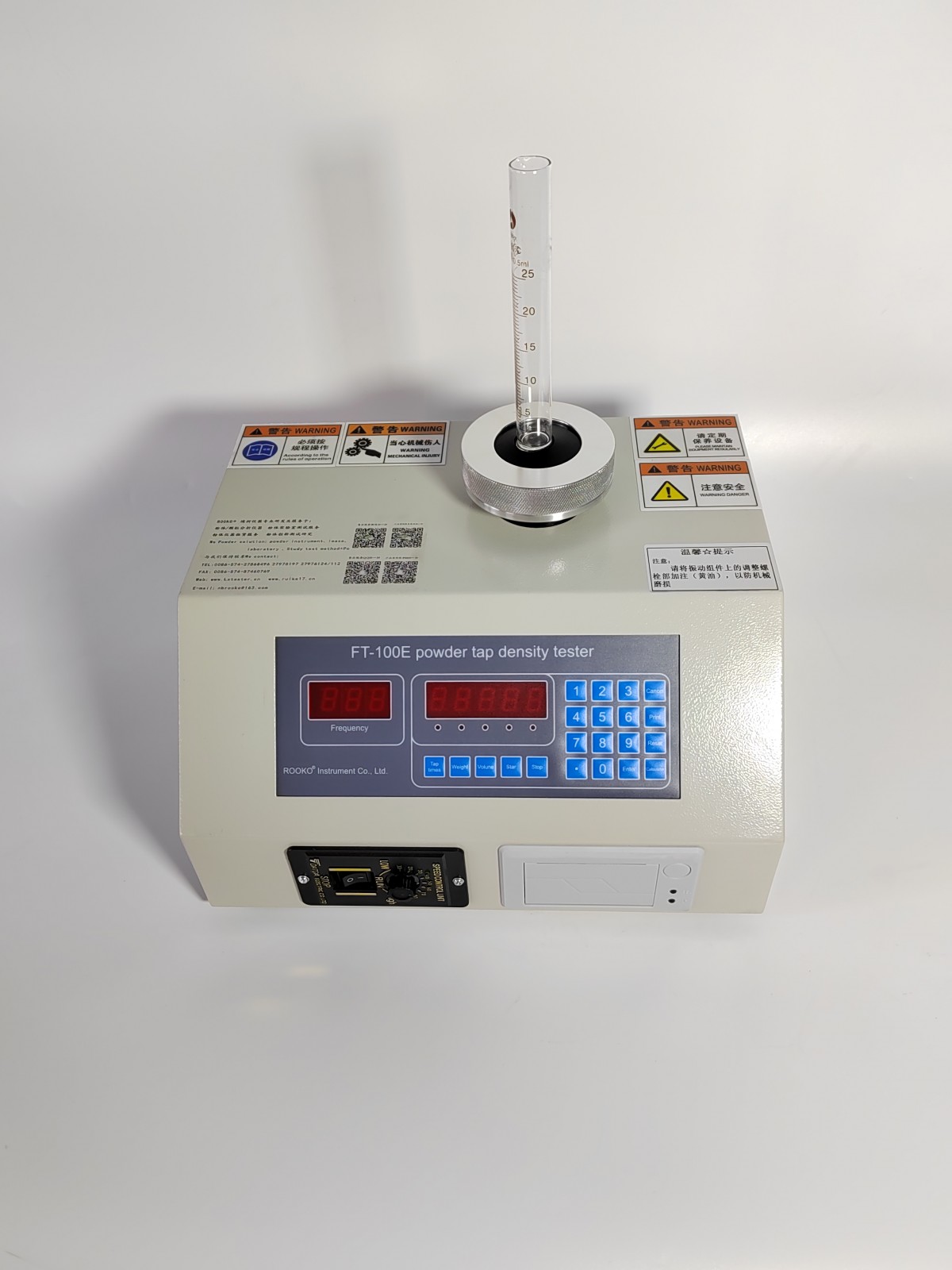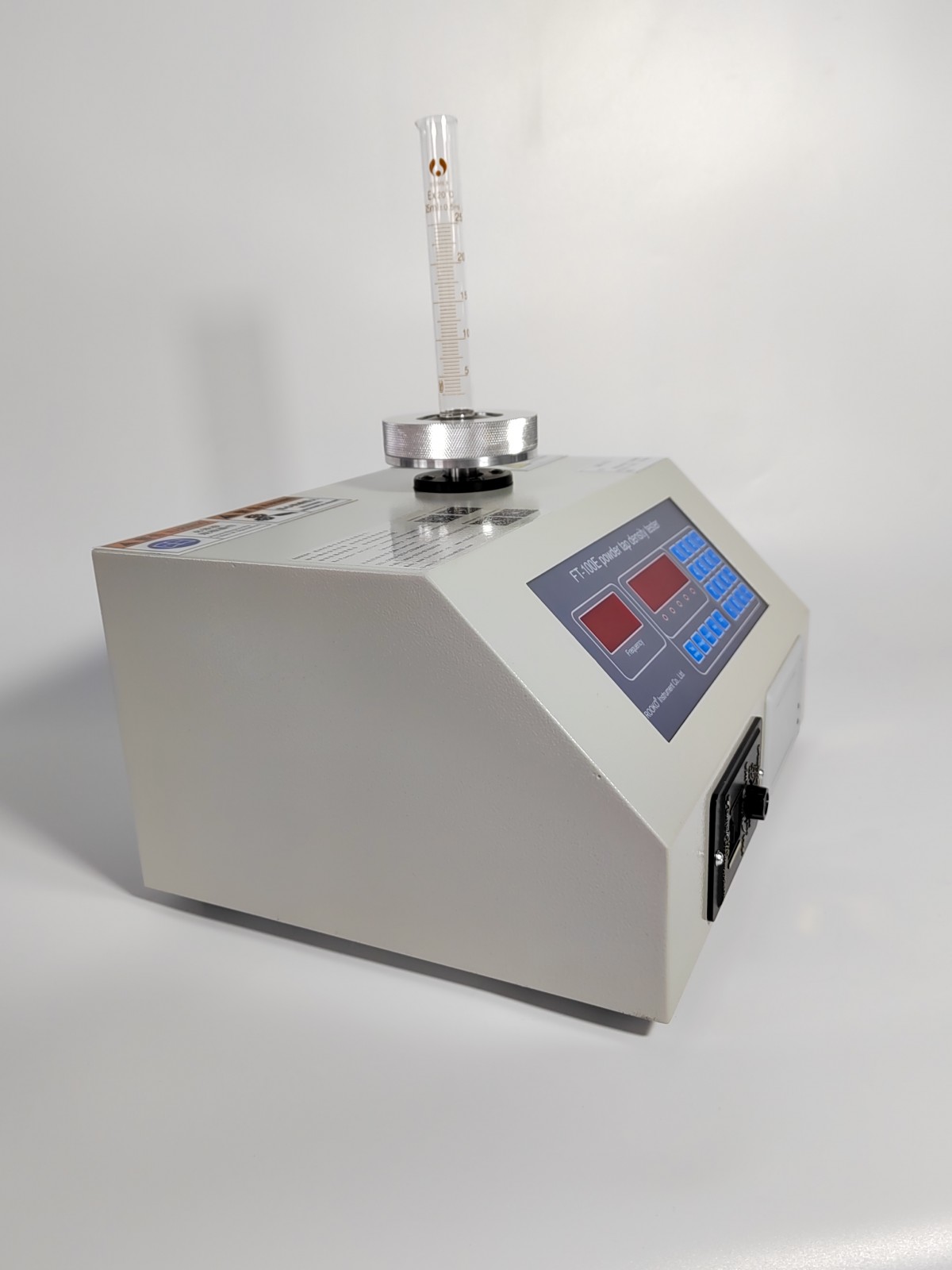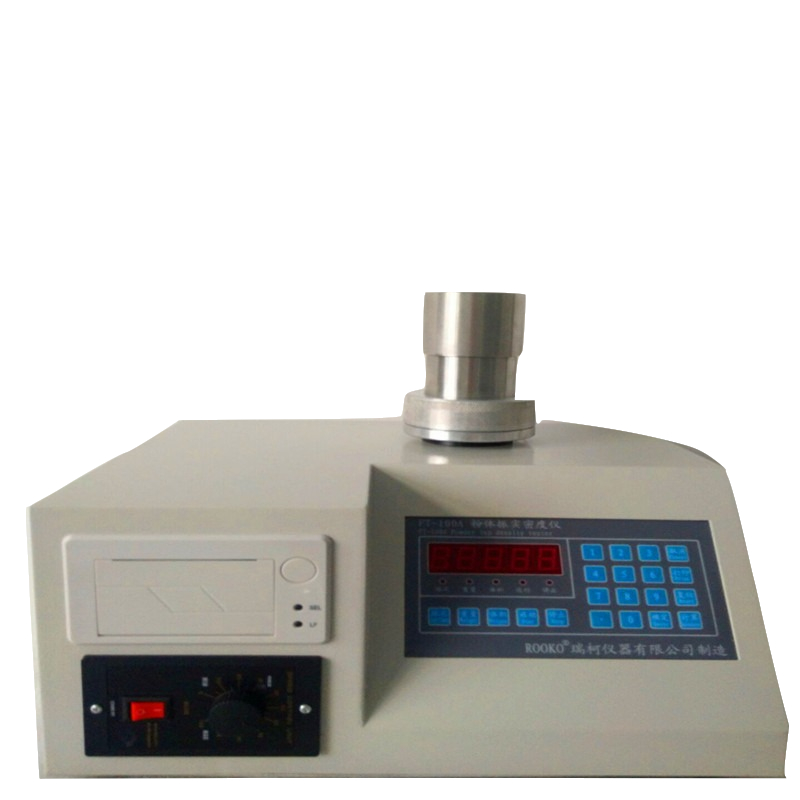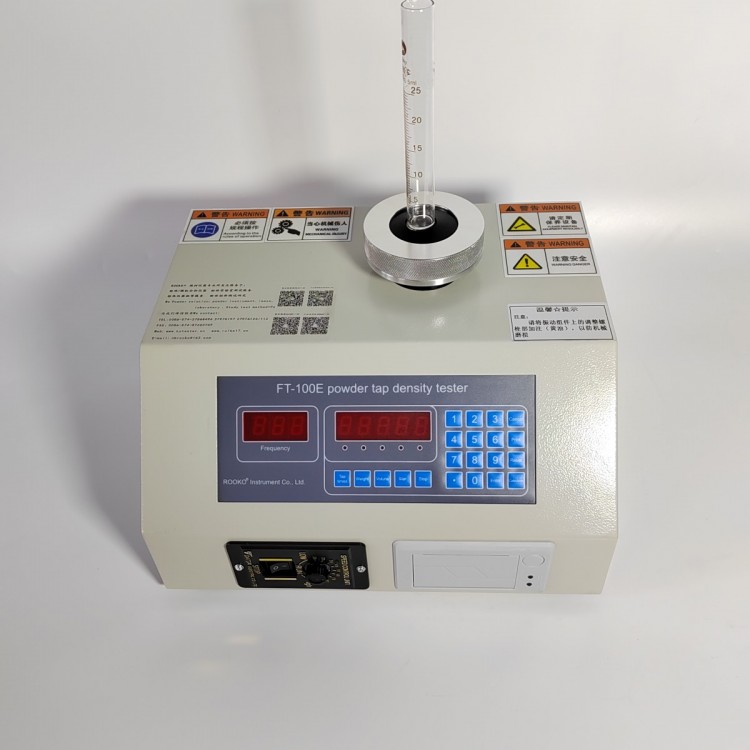
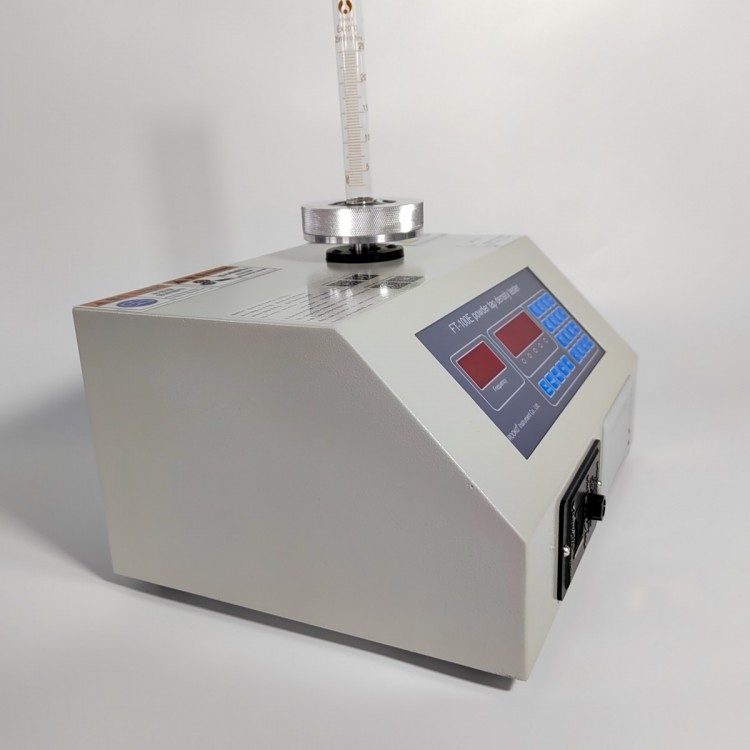
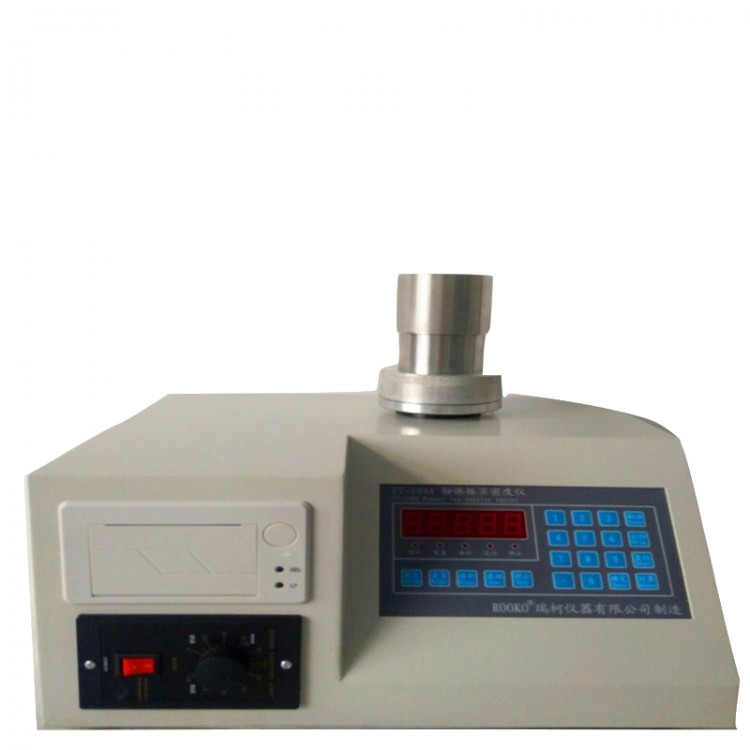







Metal powder compacting density meter direct read frequency, calculate average value
1.Overview
Features two measurement methods: set frequency and time.Designed with ergonomic considerations, easy to operate. Referencing the USP (U.S. Pharmacopeia), BP (British Pharmacopoeia), and EP (European Pharmacopoeia) standards, as well as the specifications in GB/T 5162-2006/ISO3953:1993 (Determination of tapped density of metal powders) and GB/T31057.2-2018.

Section 2: Applicable Range:Scope of application
Metal powder compacting density meter direct reading frequency, calculate average
1.Overview
Features two measurement methods: set frequency and time.The design is ergonomically designed for easy operation. It conforms to the requirements of USP (United States Pharmacopeia), BP (British Pharmacopoeia), and EP (European Pharmacopoeia) as well as the standards in GB/T 5162-2006/ISO3953:1993 (Determination of tapped density of metal powders) and GB/T31057.2-2018.

Section II: Application Scope:Scope of application
Metal Powder Compaction Density Meter Direct Reading Frequency, Calculate Average
Suitable for non-metallic powders, metal powders, chemicals, batteries, abrasives, and scientific research & teaching fields.
III.Working Principle
Secure the powder graduated cylinder to the mechanical vibration device. The vibration motor drives the device to vibrate up and down. The graduated cylinder filled with powder vibrates rhythmically with the device. As the number of vibrations increases, the powder in the cylinder gradually compacts. After reaching the set number of vibrations, the mechanical vibration device stops vibrating. Read the volume of the graduated tube, and according to the definition of density: mass divided by volume, calculate the density of the compacted powder.

Feature Item/Model project/model | FT-100A |
1. Test Station Number | One |
2. Method of Test Data Processing Test data processing method | Manual Calculation manual computation |
3. Measuring Cylinder (Glass Material) - Specifications for Fixed Mass Method Use | 25ml, 100ml (select 10ml) |
3. Density | 0-9.9999g/cm3 |
4. Measurement Mode | Two measurement methods: vibration and time Vibration and time measurements |
5. Amplitude range of vibration | 1-14mm in whole number increments 1-14mm adjustable; |
6. Vibrational Frequencynal frequency | 0 to 300 times/minute (continuously adjustable).ntinuous adjustable) |
7. Vibration Time | 0-9999S |
8. Test Methods | Set Quality Method (Standard); Set Volume Method (Optional Stainless Steel Combination Measuring Cylinder Components) |