










Central Air Conditioning Inlet Water Repair Steps
1Inspection and repair for water leakage
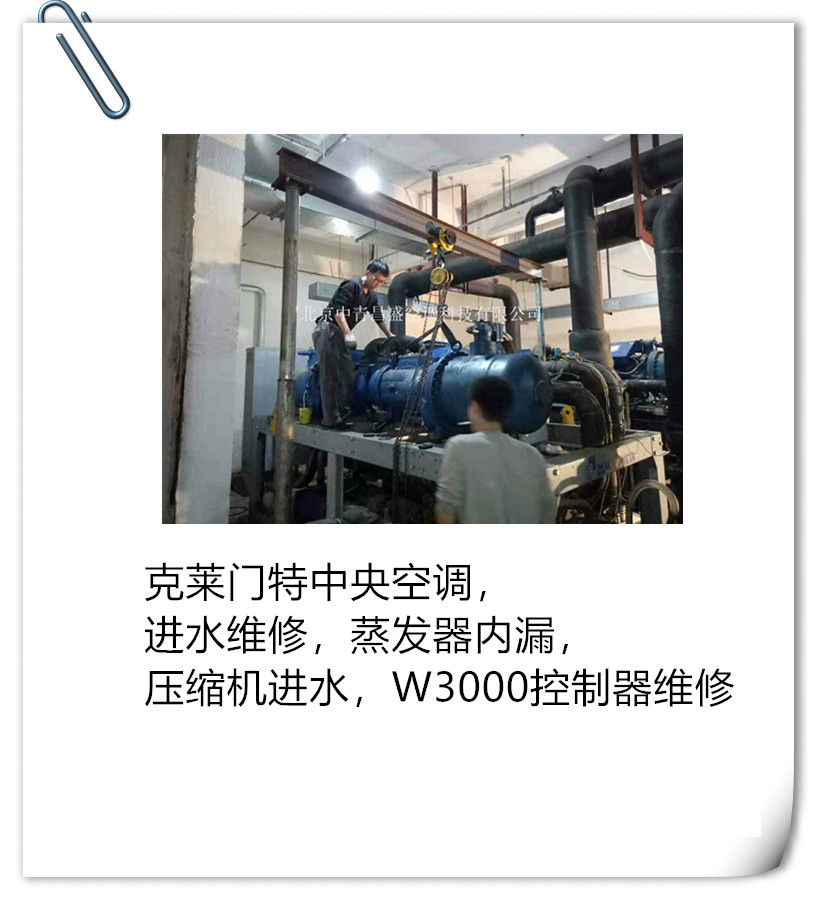
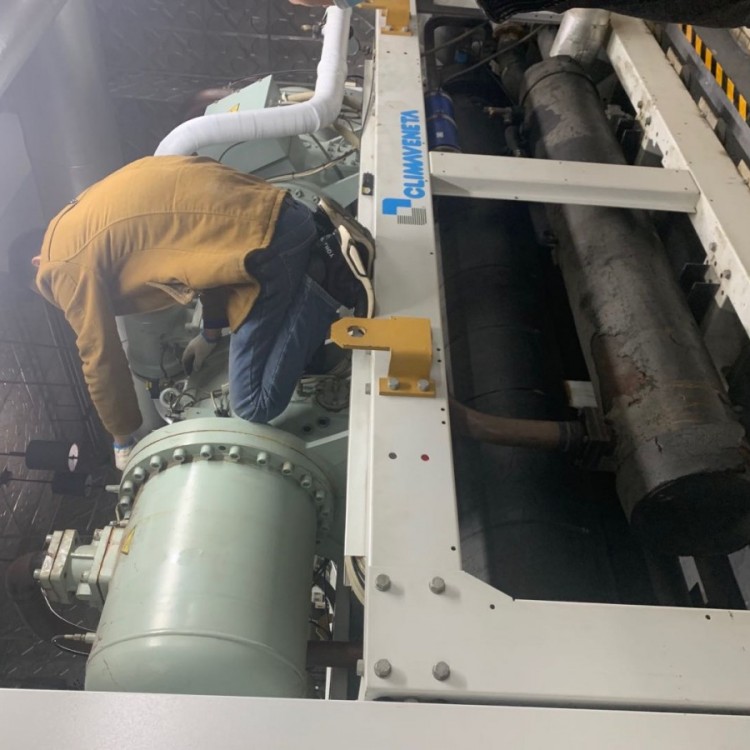
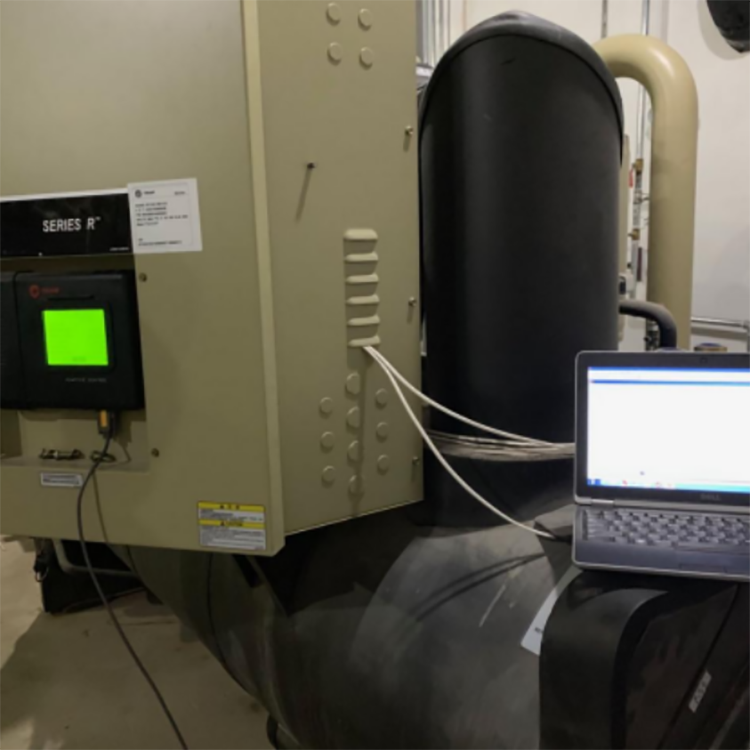
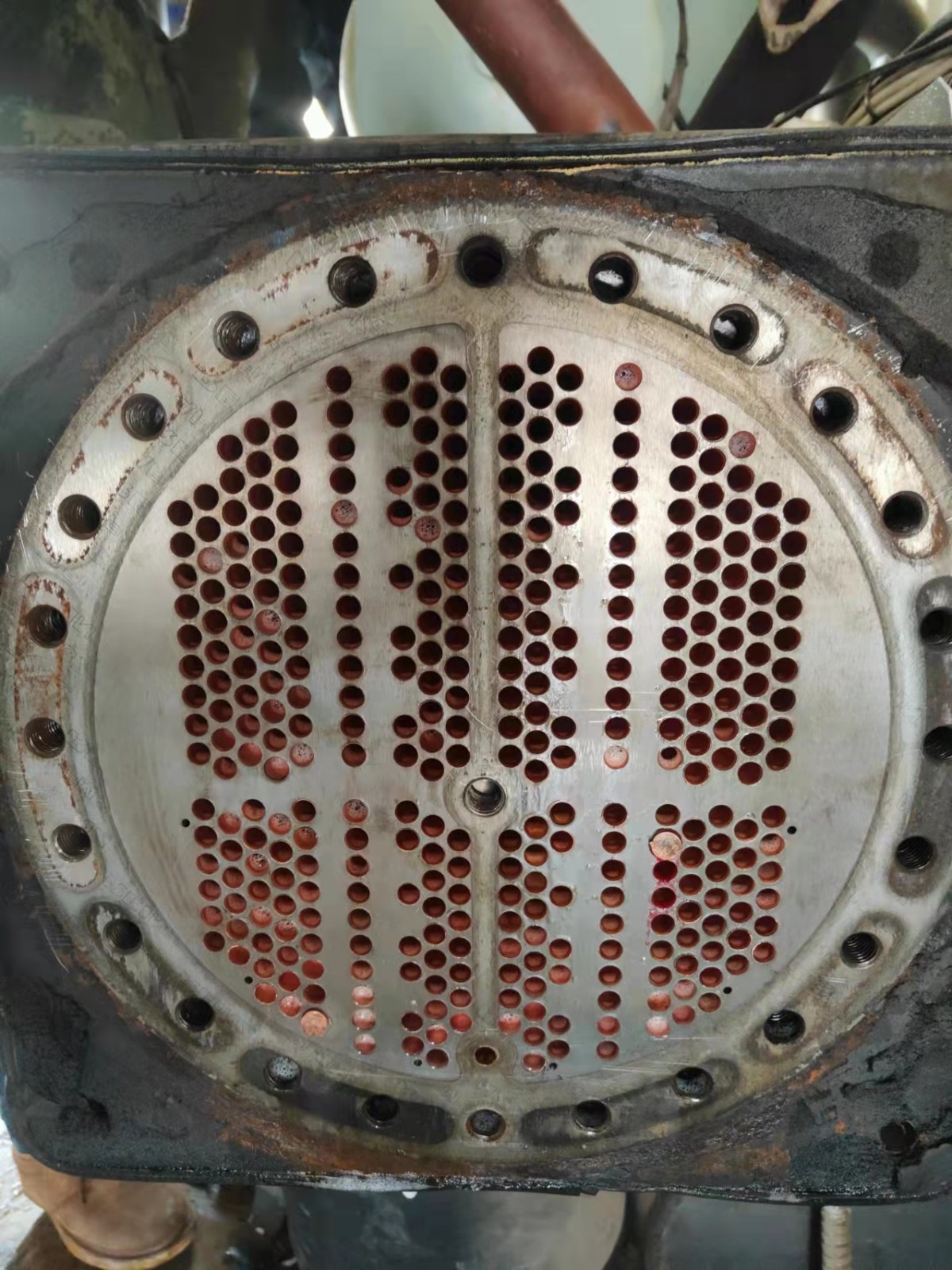
The maintenance personnel will bring the repair tools along with them. They will first conduct an overall pressure test to determine which pipe is leaking, whether it's the condenser or the evaporator, and identify which pipe is leaking. They will use an endoscope to detect the location and cause of the pipe damage. First, they will open the side covers of the condenser and evaporator, then pressure-test the entire unit with nitrogen.8Pounds of pressure, seal all copper tubes of the condenser evaporator with our tool gaskets to measure which tube is leaking. After inspection, the leaking tubes are fewer than10%In the case, a copper wedge is used to plug the leaking pipe.(10%The pipe does not affect the overall cooling capacity of the unit.)Further suppression12Kilogram pressure testing time24An hour, check for any leakage, then observe if the pressure drops, no leakage or pressure drop observed. Leak detection at constant pressure completed.
2System processing
Because the system is equipped with a water treatment system for system waterproofing.***Crucially, the system's handling of adverse consequences is unimaginable. Before processing entry, we will first handle the moisture in the condenser and evaporator. We will then remove the compressor, seal the suction and discharge ports with a blind plate.R11Whole machine recirculates to clean internal debris, recirculates48After several hours, flush with carbon tetrachloride using a high-pressure water jet.3hour;Nitrogen is first blown through the condenser and evaporator to remove most of the remaining carbon tetrachloride.R11Blow out, then dry in a dryer. The drying time is8-12Hour(s)***Afterward, conduct pipeline inspections and drying procedures.
3Vacuum treated, the heating band is installed inside the condenser tube, then heated and vacuumed. The evaporator is a dry evaporator. Use a clean cloth dipped in carbon tetrachloride to clean the inner wall of the tube. After washing off each piece of floating rust, clean them a second time with nitrogen and carbon tetrachloride.;After cleaning, vacuum the item and test for moisture using a mercury manometer pressure gauge.
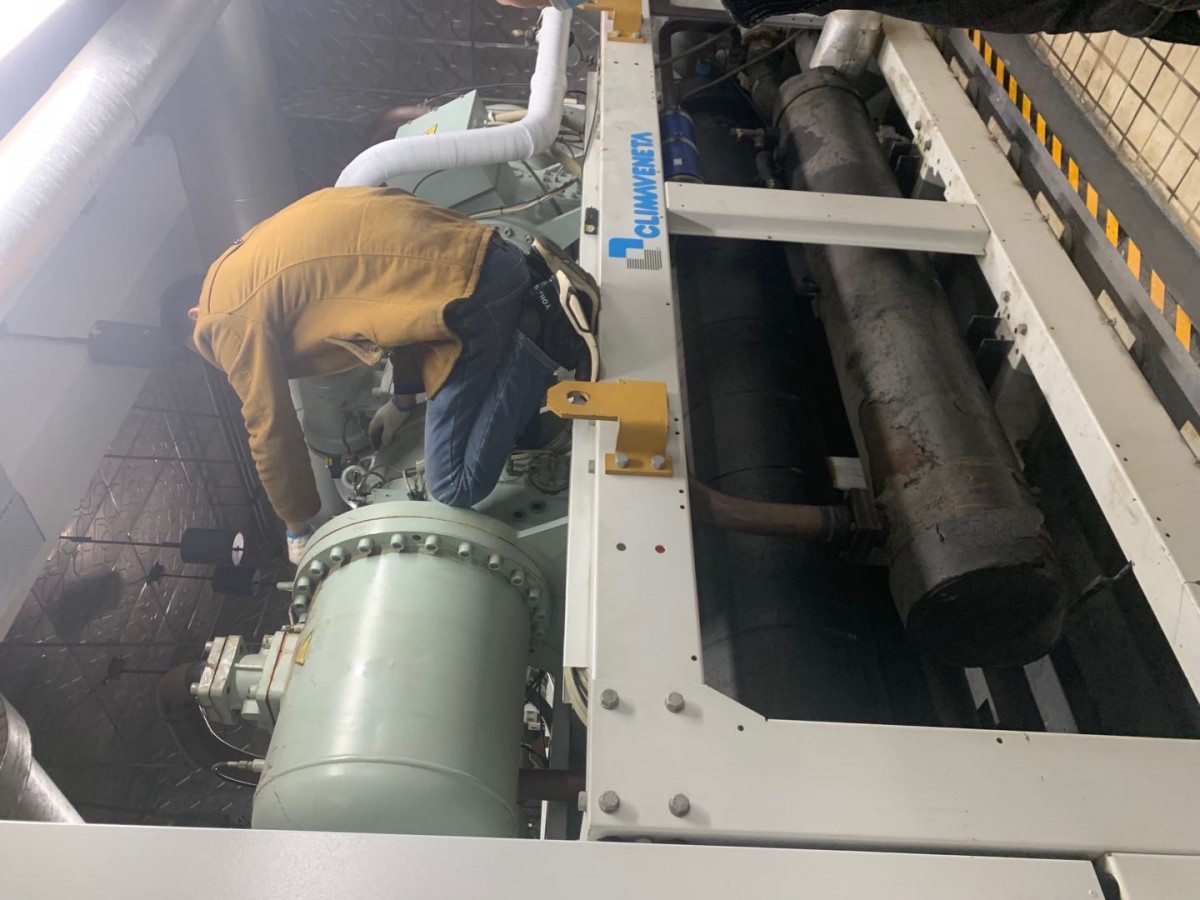
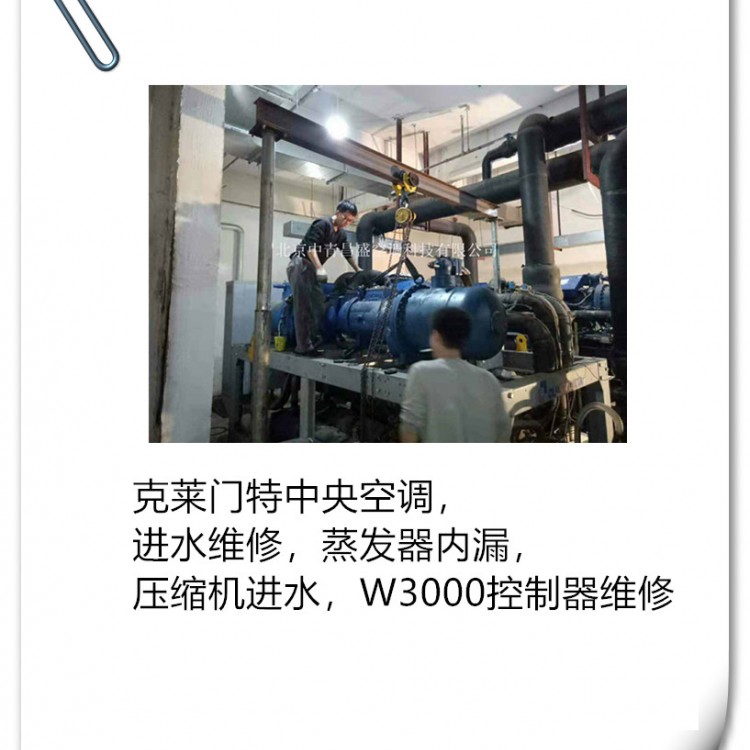
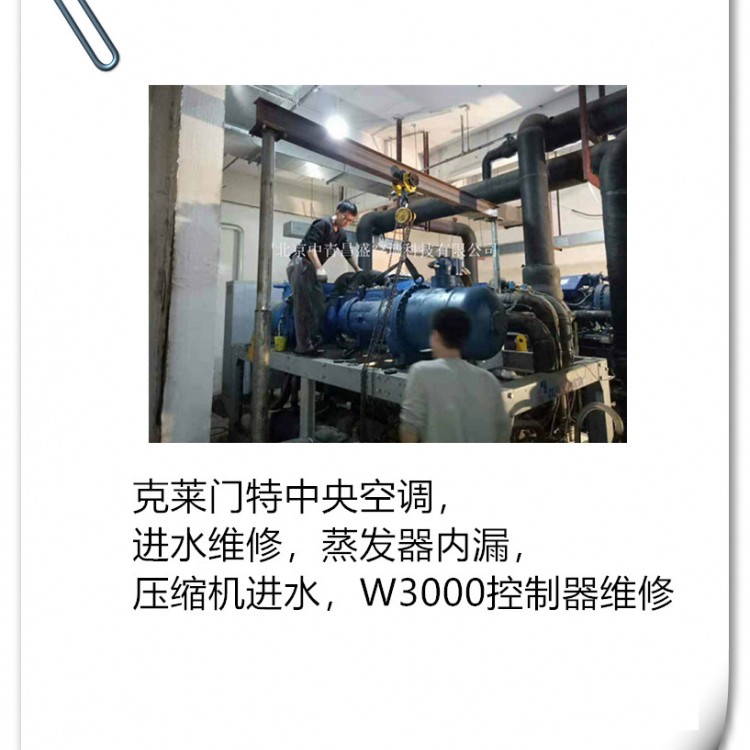
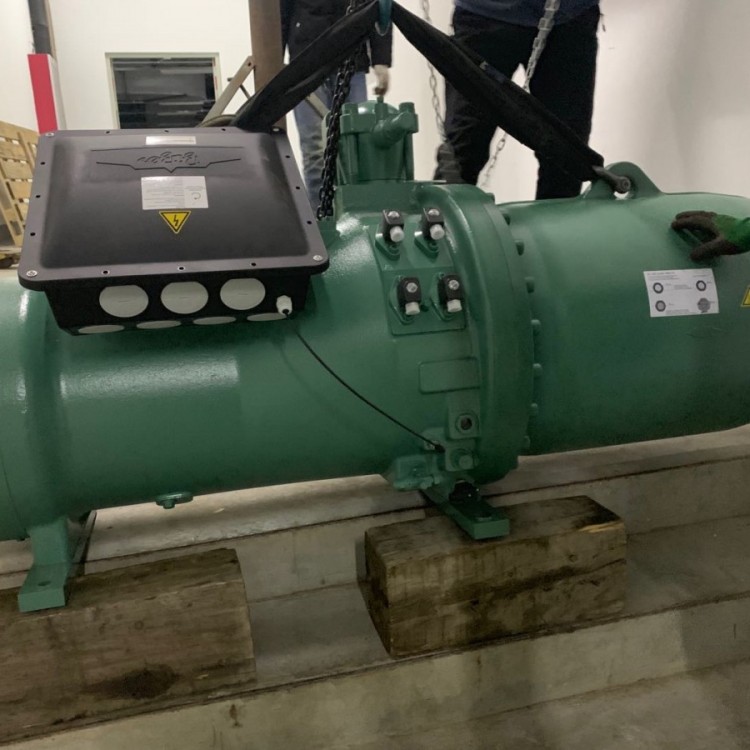
4The compressor inside the engine assembly will definitely have water. Once the maintenance personnel arrive on-site, they should first set up the gantry crane for safety, secure the compressor for safe landing, and then disassemble it to dry the motor thoroughly.24Hourly, inspect for bearing damage, and check for original parts that need to be replaced due to damage.;After repairing bearings, gaskets, and other necessary parts, begin the installation. Once installed, lift the compressor onto the site using the gantry crane, and complete the compressor repair.
5Unit start-up and debugging
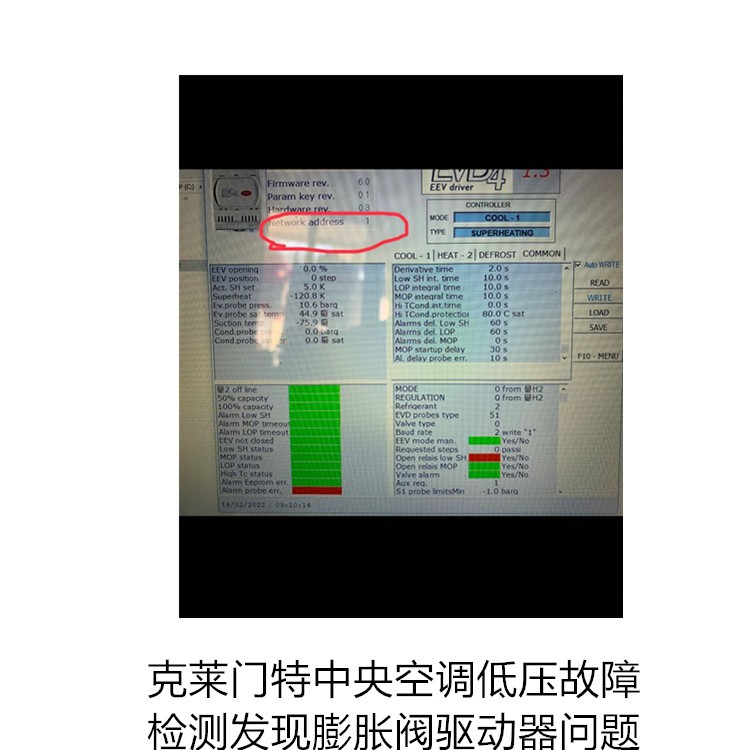
Technicians will first evacuate the air on-site.12Hours after vacuuming for more than 1 hour, inject refrigerant according to standard procedures. Cooperation from Party A is required before the machine is turned on. After the machine is turned on, observe whether the machine operates normally. Once normal, operation continues.3-5Tian Xu Ba, frozen oil, and dry filter replacement once, as the machine uses a type of grease oil, fiber cotton can be added to the dry filter core.(Wrap in cloth)Remove impurities from filtered oil5Perform an oil change every hour; when the three-day oil change period is up, open the evaporator, clean out the remaining dirty oil, and then proceed with the oil change.!The unit is operating normally; the unit has been debugged.