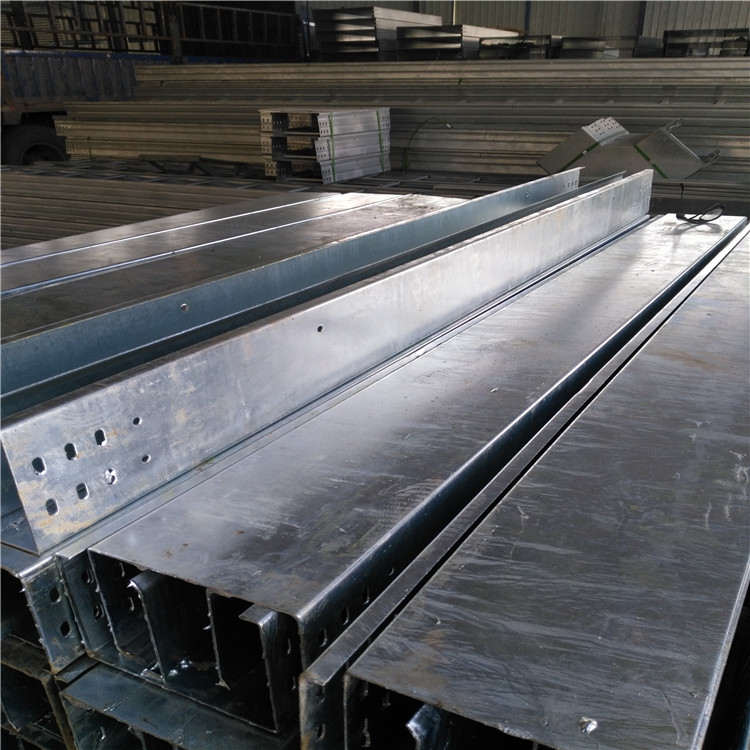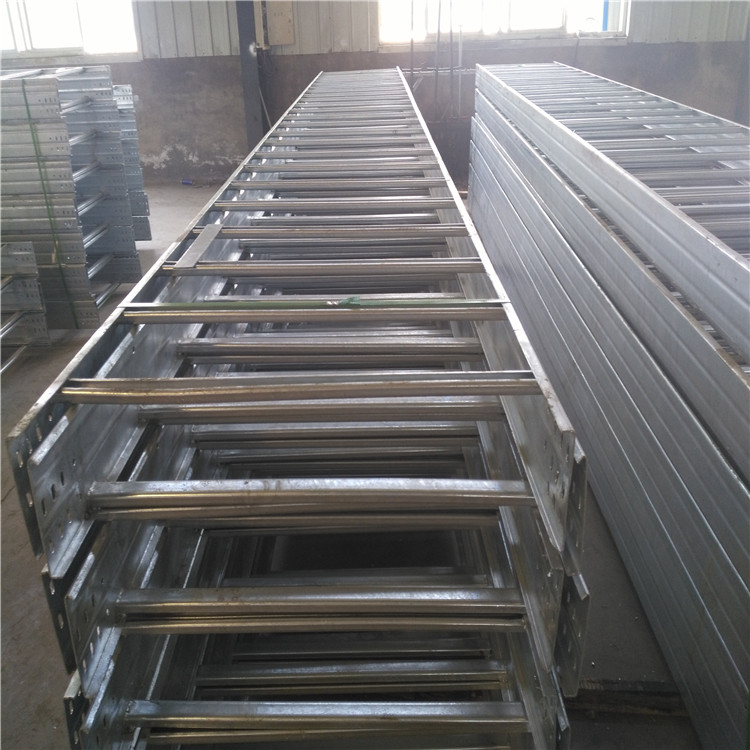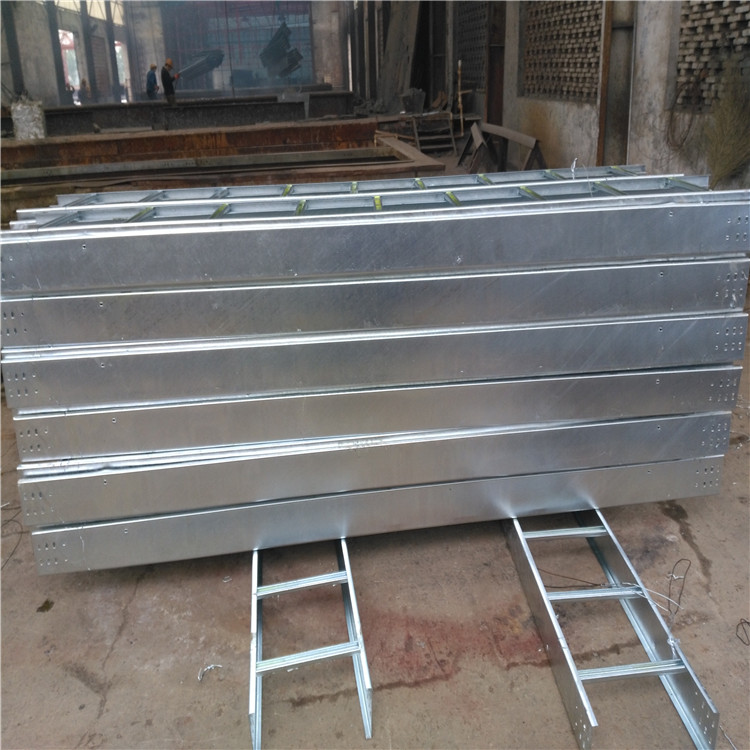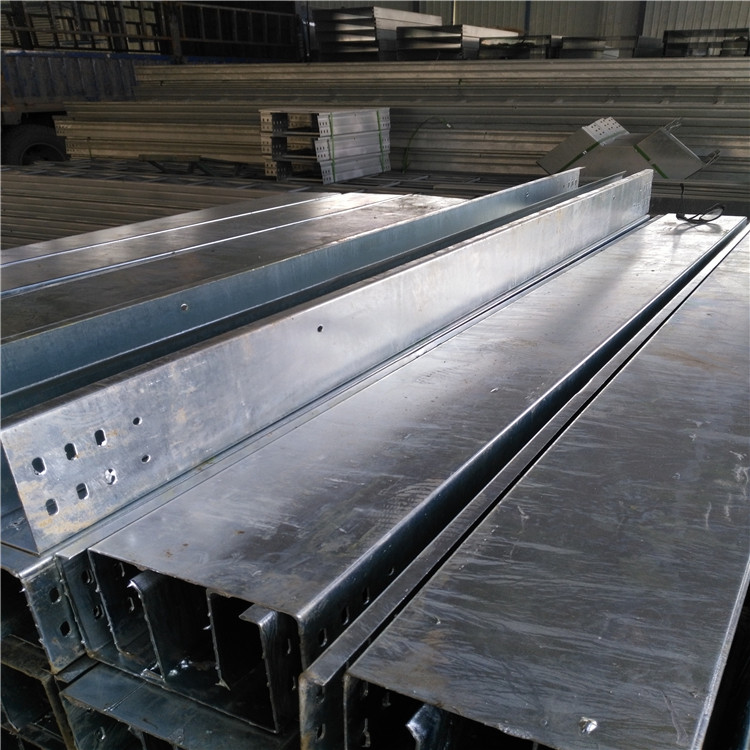

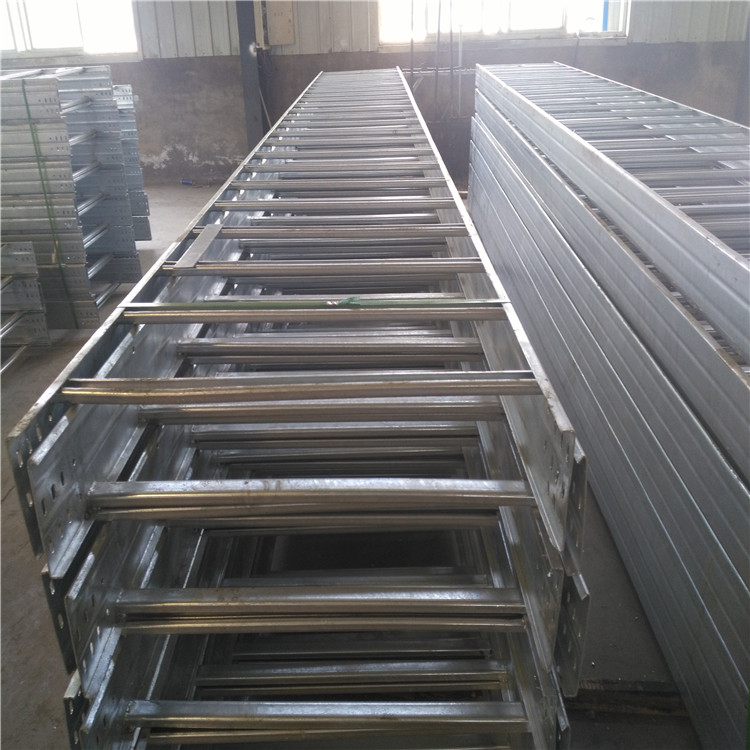
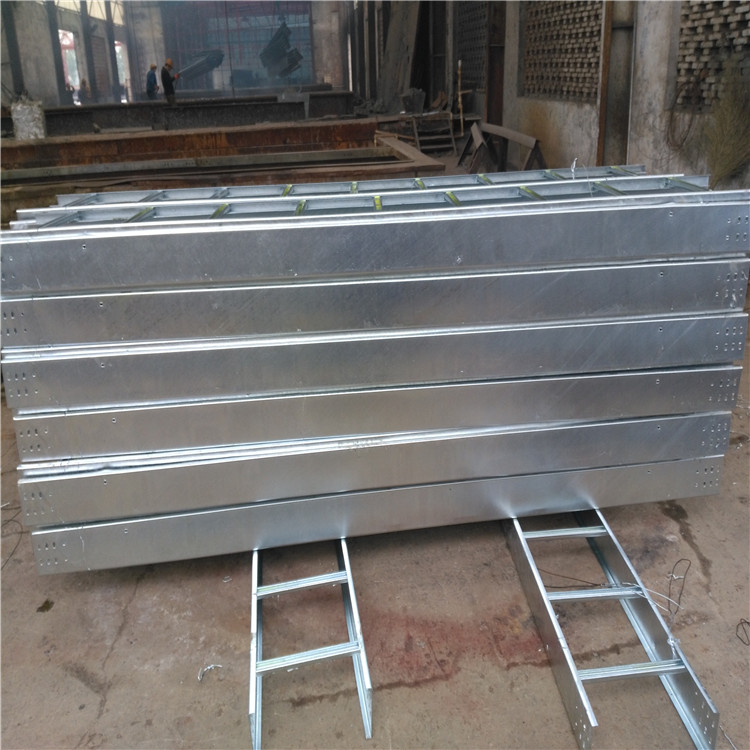









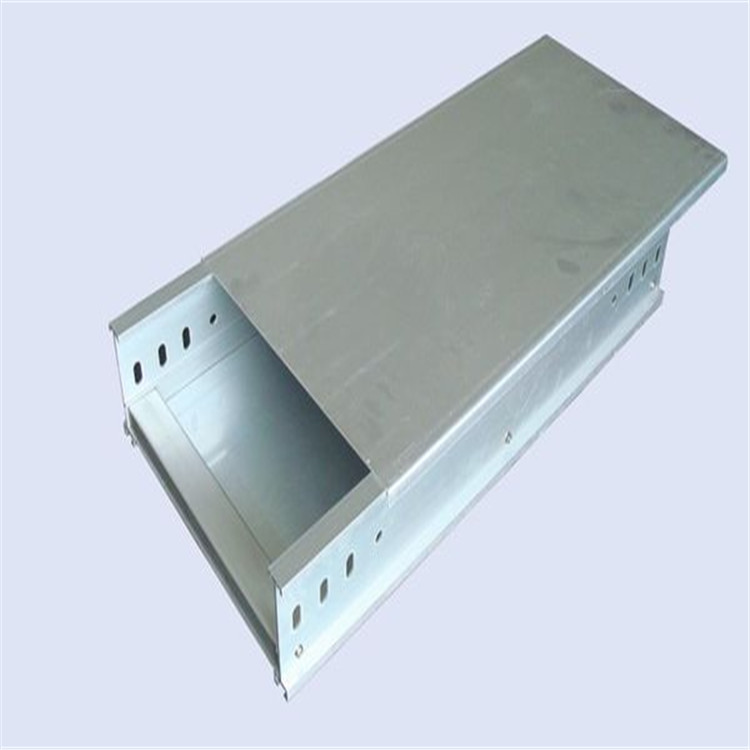
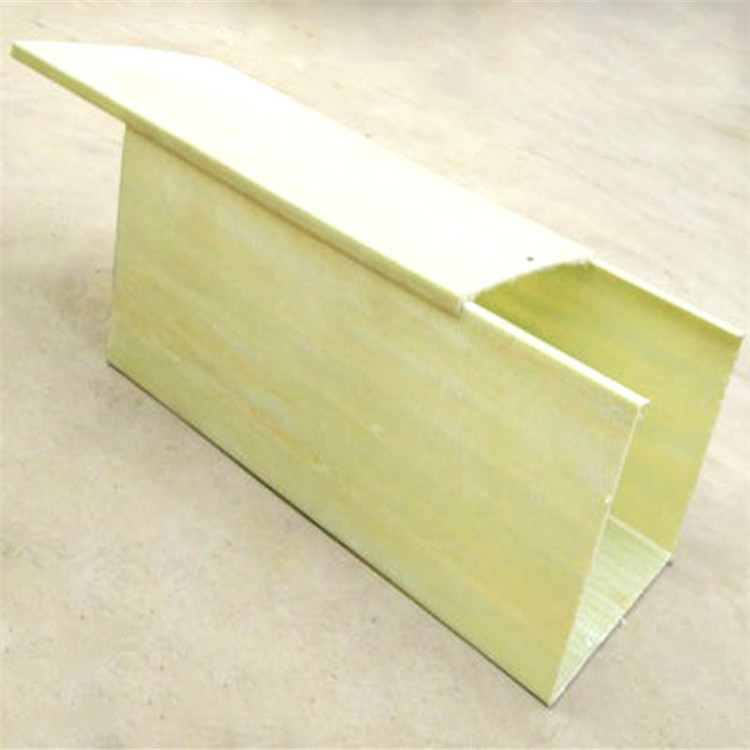


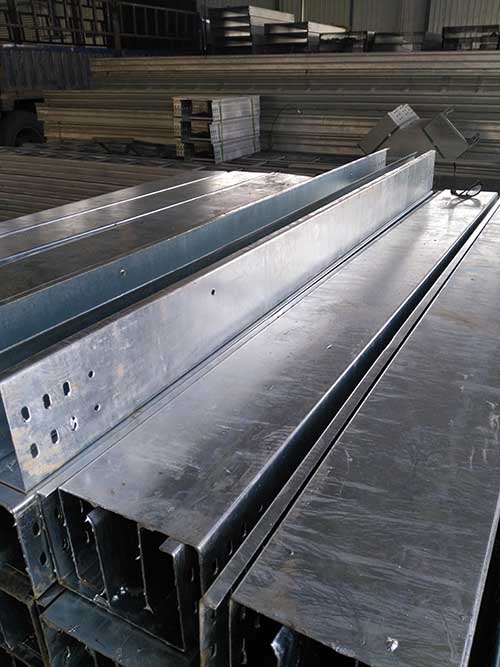
1. Hot-dip galvanized cable trays involve dipping the rust-free steel components into a zinc liquid that melts at around 600°C, resulting in a zinc coating on the outer surface of the trays. The zinc coating thickness for thin plates under 5mm must be no less than 65μm, and for thicker plates, no less than 86μm.
Then serving the purpose of corrosion prevention, it has been widely applied as an effective metal anti-corrosion method across various industries, including in the metal conduits used for power distribution.
1. Long-lasting durability, high industrial production level, and stable quality. Hence, it is widely used in outdoor environments with severe atmospheric corrosion and difficult repairs. Hot-dip galvanized cable trays, also known as hot-dip galvanized cable bridles, are not the same as hot-dip galvanized plate cable trays.
2. The primary process differs: Hot-dip galvanized cable trays, also known as hot-dipped galvanized cable trays, are made of cold-rolled steel, then after rust removal, immersed in a high-temperature zinc liquid at 600°C, causing the zinc layer to adhere to the surface of the tray. For 5mm thin plates, the thickness should not be less than 65μm, and for plates 5mm and thicker, not less than 86μm.
The bridgeway is equivalent to being coated with a protective film, making the hot-dip galvanized cable bridgeway, also known as the hot-dipped zinc cable bridgeway, highly resistant to corrosion. In areas prone to corrosion, such as chemical factories and coastal regions, this reduces the need for repairs and lowers costs.
3. Hot-dip galvanized cable trays, also sometimes referred to as hot-dip galvanized cable bridge supports, may seem similar to the term "hot-dip galvanized cable bridge" or "hot galvanized cable bridge," which refers to the process of hot-dip galvanizing. However, there are substantial differences between them.
4. Hot-dip galvanized steel cable trays are manufactured from hot-dip galvanized steel sheets (with a zinc coating of only 25μm) without any subsequent anti-corrosion treatment. Step cable trays, while aesthetically pleasing like hot-dip galvanized cable trays, have not undergone anti-corrosion processing.
So it cannot be used in outdoor settings, chemical factories, coastal areas, or other locations prone to corrosion. Not all hot-dip galvanizing is the same; for cable trays, it depends on the manufacturing process.