









Product Overview
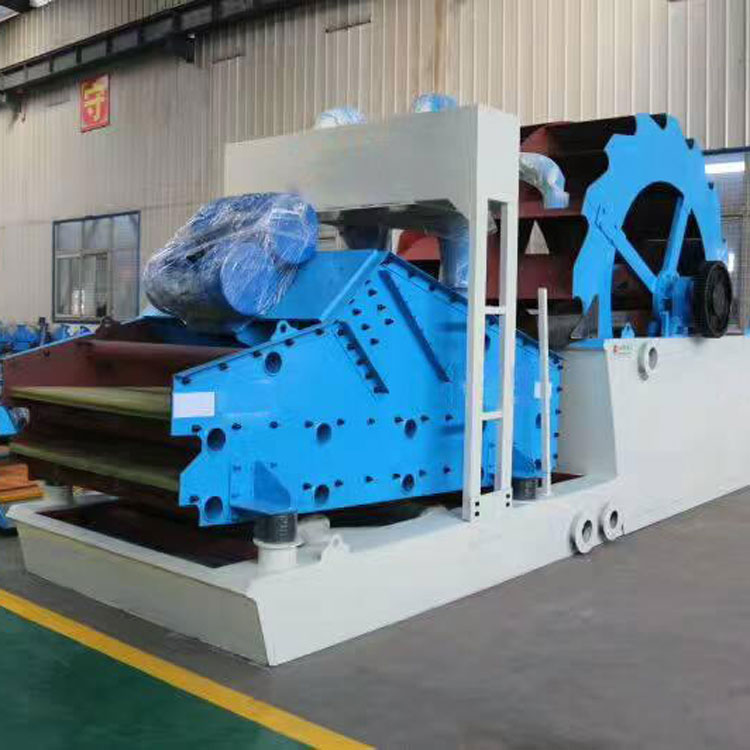
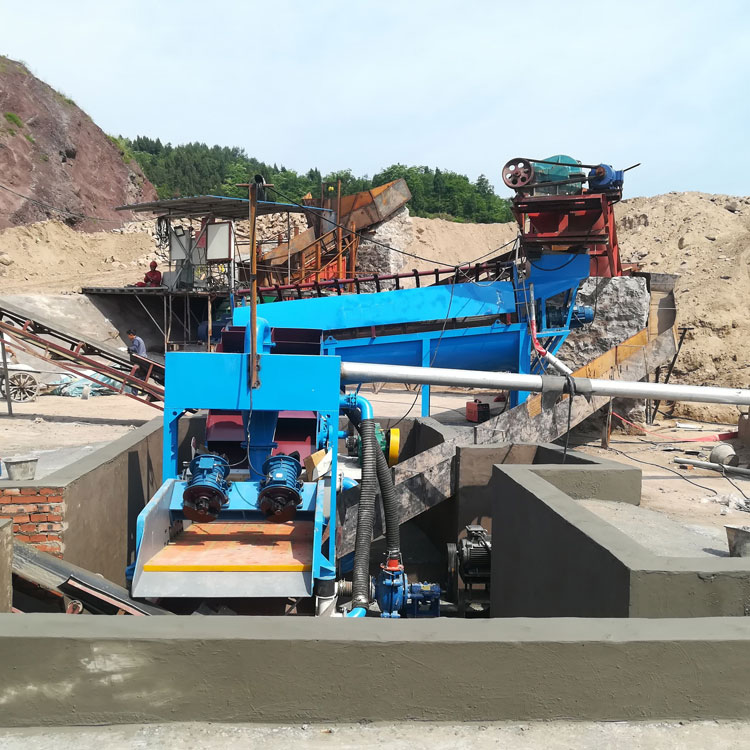
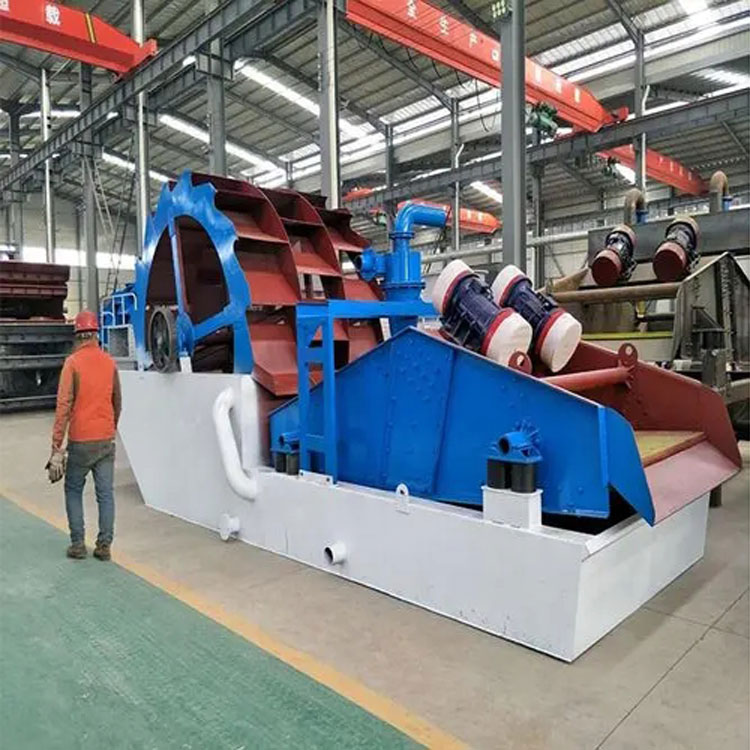
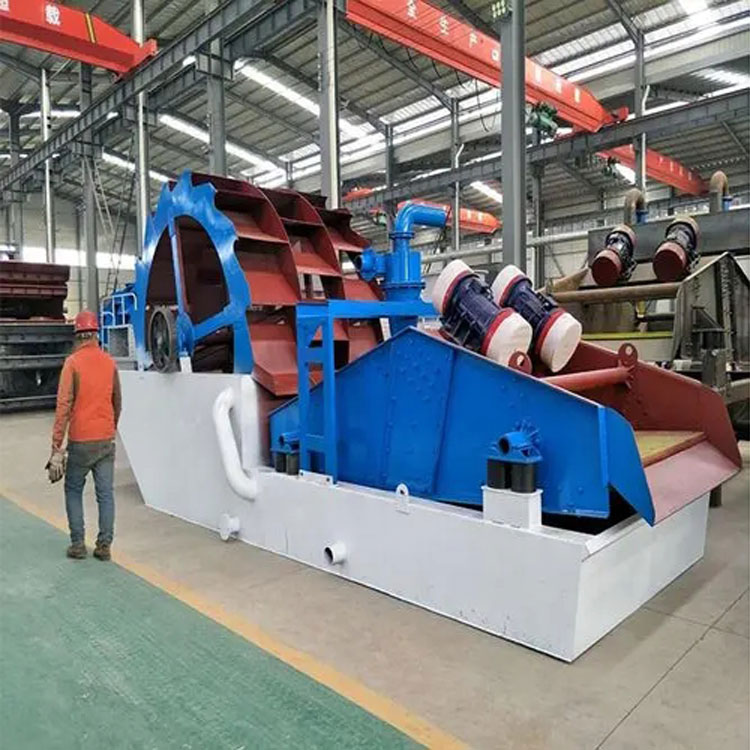
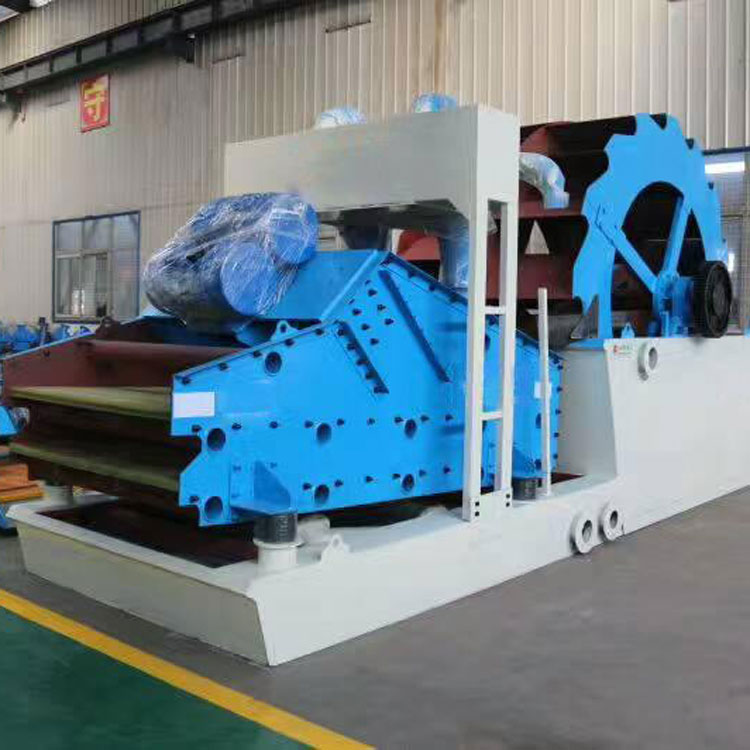
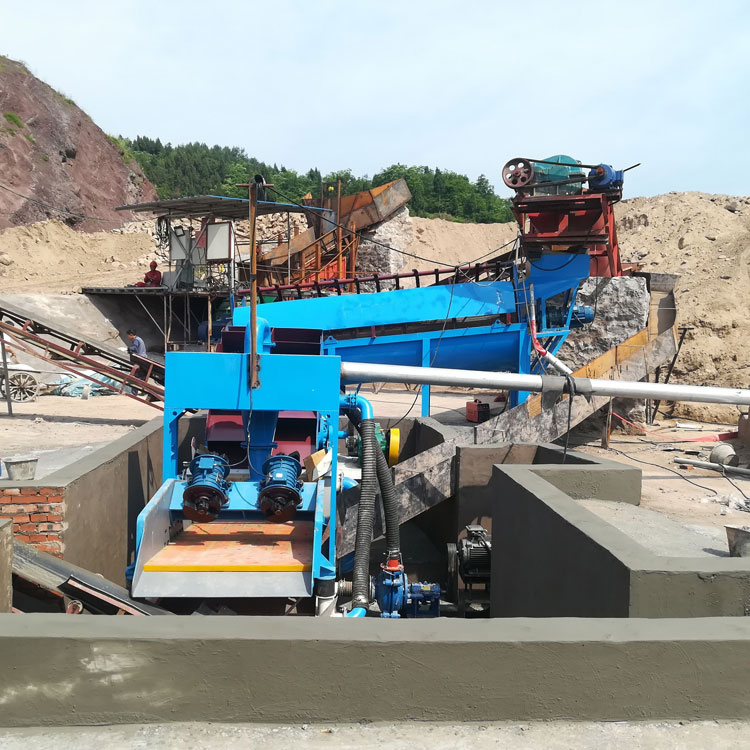
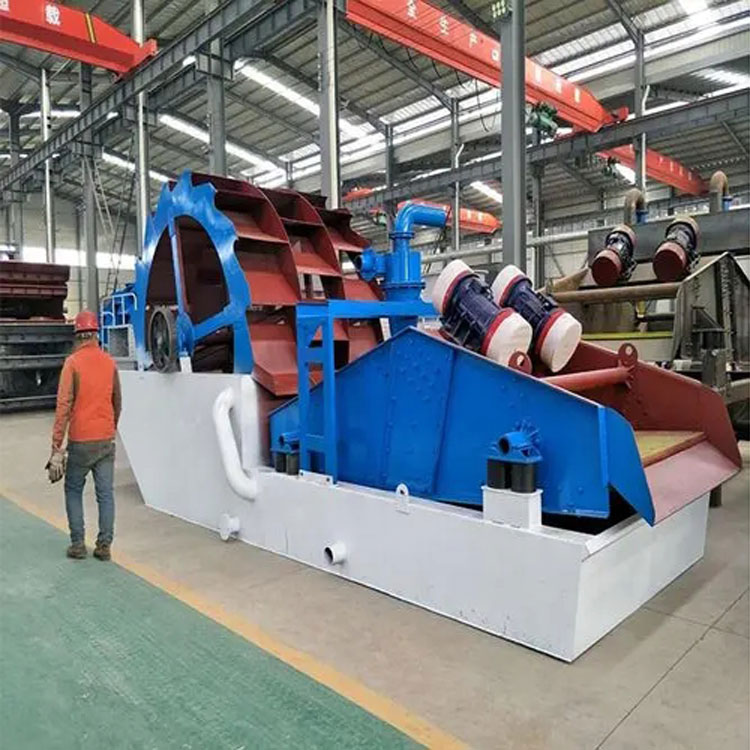
The sand washing and recovery unit integrates water washing and fine sand dehydration recovery, hence also known as the integrated sand washing and recovery unit, fine sand recovery and dehydration unit, and mud and sand water washing separation equipment. This machine cleverly connects the fine sand recovery unit with the sand washing machine, featuring a reasonable structure, small land occupation, and lower investment cost compared to the price of two separate units.
Feature Description
The sand washing and recovery unit is primarily divided into the sand washing section and the fine sand recovery section; the sand washing section functions similarly to a standard wheel-type sand washing machine, used for washing sand with water, dehydration, and mud removal; the recovery section can be customized according to customer needs. If fine sand recovery is required, a standard fine sand recovery system can be connected. For dehydration and recovery of fine sand, a dehydration-type fine sand recovery machine can be linked. Additionally, for varying sand discharge effects, a multi-layer dehydration screen can be configured.
Operating Principle
1. Structural Composition: Consists of high-pressure separator, dehydration screen, impeller separator, reducer, vacuum high-pressure pump, cleaning tank, high-level return water tank, motor, vibration motor, and other components.
2. Process Flow: The sand-water mixture enters the cleaning tank, where it is separated by a impeller separator. It then proceeds to the lower dehydrating sieve for dehydration. The wastewater overflow from the cleaning tank, containing a large amount of fine sand, sludge, dust, and other impurities, is transported to the high-pressure separator via a vacuum high-pressure pump. The finely separated sand after centrifugal classification and concentration is discharged into the upper layer of the dehydrating sieve. The wastewater, mud, dust, and impurities in the cleaning tank are drained through the overflow of the high-pressure separator into a high-level return tank and then discharged. The top layer yields coarse sand finished product, while the bottom layer yields fine sand finished product, or a mixture of coarse and fine sand (adjustments can be made according to requirements).
Features and Advantages
1. Combining the features and advantages of sand washing machines and fine sand recovery units, our solution offers both water-washed sand and fine sand dehydration recovery capabilities. It cleans materials cleaner than traditional sand washing machines, providing superior sand quality and competitive pricing.
2. The all-in-one machine offers higher work efficiency and lower energy consumption.
3. Reasonably structured, with minimal land use, easy to install, and lower investment cost compared to two units.
4. Long service life, low maintenance costs.
5. Customized special models are available to meet different requirements.
Technical Specifications
| Model | Total Power (kW) | Separator Specifications (mm) | Material Thickness (mm) | Discharge Rate (m³/h) | Flow Rate (m³/h) | Weight (t) | Dimensions (mm) |
| LZ26-35 | 23.5 | 350 | ≤10 | 20-50 | 50-80 | 6.18 | 5900*2000*2600 |
| LZ26-55 | 27 | 550 | ≤10 | 30-60 | 60-130 | 6.68 | 5900*2000*2600 |
| LZ30-65 | 37.9 | 650 | ≤10 | 50-120 | 70-150 | 9.3 | 6500*2500*3000 |
| LZ30-75 | 56.4 | 750 | ≤10 | 50-150 | 150-200 | 9.95 | 6500*2500*3000 |
Accessory performance
The Sand Washing Recycling Machine is composed of components such as a high-pressure separator, dewatering screen, impeller separator, reducer, vacuum high-pressure pump, cleaning tank, high-level return water tank, motor, and vibration motor.
1. Impeller Separator: High cleanliness, large processing capacity, low power consumption, and long service life.
The impeller drive bearing assembly is isolated from water and waterborne materials, preventing damage to the bearings due to immersion in water, sand, and contaminants, significantly reducing the failure rate.
2. Vacuum High-Pressure Pump: Power降压, sealed, slurry not prone to leakage.
The vacuum high-pressure pump is of wear-resistant type, designed based on design theory and the principle of minimum loss, achieving an ideal effect on the shape of the flowing components and the flow state of the slurry.
3. Dewatering screen: Self-cleaning surface, no clogging, efficient screening, long service life.
Due to the use of steel structure as the skeleton material in polyurethane elastic sieve nets, combined with the high elastic modulus of polyurethane itself, which offers high shock absorption, high wear resistance, and excellent tensile strength, their load-bearing capacity is over 2.5 times that of rubber sieve nets. Their service life is 8-10 times longer than that of ordinary metal sieve nets, three times that of stainless steel sieve surfaces, and 3.9 times that of natural rubber, making them one of the best-wearing sieve materials in the world.
4. Vibrating Motor: Reasonably designed, high-quality materials, low temperature rise, and long service life.
Of course, when discussing the dehydrating sieve, we must also mention the vibration motor. The vibration motor features appropriate matching of excitation force and output, with a lightweight body, high starting torque, and compact size. It generates vibration through smooth rotation, resulting in low noise; and its fully enclosed structure allows operation in any dust environment without explosion-proof requirements. The excitation force can be adjusted simply by changing the angle of the eccentric block. The direction of the excitation force can be altered based on the installation method of the vibration motor; multiple machines can be combined to create various vibration patterns, fulfilling diverse operational requirements.
5. High-pressure Separator: High-wear-resistant material, high elasticity, high strength, excellent wear resistance, tear and cut resistance.
The high-pressure separator operates on the principle of centrifugal sedimentation. As the feed slurry enters the separator at a specific pressure from its periphery, it is forced to rotate. Due to varying centrifugal forces, centripetal buoyancy, and fluid drag, the coarse solid particles in the slurry overcome hydraulic resistance and move towards the wall. Under the combined action of their own weight, they spiral downward along the wall. The finer particles and most of the water, experiencing less centrifugal force, do not reach the wall and instead rotate with the slurry.
6. High-level return water tank
The waste water discharged from the high-pressure separator serves as a buffer, facilitating drainage from all directions at the site. Additionally, due to insufficient water supply in the lower cleaning tank, the vacuum high-pressure pump's water supply is inadequate, leading to insufficient pressure in the high-pressure separator and a decrease in centrifugal force. It provides a补水 function.
7. Other Small Parts
Bottom Flow Inlet: Made from high-wear resistant material, the machine comes with three different sizes of bottom flow inlets, which are used in conjunction with material content to adjust material concentration.
Spring: Rubber Metal Spiral Composite Spring, a spring made by wrapping a layer of rubber material around a metal spiral spring. It features the nonlinear and structural damping characteristics of rubber springs, as well as the high deformation and load-bearing capacity of metal spiral springs. It offers superior stability and load-bearing capacity compared to rubber springs.
The sand washing and recycling machine not only incorporates numerous internal structures but also features an aesthetically pleasing curved design on the exterior, making the machine more user-friendly and reducing unnecessary damage during manual operation.