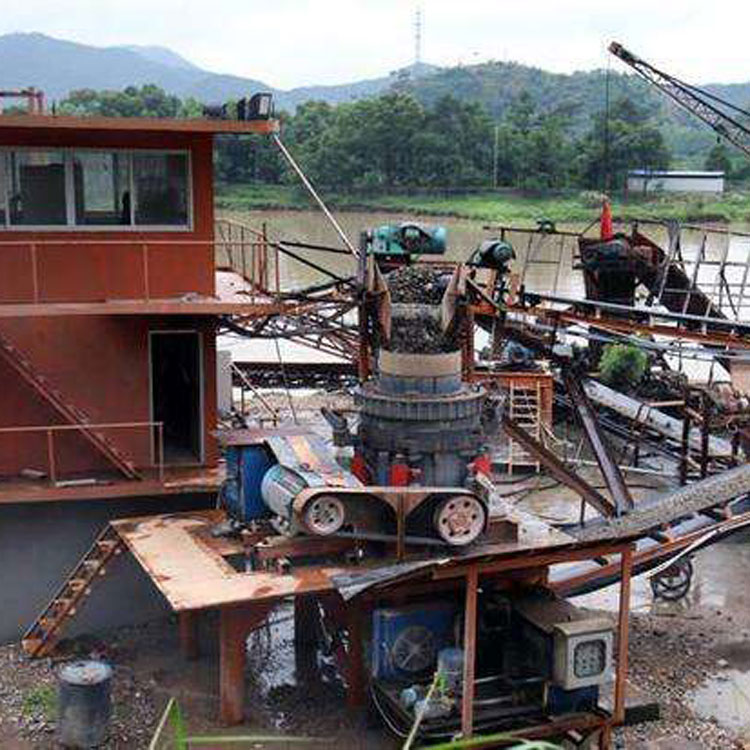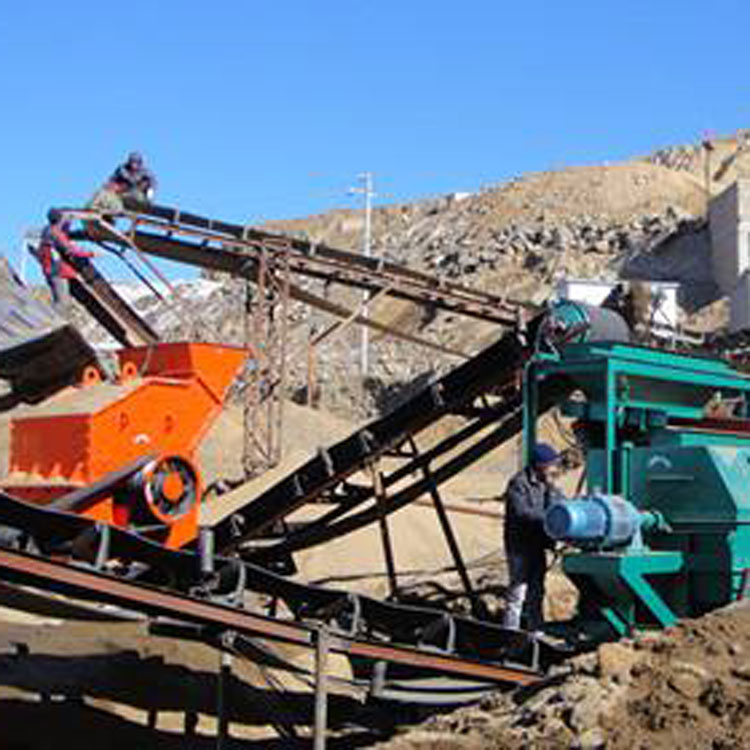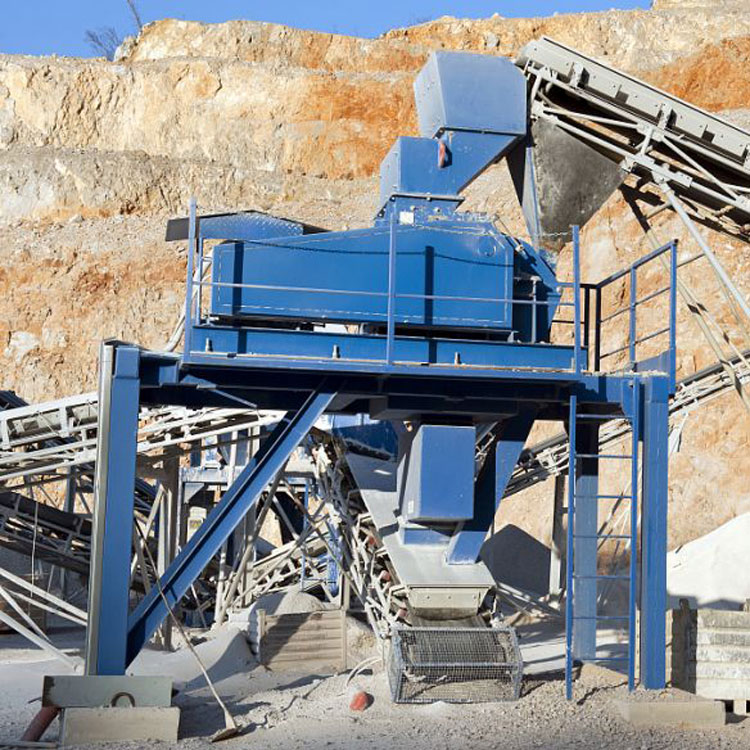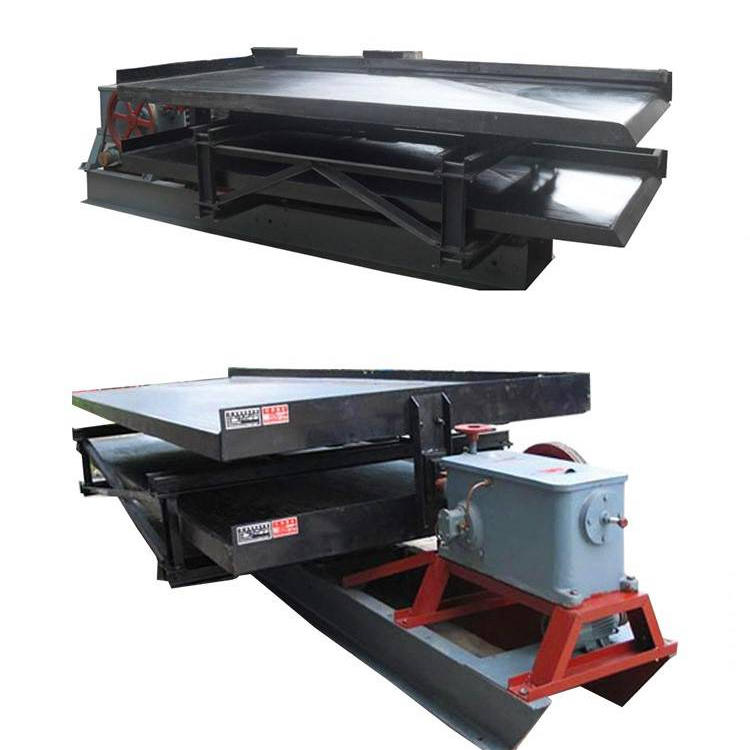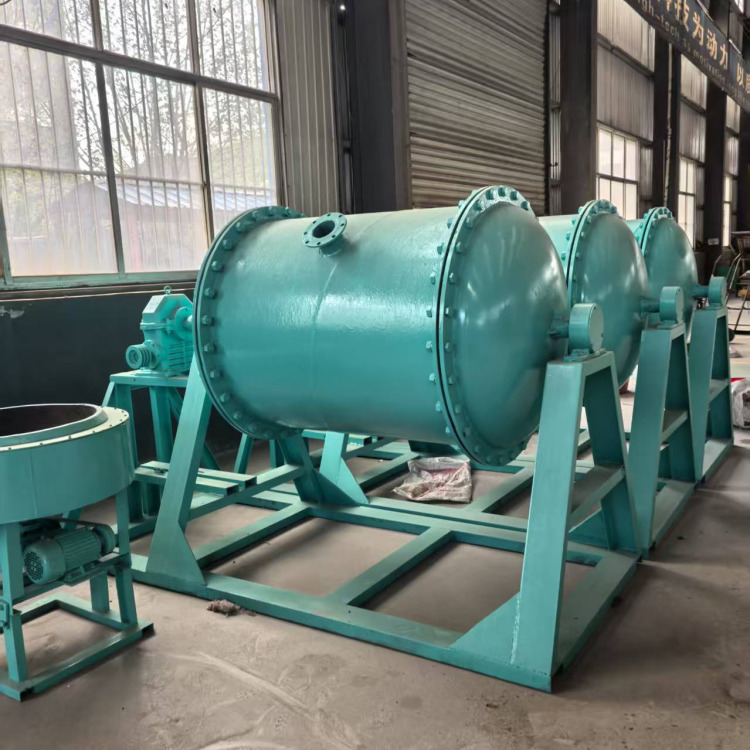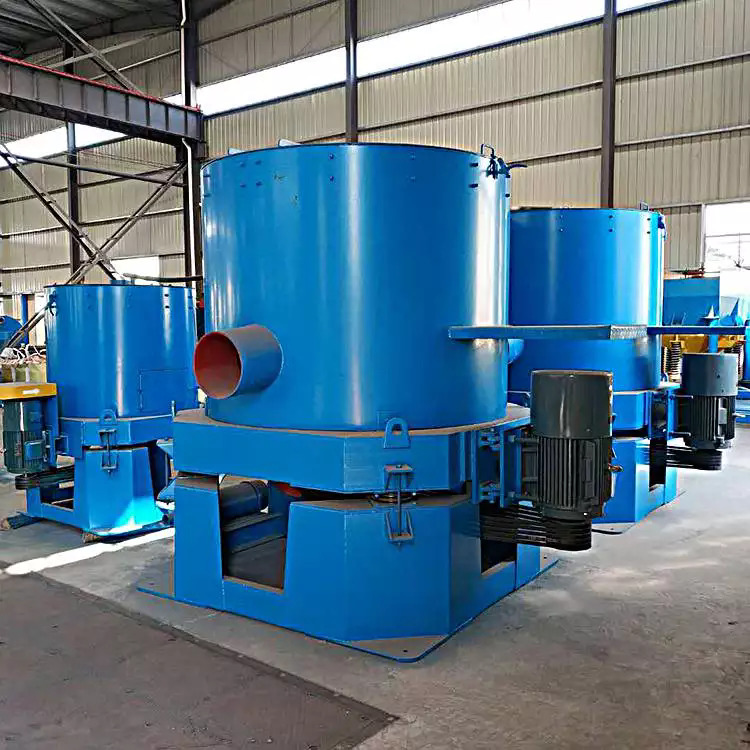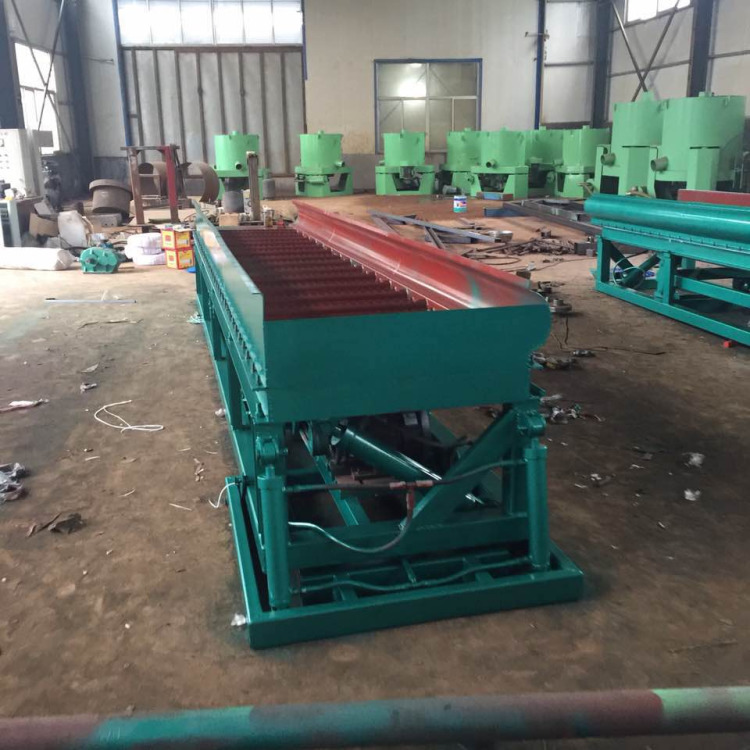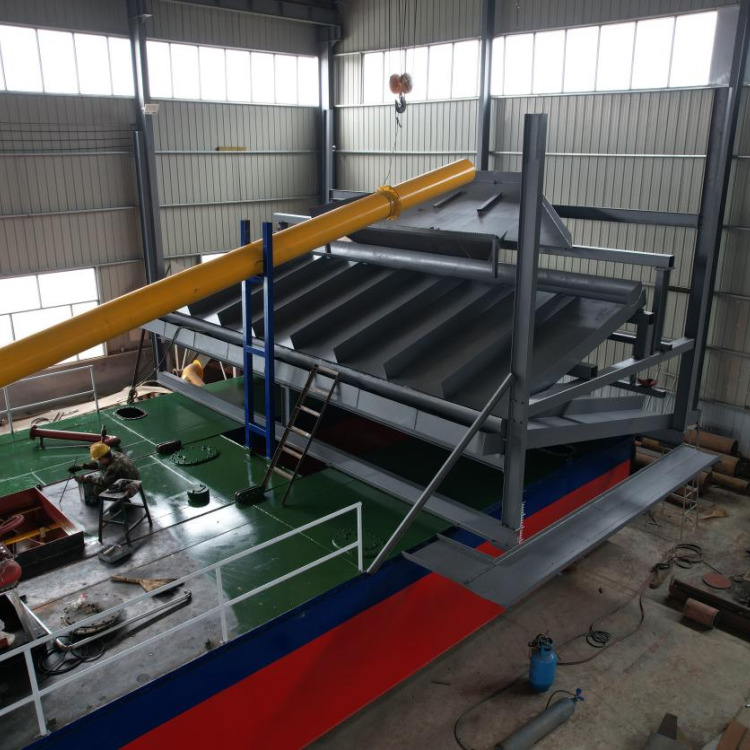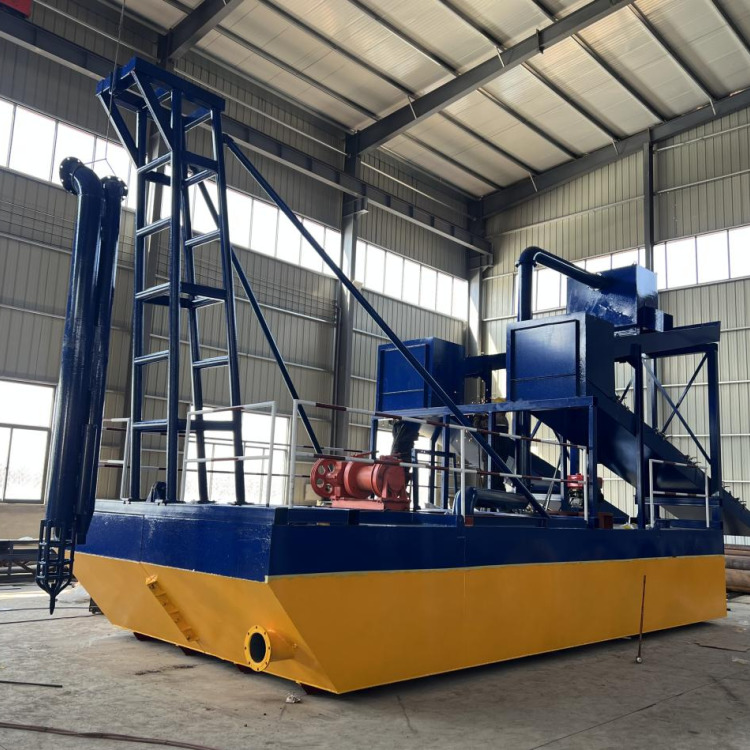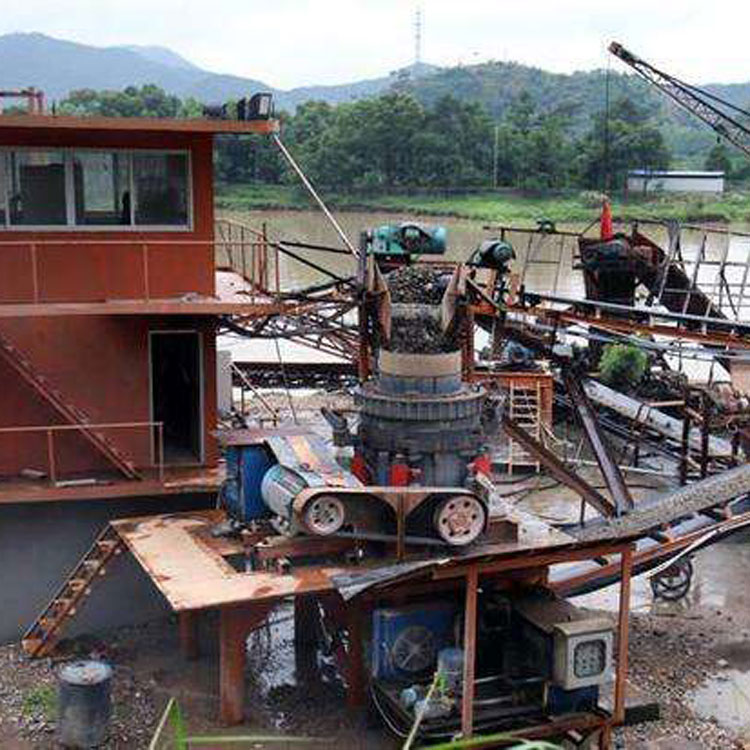

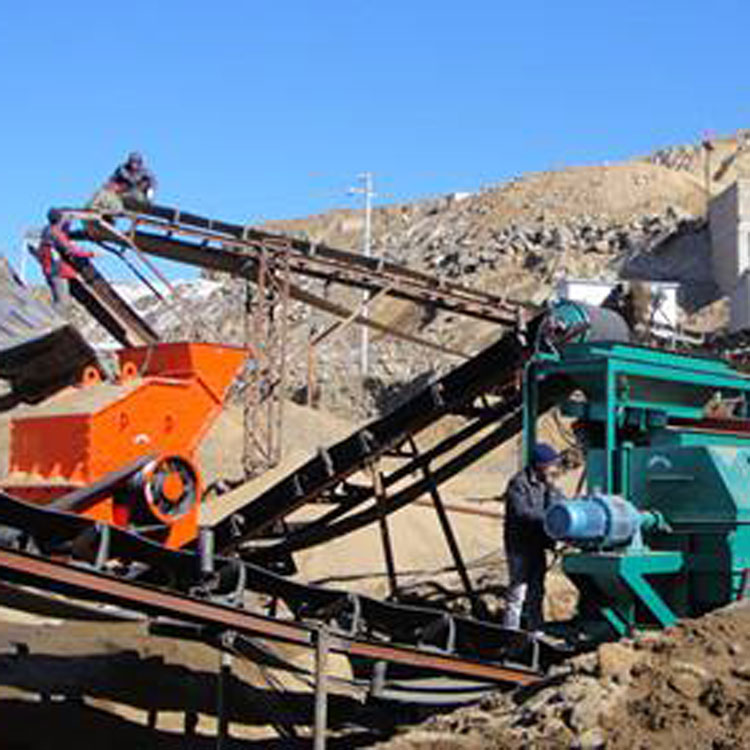


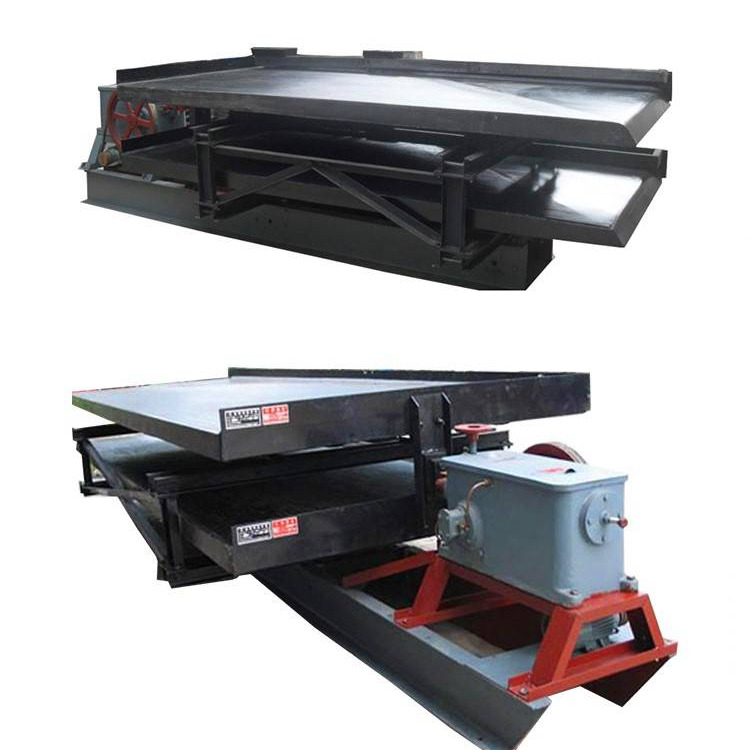
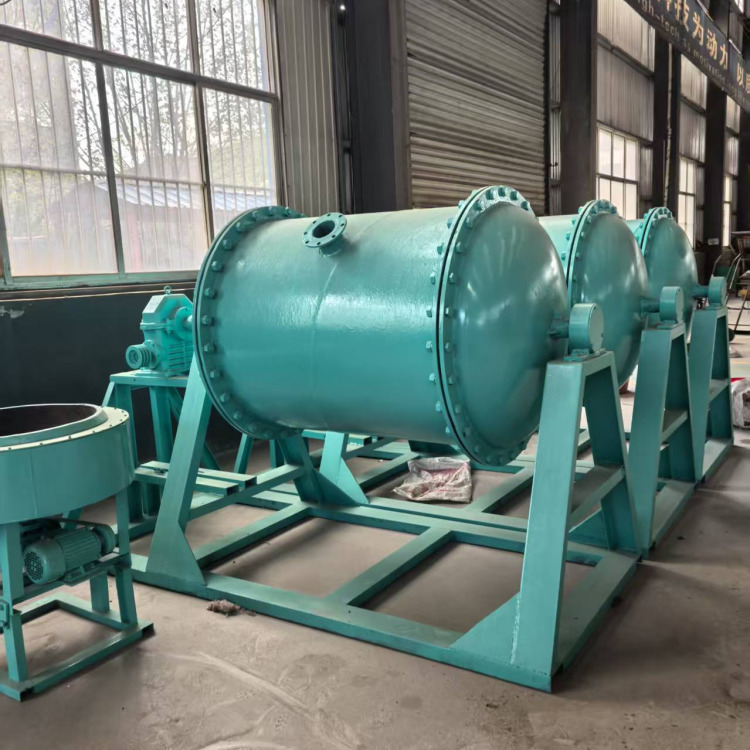
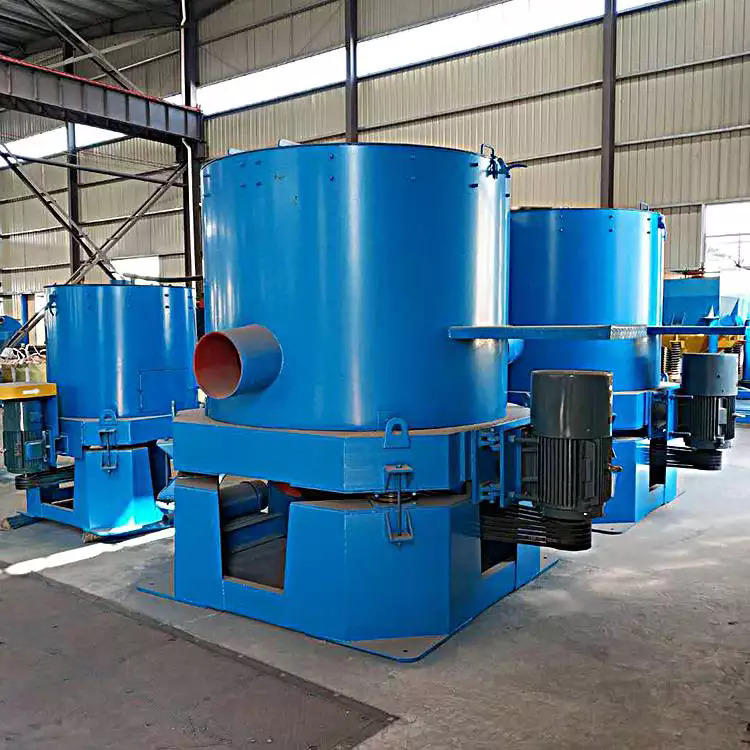
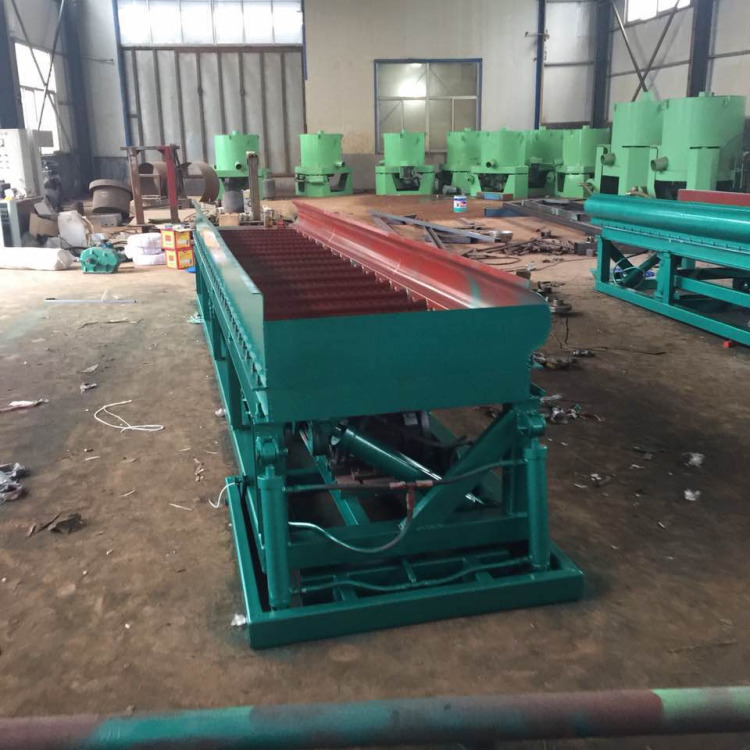
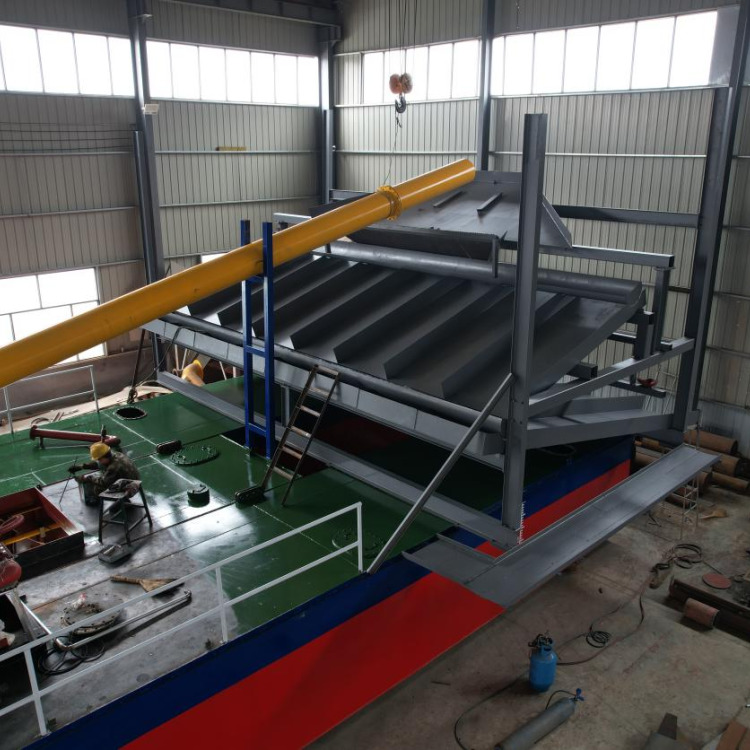






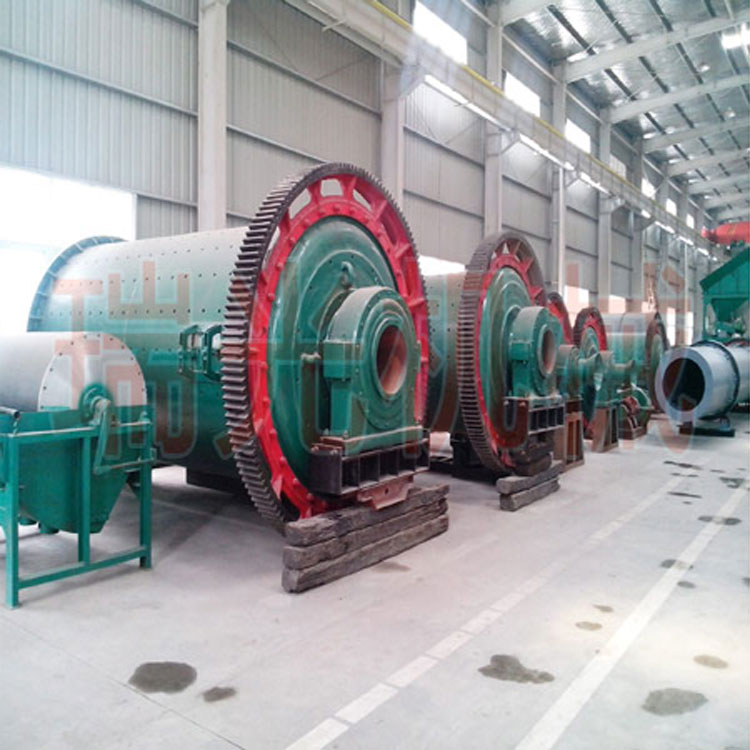
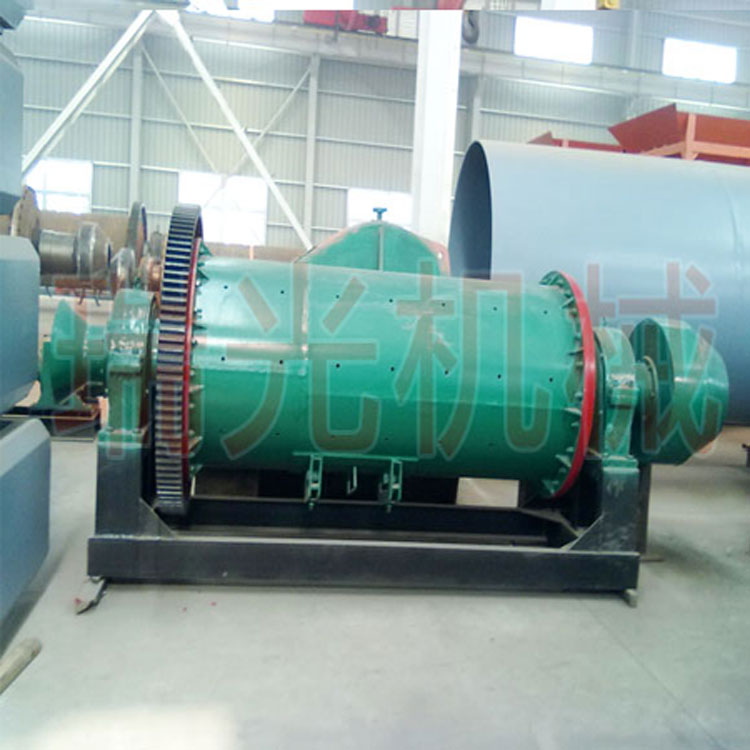
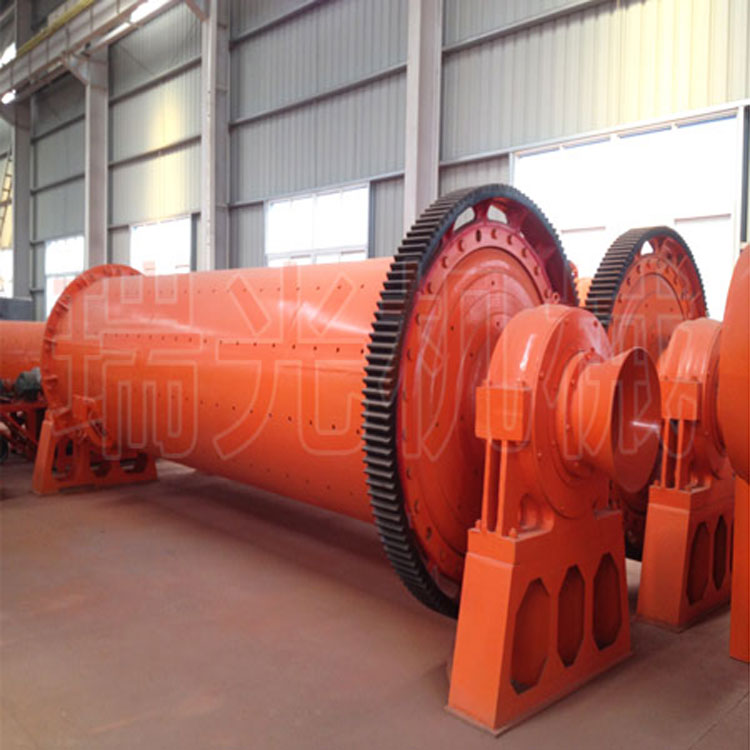
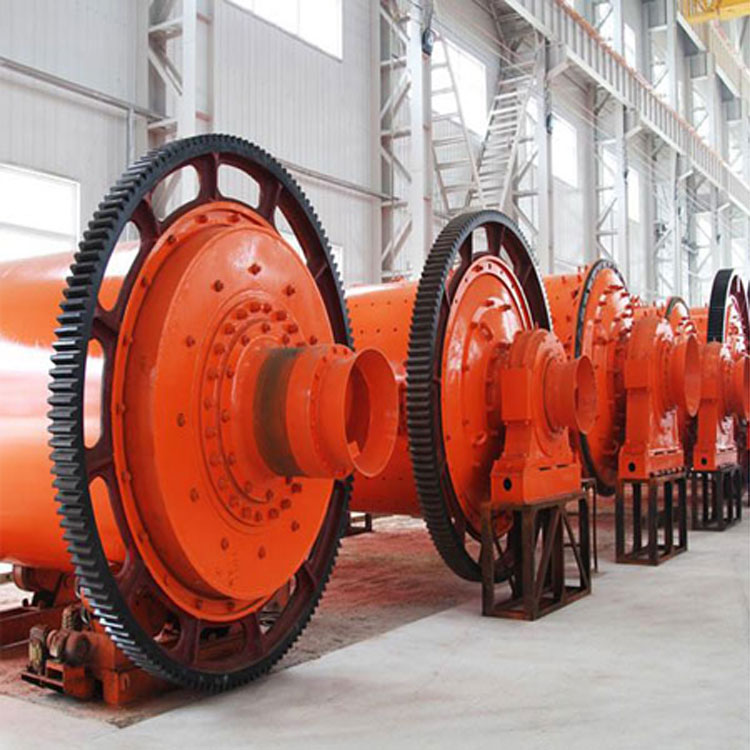
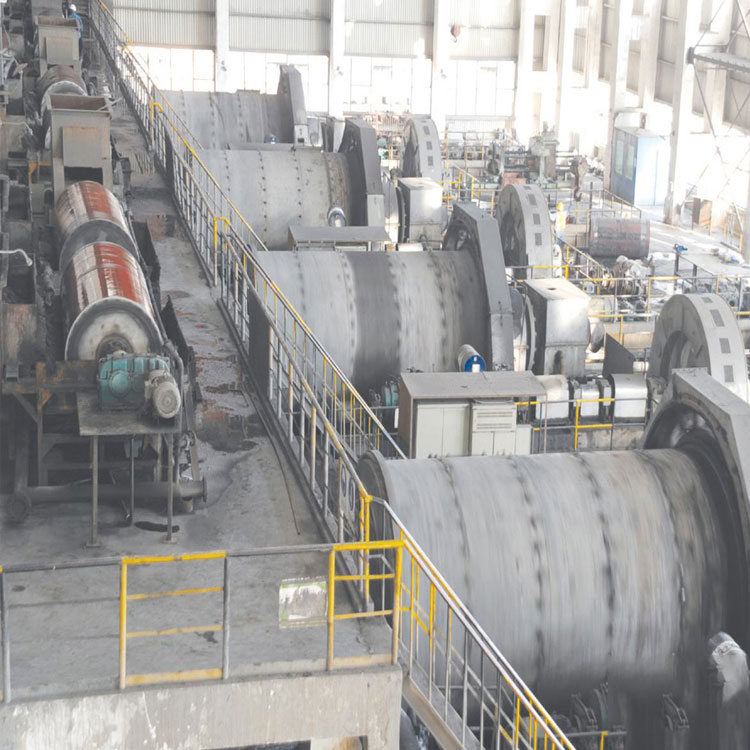
Magnetite beneficiation equipment primarily includes three main process flows: a three-stage closed-circuit crushing and screening process, a grinding separation process integrating ball mills, flotation machines, and flotation columns, and a finished product dehydration process involving concentration, filtration, and flash drying. Additionally, an advanced DCS automated control system is utilized, consolidating the three processes into a network through a centralized control room. This enables real-time dynamic collection, adjustment, and control of equipment operation and process parameters, ultimately automatically generating production technical reports.
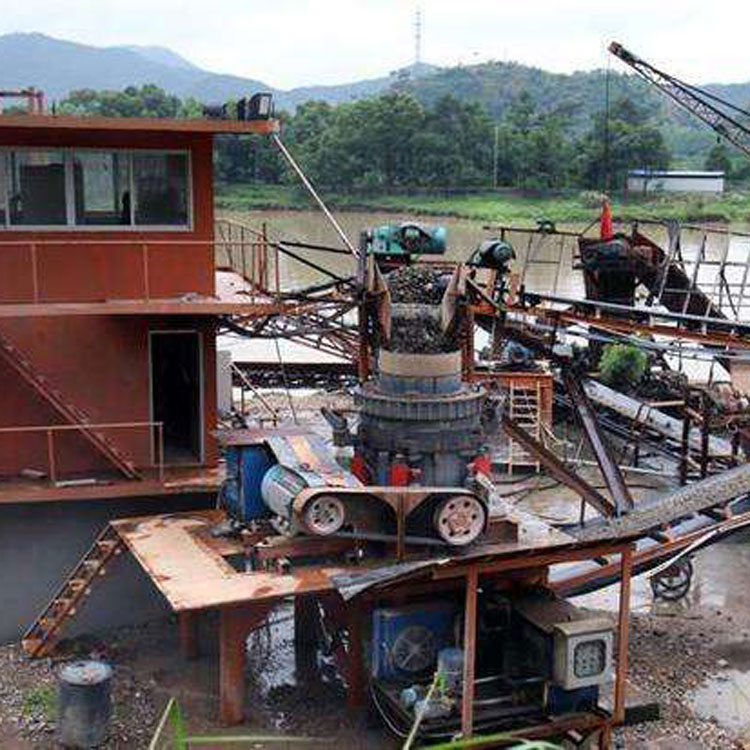
The process flow chart of the magnetite ore beneficiation equipment production line specifies the following specific beneficiation production process:
The ore is initially crushed by a jaw crusher, then, after being broken to a reasonable fineness, it is conveyed by a hoist and evenly fed into a ball mill, where it is crushed and ground by the ball mill. The finely ground ore from the ball mill proceeds to the next stage: classification.
A. During magnetic separation, the mixed ore material, which has been sorted and graded, is separated into magnetic substances due to the different magnetic saturation coefficients of various minerals, utilizing both magnetic and mechanical forces.
B. After the mineral mixture is processed and graded, it passes through a magnetic separator where the selected minerals are separated using a mixing drum. Due to the high water content, the mixture requires preliminary concentration in a concentrator, followed by drying in an oven to obtain dry minerals.
Principles of magnetite beneficiation equipment operation
The ore is initially crushed by a jaw crusher, then, after being broken to a reasonable fineness, it is evenly fed into a ball mill by a hoist and a feeder. The ball mill grinds and pulverizes the ore. The finely ground ore from the ball mill proceeds to the next step: classification. The spiral classifier uses the principle that solid particles settle at different rates in a liquid due to their varying specific gravities to wash and classify the ore mixture. After being washed and classified, the mineral mixture passes through a magnetic separator, where the magnetic properties of various minerals differ, separating the magnetic substances from the mixture using magnetic and mechanical forces. The mineral particles separated by the magnetic separator are then sent to a flotation machine, where different reagents are added based on the mineral characteristics to separate the desired minerals from other substances. Once the desired minerals are separated, due to their high water content, they must undergo initial concentration in a concentrator and then be dried in a dryer to obtain the dried minerals.
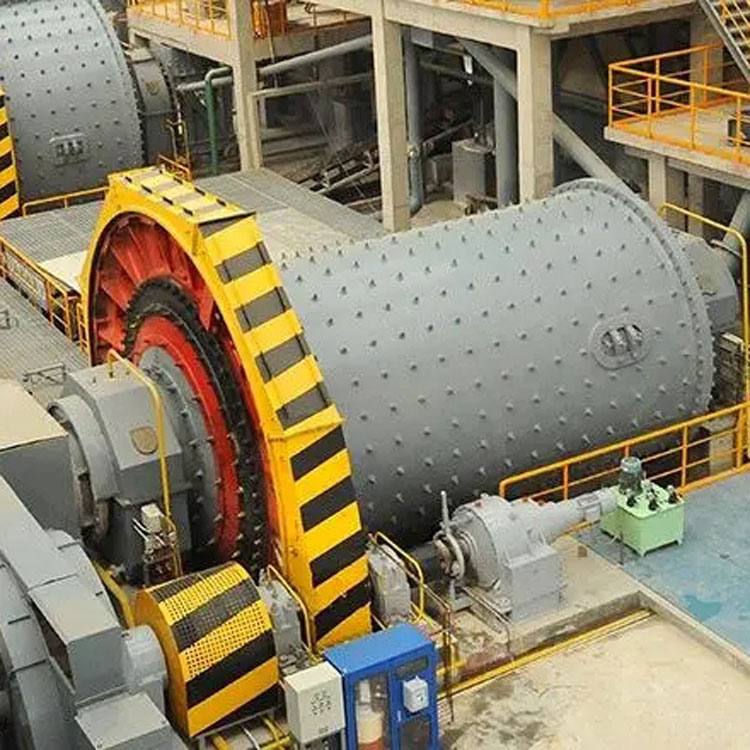
Crushing and Grinding Process
Mineral processing equipment, in the context of the beneficiation process, involves crushing and grinding as well as classification. Crushing refers to the operation of reducing the particle size of mineral raw materials to between 20-5mm, and the corresponding equipment is called a crusher. Finer grinding operations are known as grinding, with the equipment being a mill. The operation that controls the final product particle size distribution, often paired with crushers or mills, is called classification. The classification equipment that comes with crushers is typically called a screen, while the beneficiation equipment that comes with mills is called a classifier.
Typically, crushing and grinding in mineral processing are conducted in stages, as existing equipment often cannot crush large raw ore to the required fineness in a single operation. The specific number of crushing and grinding stages depends on the nature of the raw ore, particle size of the material, product fineness, and type of equipment. Each time the material passes through a crusher or a mill, it is considered a crushing or grinding stage. For each stage of crushing or grinding, the ratio of the particle size before and after the material is crushed (i.e., feed particle size to product particle size) is defined as the crushing ratio or粉碎 ratio for that stage, reflecting the degree of reduction in particle size of the raw coal (ore) after being processed by the crusher or mill. The total crushing ratio or粉碎 ratio of the entire crushing or粉碎 process.
Magnetite ore dressing equipment maintenance and repair
One, strictly adhere to the principle of combining use with maintenance and the principle that the user is responsible for maintenance. Equipment used by individuals is managed under a dedicated responsibility system. Major equipment is managed under a package system (including operation, maintenance, and repair). Equipment use is implemented with designated personnel and machines, and operations are conducted with credentials. Key pipeline and cable installations are managed under a regional responsibility system, with a piece-by-piece management approach.
Section 2: Operators of various equipment must undergo training to meet the technical level requirements of "should know" and "should be able" for operating the equipment. Upon passing the examination and obtaining a qualification certificate, they may assume their positions. Equipment operators must ensure "three good practices": manage well, use well, and maintain well; and "four competencies": be able to use, maintain, inspect, and troubleshoot.
Three, strictly enforce the daily maintenance and regular maintenance systems. Daily Maintenance: Operators perform maintenance as routine, including a 10-15-minute round check before each shift; during the shift, take responsibility for the equipment's operation, oil level, temperatures, gauge pressures, indicator signals, and safety devices; perform a thorough cleaning and wiping after shifts, weekends, and before holidays. Identify and promptly eliminate hazards; for major issues, seek the repair personnel's attention. Regular Maintenance: After 1-2 months of operation or 500 hours of runtime, primarily led by the operator with assistance from the maintenance crew, partially disassemble, clean, and inspect the equipment, adjust fitments and tighten components, and address defects that cannot be handled during daily maintenance. After regular maintenance, the workshop technicians and equipment administrators conduct an acceptance and evaluation, complete the maintenance records. Ensure the equipment remains orderly, clean, well-lubricated, safe, and operates economically.
Four, key equipment should be regularly tested for accuracy and performance, records should be kept, and adjustments or maintenance should be conducted if accuracy or efficiency is found to be reduced. Daily and regular inspections of critical areas of key equipment should be conducted and documented.
V. Special equipment refers to explosion-proof electrical equipment, pressure vessels, and lifting equipment. They must be used and managed strictly in accordance with national regulations, undergo regular inspections and preventive tests, and any hazards found must be replaced or addressed immediately.
Six: Enhance equipment lubrication management by establishing and strictly enforcing the "Five Fixed" system for lubrication, which includes assigning personnel, quality, location, quantity, and schedule, and keep thorough oil change records. For major equipment, establish lubrication cards and conduct oil change monitoring based on the oil quality status.
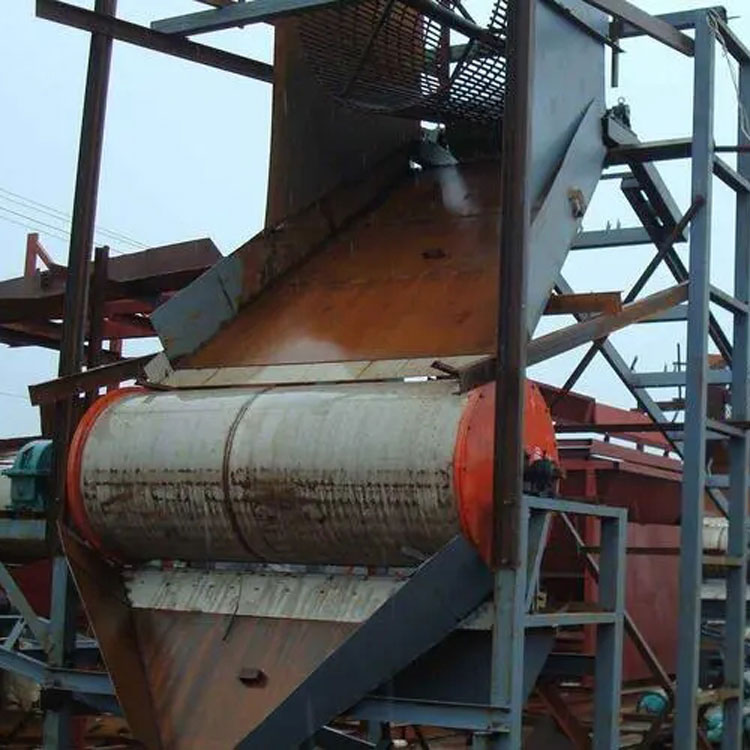
To extend the service life of equipment in the beneficiation production line, it is crucial to operate the equipment correctly and perform regular maintenance checks. Below are six key details for extending the service life of the equipment.
Operators should be familiar with the equipment and comply with the factory's operating, maintenance, safety, and hygiene regulations.
2. Operators should read the duty log and conduct equipment inspections before starting work, checking for loose bolts and any damage to the machine surfaces.
3. Equipment startup must follow the process system sequence; it is strictly prohibited to start with a load.
4. During operation, the ore processing production line should be regularly monitored for equipment performance. In case of any abnormal phenomena, it should be addressed promptly according to relevant plans, or the equipment should be shut down for maintenance.
5. Shutdown should follow the sequence of the process system, and the surrounding environment of the production line equipment should be cleaned after shutdown.
6. It is mandatory to perform scheduled maintenance on time; it must be done without fail, and no time or personnel should be omitted due to tight construction schedules.