




 通过中商114认证
Usage Instructions:
Recommended Dosage: Typically 0.3% of the total blend weight, with the specific application rate to be determined by design.
Construction Technology: The gap-type mixer is used for manual feeding, where whole bags of fibers can be added simultaneously with hot aggregate during feeding. Workers manually place fiber packages into the mixing drum, which needs to be done approximately every 60 to 70 seconds, resulting in a high frequency of operations. Operators must be highly focused, leading to a tense working environment. Manual feeding of fibers often results in a delay in adding fibers to the drum as the mixer door opens, reducing the effective dry mixing time between fibers and aggregates. This uneven distribution affects the absorption of asphalt by the fibers, potentially causing oil spots on the road surface. Continuous mixers can utilize a fiber feeding machine. The feeding machine consists of a spiral conveyor, feeding spiral conveyor, primary and secondary aeration, measuring device, discharge spiral conveyor, primary and secondary fans, compressed air regulating valve, and pneumatic devices (see Figure 1). The entire unit is mounted on a base, and during installation, the feeding machine's outlet is connected to the mixer's inclined spout or the drum's air conveying pipe. Powering on the unit allows it to synchronize with the mixer. The feeding machine, tailored for the characteristics of fluffy lignin fibers, employs a volumetric measurement method. During production, bagged compressed fibers or loose fibers are poured into the hopper, and once the hopper door is closed, the production process is controlled by a computer program. The feeding spiral conveyor transports fibers from the hopper to the storage bin for primary aeration, then through a sieve to the bottom of the bin. After receiving a feeding signal from the mixer, the discharge spiral conveyor immediately delivers evenly weighted fluffy lignin fibers at a standardized speed to the secondary aeration, further refining them. They are then blown into the drum by the two fans, achieving the mixing of lignin fibers with aggregates. The fibers are evenly dispersed in the mixture through dry mixing. The bin maintains a certain amount of fluffy fibers, which are promptly replenished to the measuring system. This automated cycle coordinates with the mixer's operations.
Purpose:
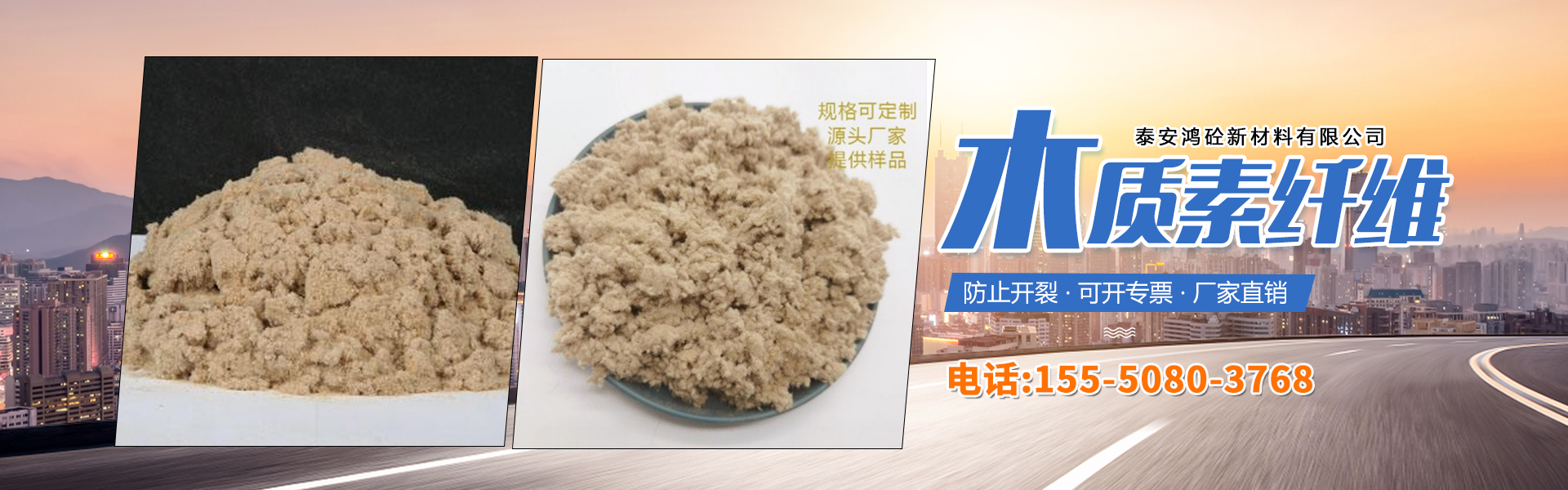
Broadly used in asphalt roads, concrete, mortar, plaster products, wood pulp sponge, and other fields, it exhibits excellent effects in preventing coating cracking, enhancing water retention, improving production stability and construction suitability, increasing strength, and enhancing adhesion to the surface. Its technical functions mainly include: thixotropy, protection, absorption, carrier, and filler. In road paving, the fiber stabilizer utilizes lignin fiber, which is processed into cotton-like fibers or granular fibers in the factory.
