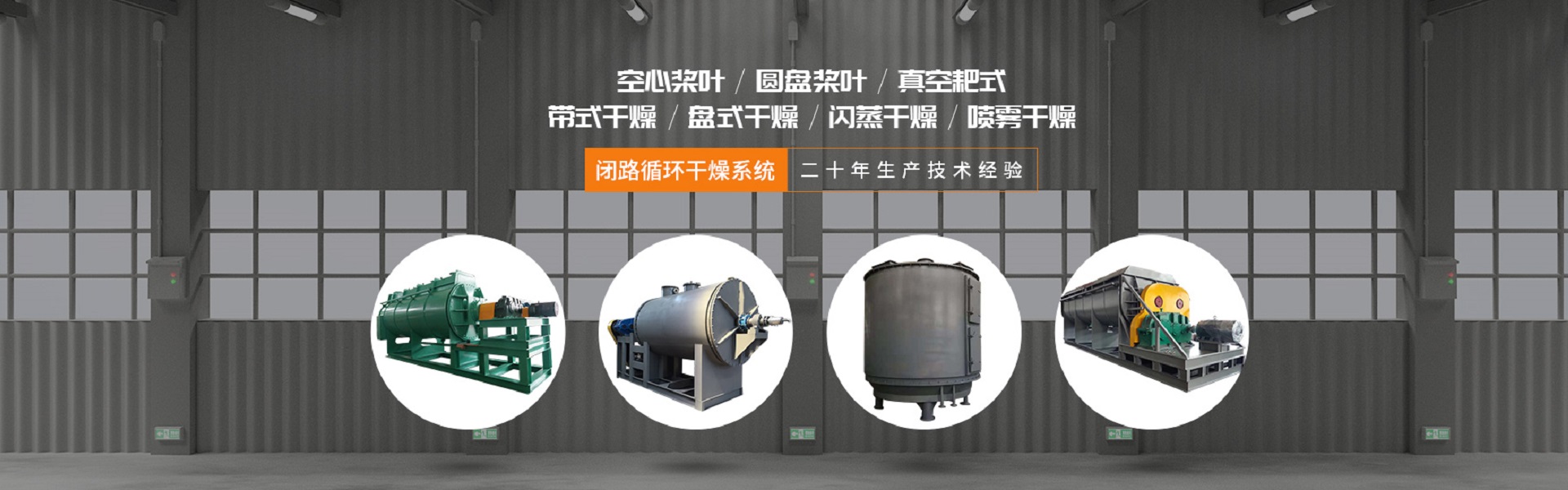
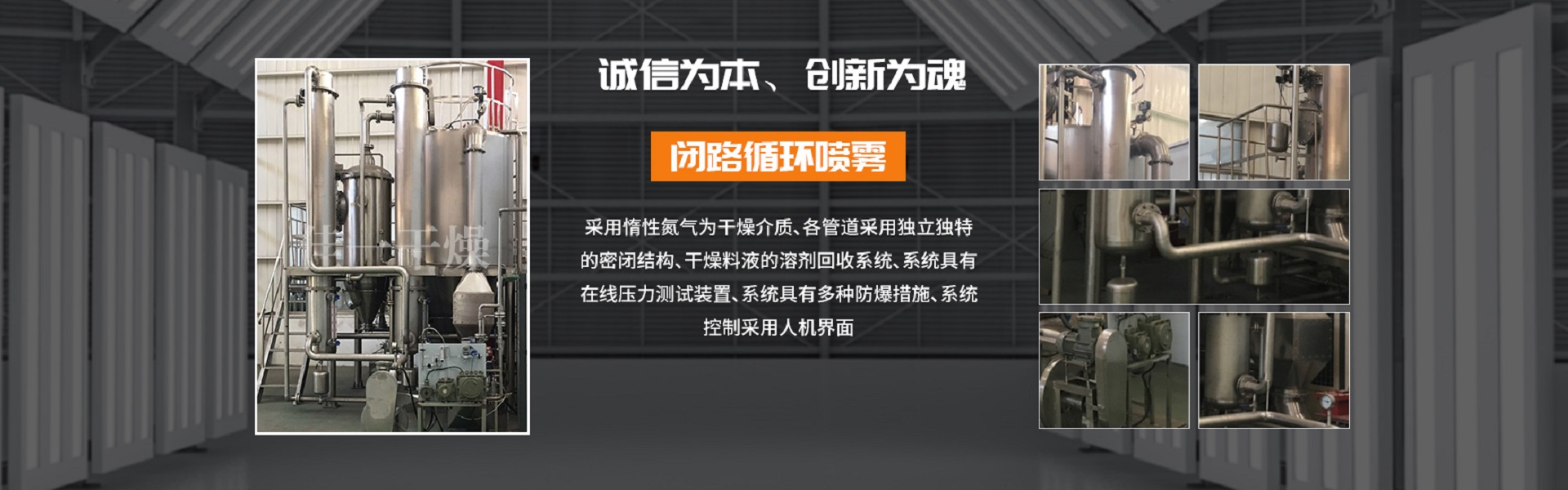
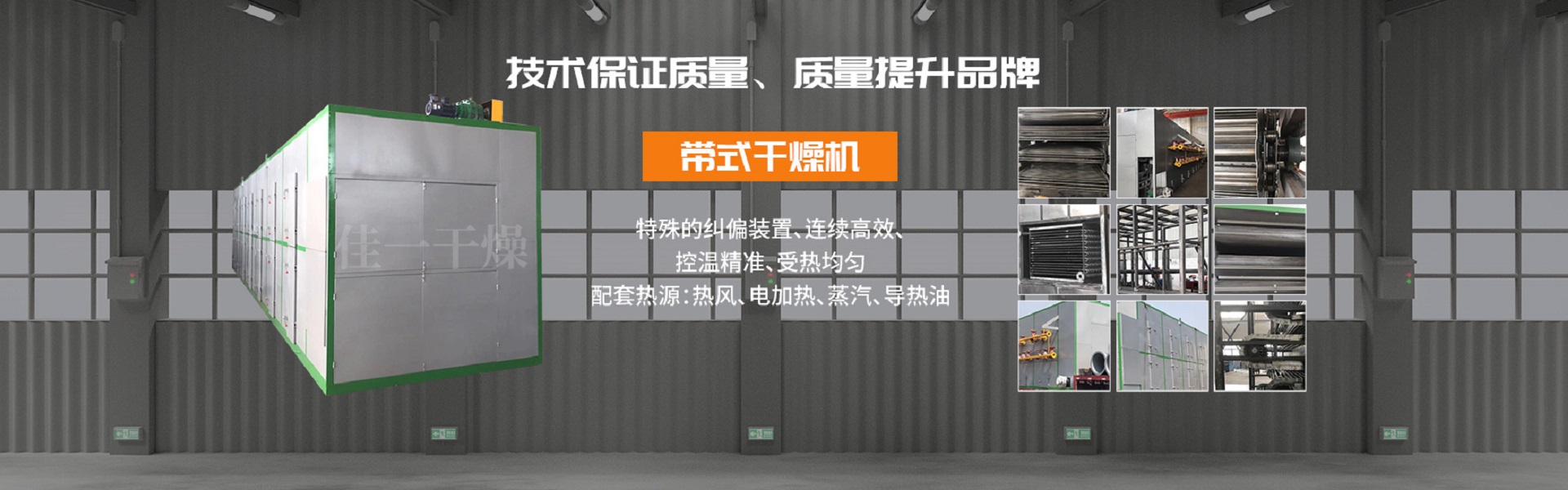
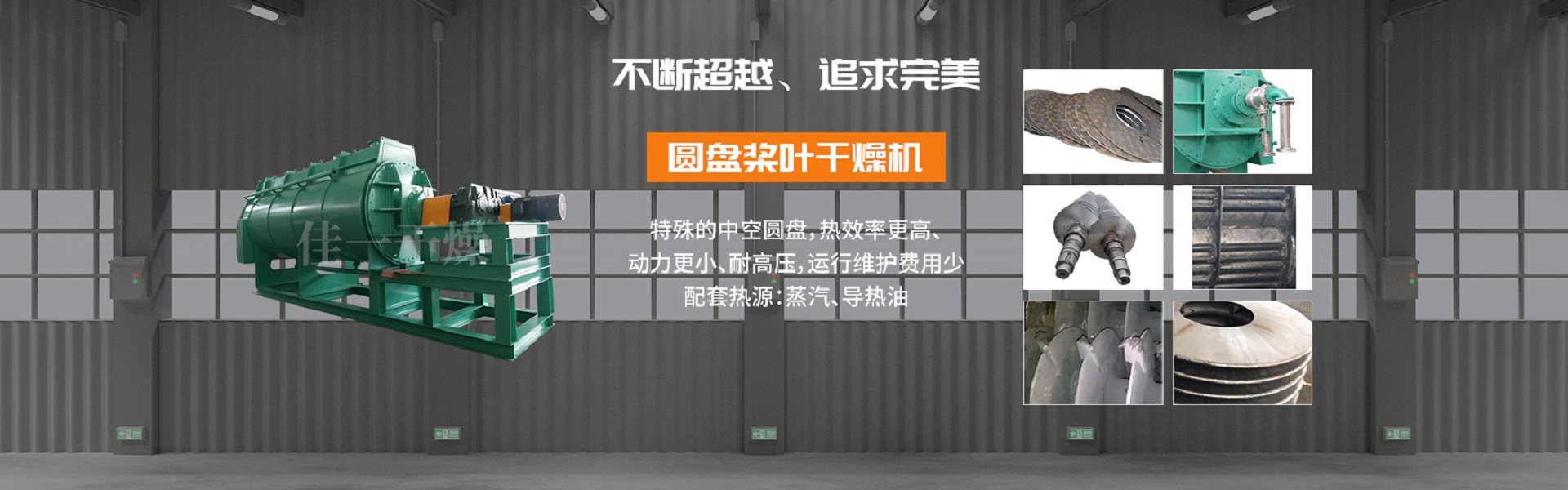
Drying Equipment

I. Working Principle and Features:
1Principle:
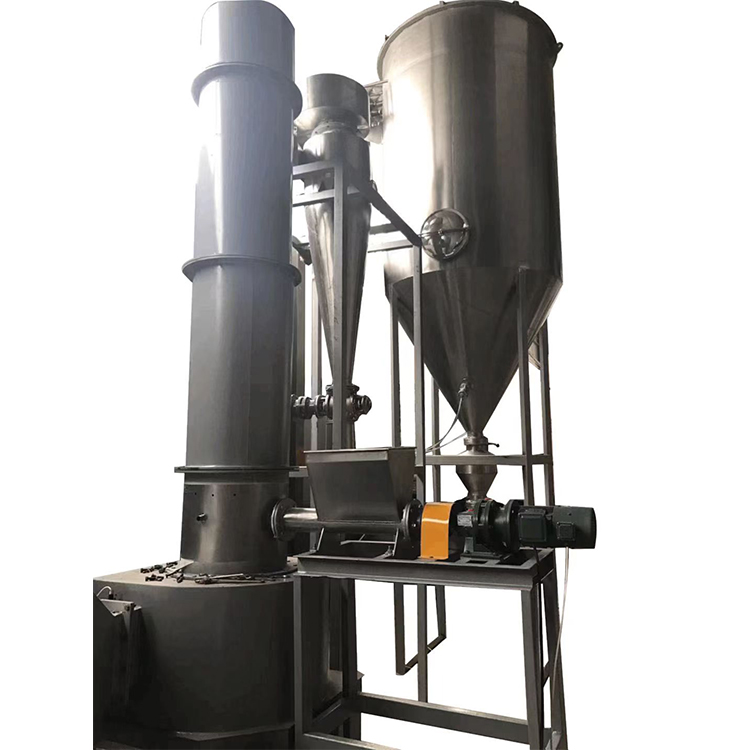
The rotary flash dryer focuses on effectively enhancing its dispersion during the development process, which is to increase the surface area per unit volume of wet material, thereby accelerating the heat and mass transfer processes. The required air is purified through an air filter and then heated by a blower before entering the dryer chamber at a tangent through the bottom annular gap, creating a spiral ascending airflow. The wet material is mixed in a dispersing tank, and after even dispersion, it is continuously and quantitatively added to the dryer through a spiral feeder. The dried product is carried out of the dryer through the upper outlet pipe along with the hot air, collected in a storage bin through a cyclone dust collector and a bag dust collector, and the exhaust gas is exhausted through an exhaust fan.
2Feature:
Due to the material being micropulverized by centrifugal force, shearing, collision, and friction, it is in a highly dispersed state, and the relative speed between gas and solid phases is significant, which enhances mass and heat transfer, resulting in high evaporation intensity and large production capacity for the machine.
⑵ Materials undergo processes of crushing, dispersion, drying, and grading simultaneously within the dryer, achieving multi-functional use and a wide range of applicability.
The intense swirling gas flow formed inside the vessel, which produces a strong scrubbing effect on the material on the vessel walls, eliminates the phenomenon of sticking.
⑷ In the high-temperature zone at the bottom of the dryer, thermosensitive materials do not come into direct contact with the hot surface, thereby solving the issue of carbonization and discoloration of thermosensitive materials.
The separator at the top of the drying chamber controls the particle size and humidity of the outgoing material, ensuring product quality.
The dryer operates under micro-negative pressure, eliminating the need for product crushing and thus reducing environmental pollution.
The machine features a compact structure, occupies minimal space, requires low labor intensity from operators, and is easy to operate.
The machine is equipped with a special feeding mechanism that resolves the issues of bridging and clogging in filter cake materials, allowing for uniform, quantitative, continuous, and stable addition of materials into the dryer. This solves the difficulty of feeding paste-like materials.
⑼ Key components of the dryer are easily replaceable, and critical control parameters are adjustable to adjust the material residence time, catering to the needs of drying multiple types of materials.
Design Technical Conditions:
1、Initial Moisture Content: 55%
2、Final Moisture Content: <4%
3、Production: 5 tons/20 hours
4、Material Fineness: 1000 mesh
5、Bulk Density: 0.25 g/cm³3
6、Coal-fired hot air stove
Material and Heat Balance:
1Production: W1 = 250 kg/h
2Throughput: W2 = 533 kg/h
3Desalination Rate: ΔW = W1 - W2 = 283 kg/h
4、Inlet air temperature T1 = 250°C, outlet air temperature T2 = 80°C, wet material temperature 10°C, product temperature 60°C.The specific heat capacity, C, for the material retrievalS=0.4 kcal/kg·℃,the heat required for the evaporation of moisture is Q1=175,743 kcal/h, Heat absorbed by product warming: Q2=5000kcal/h
5If the heat loss during the drying process is taken as 15%, the air volume required for drying is: G = 5094 kg/h
6、The heat required to dry the medium air is: Q3=305668kcal/h
Section 4: Main Equipment Selection
1、 Flash Steam Generator
At an intake temperature T1 of 250°C and an exhaust temperature T2 of 80°C, the average air density ρ is 0.837 kg/m³.3
The average volume flow rate of air entering the drying tower is: V1 = 6086 m³3Based on experience, for an empty tower operation with wind speed υ1 = 3.5 m/s, the main tower diameter is: D1 = 0.7844 m, rounded to D1 = 0.8 m.
Therefore, the flash drying machine model is: XSG-800.
2Tornado Separator
The air volume entering the cyclone separator is: V2 = 6086 m³3For an imported wind speed of υ2 = 18 m/s, the diameter of the cyclone separator is: D1 = 0.7512 m, thus the separator model is: XF-750.
3Baghouse Dust Collector
The bag dust collector features a compressed air pulse cleaning structure; the filter bags are selected in specifications of φ120×2000mm, with each bag having a filtration area of 0.75 square meters.㎡,The air volume entering the bag dust collector is: V3 = 5094 m³3The filter velocity entering the bag is υ3 = 1.0 m/min, requiring a bag filter area of F = 84.9 m².2The required number of dust bags is n=113.2 pieces, rounded up to n=120 pieces. Therefore, the model of the dust collector is the MC-120 type.
4、Selection of Fans
Blower Model: 9-26-5.6A, 2900 rpm, 22 kW
Airflow: 6032-7540 m³3/h
Wind Pressure: 7718-7394 Pa
Fan Model: 4-72 4.5, 2900 rpm, 7.5 kW
Airflow: 5712-7081 m³3/h
Wind Pressure: 2554-2428 Pa
5Heating Source:
The heat required for drying is:Q3=305668kcal/hConsidering pipeline heat loss, the output heat of the hot air furnace must be greater than this heat. The model of the hot air furnace is: JRF5-35
Supplementary Exhaust Fan for Flue Gas: Y5-47 4C 3kW
Fuel Consumption: G' = 85~100 kg/h (with a coal calorific value of 5500 kcal/kg)


b2b.china9.net © Zhongshang 114 Hebei Network Technology Co., Ltd.Address: Room 6009, Oriental New World Center, No.118 East Zhongshan Road, Qiaoxi District, Shijiazhuang City, Hebei ProvincePlatform Service Hotline: 4006299930