Water Treatment Equipment, Wastewater Treatment Equipment...


Product Recommendation
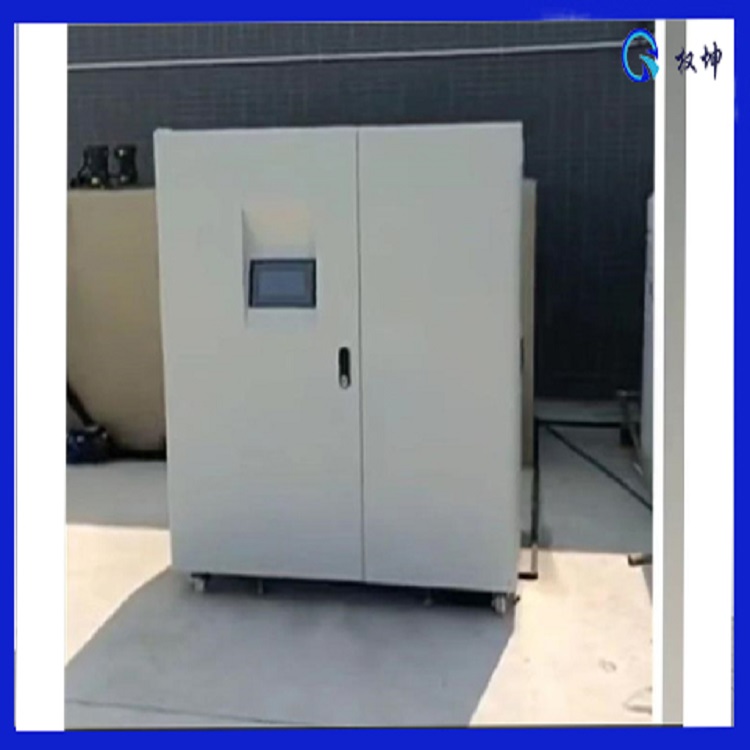
Quan Kun - Comprehensive Laboratory Waste Water Treatment Equipment - Remote Monitoring - Automated Control
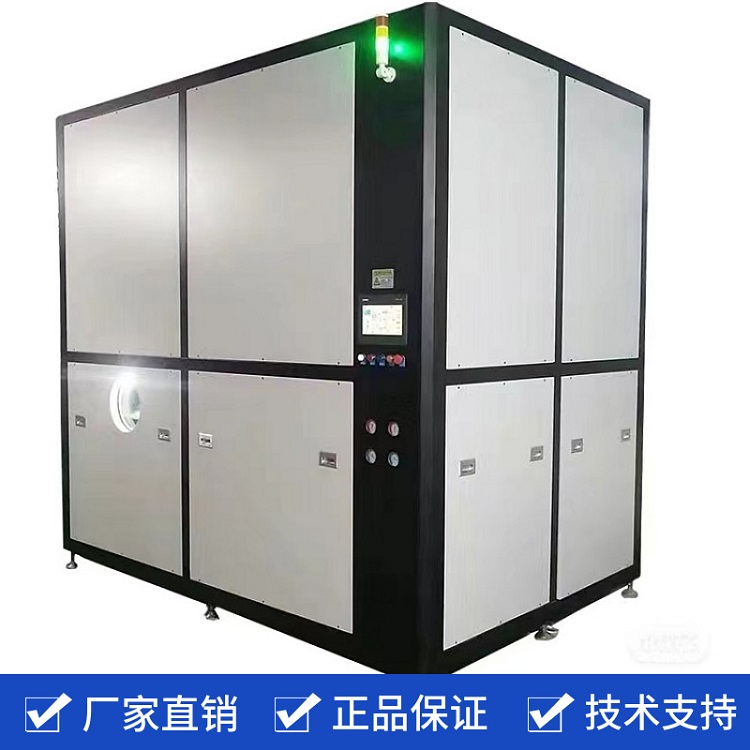
Sodium Chloride Wastewater Low-Temperature Evaporator - Intelligent Automatic - Quankun - Integrated Design
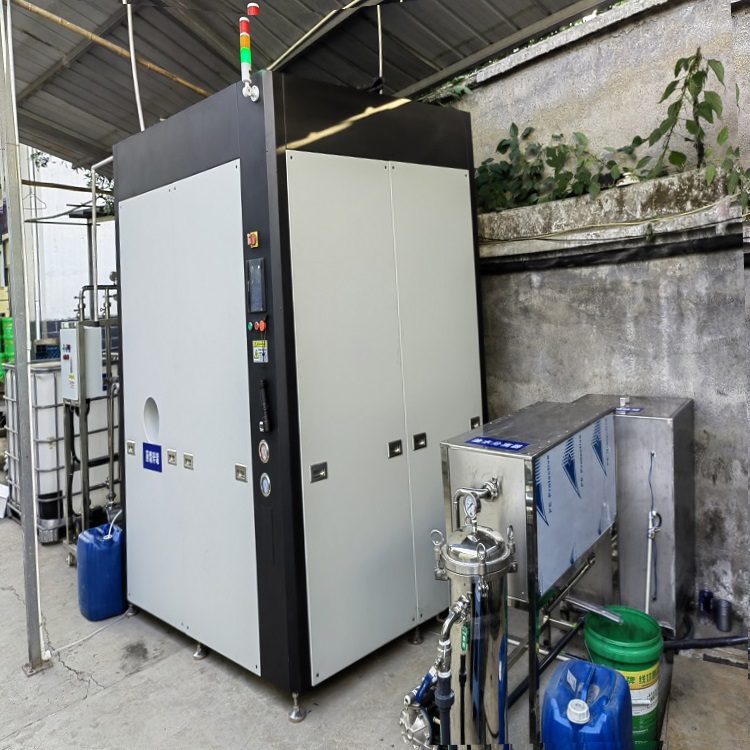
High-Concentration Oil Emulsion Waste Water Treatment Equipment - Quankun - Evaporator Unit - High Concentration Ratio
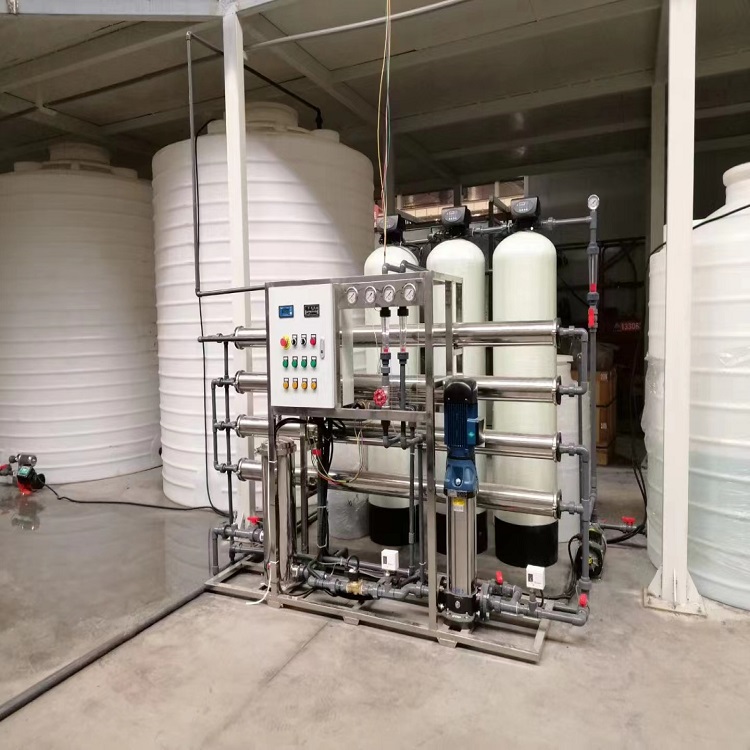
Industrial Pure Water Equipment EDI Ultra-Pure Water System Fully Automatic Control Quankun Environmental Protection
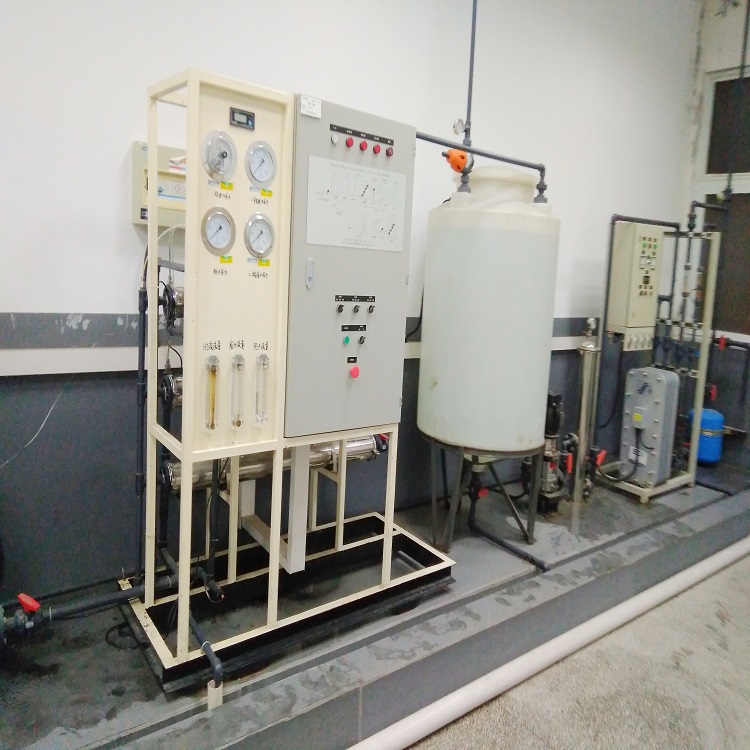
Shenzhen Industrial Ultra-Pure Water Equipment, equipped with EDI system, features low energy consumption and high degree of automation.
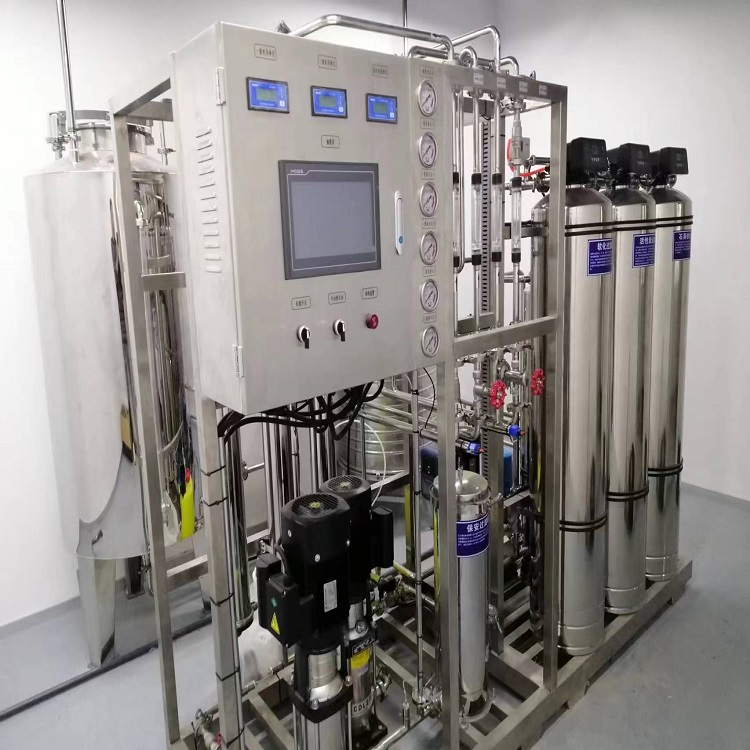
Shanghai industrial pure water production equipment reverse osmosis filtration system with high yield and customizable options, Quankun brand.
In modern industrial production, pure water systems serve as critical infrastructure, widely used in industries such as electronics, pharmaceuticals, chemicals, and food. Their core objective is to remove impurities, ions, microorganisms, and other pollutants from raw water through multiple technological methods, producing industrial water that meets specific purity requirements.
Original Water Pretreatment Phase
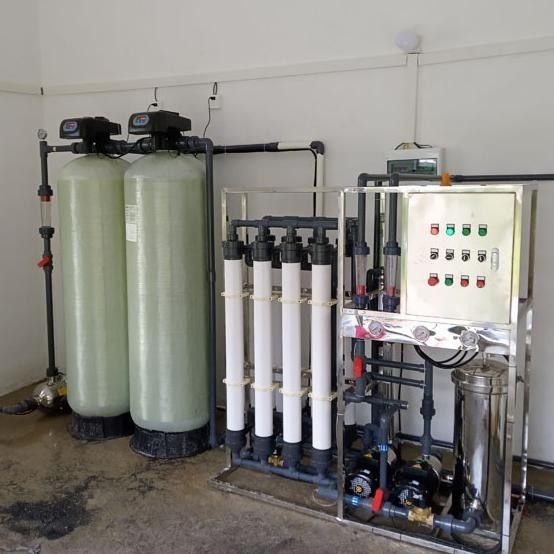
The first step in a pure water system is the pretreatment of raw water, which is essential for the stable operation of subsequent processes. Pretreatment typically includes three main stages: multimedia filtration, activated carbon adsorption, and softening. The multimedia filter consists of a multi-layered bed composed of filter media such as quartz sand and anthracite coal of various particle sizes, effectively retaining large particles like suspended solids and colloids, with a filtration precision of up to 5-10 micrometers. The activated carbon filter utilizes the large specific surface area and abundant microporous structure of activated carbon to adsorb organic matter, residual chlorine, and some heavy metals from the water, which is crucial for protecting the subsequent reverse osmosis membrane. For high-hardness water sources, softening treatment with sodium ion exchange resins is required to replace calcium and magnesium ions with sodium ions, preventing scaling of the reverse osmosis membrane. The water quality after pretreatment must meet technical specifications of turbidity < 1 NTU and SDI (pollution index) < 5.
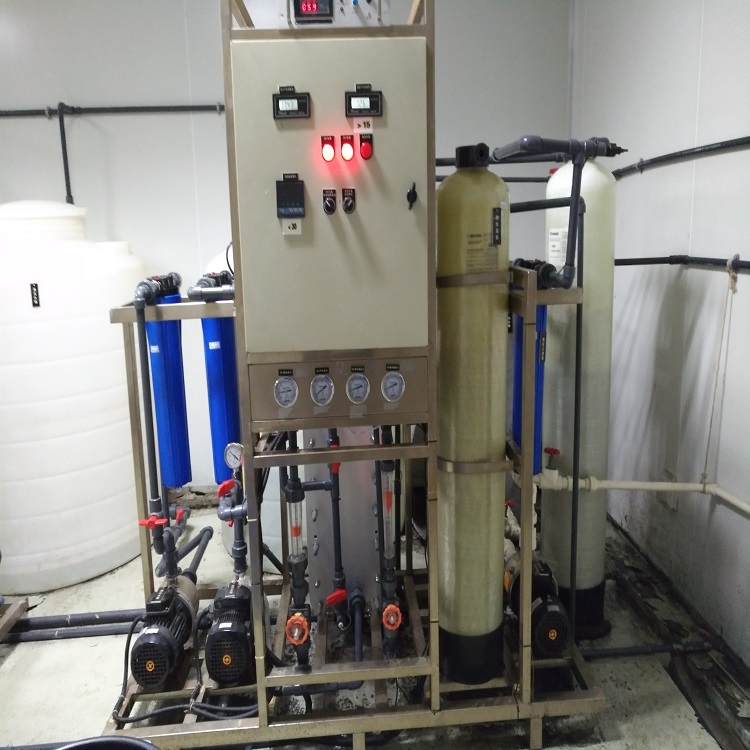
Core Desalination Technology: Reverse Osmosis (RO) System
Reverse osmosis is the core process unit of pure water systems, operating on the principle of selective permeation through semi-permeable membranes. Under the pressure of 3-15 bar provided by a high-pressure pump, water molecules overcome osmotic pressure to penetrate the reverse osmosis membrane, while over 98% of dissolved salts, organics, and microorganisms are retained. Modern industrial reverse osmosis membranes are typically made of polyamide composite materials, with a single membrane element achieving a desalination rate of up to 99.5%. Systems are often designed as two-stage series configurations to enhance water purity. It's worth noting that approximately 20-40% of the incoming water is converted to concentrate and discharged during the reverse osmosis process, necessitating the use of energy recovery devices to improve water resource utilization. During operation, it is crucial to strictly control the incoming water pH (within the range of 5-8), temperature (15-35°C), and the dosage of antioxidants to extend the service life of the membrane elements.
Section III: Deep Purification Process Combination
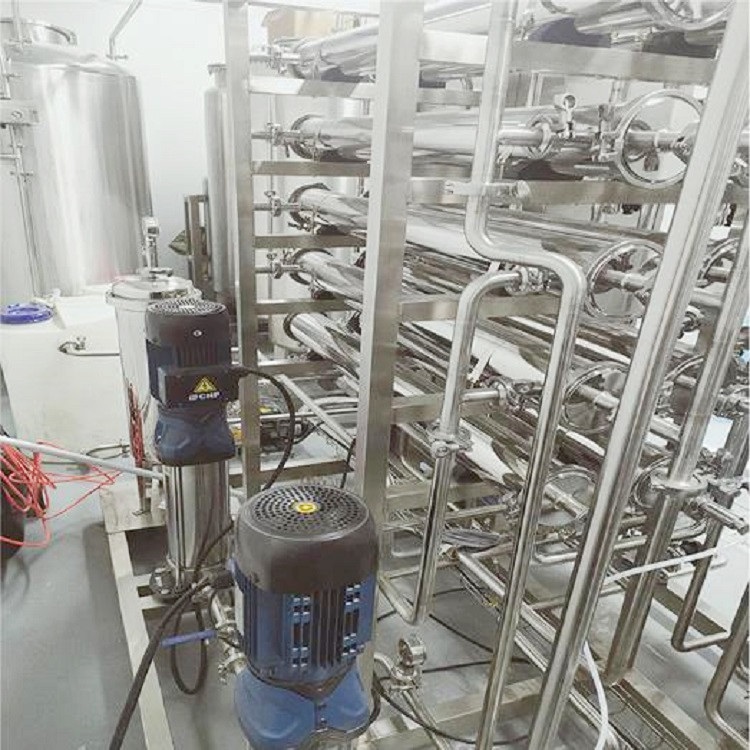
Reverse osmosis product water requires further purification to meet high-purity water standards. Mixed bed ion exchange is a classic advanced treatment technology that blends cation and anion exchange resins in proportion, completely removing residual ions through the exchange reaction of H+ and OH- ions, allowing the water resistivity to reach the theoretical limit of 18.2MΩ·cm. Electrodialysis (EDI), as a new green technology, fills ion exchange resins in a membrane stack under the action of a direct current electric field, achieving continuous regeneration without the need for acid or alkali chemical cleaning, making it particularly suitable for ultra-pure water preparation in the electronics industry. The ultraviolet sterilizer and precision filter form a microbial control barrier, with the former destroying the DNA structure through 254nm UV light, and the latter retaining microparticles using a 0.22μm filter membrane, ensuring that the terminal water quality meets the biological indicators standards.
Four: Intelligent System Control and Recirculation Design
Modern industrial pure water systems commonly utilize PLC+SCADA automated control systems to monitor critical parameters in real-time, such as conductivity (0.1μS/cm level), TOC (<10ppb), and particle count (<5 particles/mL), and achieve constant pressure water supply through variable frequency regulation. The circulation pipeline design adheres to the "fully enclosed, no dead corners" principle, is made of 316L stainless steel, and undergoes electrolytic polishing treatment. It is equipped with a UV-ozone combined disinfection unit to maintain stable water quality in the pipeline. To meet the needs of different industries, the system can be modularly configured: the pharmaceutical industry emphasizes microbial control and requires the addition of pasteurization units; the electronics industry aims for purity and often adds a secondary RO+EDI combination; the food and beverage industry focuses on mineral retention and optimizes the process chain combination.
V. Trends in Technology Development and Maintenance Tips
With advancements in new material technology, novel separation materials such as graphene membranes and biomimetic membranes are demonstrating breakthrough performance at the laboratory stage. The application of digital twin technology enables predictive maintenance for the system, allowing for the early detection of membrane contamination through big data analysis. In actual operation and maintenance, a comprehensive quality management system must be established: daily inspection of pressure difference changes (ΔP < 0.5 bar), monthly calibration of online instruments, quarterly integrity tests, and annual replacement of security filter cores. The chemical cleaning cycle should be flexibly adjusted based on changes in pressure difference and water production, typically using a 0.1% NaOH + 0.2% EDTA composite cleaning solution to restore membrane flux.


b2b.china9.net © Zhongshang 114 Hebei Network Technology Co., Ltd.Address: Room 6009, Oriental New World Center, No.118 East Zhongshan Road, Qiaoxi District, Shijiazhuang City, Hebei ProvincePlatform Service Hotline: 4006299930