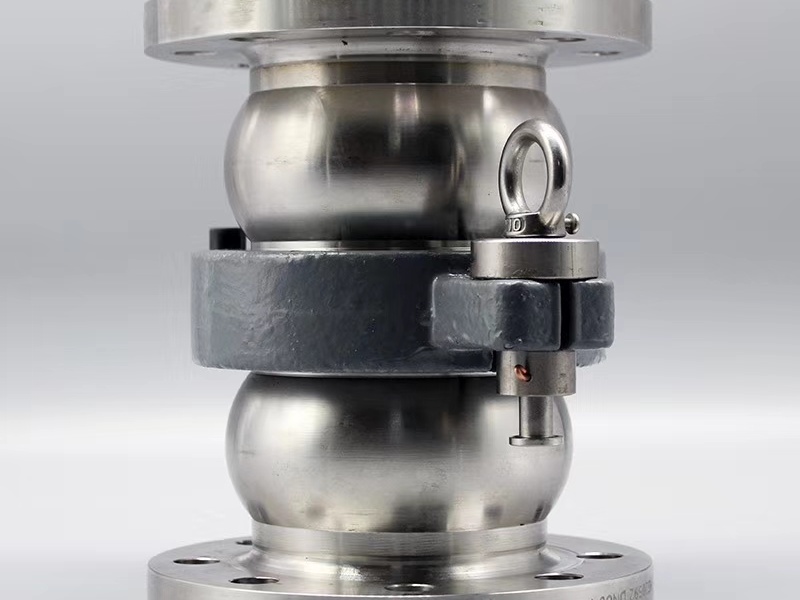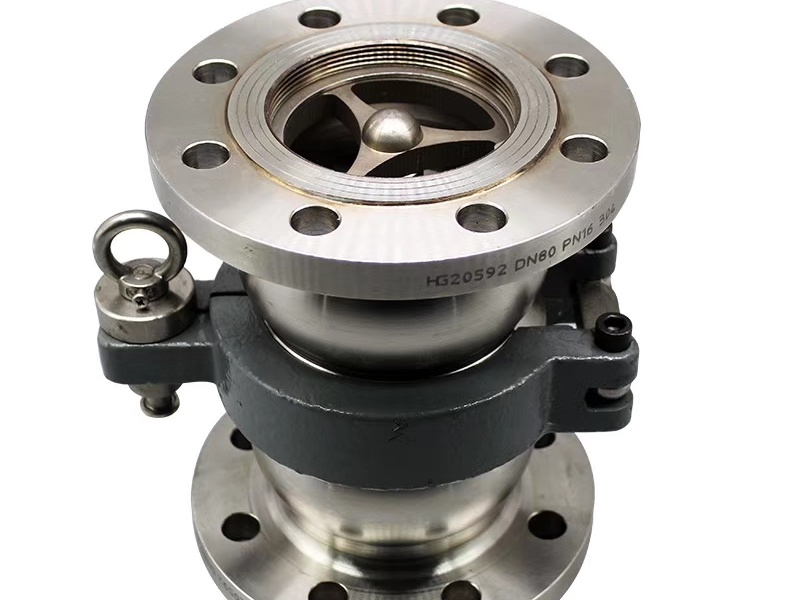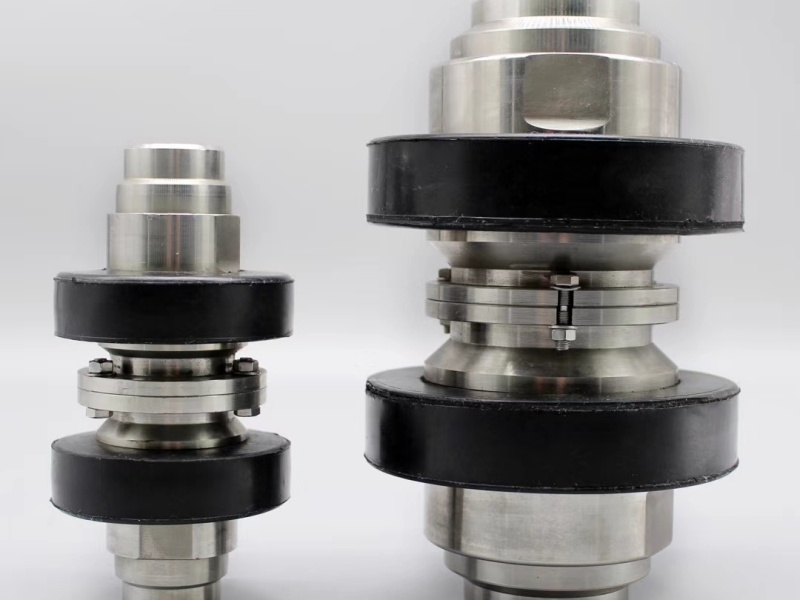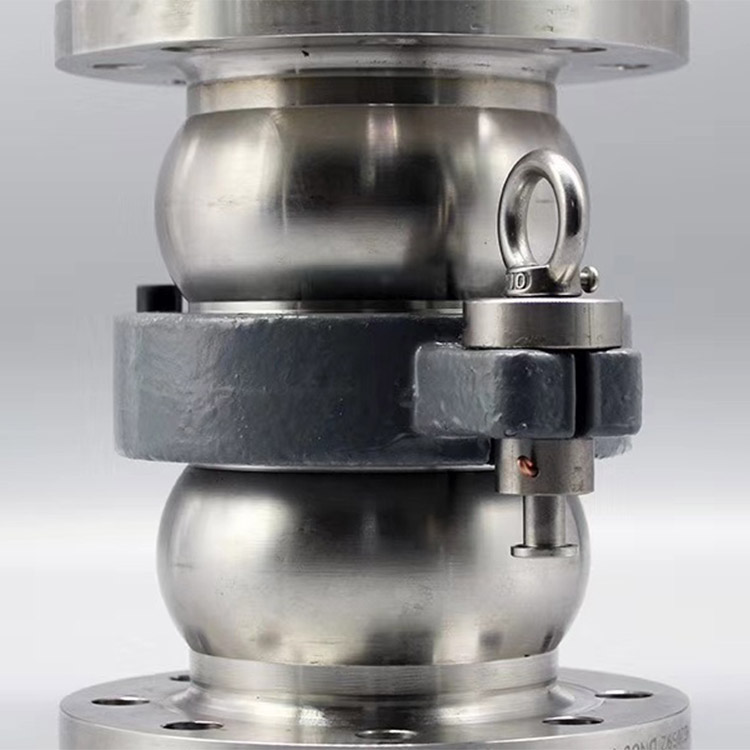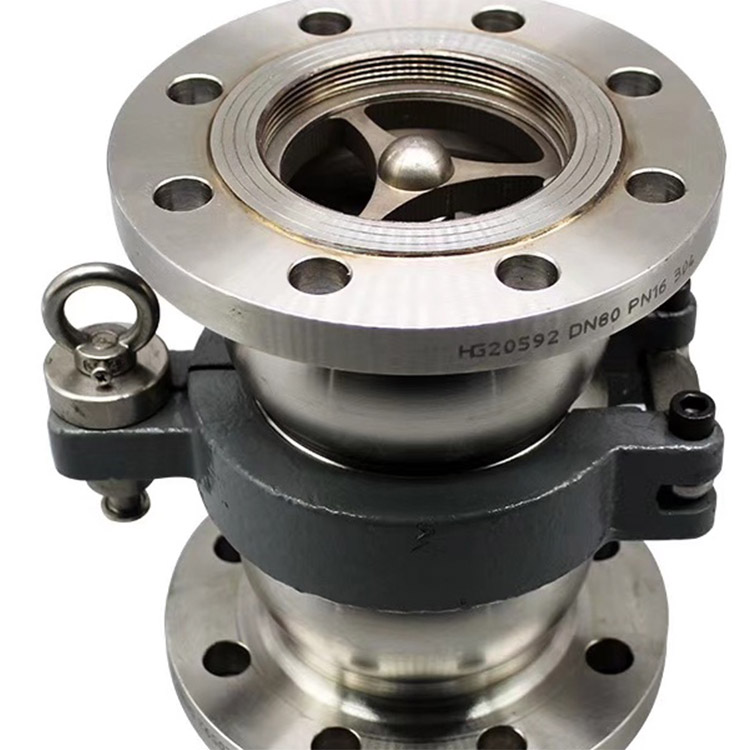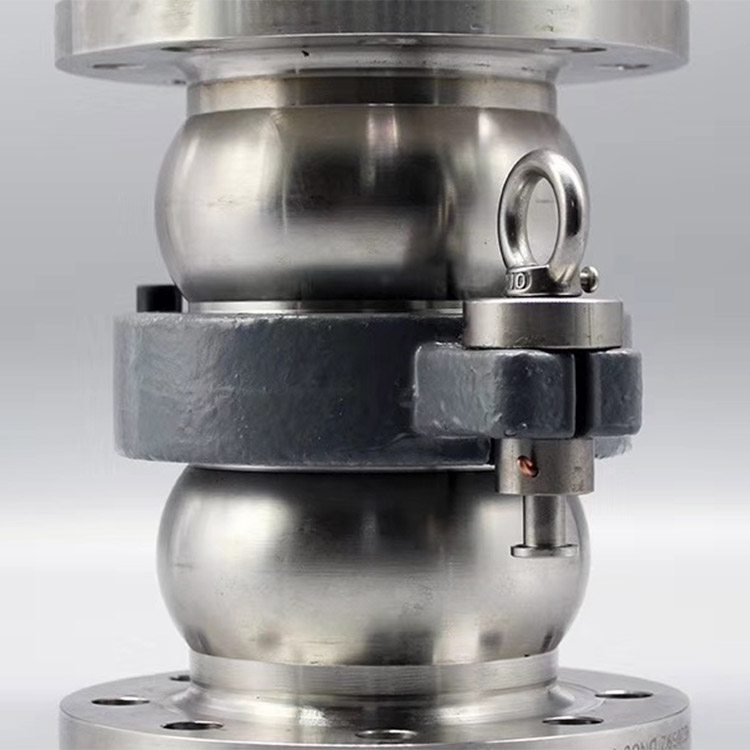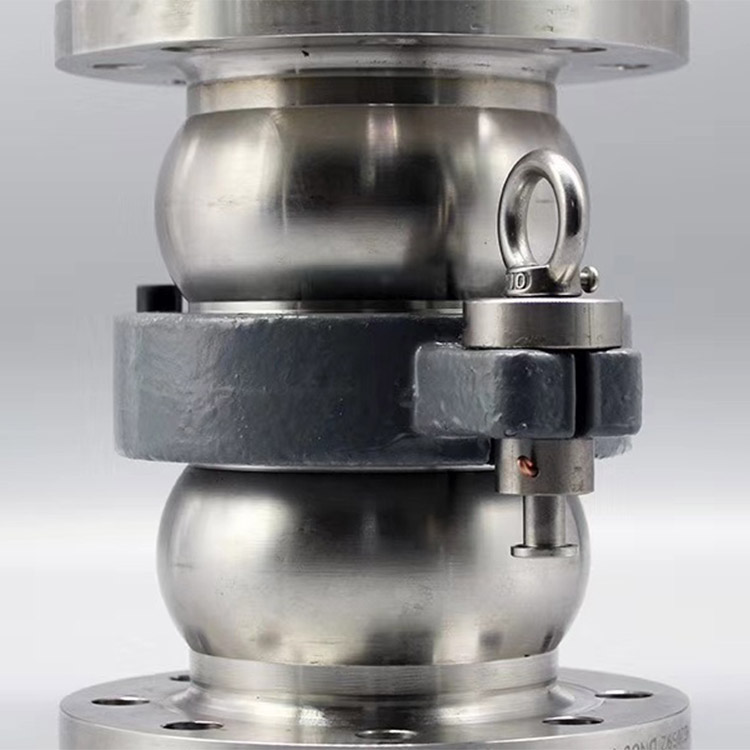

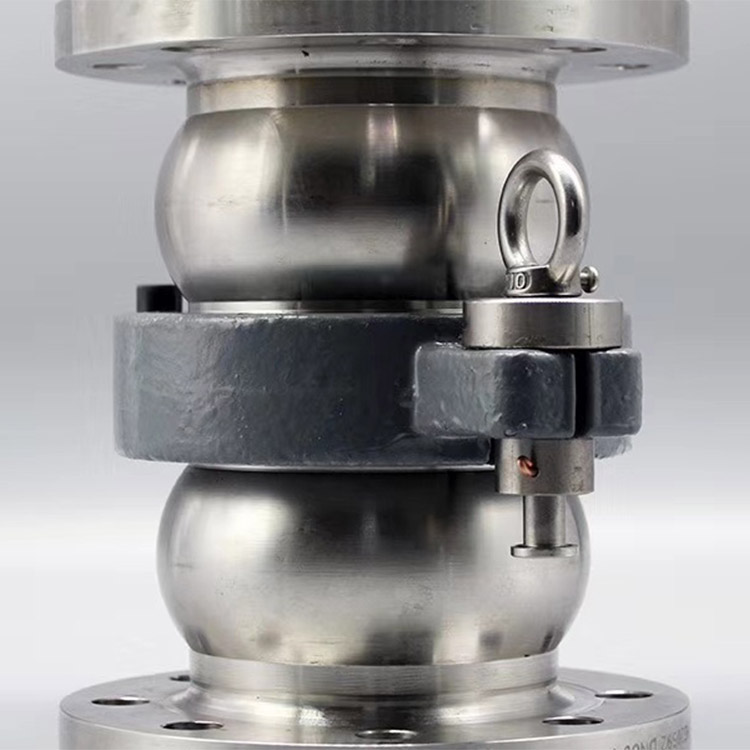
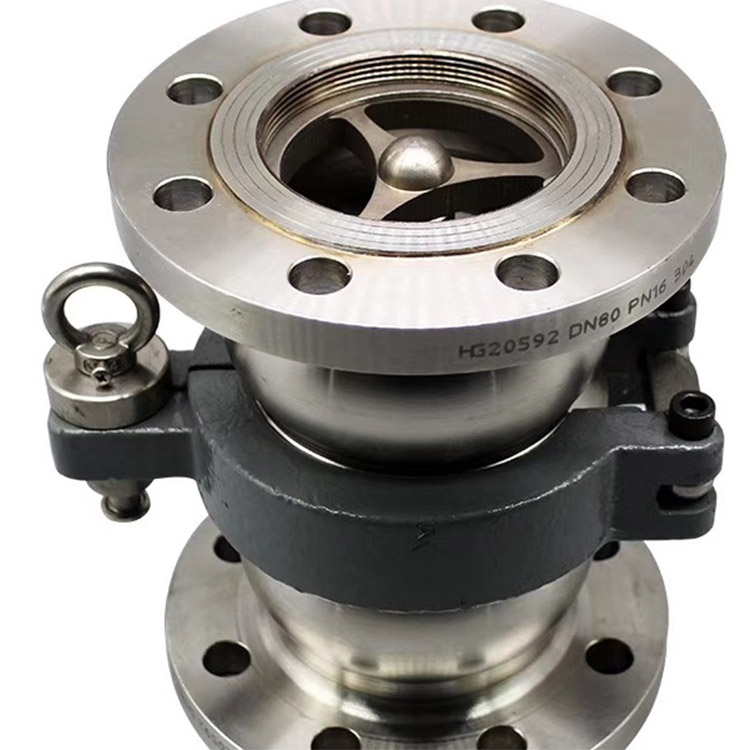
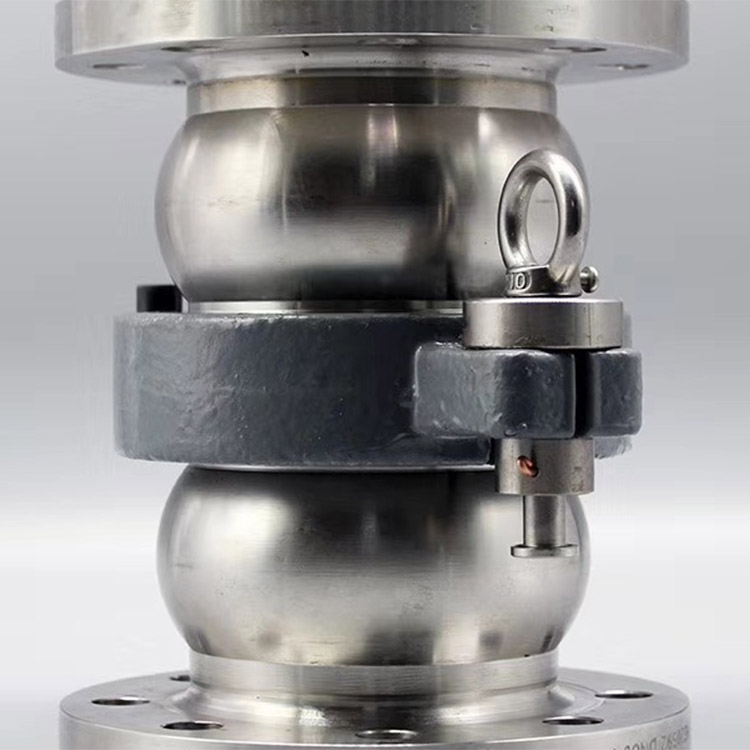







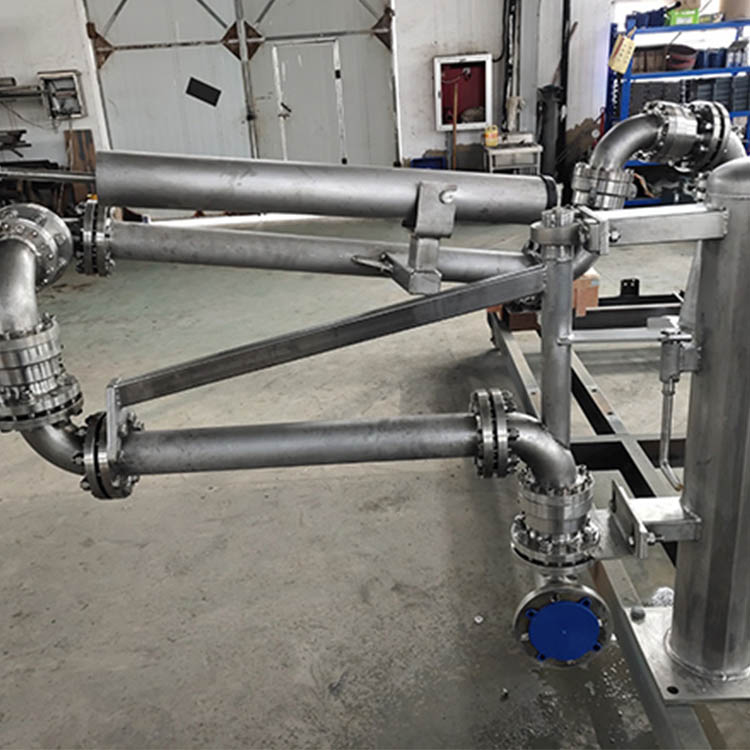
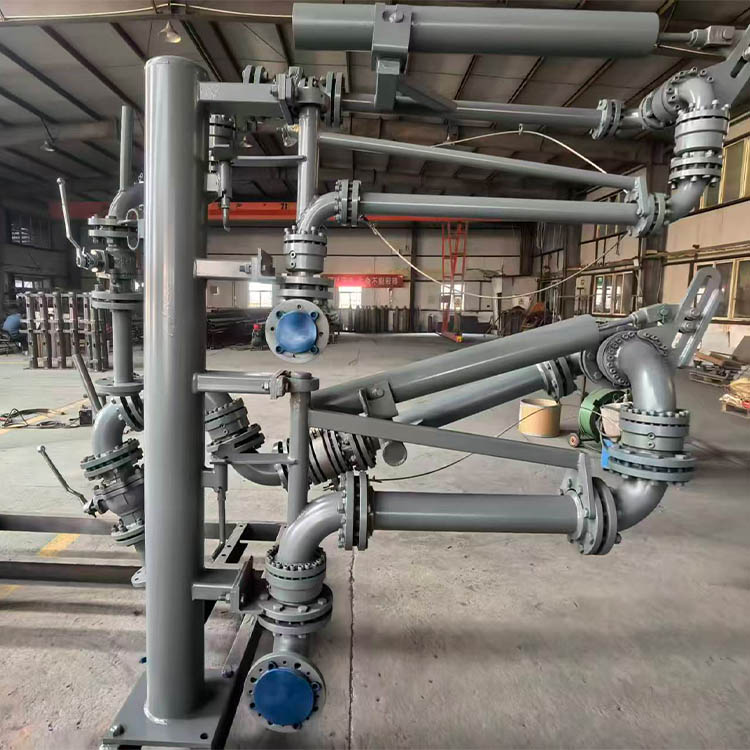
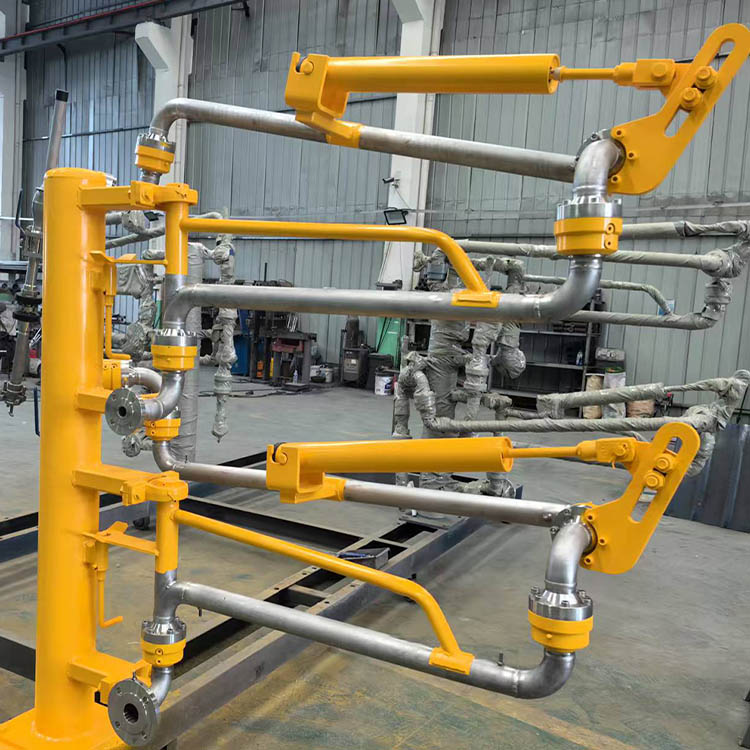
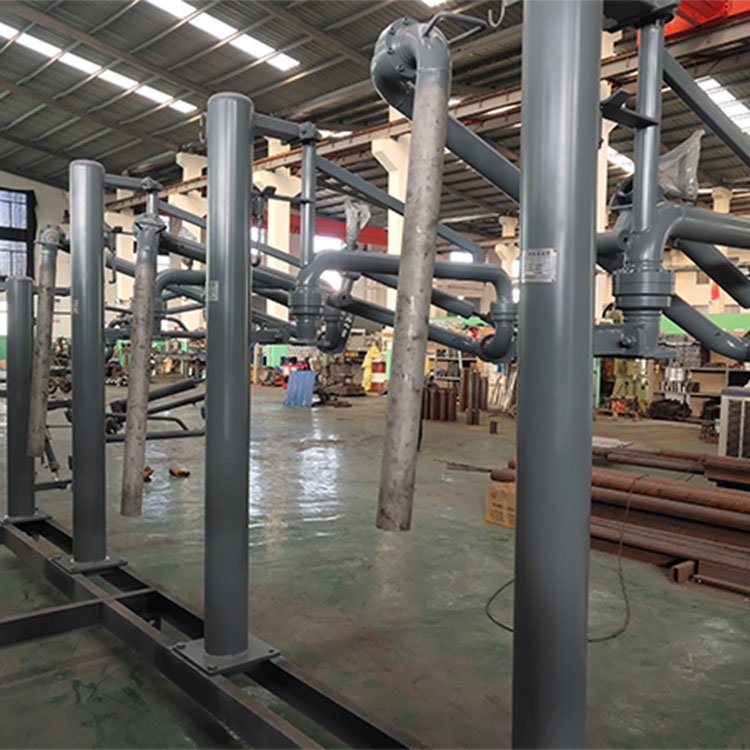
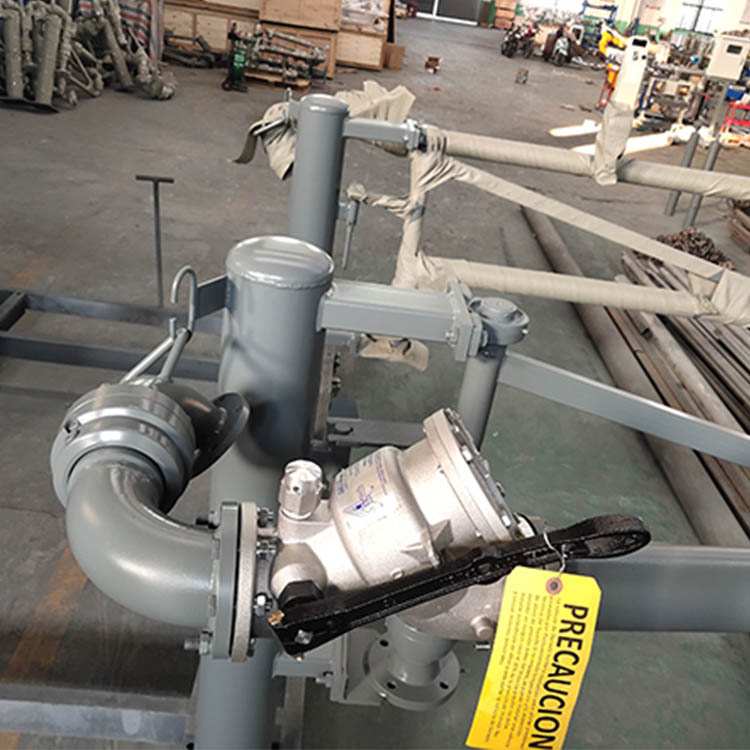
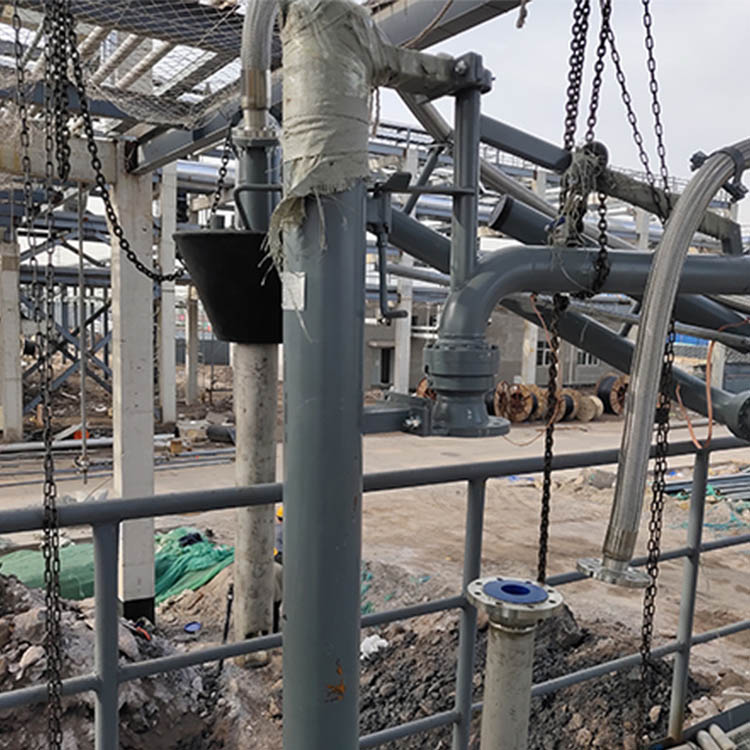
The鹤管拉断阀 serves as the core safety protection valve in the鹤管装卸 system, installed in the pipeline connecting the鹤管 to the tanker (for gas/liquid phase ends). In the event of accidental pulling or impact between the tanker and the鹤管 due to improper operation, sudden failure, or other reasons, it can quickly and automatically disconnect the pipeline and achieve a two-way seal, preventing medium leakage, fire and explosion, environmental pollution, and other safety accidents. It is an essential safety device for the loading and unloading operations of鹤管 in petrochemical and chemical storage areas.
Core structure composition
Overall modular mechanical structure, core components made of corrosion-resistant, pressure-resistant, and shock-resistant materials, compatible with crane pipe medium transportation requirements. Main components:
Breakaway main body: Utilizes a split-type clamp/flange connection structure, featuring an internal stress-activated mechanism, which is the core component for achieving pipeline breakaways.
Bi-directional sealing components: Both sides of the fracture are equipped with main seal + auxiliary seal (NBR / Fluororubber material), achieving double sealing instantly upon breaking, ensuring no medium leakage.
Trigger Mechanism: Equipped with an internal spring, lever, or shear pin structure, allowing for precise tension break-force setting (suited for different pipeline diameter crane booms), quickly disconnecting upon reaching the set tension without jamming.
Flange / Fitting: Seamless connection with crane pipes and tanker pipeline; supports GB / ANSI / JIS flanges, compatible with different crane pipe specifications (DN25~DN200).
Reset/Repair Parts: Quick disassembly and reset after breakaway (some models are one-piece resettable, others are modular for replacing wearables), with matching maintenance ports for convenient daily maintenance.
Auxiliary protective components: External anti-corrosion shields, static-dissipative grounding terminals, to prevent valve body rust and static buildup, suitable for explosive-proof environments in storage areas.
Operating Principle
During normal loading and unloading operations of the crane pipe, the rupture disc valve remains in the open position, allowing the medium to flow smoothly through the valve body, with the actuating mechanism in a stress-free reset state. In the event of an accidental pull between the tank truck and the crane pipe, when the pipeline tension reaches the preset rated tension of the rupture disc valve, the stress actuating mechanism activates instantly, pulling apart the integral main body. At the same time, the sealing components on both sides of the break are quickly sealed against the sealing surface under the force of the spring/medium pressure, achieving double-sealing of the pipeline and cutting off the medium transmission path. After rupture, there is no residual flow or splashing from the valve body, effectively controlling the leakage area. Subsequent operations can restore functionality through simple reset or replacement of consumable parts.
Key Features and Advantages
Precision Break, Safe & Reliable: Pre-set breaking force is accurate and controllable (5kN~80kN), breaks only when the rated tensile force is reached, preventing false triggering; after breaking, double-sealed with zero leakage.
Corrosion and pressure-resistant, versatile: main material options include carbon steel, 304 stainless steel, 316L stainless steel, and Hastelloy; sealing parts are compatible with gasoline, diesel, heavy oil, chemical solvents, acidic and alkaline media, etc.; working pressure ranges from 0.6 to 4.0 MPa, meeting various crane boom loading and unloading medium requirements.
Rapid response, no secondary damage: The breaking action is completed instantaneously (<0.1s), with no impact or sparks upon disconnection, preventing secondary accidents caused by pipe breakage impact and meeting explosion-proof requirements for storage areas.
Easy installation and simple maintenance: Flange / Clamp quick-connection design, can be directly connected to the crane pipe vapor / liquid phase pipeline without modifying the existing crane pipe structure; Resetting or maintenance operations after breakage are simple, no professional tools required, significantly reducing downtime.
Vibration-resistant and wear-resistant with a long service life: valve body internally has no components prone to sticking, withstands pipeline vibration and medium erosion in storage areas, requires minimal routine maintenance, and is suitable for frequent lifting and unloading operations with crane booms.
Compliant and versatile, covering all scenarios: Meets GB/T, API, EN, and other domestic and international petrochemical equipment safety standards. Compatible with all types of鹤管, including top卸鹤管, bottom卸鹤管, and heating鹤管. Supports individual installation or complete set configuration of vapor or liquid phase.
Application Scenarios and Compatibility Requirements
Core Application Scenarios: Suitable for storage areas in the oil, petrochemical, chemical, grain and oil, and gas industries, with matching top and bottom loading/unloading鹤管, and heating鹤管. It is applicable to the loading/unloading operations of tank trucks for various fluid media such as gasoline, diesel, heavy oil, chemical solvents, liquefied hydrocarbons, acidic and alkaline mediums, and edible oils.
Matching Installation Requirements: Install in series at the connection end of the crane pipe and tanker (optimal distance from the tanker interface is 1~1.5m), the gas and liquid phase pipelines must be individually installed with bursting disks and cannot be shared; ensure the valve body is horizontal/vertical during installation to avoid uneven load of stress, and simultaneously connect the antistatic grounding terminal to form an integrated system with the crane pipe's antistatic grounding system.
Compatibility requirements: Select the corresponding model based on the鹤管 (鹤管) diameter, medium characteristics, and working pressure. Set the tensile force to match the strength of the鹤管 (鹤管) pipeline to prevent damage to the main body during breakage.
Key Points for Daily Maintenance and Inspection
Regular performance checks of sealing integrity: Conduct pressure tests monthly to inspect valve body sealing conditions, replace sealing parts promptly upon detecting leakage, ensuring the sealing performance remains intact.
Inspect trigger mechanism: Check the pull-out force setting value quarterly, clean dust and residue inside the trigger mechanism to prevent jamming; inspect the pin integrity for shear pins to avoid premature breakage.
Corrosion and Lubrication: Regularly apply anti-corrosion treatment to the valve body surface and connecting bolts, and lubricate the moving rods and bearings with medium-resistant grease to prevent rust and sticking.
After breakage inspection: After a breakage action occurs, a comprehensive check is required to determine if the seals and trigger mechanism are damaged. Replace any damaged parts, and only after passing a pressure test can the equipment be put into use again.
Regular Calibration: Professional calibration of tensile strength is conducted annually to ensure consistency with the preset values, preventing deviations due to long-term use.