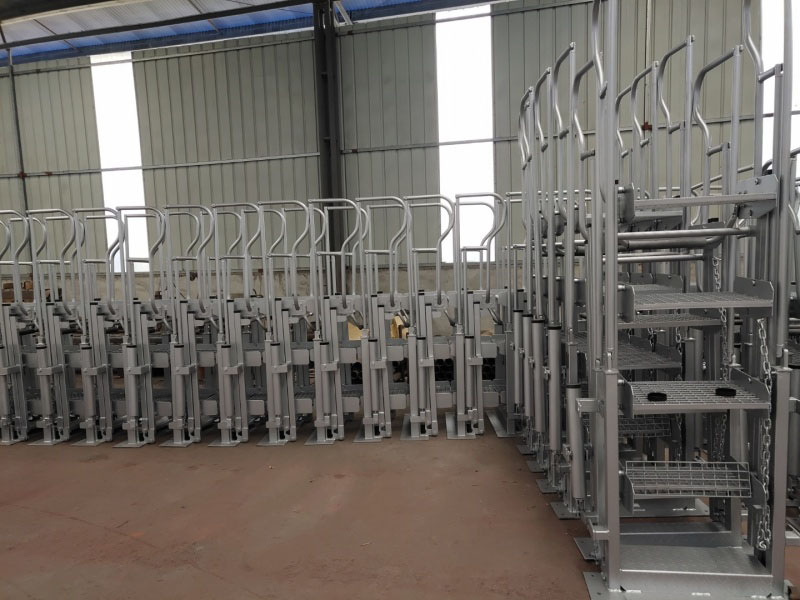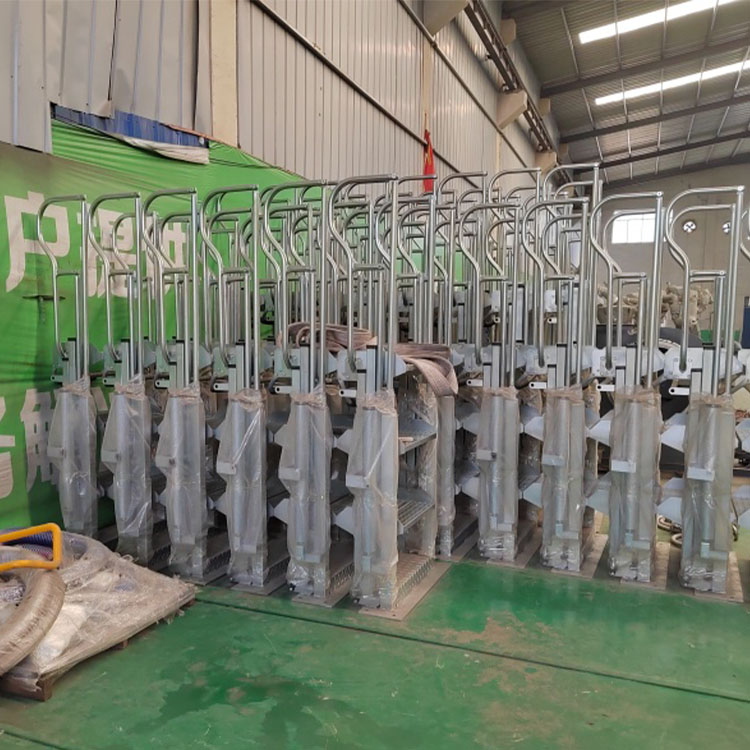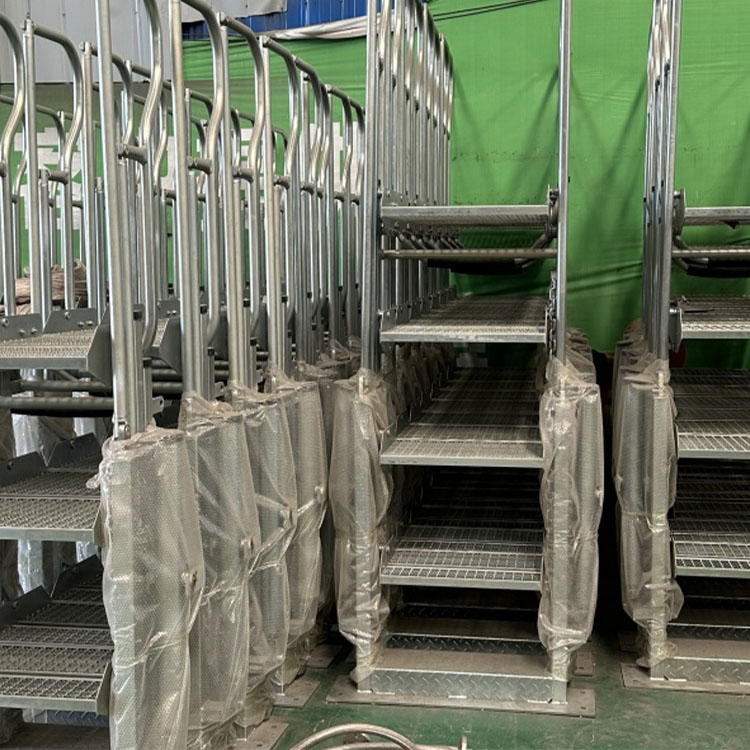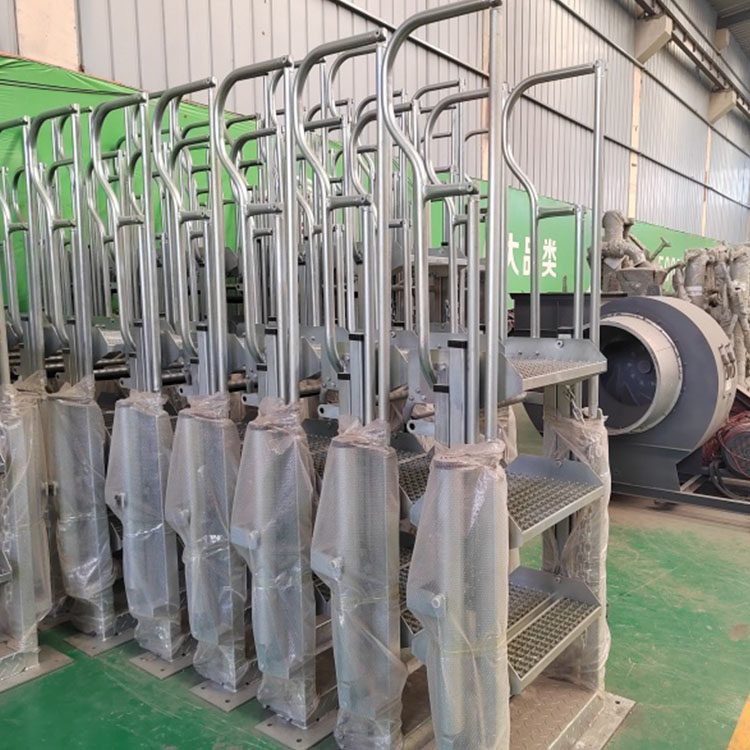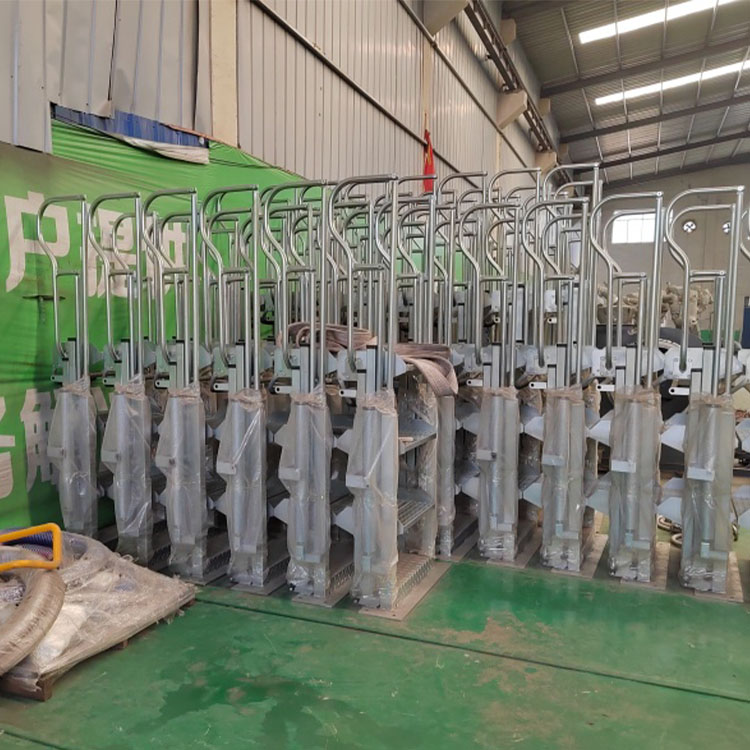


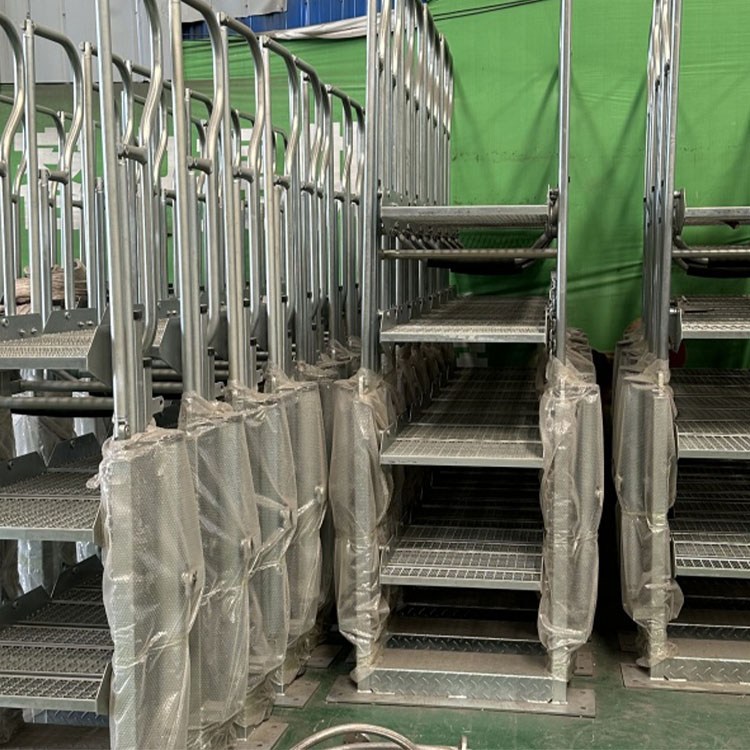
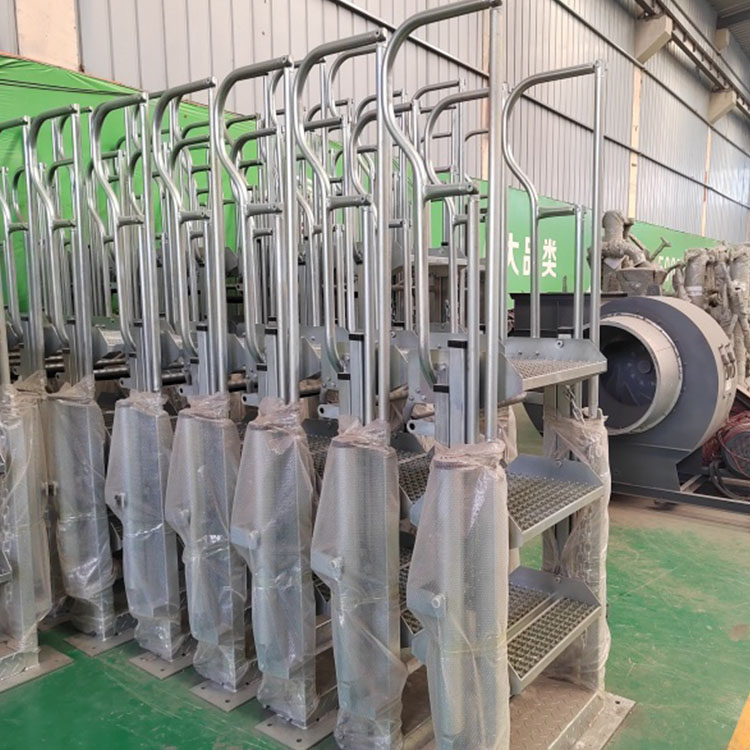











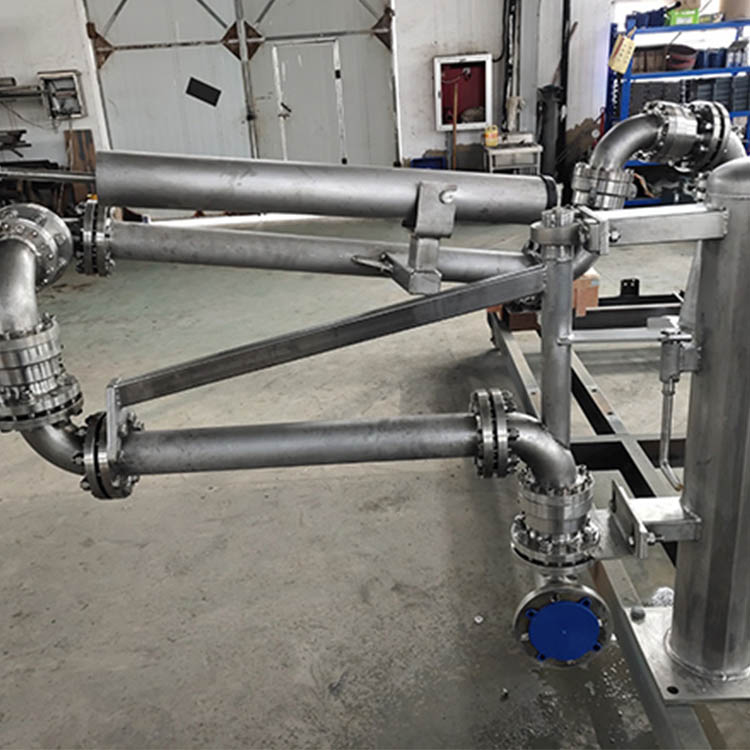
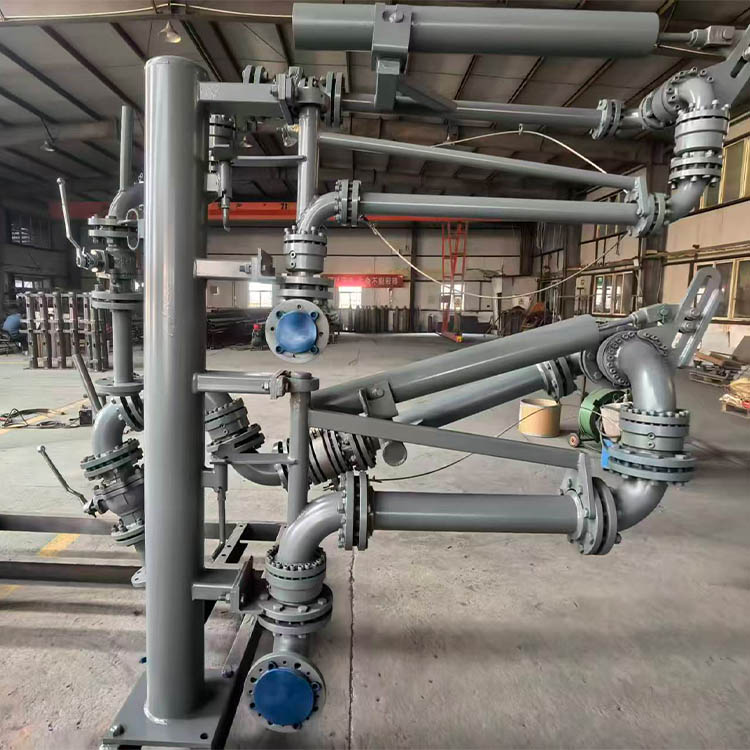
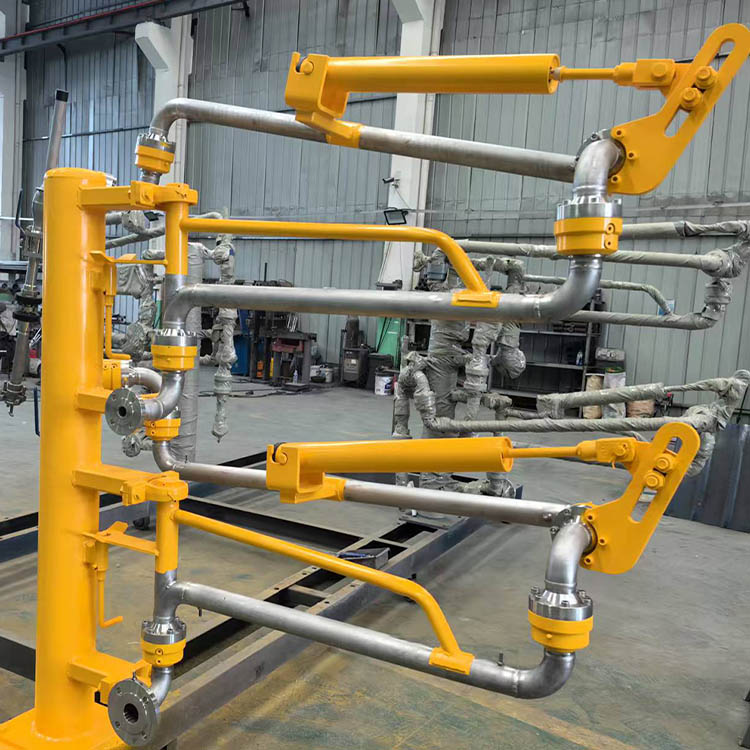
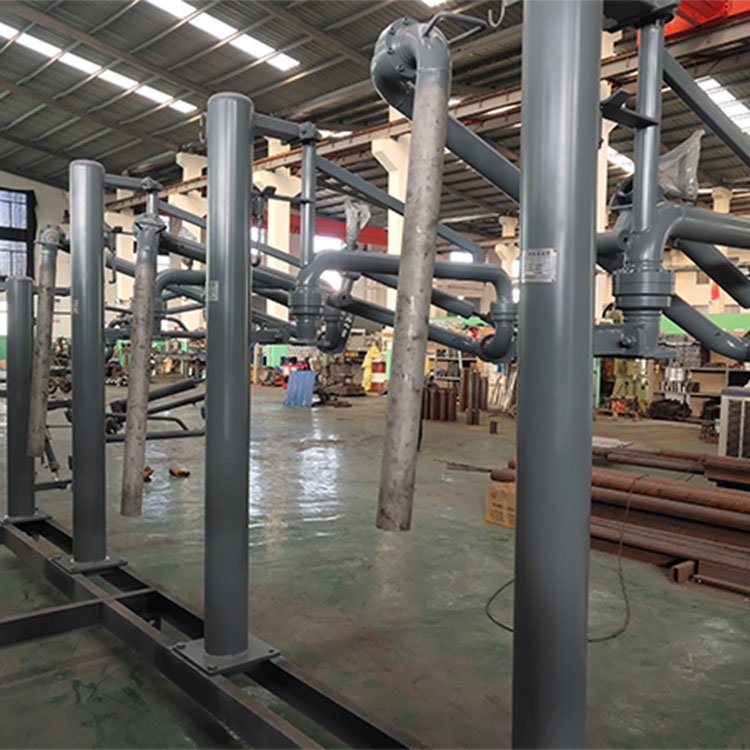
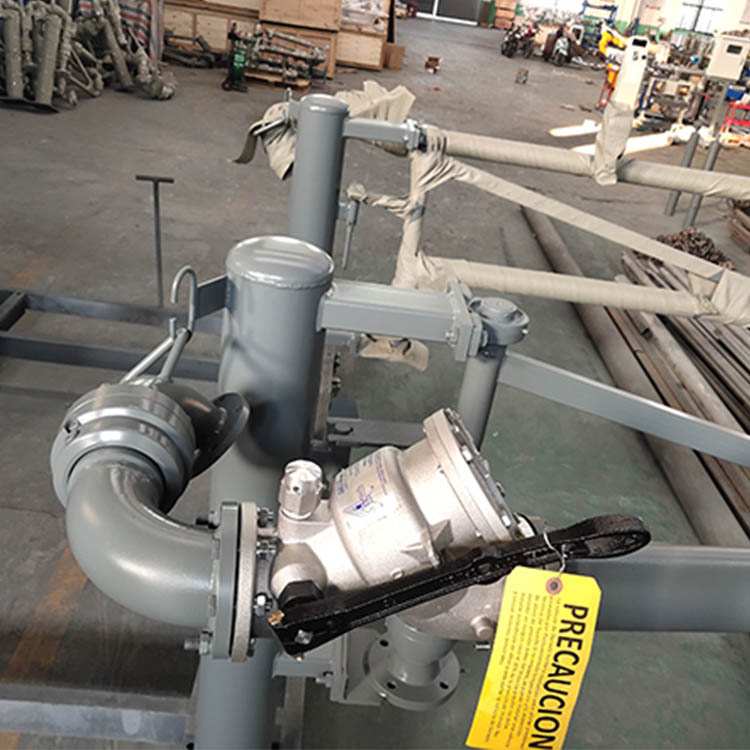
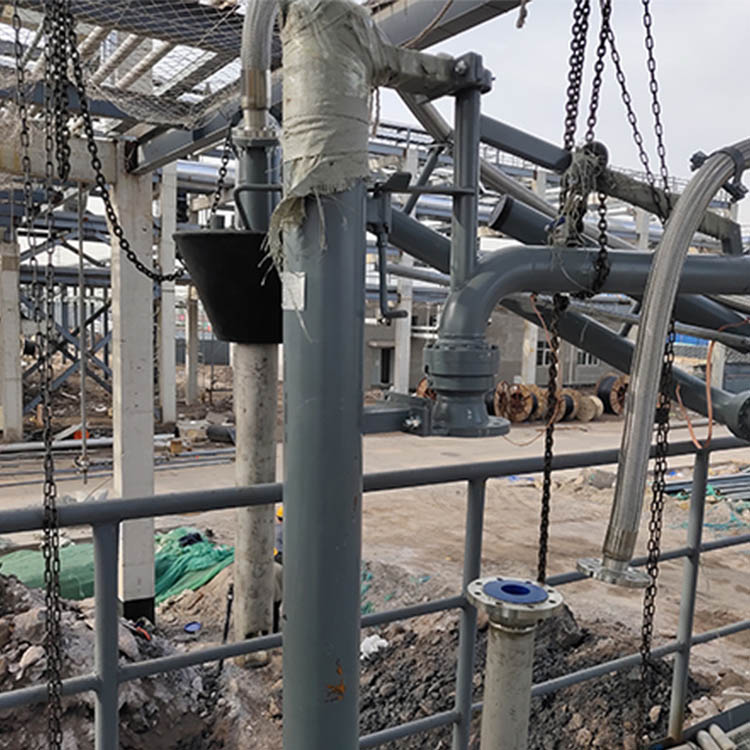
The crane pipe mobile ladder is a specialized elevated access ladder designed for use with crane pipes. Installed beside the crane pipe loading and unloading arm, it synchronizes with the horizontal and vertical rotation of the crane pipe to adjust its position and height, providing an safe and stable elevated access path for operators. It facilitates operations such as crane pipe docking, valve operation, and routine maintenance during tanker truck loading and unloading, and is an essential safety accessory equipment for loading and unloading operations in petrochemical and chemical storage areas.
Core Structure Components
The overall design is a collapsible and interlocking steel structure, with each component treated for corrosion and slip resistance. The core components include:
Railing Frame: Made of carbon steel, stainless steel, or aluminum alloy, available in straight or inclined ladder styles, featuring anti-slip tread plates/ribs for safe stepping.
Linked rotating mechanism: Connects with the crane pipe rotating base, allowing for synchronized 360° horizontal rotation with the crane pipe, ensuring the ladder always aligns with the hopper truck loading/unloading opening without the need for manual repetitive positioning.
Lifting and lowering adjustment device: Achieves micro-adjustment of the ladder height through hydraulic, spring, or manual screw, to accommodate different vehicle types and varying level requirements for tanker truck loading and unloading heights.
Support and Anti-Slip Base: Equipped with adjustable legs, anti-slip pads, or casters (with brakes) at the bottom. Locks into place during operation to prevent the ladder from sliding or toppling.
Safety Protection Components: Equipped with guardrails and handrails on the ladder sides, the top working platform features railings. Some high-end models are fitted with fall prevention anchorage points and toe guards, in compliance with safety regulations for elevated work.
Limiting and Buffering Device: Equipped with rotation and lift limiters to prevent excessive operation from damaging the mechanism. Partially installed with buffer pads to reduce collision wear during linkage.
Operating Principle
The crane boom ladder is connected to the crane boom's rotation and pitch mechanisms through a mechanical interlocking structure. When the crane boom performs horizontal rotation and vertical pitch for tank container coupling, the ladder's interlocking rotation mechanism and lifting adjustment device will synchronize, keeping the working platform of the ladder frame at a reasonable height between the crane boom's operating mouth and the tank container loading/unloading mouth. Before operation, the ladder frame is secured by adjusting the support legs. Operators reach the working platform via the ladder frame to complete operations such as crane boom flange coupling and valve opening/closing. After operation, the ladder frame can be folded to reduce space occupation in the storage area.
Core Features and Advantages
Integrated synchronization, easy operation: Seamless integration with crane pipe, no need for manual positioning or height adjustment, significantly reduces preparation time for climbing, and enhances loading and unloading efficiency.
Safety and Stability, Compliant with Standards: The entire structure features anti-slip and anti-fall design, ensuring strong stability after installation. It avoids the risks of tipping and sliding associated with temporary elevated ladders, and meets the safety requirements for explosion-proof in petrochemical storage areas and elevated work operations.
High adaptability and versatility: adjustable in height and angle according to crane pipe models (top loading/unloading / bottom loading/unloading) and tanker types (light oil tanker, heavy oil tanker, chemical tanker), compatible with various loading/unloading scenarios.
Corrosion-resistant and durable, suitable for harsh environments: The main material can be stainless steel or anti-corrosion carbon steel, resistant to corrosion from storage area oil and gas, rainwater, and acidic or alkaline mediums, with a long service life and low maintenance costs.
Space-saving and easy to store: foldable and collapsible when not in use, can be placed against crane pipes or storage area supports, without occupying loading and unloading channels in the storage area; ideal for densely arranged crane pipe storage areas.
Ergonomic operation, simple maintenance: The linkage mechanism features a design with minimal wearing parts such as bearings and wear-resistant sleeves, requiring only lubrication and tightening for daily use, without the need for professional maintenance.
Common Types
By categorizing according to鹤管 (crane pipe) handling methods and structural forms, the mainstream types include:
Top Loading and Unloading Crane Ladder: Primarily features an inclined ladder + a top working platform, designed to fit the top loading/unloading openings of tank trucks. The working platform offers a wide range of height adjustments and enhanced safety features.
Bottom Loading and Unloading Crane Tube Special Folding Ladder: Generally in the form of a short inclined or straight ladder, compatible with the bottom loading/unloading ports of tank trucks; the ladder body is more compact and offers higher rotational flexibility.
Hydraulic telescopic ladder: Adjusts height through a hydraulic system, offering smooth and effortless operation, ideal for high-frequency operations and areas requiring large height adjustments.
Manual adjustable telescopic ladder: Achieves fine adjustment of height and angle through lead screws and clips, with a simple structure and low cost, suitable for medium and small storage areas and low-frequency operation scenarios.
Aluminum alloy lightweight portable ladder: Made entirely of aluminum alloy, it is lightweight with excellent corrosion resistance, suitable for chemical storage areas with high explosion-proof requirements and weight limitations on equipment.
Application Scenarios and Compatibility Requirements
Core Application Scenarios: Storage areas in the oil, petrochemical, chemical, grain and oil industries, used in conjunction with top and bottom loading/unloading crane pipes to facilitate elevated operations for tank trucks (including oil tankers and chemical tankers) during loading and unloading procedures.
Matching Requirements: Must be customized with the same model and installation foundation as the crane pipe to ensure联动accuracy; during storage area operations, it must be used in conjunction with the crane pipe's emergency disconnection device and static grounding device to form a complete loading and unloading safety system.
Daily Maintenance Points
Regularly inspect the bearings and pin shafts of the interlocked rotating mechanism and lifting device, promptly add lubricant to prevent jamming and wear.
Inspect the integrity of the anti-slip strips, guardrails, and leg anti-slip pads; replace promptly if damaged to avoid potential safety hazards.
Regularly inspect the anti-corrosion coating on steel structures, repaint promptly if any paint chips or rust appears.
Check the effectiveness of the limit and brake devices before and after operation to ensure the ladder body is securely fixed.
Stainless steel or aluminum alloy ladder frame, regularly wipe with clean water to remove oil and dust from the storage area, maintaining a clean surface.