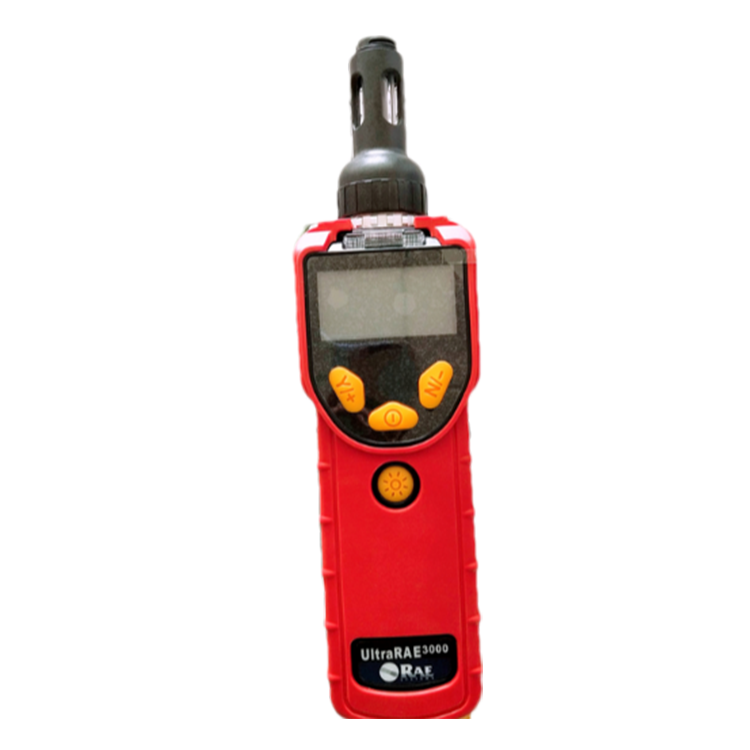

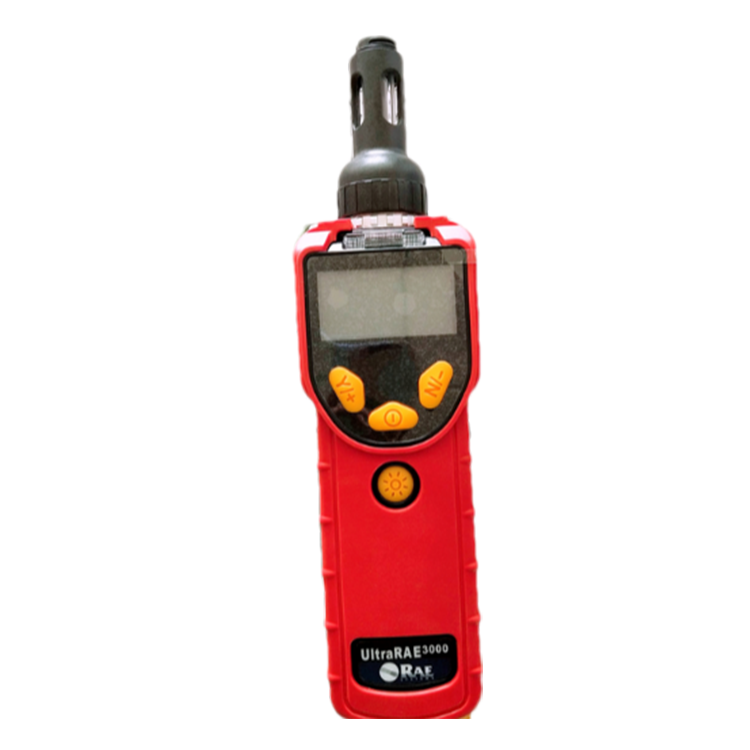

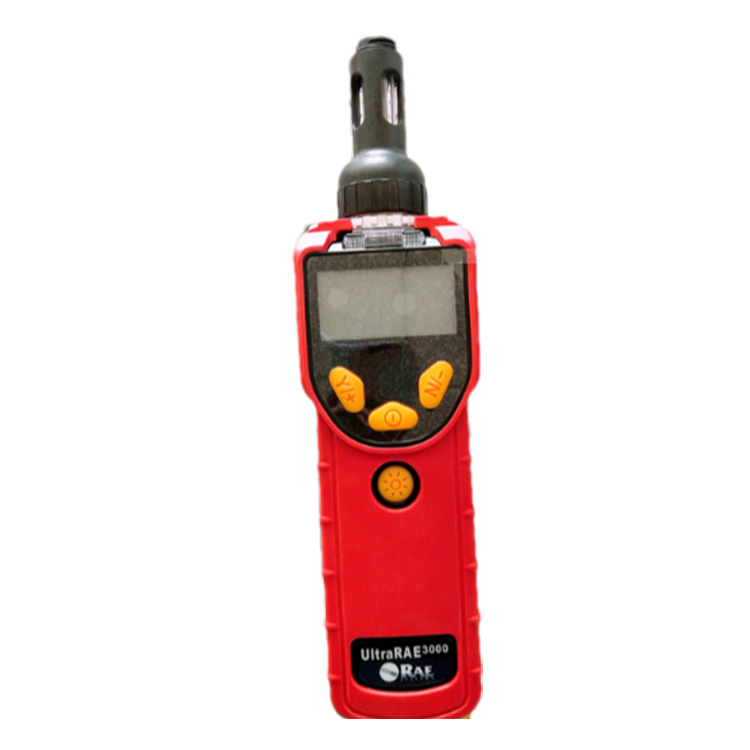







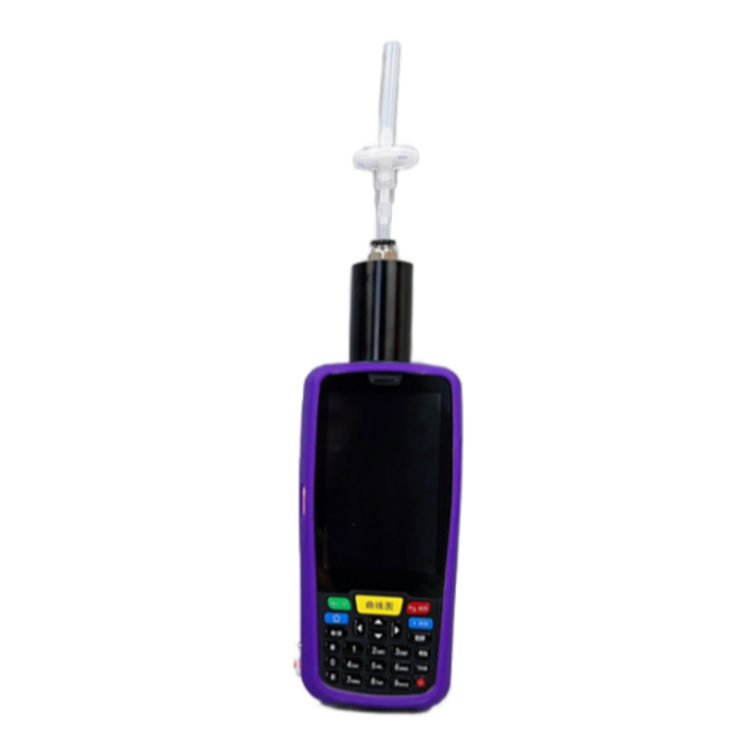
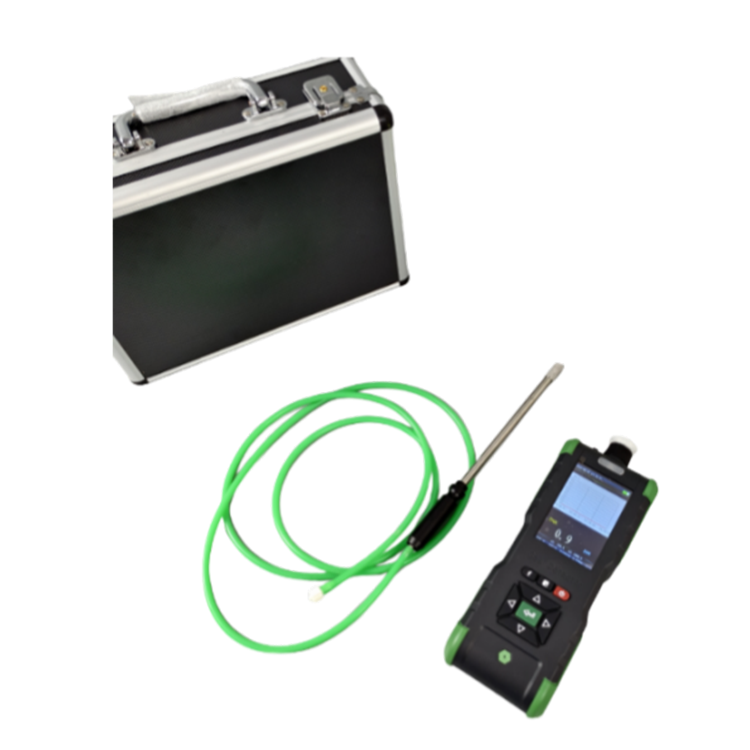


The UltraRAE 3000 is a handheld PID detector based on the 3GPID platform, designed for specialized organic gas detection. It employs a photoionization detector (PID) with a 9.8eV or 10.6eV gas discharge lamp, and when paired with the unique RAE-SEP gas separator tube, it isolates the component to be measured for more targeted detection. It can also be used with a dedicated separator tube as a broad-spectrum VOC detector for total volatile organic compounds (TVOC).
Technical Specifications:
Dimensions: 25.5×7.6×6.4 cm
Weight: 738g (including lithium battery)
Sampling Method: Pump Extraction
Shell Material: Engineering Plastic, Rubber Coating
Protection Rating: IP65, Dustproof and Waterproof
Electromagnetic Interference/RF Level: EMC Directive 2004/108/EEC
Operating Temperature: -20℃ to 50℃
Environmental Humidity: 0% ~ 95% relative humidity (no condensation)
ATEX Certification: II 2G EEx ia IIC T4
UL/cUL/CSA Certification: Class I, Division 1, Groups A, B, C, D
Display: Large-screen graphic LCD display with automatic backlight
Display Language: Chinese/English + Symbols
Real-time detection values, TWA values, STEL values, peak values, battery voltage, date and time, temperature
Button: 1 operation key, 2 function keys, 1 light switch
Alarm Method: 95dB@30cm buzzer, red LED
Alarming Signals: Excessive gas levels, low battery voltage, sensor malfunction, low battery charge alert
Alarm Point Settings: Individually set TWA, STEL, and High/Low Alarm Limits
Data Storage: Approximately every 2 months (1-minute interval) records include date, time, serial number, user ID, detection point ID, etc.
Sample Interval: adjustable from 1 to 3600 seconds
Data Communication: USB (via base), RS232 (via travel charger), optional built-in Bluetooth module for downloading inspection data, uploading instrument parameter settings; optional built-in wireless module for wireless data transmission
Flow rate of sampling pump: 450cc/min to 550cc/min
Battery: 4.2V/3300mAh rechargeable lithium-ion battery; alkaline battery box uses 4 AA batteries
Operating Time: Continuous operation for 16 hours (depending on working environment and frequency of use)
Charge Time: 8 Hours
Calibration Method: Two-point/Three-point Zero/Extended Calibration
Sensor Configuration: Standard with a 9.8eV PID detector (optional 10.6/11.7eV UV lamp)
Sensor Parameters:
Test Type | Test Range | UV Lamp Type | Resolution | Response Time (T90)
————————————————————————————————————
Benzene 0-200ppm 9.8eV 0.05ppm 60s
Butadiene 0-200ppm, 9.8eV, 0.05ppm, 60s
TOVCs 0~99.99ppm 10.6/11.7eV 0.05ppm 3s
TOVCs 100~999.9ppm 10.6/11.7eV 0.1ppm 3s
TOVCs 1000~9999ppm 10.6/11.7eV 1ppm 3s
Key Features
Third-generation PID sensor, with short response time and wide detection range.
Large screen graphic LCD display, graphical menu display
Automatic backlit display, built-in lighting, convenient for use in dark environments
Built-in temperature, humidity, and pressure sensors, automatic humidity compensation, ensuring measurement accuracy
Quickly replace sensors and batteries without any tools
Automatic UV Lamp Model Recognition
Sensor and UV light automatic cleaning
Built-in Bluetooth and wireless transmission module for real-time wireless transfer
Multilingual display, supports Chinese
High protection grade, completely dustproof, can be cleaned directly with water
Built-in powerful suction pump
Utilize high-capacity lithium-ion batteries and alkaline batteries
Supports AutoRAE Automatic Calibration System
Standard Configuration
PGM-7360 main unit, including sensor and 9.8eV UV lamp
Lithium-ion batteries, travel chargers
Ten separation tubes (choose benzene or butadiene as needed)
Rubber Protective Cover
Intake Manifold and Trap Water Filter
Operation Manual
Data and software discs
Portable Soft Pouch
Application Fields
• Petroleum & chemical, plastic manufacturing safety inspections
• Tankers, railway, aviation, industrial pipeline inspections
• Hazardous Material Testing
Petroleum & Petrochemical
Eco-friendly
Carbonization
Professional Health and Safety
• Indoor Environment Testing
• Vehicle Interior Environment Monitoring
Education
Chemical Industry