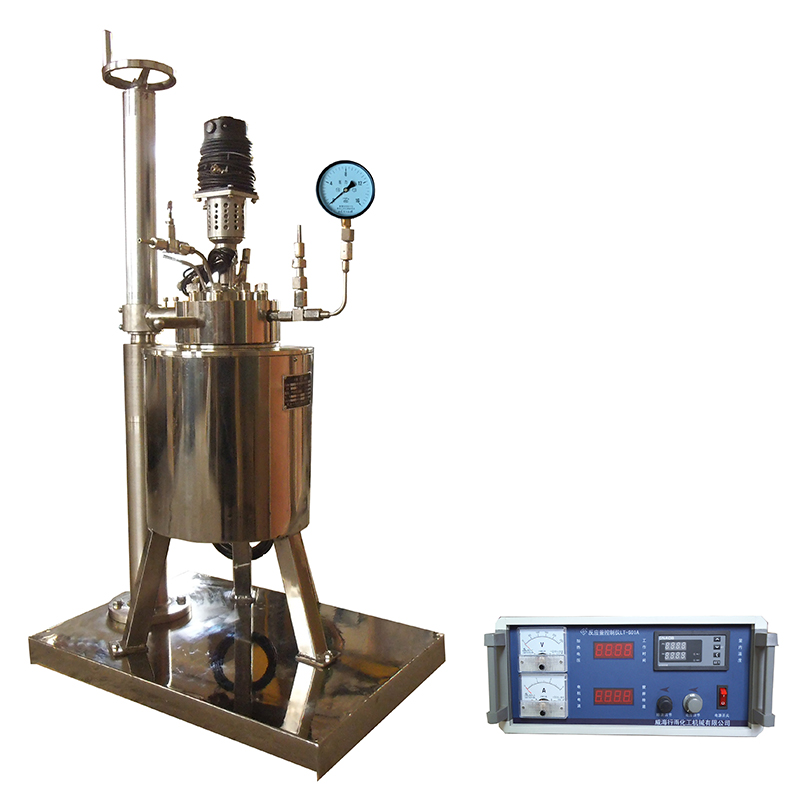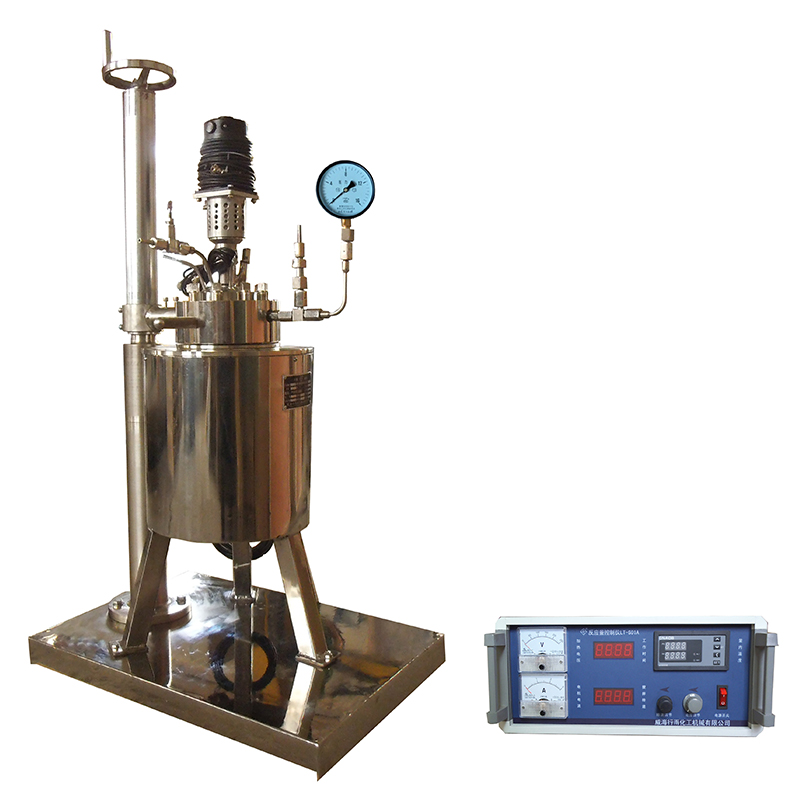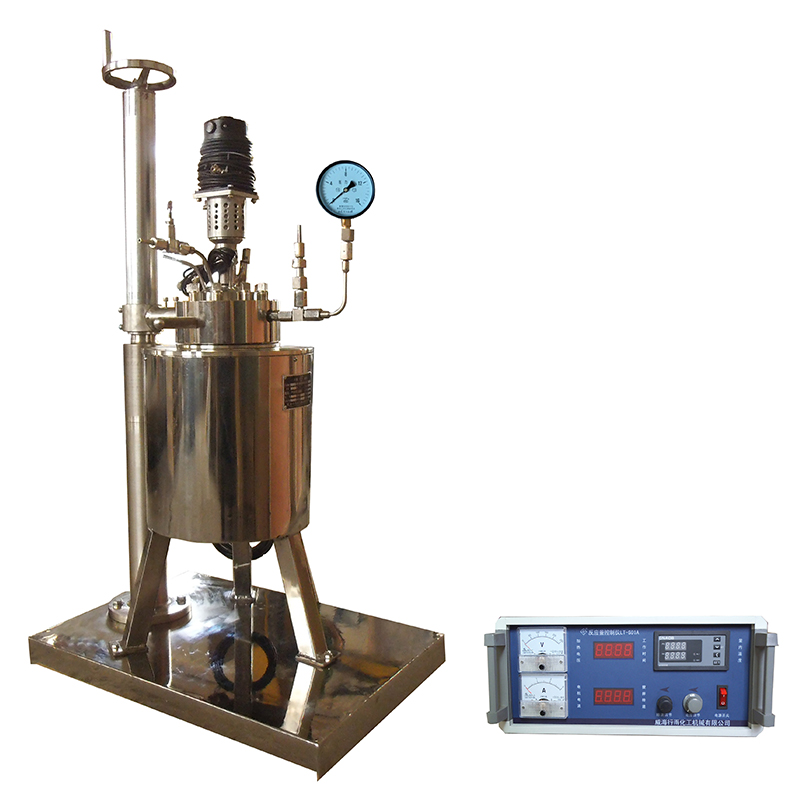

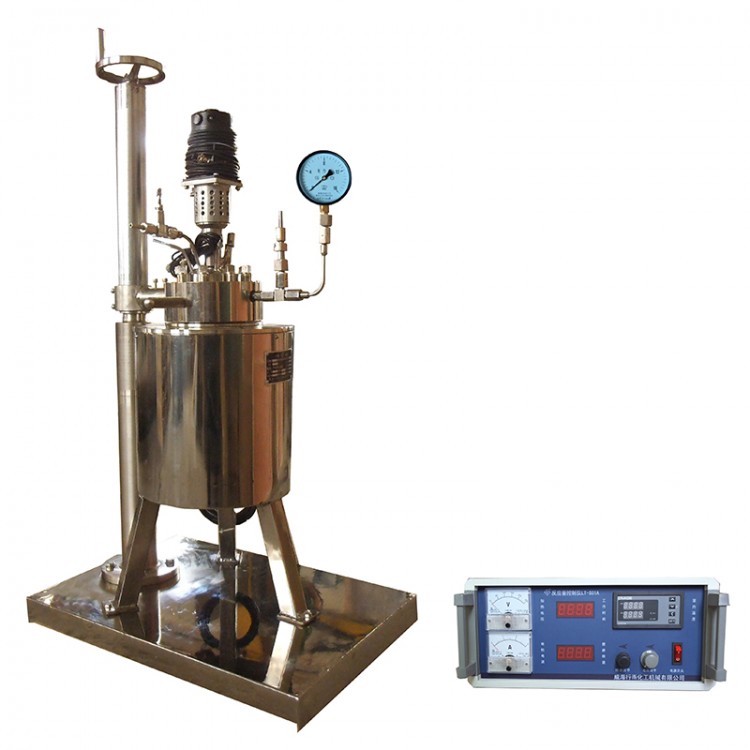

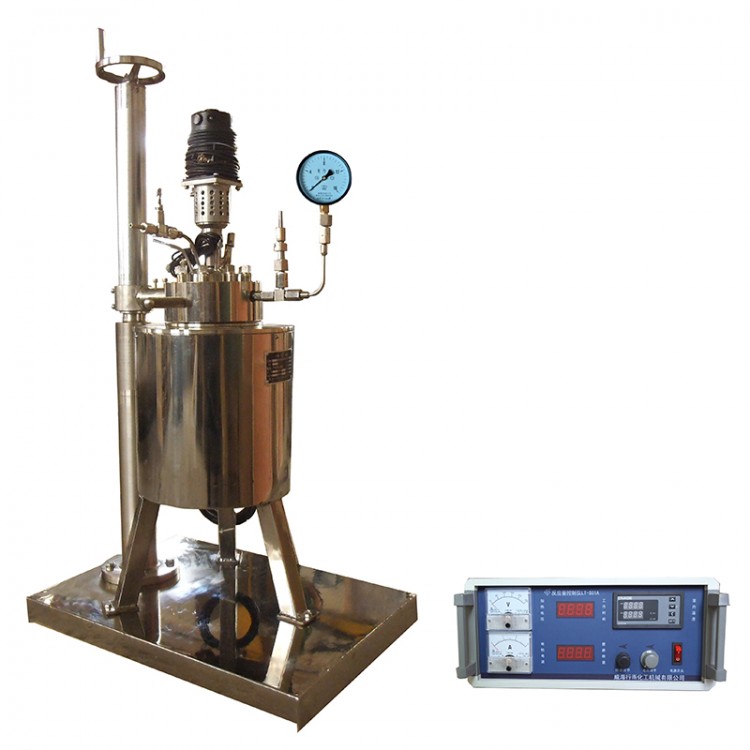

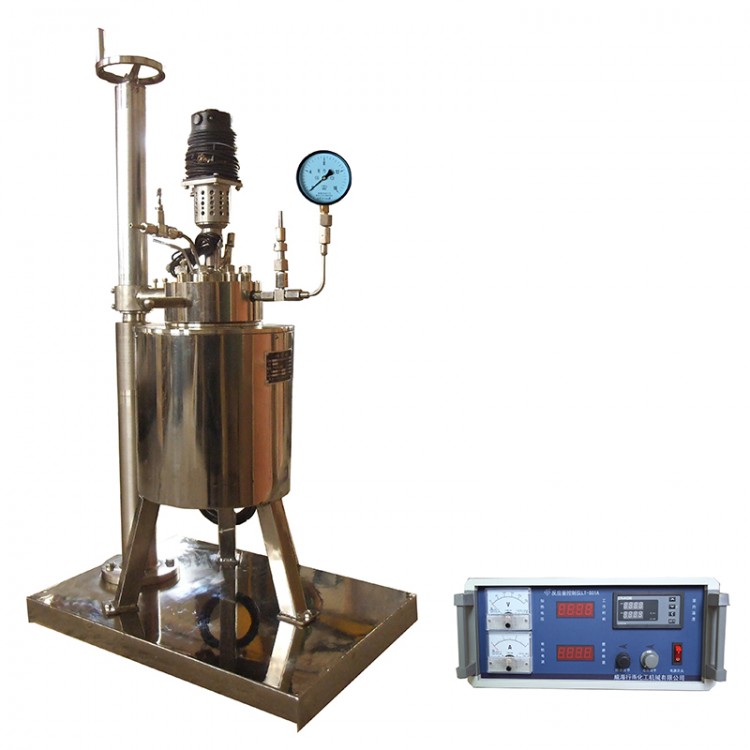


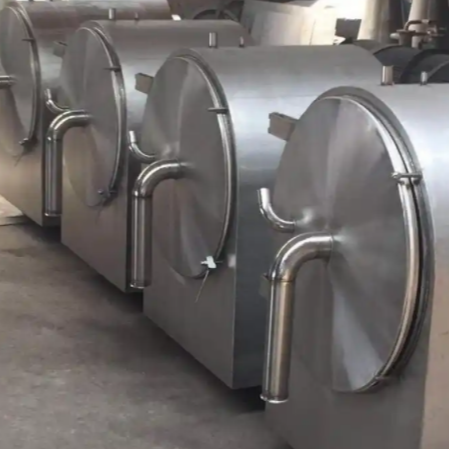





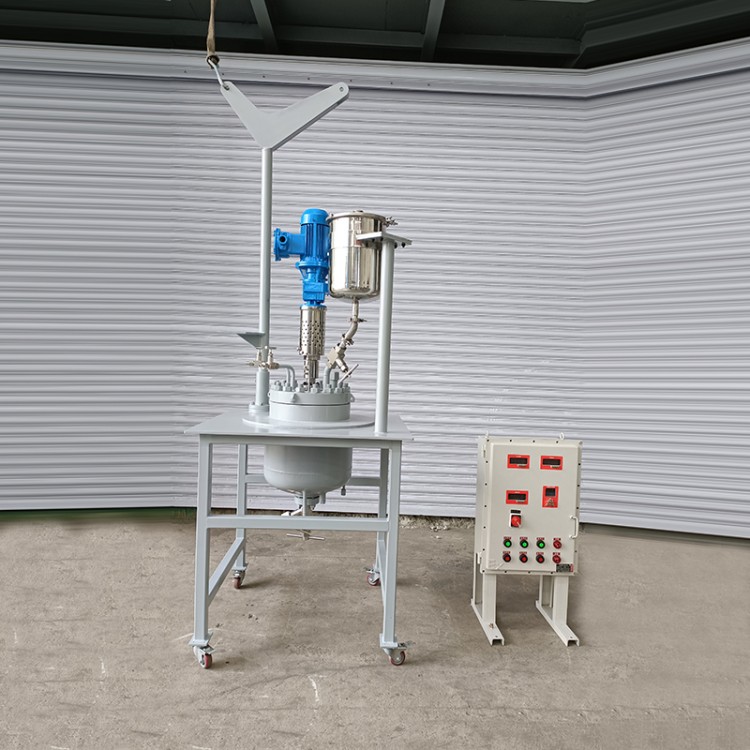
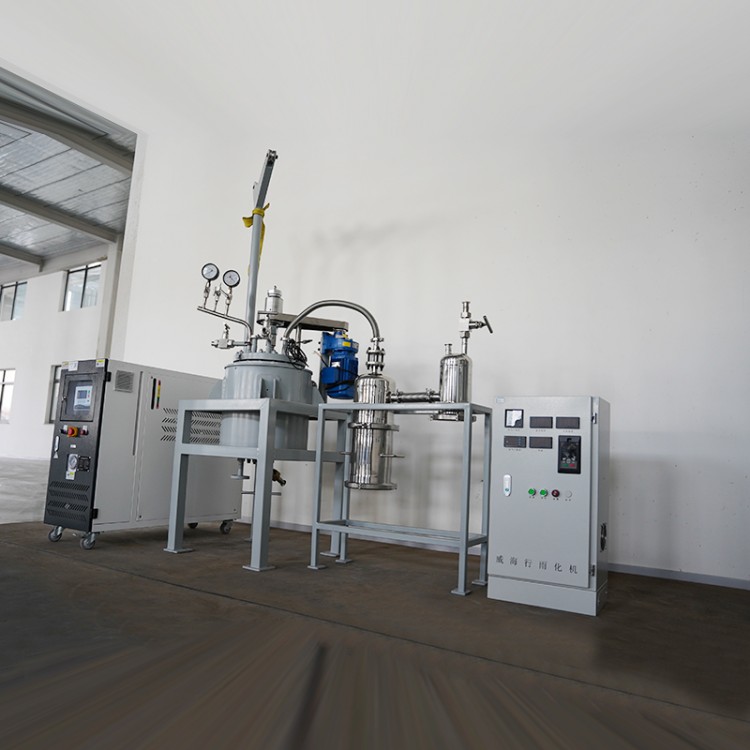
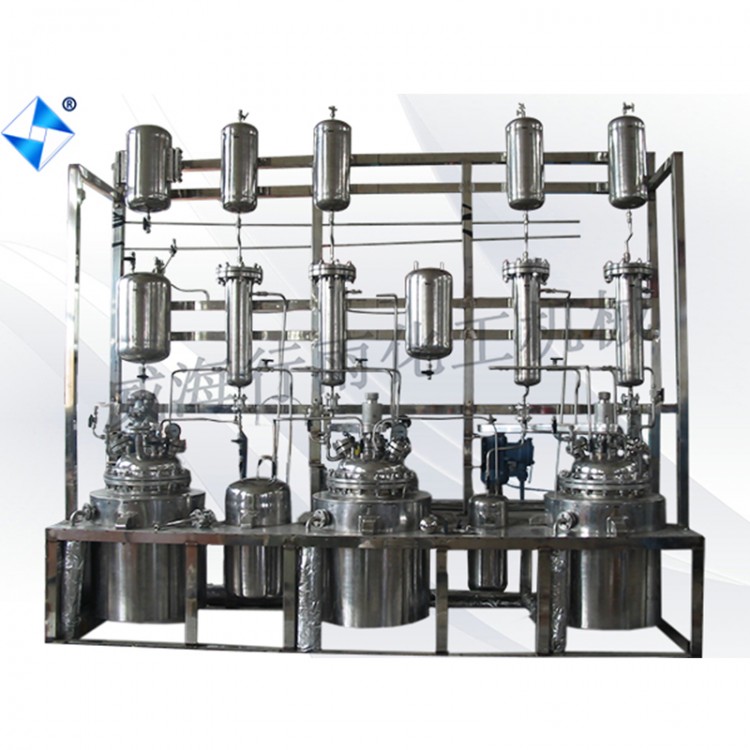
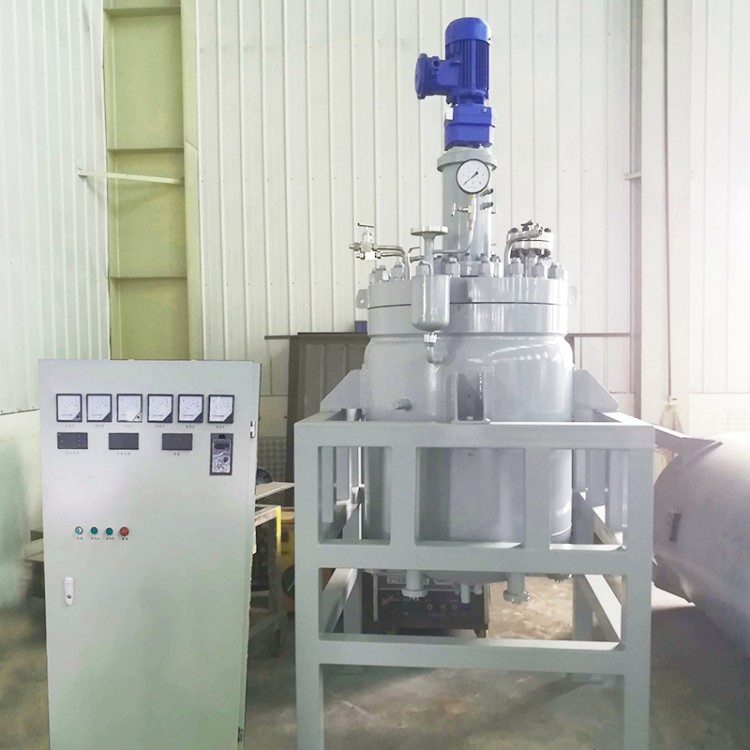
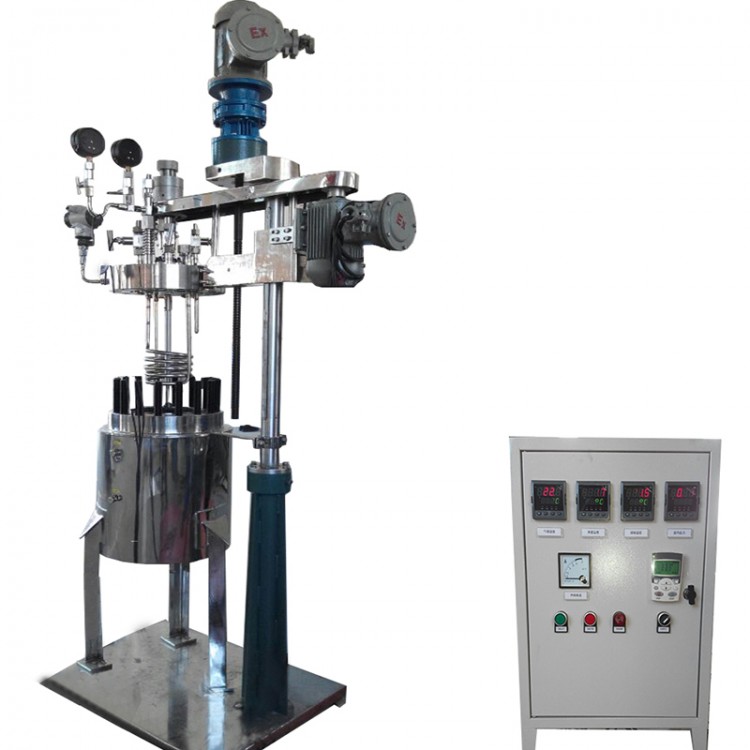
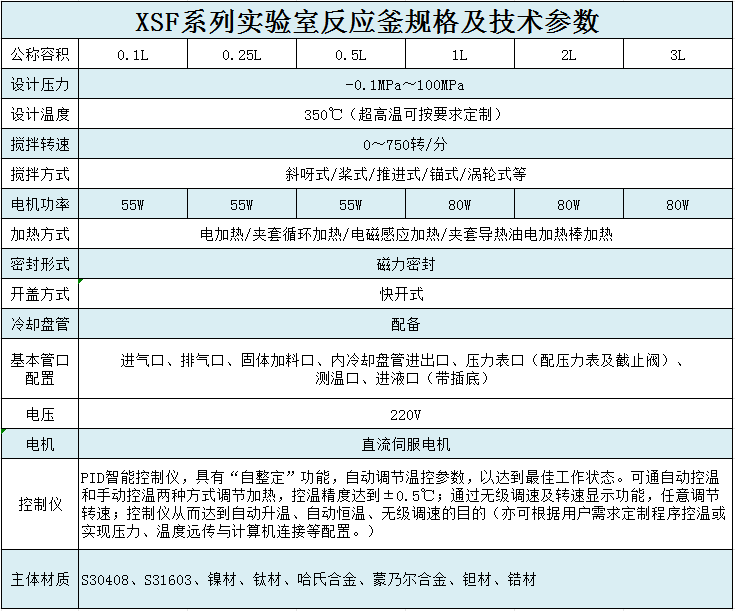
The laboratory reactor is a container used for chemical reactions, requiring simple operation, ease of use, lightweight structure, and ease of handling.
Features of Laboratory Reactor
1. Standard reactors typically use 8-M20 bolts for fastening, which require manually unscrewing each nut, a labor-intensive process. In contrast, quick-opening reactors utilize a sleeve and corresponding bolts for securing, allowing for quick removal by simply loosening each bolt a few turns to release the sleeve.
2.釜体物料取出:Conventional reactors require manual removal of the kettle lid with two hands first, then lifting and flipping the kettle body to pour out the material. In contrast, quick-opening reactors utilize a hand-cranked screw to easily lift the lid and rotate it 90 degrees, clearing space for the kettle body. Subsequently, use the hand-cranked column's worm screw to drive the worm gear, flipping the kettle body 135 degrees for material discharge.
3. The heating furnace can be easily mounted and dismounted in just 2 seconds. This allows the reactor body to cool in the air, shortening the reaction process time.
The above three tasks, a regular kettle cycle (excluding reaction time) takes at least 20-30 minutes, is labor-intensive, especially uncomfortable for the operator due to heat, and may even cause burns if not careful. In contrast, each cycle for a quick-opening kettle only takes a few minutes, is effortless, doesn't overheat, and ensures safety.