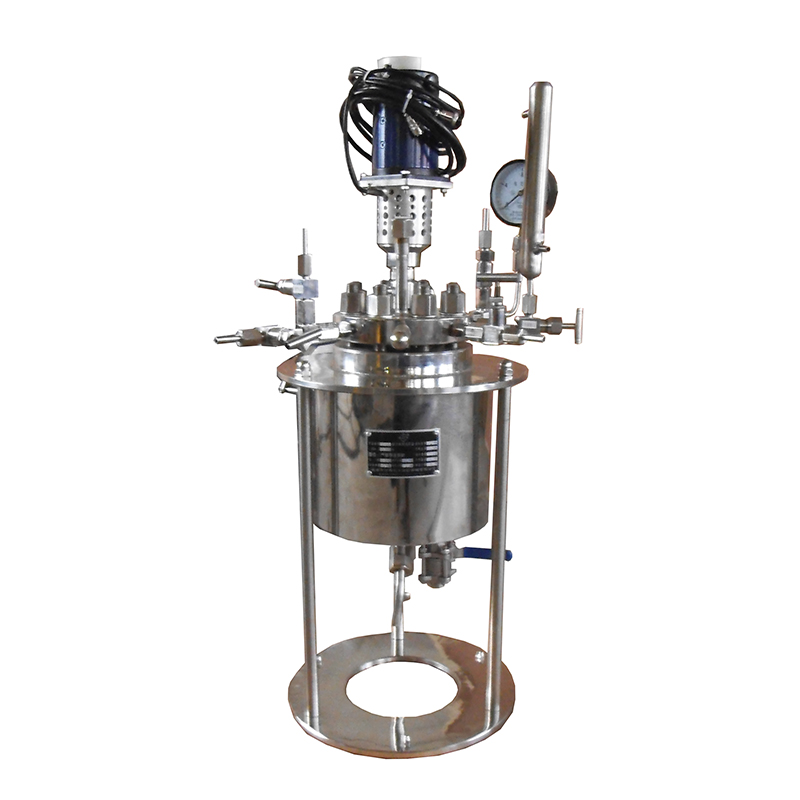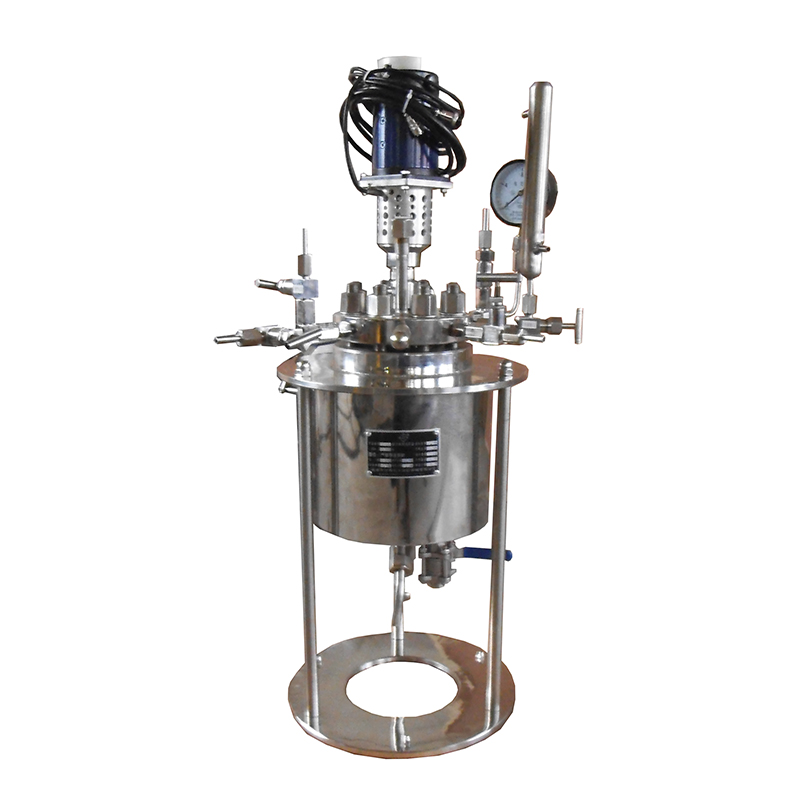

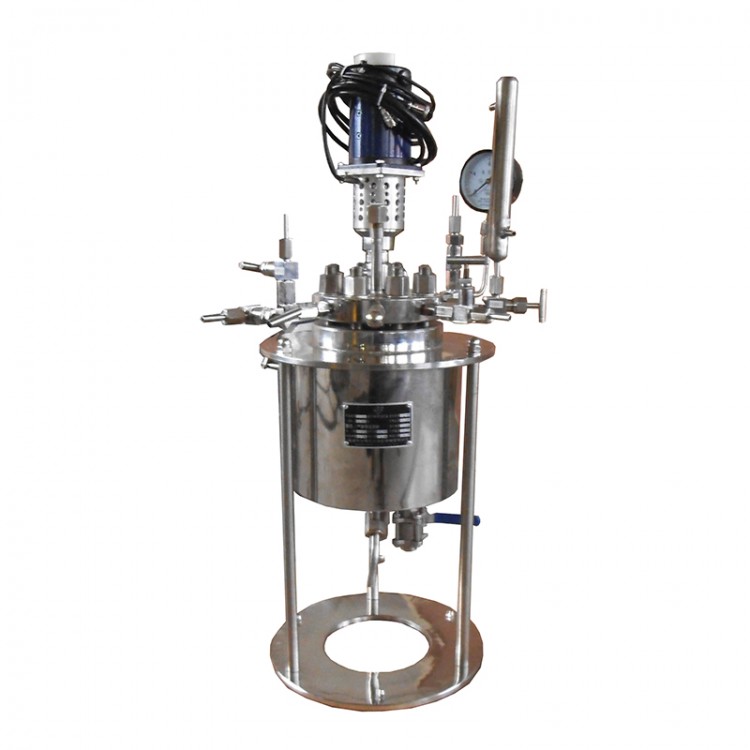


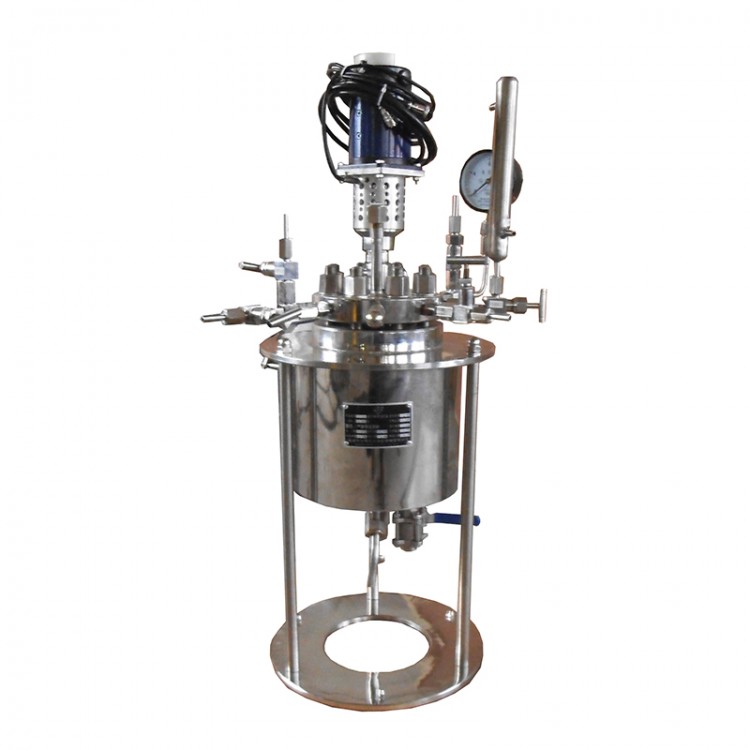







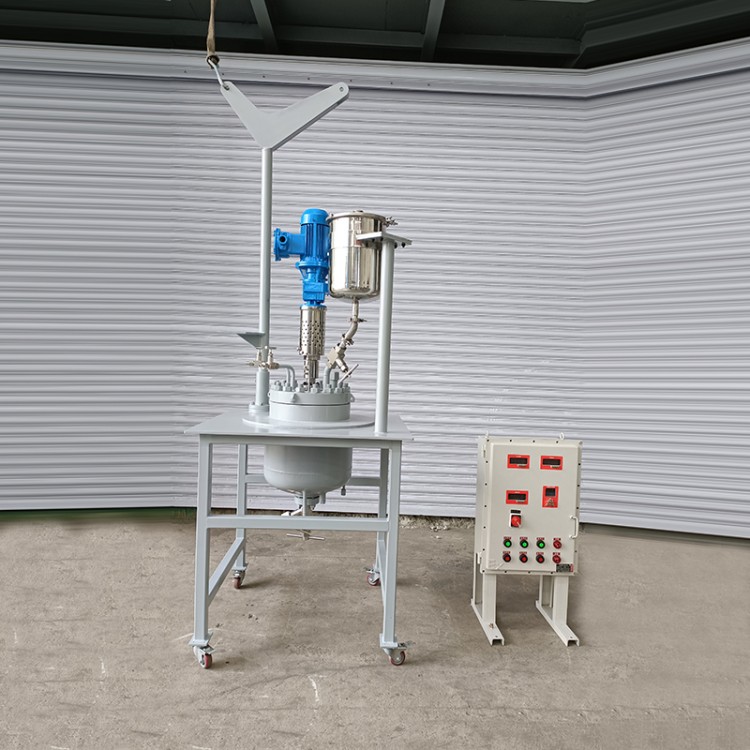
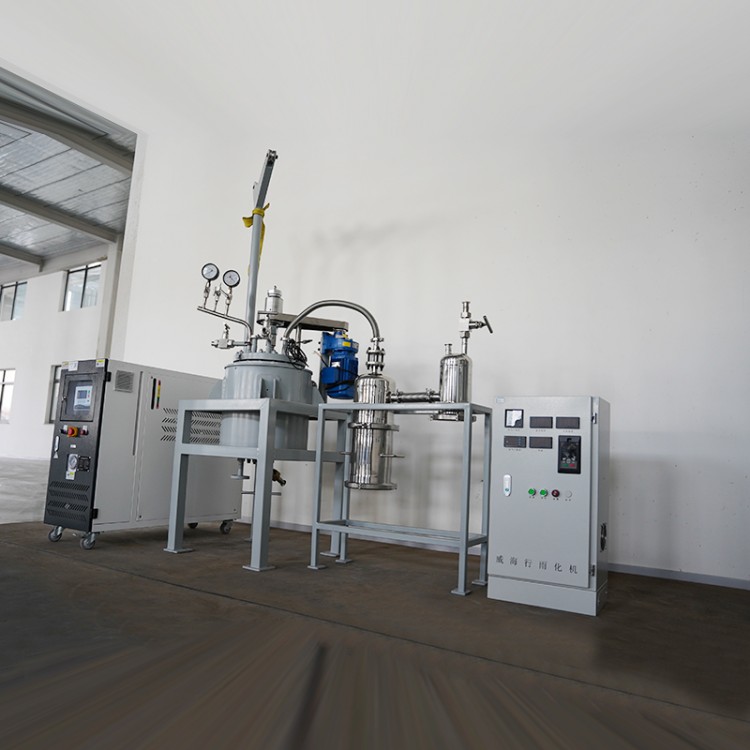
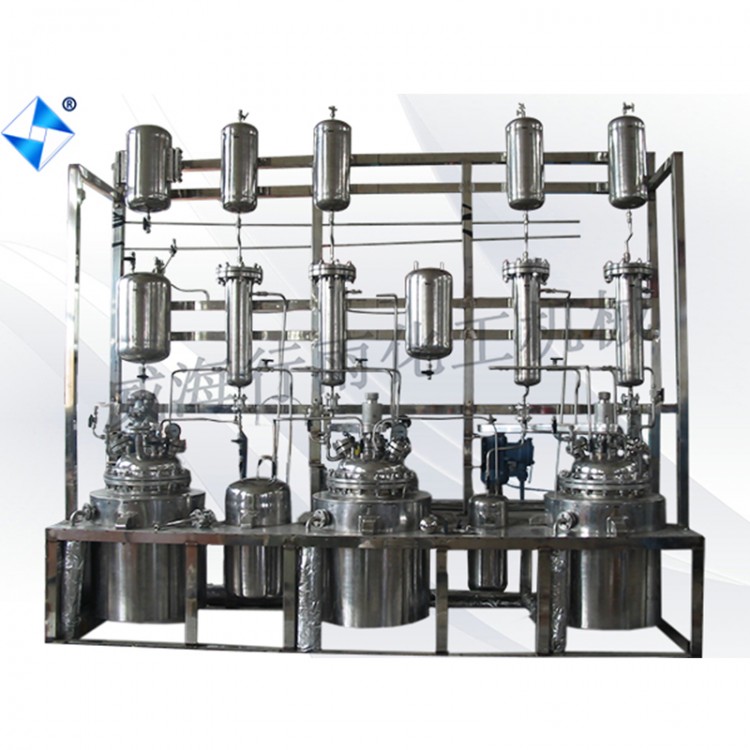
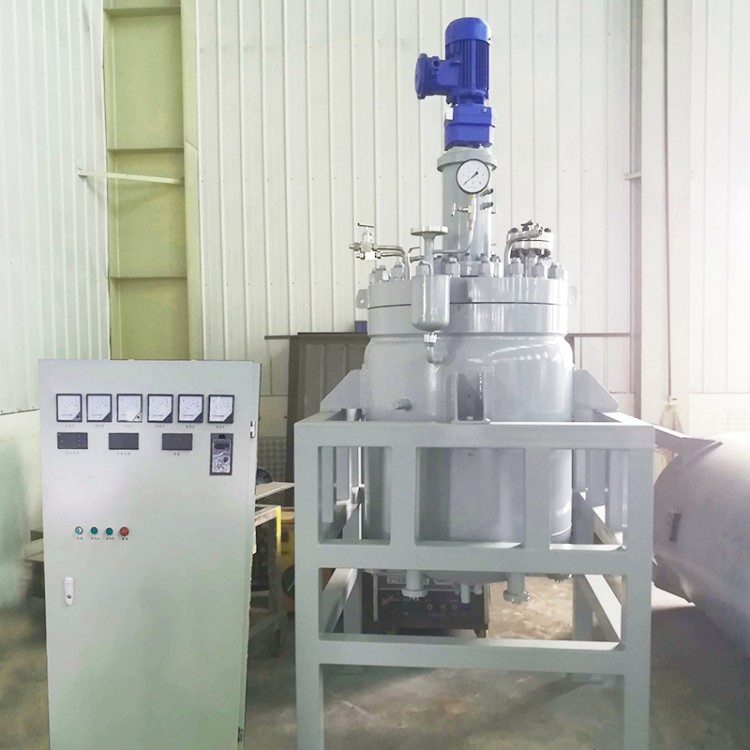
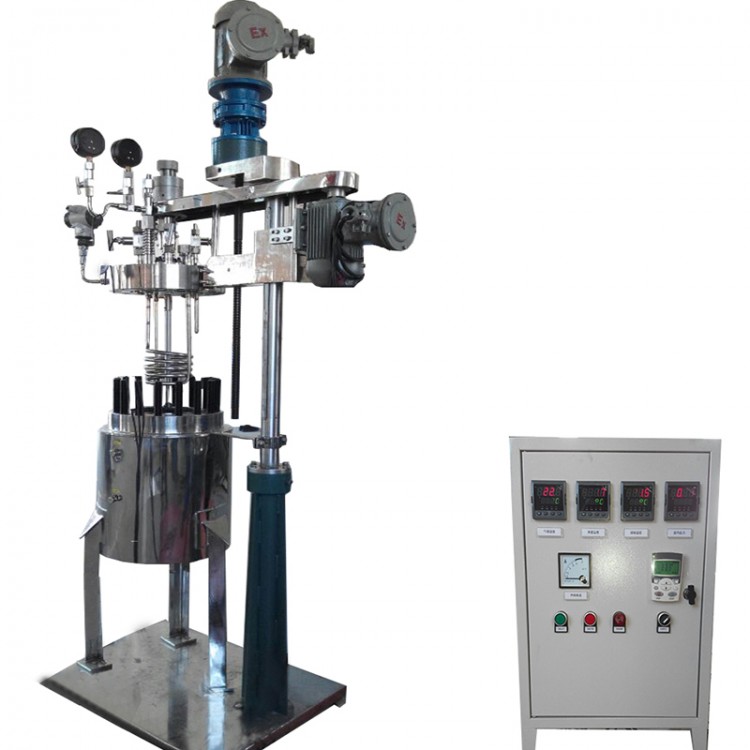
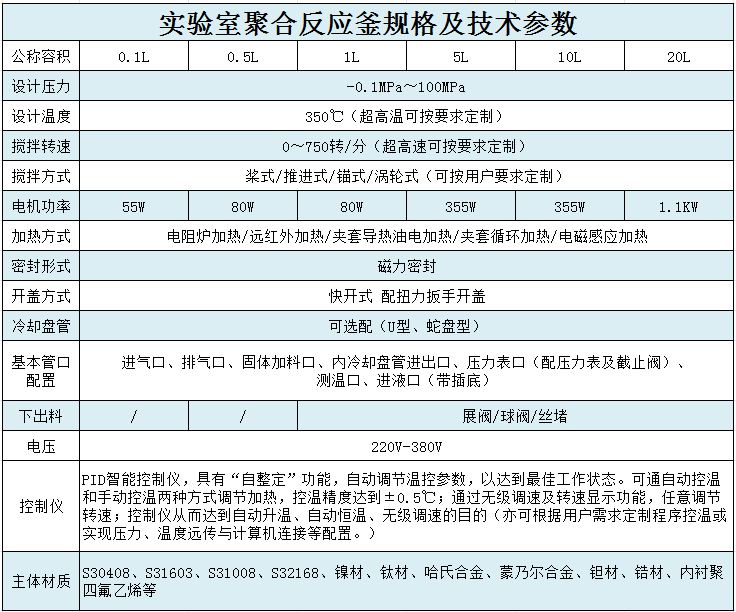
Product Introduction: Our laboratory polymerizer is highly adaptable with wide applications, offering reliable and stable performance, long service life, low energy consumption, high yield, simple operation, and convenient use, making it a premium reaction equipment.
1. The vessel body and lid are sealed with gaskets, ensuring a long service life.
2. The main seal is secured using a two-way split ring, which freely fits over the shoulders of the kettle body and lid. By evenly tightening the torque on the eight main bolts, the kettle can achieve a tight seal. To remove, simply loosen the eight main bolts, open the ring, and the kettle lid can be lifted easily and conveniently, making it the most ideal structure in modern domestic use.
Turn the toggle hook to quickly reset. To prevent the pot body from swinging left and right, manually control the speed of the tilting wheel until reset.
3. The reverse-action mixer features a cylindrical magnetic clutch structure, with the torque size determined by the magnetic material. Generally, strong rare earth magnets are used, which offer a high coupling force. Powered by an electric motor, the mixer generates sufficient stirring power through the clutch. The slurry can be replaced by the operator, and various components such as blades, anchors, frames, and auger worm gears are available for selection based on the viscosity of different materials.
4. The valve components include gas-phase valves, liquid-phase valves (also known as insert-bottom tube valves), safety bursting valves, feed valves, and discharge valves, which can be added or removed according to customer requirements. The valve structure employs a reciprocating design, which boasts a sealing life that is 1.5 times longer than that of rotary valves. The bursting valves come in two types: double safety and single safety devices. The bursting diaphragms are pre-adjusted and sealed by the manufacturer, and should not be altered or loosened. Pressure gauges are all positioned above for easy reading.
Laboratory Aggregation Kettles are widely used in industries such as pharmaceuticals, building materials, chemicals, pigments, resins, and food, featuring rapid heating, high-temperature resistance, corrosion resistance, hygiene, environmental pollution-free, no need for boiler automatic heating, and easy operation.