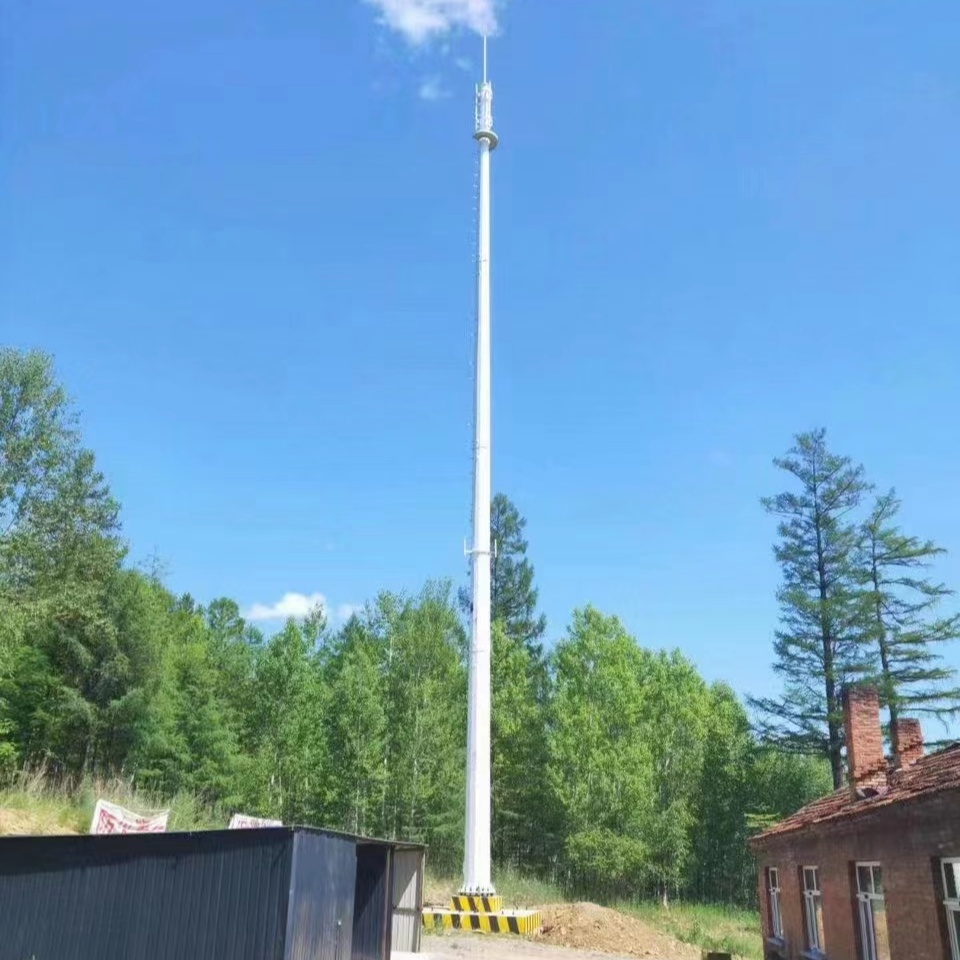

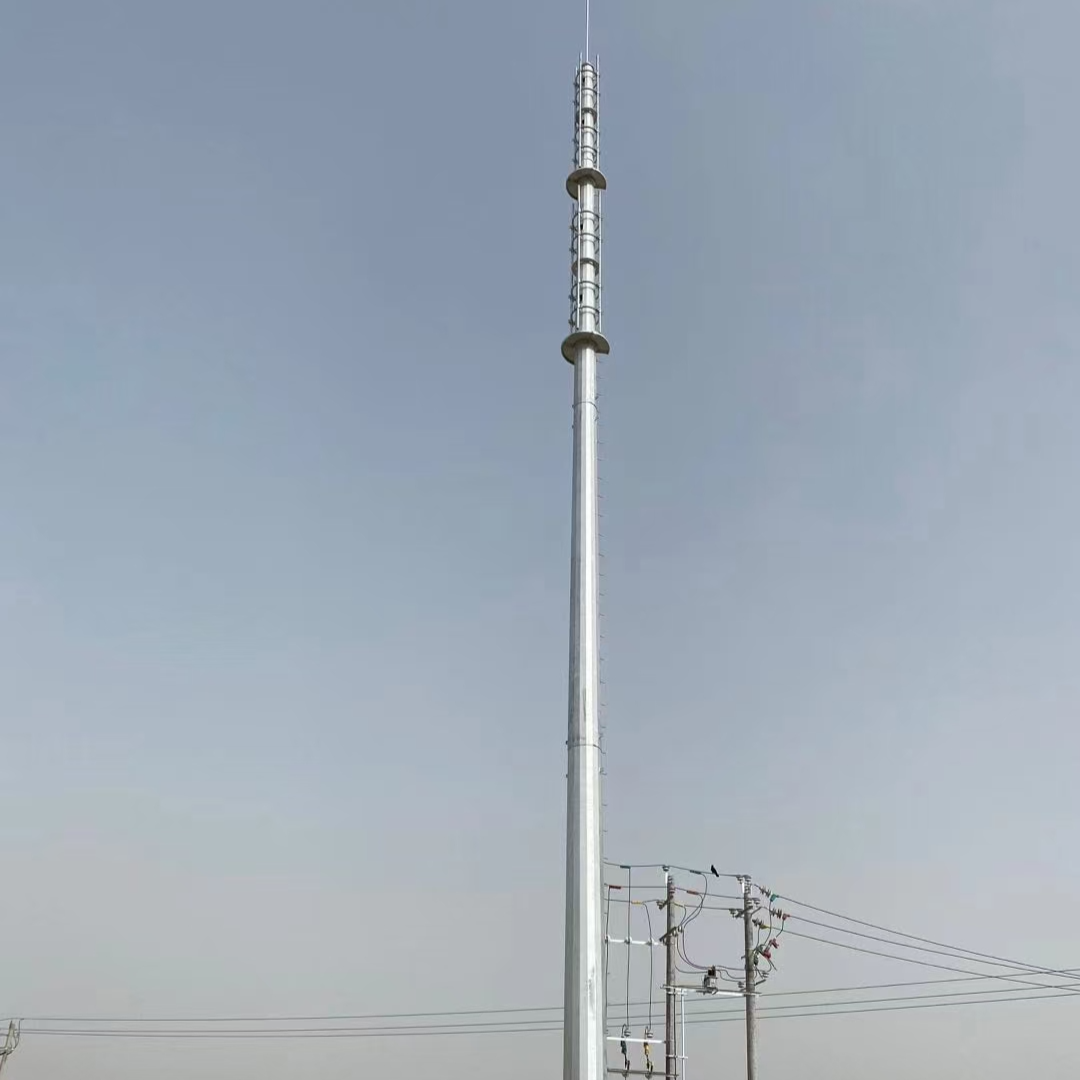
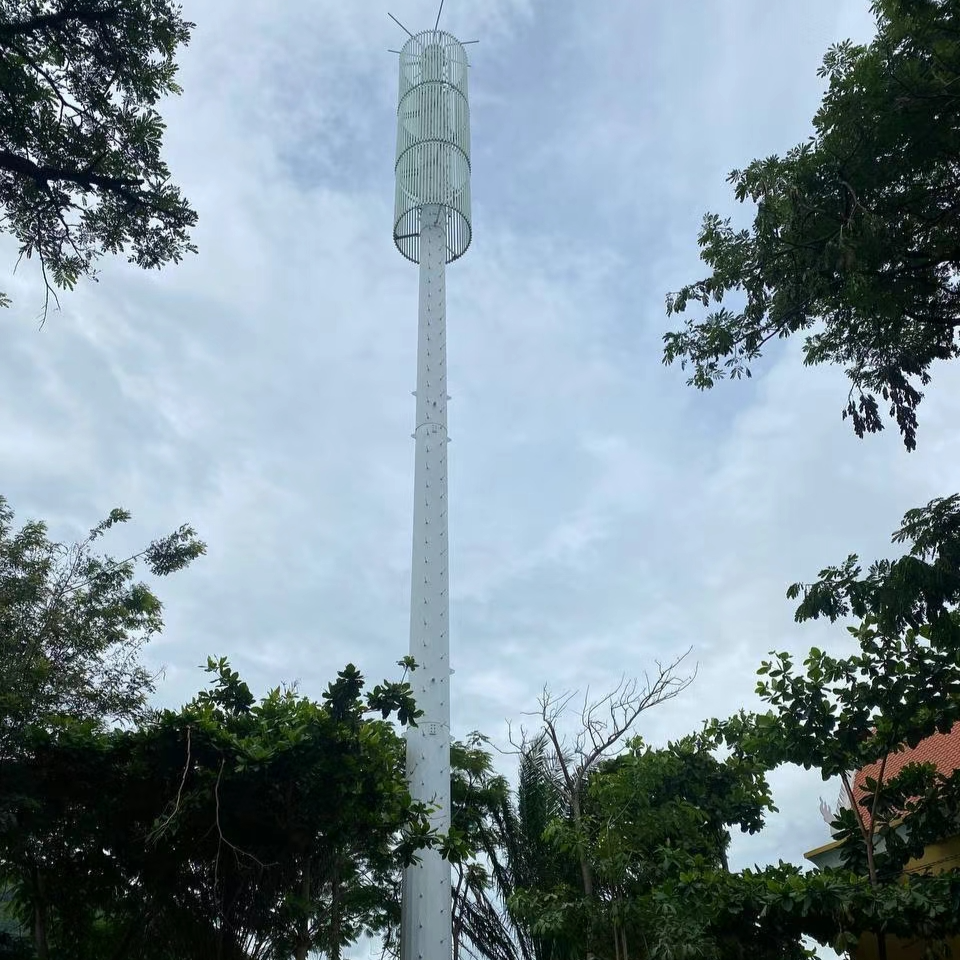














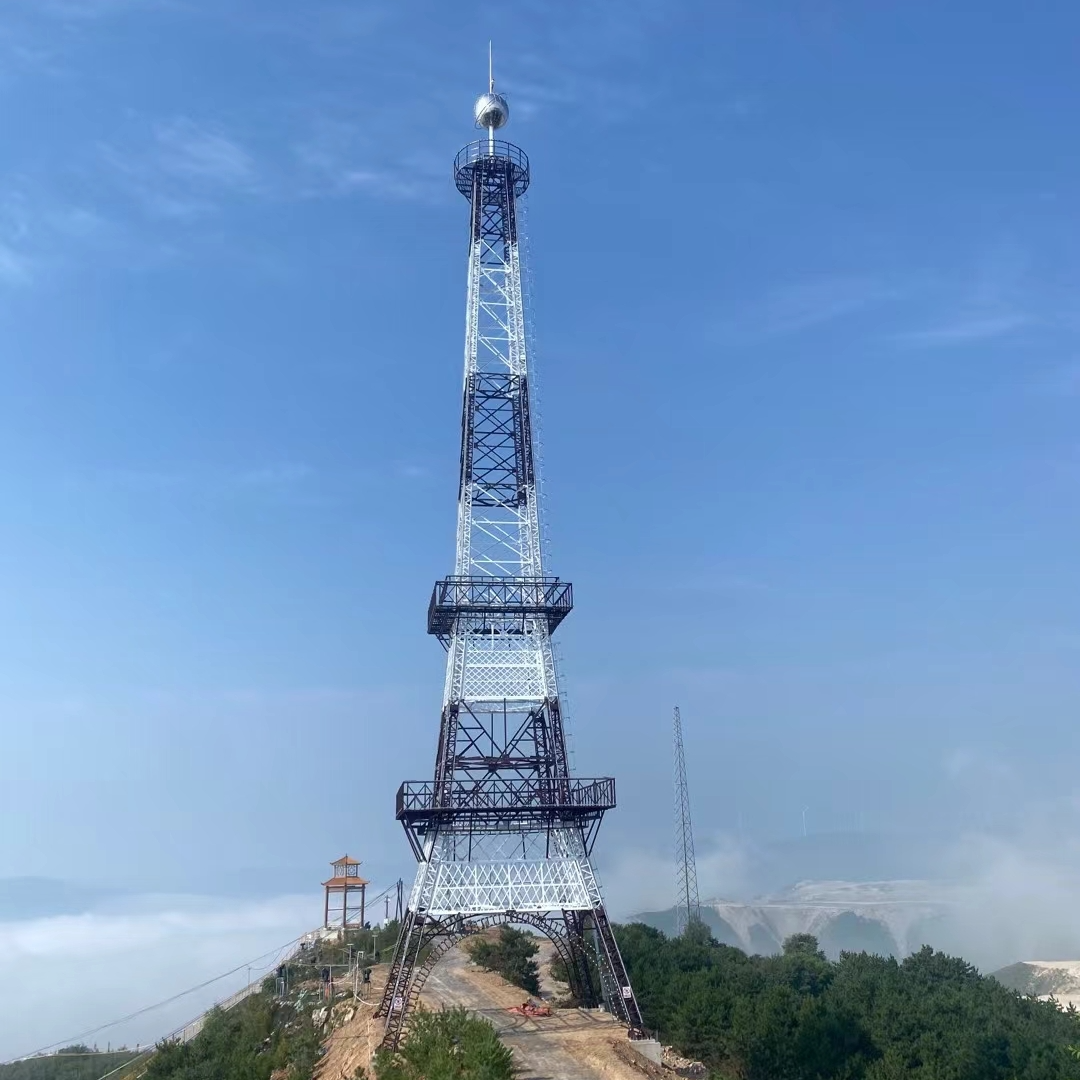


A single-tube tower is a self-supporting tall steel structure primarily composed of a single large-diameter conical steel pipe, widely used in communication and broadcast television fields. Below is a detailed introduction to it:
- Main StructureThe tower cross-section is generally circular or a regular polygon, forming a cone shape with a larger base and a smaller top.
- Connection MethodThe tower sections are connected by either splicing or flange joints, and are fastened together with high-tension bolts through connectors.
- Ancillary FacilitiesThe tower's bottom pipe wall has a lower door opening, and an upper door opening is located at the work platform. The antenna bracket is fixed to the perimeter fence of the work platform. Inside the tower, there is a ladder consisting of the main ladder pole and crossbars.
- Key Features:
- Aesthetically pleasingExteriorly minimalist and elegant, with a straight and proportional silhouette, it blends seamlessly with urban landscapes. Ideal for cities and scenic areas with high aesthetic requirements.
- Smaller footprintThe land area is typically 9-18 square meters, with the foundation mostly constructed in square or round plate styles, which can effectively reduce the land acquisition area and lower construction costs.
- Easy to installFeatures: Reasonably segmented design, fast installation with high-tensile bolts, suitable for equipment hoisting operations. Construction period: 7-10 days, base maintenance: 28 days, installation mast: about 1 day.
- Good performanceThe tower is constructed with steel structure, featuring high material strength and the ability to bear significant loads. Additionally, the built-in climbing ladder and cabling method not only provide convenience and a safe operating environment for operators but also protect the feedline from sun and rain, thereby extending its service life.