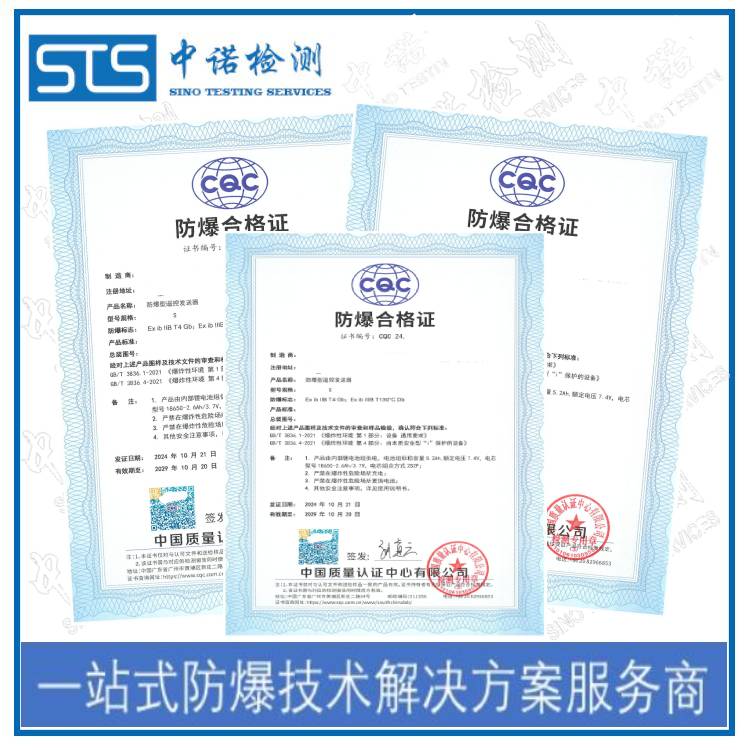

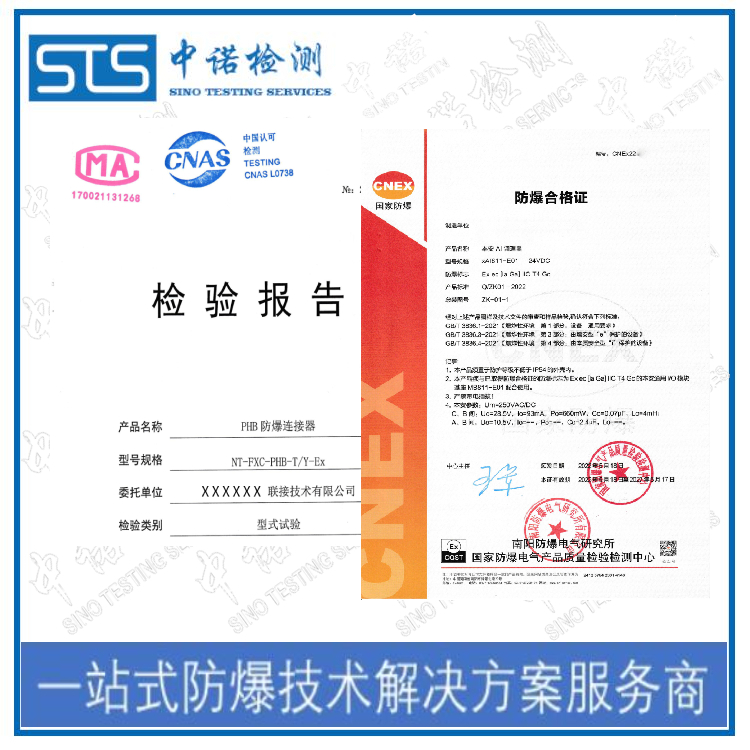
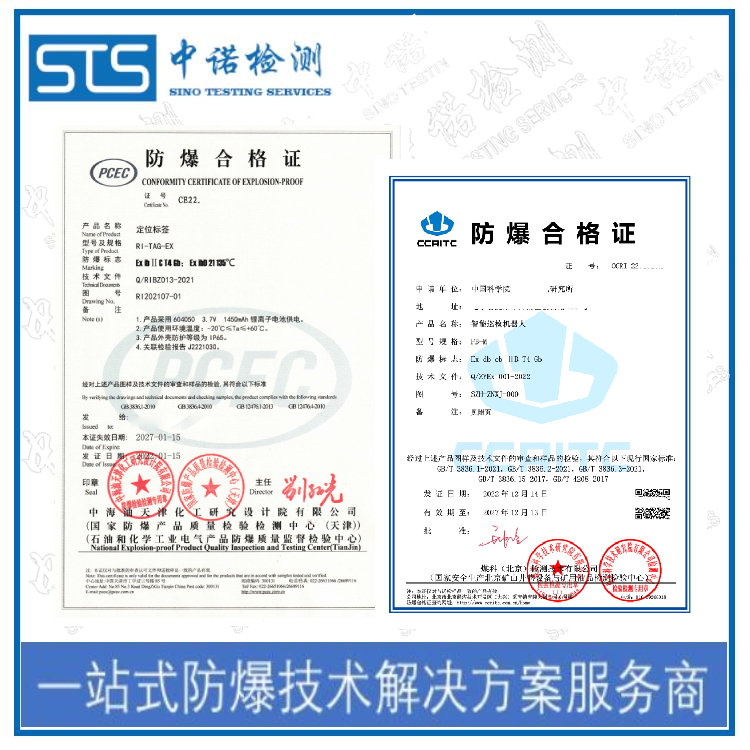










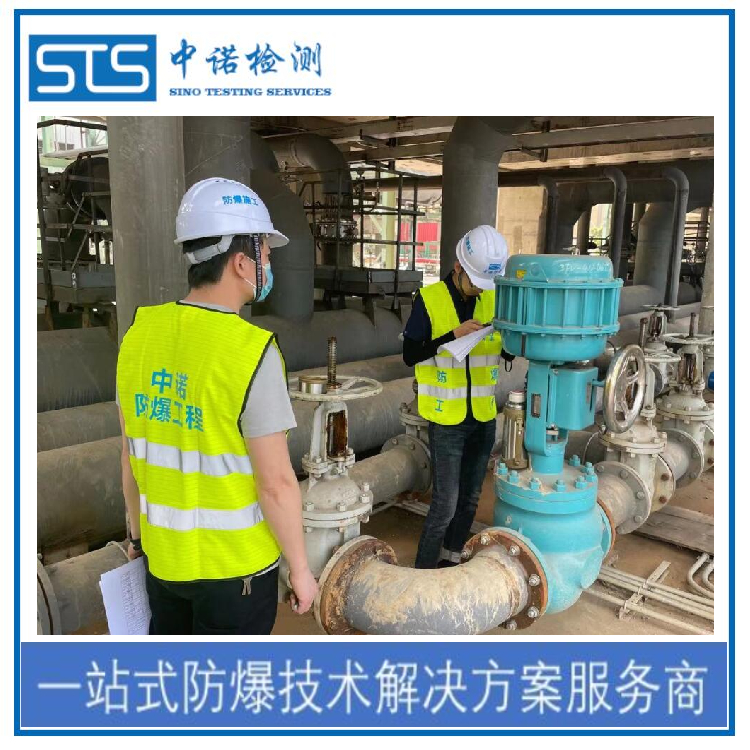
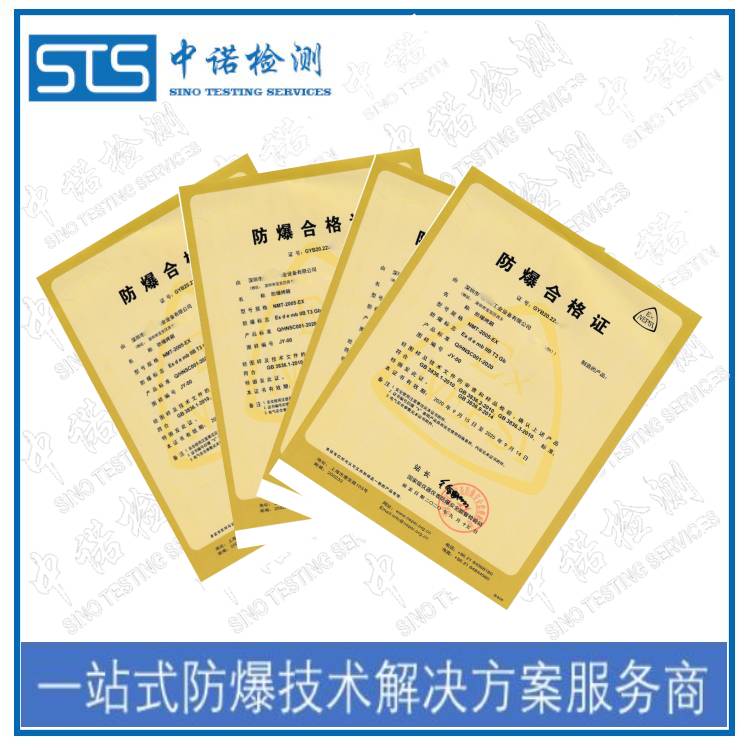
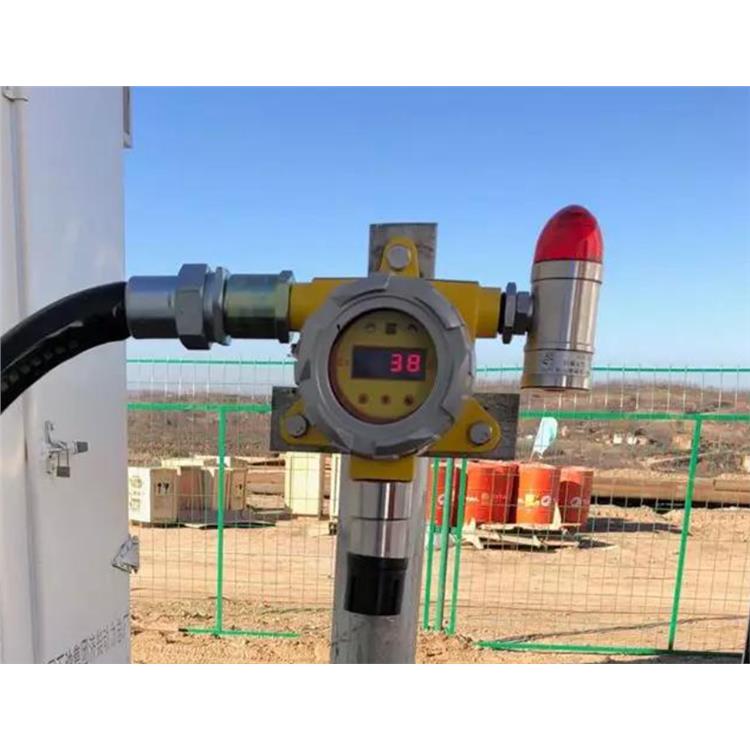
Shenzhen Zhongnuo Testing Technology Co., Ltd. is based in South China and specializes in explosion-proof certification and coal safety certification application consulting services, offering a one-stop explosion-proof technology consulting service.
Certification standards for explosion-proof equipment used in environments with explosive gas:
GB/T 3836.1-2021 Explosive Atmospheres Part 1: Equipment General Requirements
GB/T 3836.2-2021 Explosive Atmospheres, Part 2: Equipment protected by a flameproof enclosure "d"
GB/T 3836.3-2021 Explosive Atmospheres, Part 3: Equipment protected by intrinsic safety "i"
GB/T 3836.4-2021 Explosive Atmospheres, Part 4: Equipment protected by intrinsic safety "i"
GB/T 3836.5-2021 Explosive Atmospheres, Part 5: Equipment protected by positive pressure enclosures "p"
GB/T 3836.6-2017 Part 6: Equipment protected by liquid immersion type “o” for explosive environments
GB/T 3836.7-2017 Explosive Atmospheres Part 7: Equipment protected by filling with sand type “q”
GB/T 3836.8-2021 Explosive Atmospheres, Part 8: Equipment protected by "n" type protection
GB/T 3836.9-2021 Explosive Atmospheres, Part 9: Equipment protected by "m" type enclosures
The Difference Between Intrinsically Safe and Explosion-Proof:
These are two different explosion-proof protection types.
Explosion-proof is typically achieved through the use of a protective explosion-proof housing, which must have adequate thickness and strength.
Even in the event of an explosion inside the equipment, the flame would be extinguished due to the width, gap, and roughness of the explosion-proof shell joint surface, preventing ignition of the external hazardous environment.
On the other hand, even if an explosion occurs in a hazardous area outside, the explosion-proof housing also boasts explosion-resistant properties.
In summary, the shell is both explosion-resistant and explosion-proof. The equipment will be rather heavy.
intrinsic safety, referring to equipment that achieves inherent safety by limiting circuit energy, etc.
Safety-certified products have higher requirements for equipment's circuitry and operating power, generally suitable for handheld devices and low-power products.
The differences between explosion-proof grades IIB and IIC
Certification levels IIB and IIC are classifications for explosion-proof electrical equipment in environments with flammable and explosive gases, and they have some key distinctions.
Firstly, both IIB and IIC are classified as Class II explosion-proof equipment, suitable for environments with flammable and explosive gases other than coal mines, such as the common flammable gas and steam environments in petrochemical, gas, and other industries. For such equipment, further categorization into different groups, such as IIA, IIB, IIC, etc., is based on the characteristics of flammable and explosive gases.
In these environments, the characteristics of flammable and explosive gases dictate the level of explosion-proof equipment required.
Specifically, the differences between IIB and IIC mainly lie in the gas environments they are applicable to. Gases in the IIC category are generally more hazardous, with lower ignition energies and wider limits; ethylene is a representative gas. In gas environments of the IIC category, explosion-proof equipment must have higher explosion-proof performance to prevent accidents. In contrast, gases in the IIB category have relatively stable ignition energies and limits, so the performance requirements for explosion-proof equipment are relatively lower; ethylene is also a representative gas.
Additionally, when selecting explosion-proof equipment, factors such as temperature classes and equipment protection levels must be considered to ensure safe operation in hazardous environments.
In summary, IIB and IIC are different classification levels for explosion-proof electrical equipment in flammable and explosive gas environments. The main differences between them lie in the applicable gas environments and the requirements for explosion-proof performance. For more detailed information or consultation on explosion-proof certification issues, please feel free to contact Shenzhen ZhongNuo Testing Technology Co., Ltd.
Difference Between Explosion-Proof 3C Certification and Explosion-Proof Compliance Certificate Certification
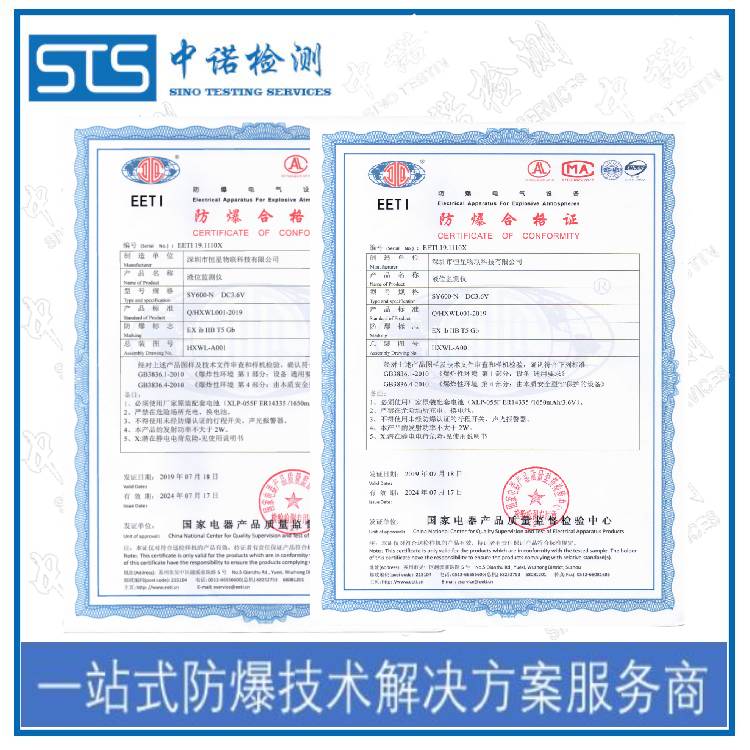
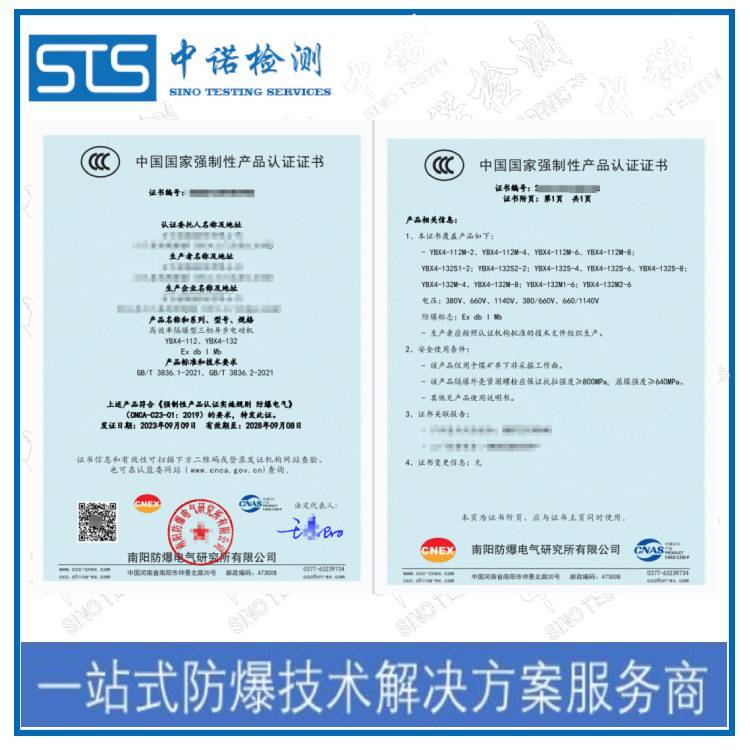
As of October 1, 2009, certain explosion-proof electrical equipment was included in the CCC certification catalog. Products listed in the catalog must undergo explosion-proof 3C certification, following a "product testing + factory audit" approach, which involves both type testing of the product and on-site factory audits. Explosion-proof certificates, however, are for products not listed in the explosion-proof 3C catalog, and the certification process involves technical image assessment and product testing; upon passing the product testing, an explosion-proof certificate can be issued. Please note that while products within the explosion-proof 3C catalog can only obtain explosion-proof certificates, there is a risk of being penalized by market supervision.
Requirements for obtaining the explosion-proof 3C certification
To obtain the explosion-proof 3C certification, products listed in the explosion-proof 3C catalog, such as motors, fans, intercoms, etc., must be addressed. Additionally, applicants must have a manufacturing facility or an OEM/ODM factory, as the explosion-proof 3C certification requires a "product testing + factory audit" approach.
If your product falls under the explosion-proof 3C certification list and you wish to learn more about the details or application process of the explosion-proof 3C certification, please feel free to consult Shenzhen ZhongNuo Testing Technology Co., Ltd. for more detailed guidance and assistance.
Explosion-proof Certification Application Consulting Service - Shenzhen Zhongnuo Testing Technology Co., Ltd.
WeChat Official Account

Scan to follow Official Account