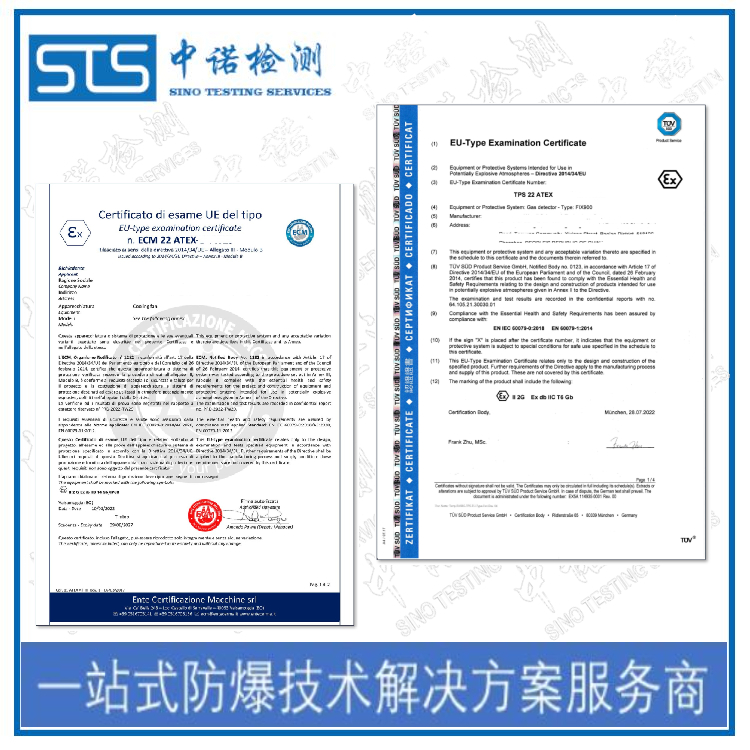

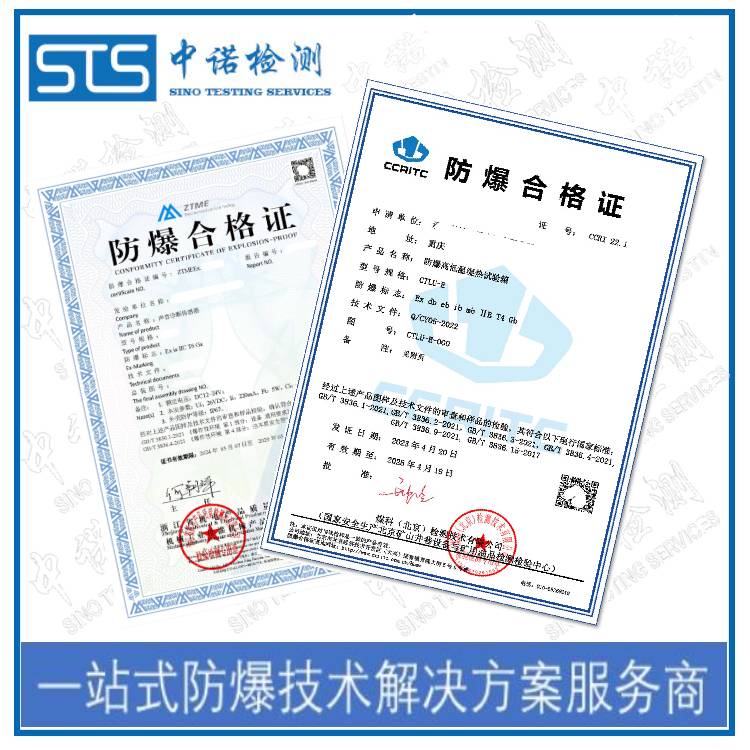
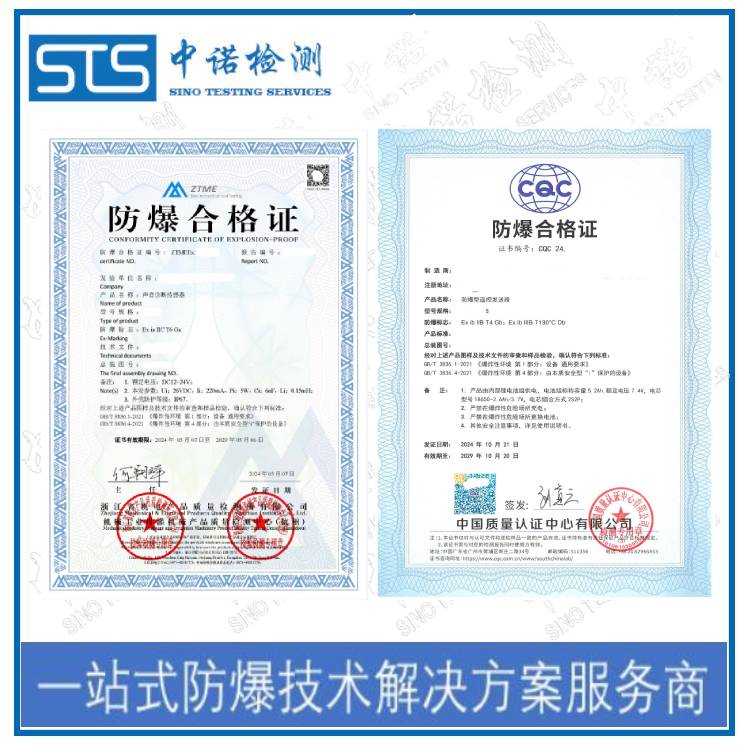










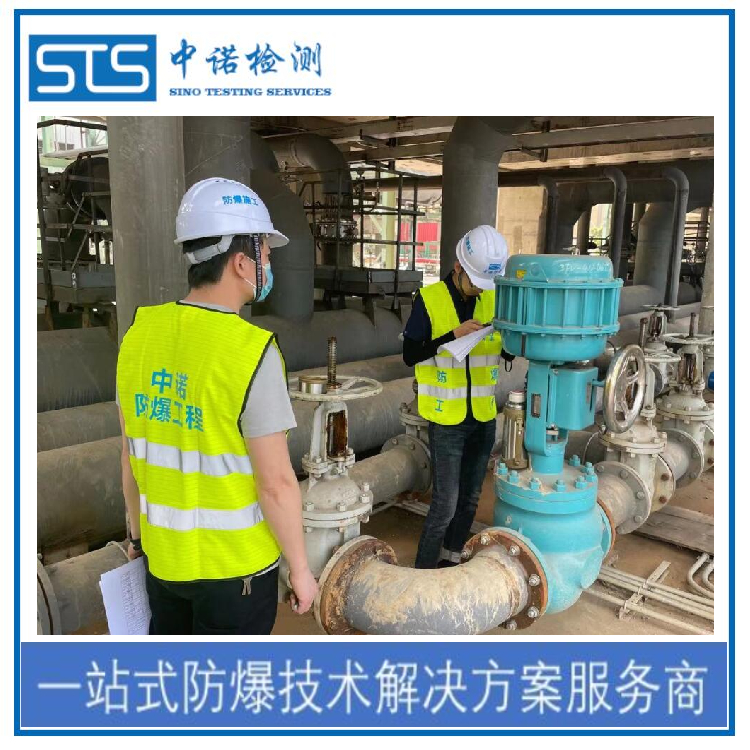
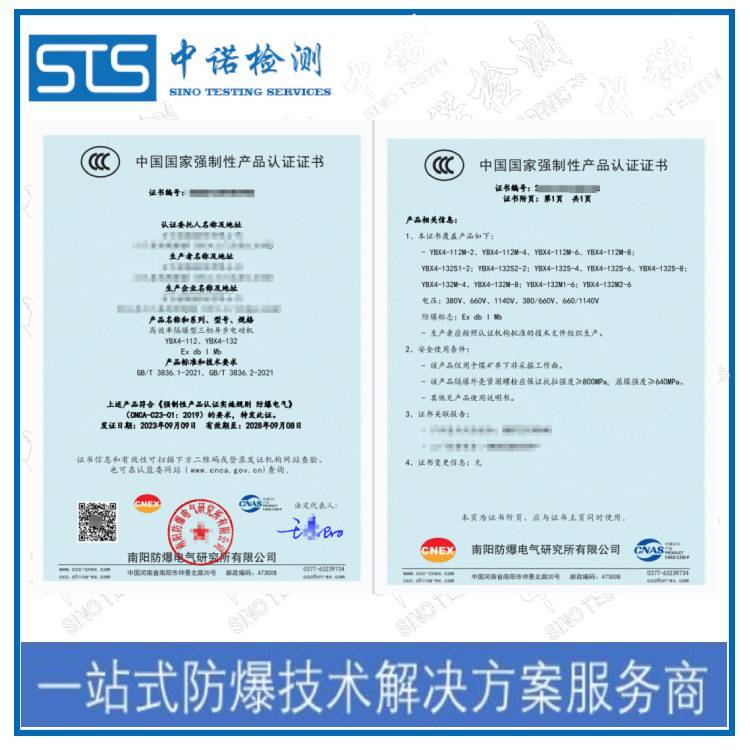
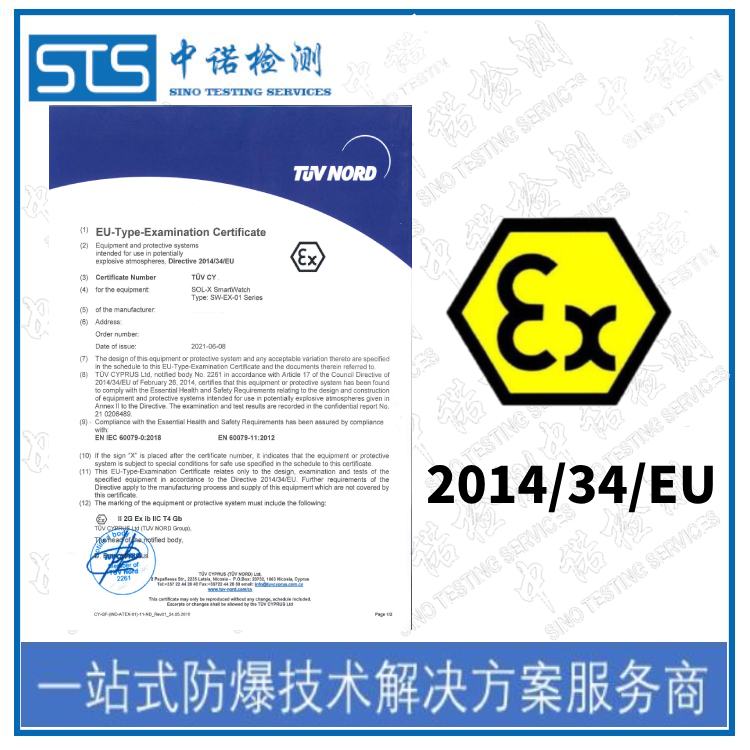
Shenzhen Zhongnuo Testing Technology Co., Ltd. is based in South China and specializes in explosion-proof certification and coal mine safety certification application consulting services, offering one-stop explosion-proof technology consulting services.
What are the requirements and documents needed to apply for an explosion-proof certificate?
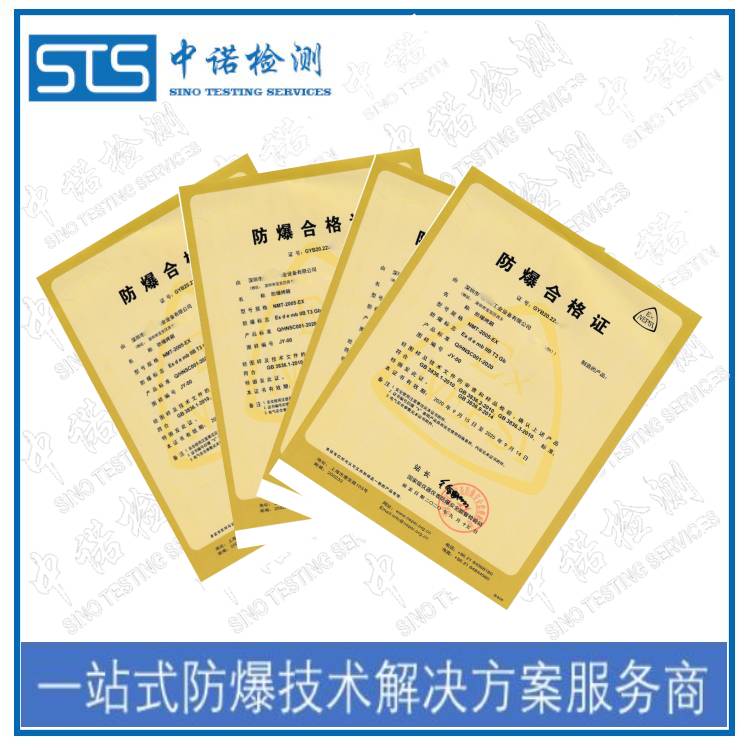
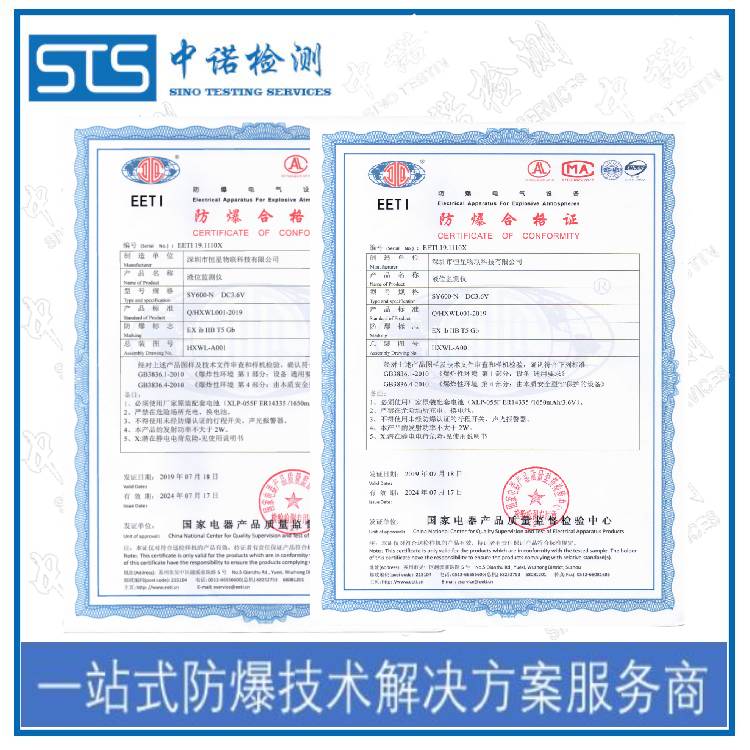
The explosion-proof certificate is a safety certification for equipment and products used in environments with explosive gases or combustible dust.
Certificates are available for Ex equipment and Ex components.
The product must obtain a防爆合格证, and a防爆 standard test of the product is required.
Provide drawings and technical documents that meet explosion-proof standards.
The technical documentation here includes product manuals, corporate standards, electrical schematics, PCB layouts, assembly diagrams, exploded views, battery testing reports, specifications, potting process files, wireless transmission power reports, and shell material reports, among others.
Of course, not all of this information is required; it needs to be further assessed based on the product structure and explosion-proof type.
ZhongNuo Inspection boasts years of experience in explosion-proof product testing and certification services.
We offer consulting services for explosion-proof design, drafting, circuit, and structural modifications. Full-process consulting on obtaining explosion-proof certification is also available. Welcome to consult anytime!
The explosion-proof certificate is a certification model for products outside the explosion-proof 3C catalog.
As of October 1, 2009, certain explosion-proof electrical equipment was included in the CCC certification catalog, which is a mandatory product certification. Products listed in the catalog must undergo explosion-proof 3C certification, following the "product testing + factory audit" model. For a detailed explosion-proof 3C certification catalog, please refer to the relevant information on our website. Explosion-proof products not listed in the catalog can opt for a certificate of conformity, which can be obtained simply by passing the product testing.
The general process for obtaining an explosion-proof certificate includes: submitting relevant product documents, conducting product testing, and upon passing the test, issuing the explosion-proof certificate. Throughout the application process, ensure that your product complies with the relevant explosion-proof standards and requirements.
If you're unfamiliar with explosion-proof standards and certification requirements, that's okay. Shenzhen ZhongNuo Testing Technology Co., Ltd. offers explosion-proof design and modification services, as well as certification agency services for intrinsically safe, flameproof, explosion-proof enclosures, and positive pressure types. We help businesses conveniently obtain explosion-proof certifications.
What are the requirements for a company to apply for explosion-proof certification -- Shenzhen ZhongNuo Inspection & Testing Technology Co., Ltd.
For businesses, there are no special requirements for obtaining a domestic explosion-proof certificate (except for the explosion-proof 3C certification).
Primarily, it's about checking if the product meets the explosion-proof standards and what documentation can be provided.
If the product falls under the explosion-proof 3C certification category, the applicant must have a production factory (OEM/ODM is also acceptable).
Because the explosion-proof 3C certification is a certification model that involves both type testing and factory inspection.
In addition to product testing, an annual audit of the manufacturing facility is required.
Intrinsically Safe Certification and Explosion-Proof Certification are two common types of different explosion-proof protection styles. They have essential differences in the explosion-proof principle, mainly reflected in the following aspects:
Explosion-proof certification typically involves using explosion-proof enclosures. These enclosures must have sufficient thickness and strength to prevent flame ignition in the event of an internal explosion, due to the width, gap, and roughness of the joint surfaces of the enclosure. On the other hand, even if an explosion occurs in an external hazardous area, the explosion-proof enclosure retains its blast-resistant properties. In summary, explosion-proof enclosures can withstand and resist explosions, but the equipment tends to be heavier.
The intrinsic safety certification, which ensures fundamental safety, is achieved by limiting circuit energy, ensuring that even in the event of a predicted fault, the energy produced is not sufficient to ignite surrounding explosive substances. Therefore, intrinsic safety products have higher requirements for equipment circuits and working power, and are generally suitable for handheld devices and low-power products.
Additionally, there is a composite explosion-proof certification. This indicates that the product cannot achieve explosion-proofing with a single type, and it must incorporate two or more explosion-proof types. For instance, explosion-proof equipment with antennas, where the antenna section is typically intrinsically safe, this device is both explosion-proof and intrinsically safe. However, it's important to note that composite explosion-proof products do not mean the product must meet all the requirements of different explosion-proof types simultaneously, nor does its explosion-proof level necessarily exceed that of a single type. The explosion-proof level of the product primarily depends on the gas/dust category, temperature group, and equipment protection level.
For more information on ATEX and intrinsic safety explosion-proof certifications, feel free to consult Shenzhen ZhongNuo Inspection & Technology Co., Ltd. at any time.
Explosion-proof Certification Application Consulting Service - Shenzhen Zhongnuo Testing Technology Co., Ltd.
WeChat Official Account

Scan to follow Official Account