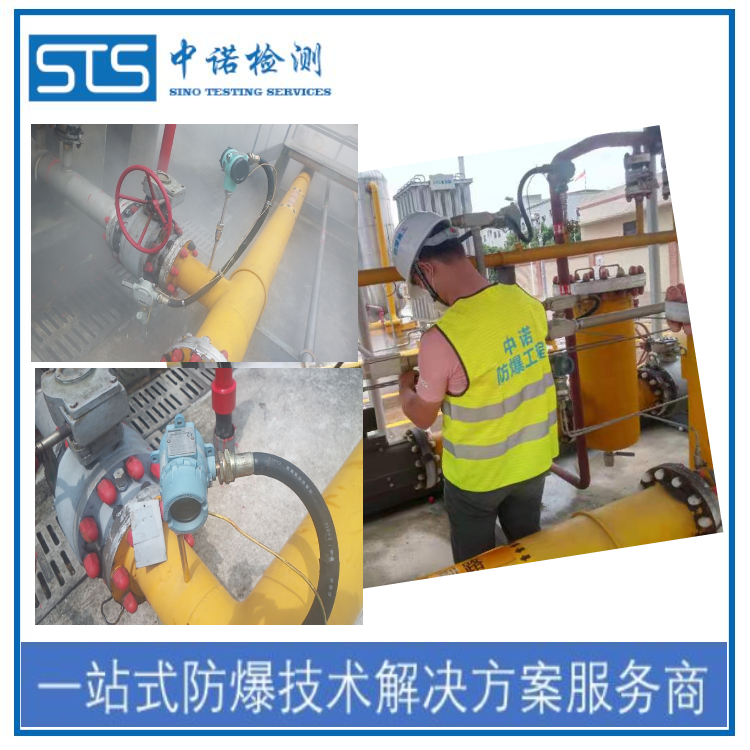











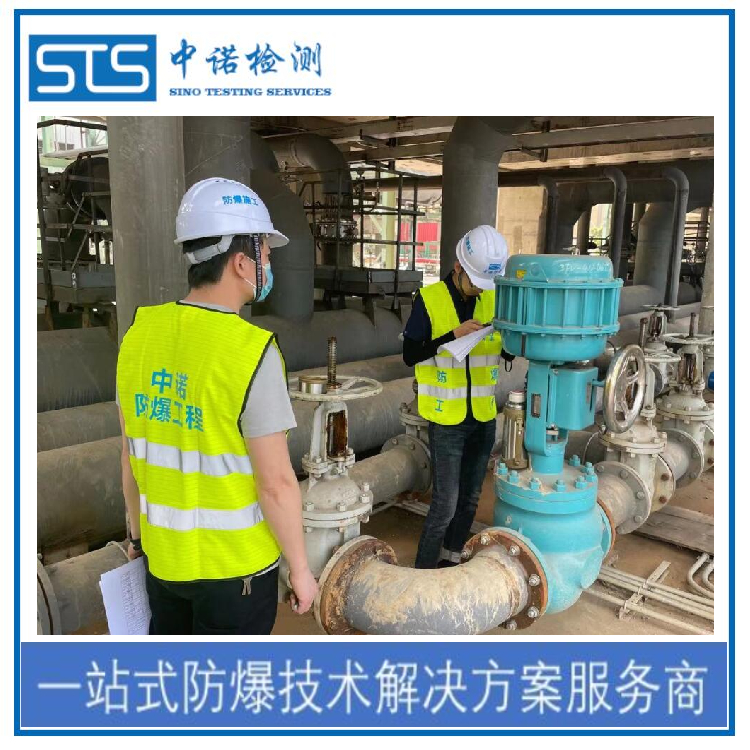
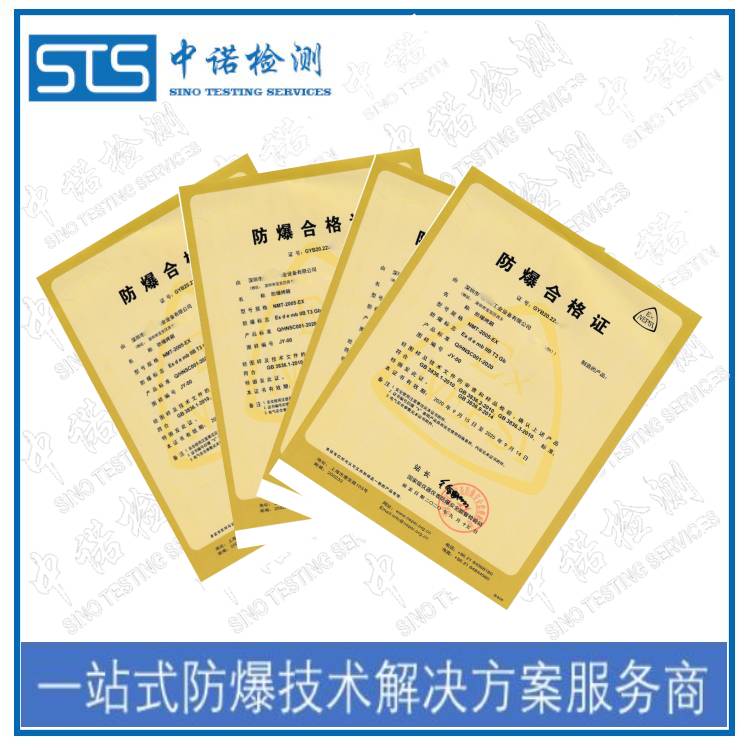
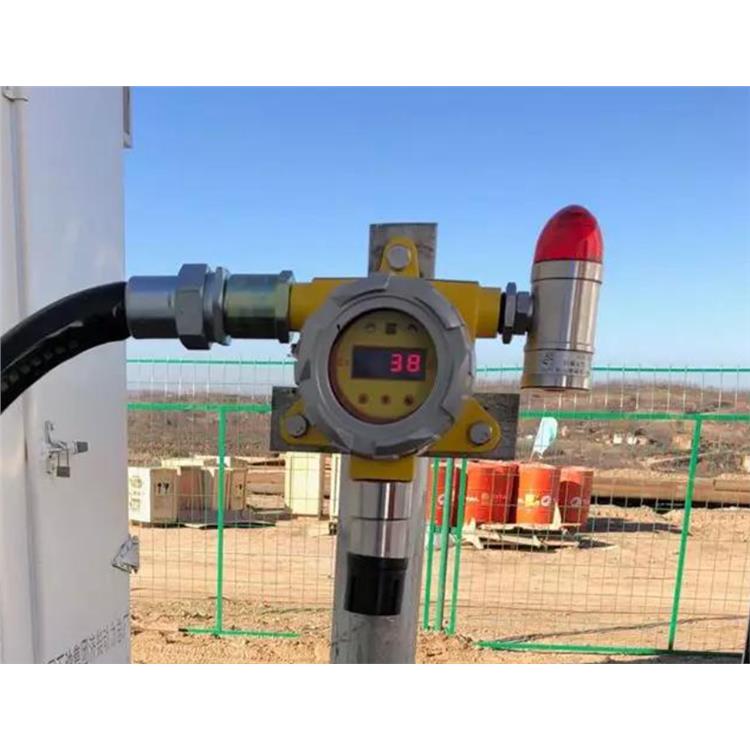
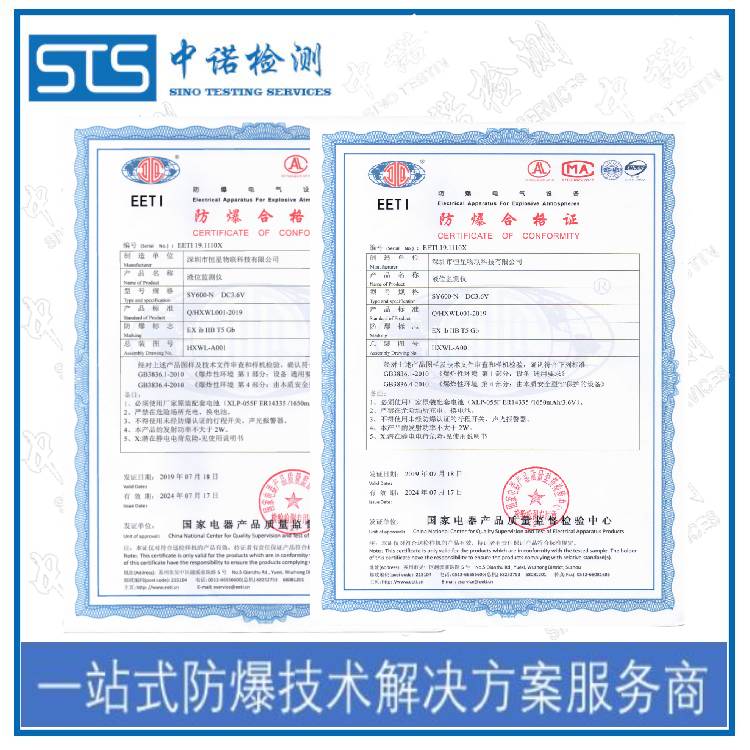
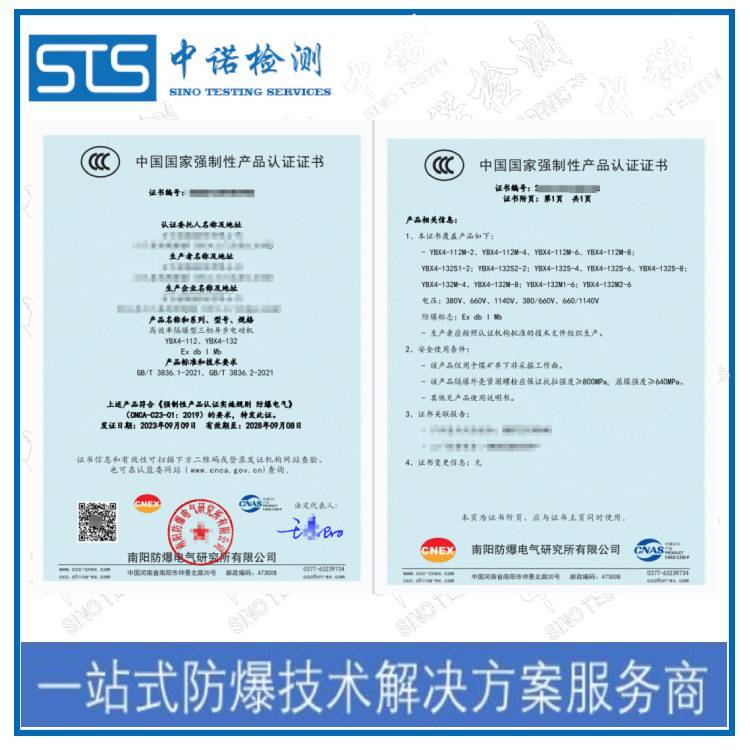

Shenzhen Zhongnuo Inspection & Technology Co., Ltd. is based in South China, offering on-site explosion-proof construction, safety inspections, renovations, project acceptance, and explosion-proof installation consulting services. We are well-versed in explosion-proof construction standards, boast experienced construction teams, and have served major corporations such as PetroChina, LG, Hanlan Environment, BOE Technology Group, and Sinovac Biotech, receiving consistent praise and trust from our clients!
Basic Requirements for Explosion-Proof Electrical Installations in Explosive Areas (Shared by Shenzhen ZhongNuo Testing Technology Co., Ltd.)
1. Oil-immersed equipment should be used under conditions of no vibration, no tilt, and fixed installation.
2. When using non-explosion-proof equipment for mechanical transmission as partition walls, the following regulations should be adhered to:
The room for installing electrical equipment should be separated from the explosive hazard area by a solid wall made of non-combustible materials.
(2) Transmission shafts should be sealed with gland packing or equivalent sealing measures at the wall partition.
(3) The exit of the electrical equipment room should lead to an environment free of explosive hazard areas.
(4) When the room housing the equipment must be connected to an explosive atmosphere, maintain a positive pressure relative to the explosive atmosphere.
3. Electrical wiring and equipment in explosive environments, excluding inherently safe circuits, should be equipped with overload, short-circuit, and grounding protection. Electrical equipment that cannot experience overloads need not be fitted with overload protection. Motors in explosive environments, in addition to the necessary protections as required by current standards, should also be equipped with phase failure protection. If the automatic shutdown of electrical equipment could pose a greater risk than the ignition hazard, an alarm device should be used instead of the automatic shutdown device.
4. In emergency situations, outside of hazardous areas, appropriate measures should be taken at suitable locations or sites to disconnect the power to the equipment in the hazardous area. Continuous operating equipment should not be included in the emergency shutdown circuit and should be installed on a separate circuit to prevent the occurrence of additional hazards.
5. The design of substation, distribution station, and control room shall comply with the following regulations:
Transformer stations, distribution stations (including switchrooms, hereinafter referred to as such), and control rooms should be located outside of explosive atmosphere environments. When they are positive pressure rooms, they can be situated in Zones 1 and 2.
(2) For explosive gas atmospheres where the gas is heavier than air, the equipment floor of electrical and instrumentation in substations, distribution stations, and control rooms located in the additional 2 zone of the explosion hazard area should be elevated 0.6 meters above the external ground level.
Basic Dust Explosion-proof Construction Standards
In facilities where explosive dust is present, such as flour mills, feed factories, grinding workshops, and plastic production plants, the requirement for explosion-proof measures on-site is particularly crucial. The installation and use of explosion-proof wiring, electrical equipment, dust removal systems, architectural layout, and explosion-proof venting must all comply with the relevant dust explosion-proof standards. Based on a wealth of explosion-proof electrical construction and retrofitting cases, Shenzhen Zhongnuo Testing Technology Co., Ltd. has summarized the following points:
Building structure and layout
Process equipment with dust explosion hazards or buildings (structures) containing combustible dust should be separated from other buildings (structures), and the fire protection distance should comply with the relevant provisions of GB50016.
(2) The building should be a single-story structure, with a lightweight roof design preferred.
(3) The structural requirements for multi-story buildings are as follows:
A. Multi-story buildings are best suited for frame structures.
B. Buildings without frame structures must have explosion relief openings installed on the walls in compliance with requirements.
C. If windows or other openings are used as explosion relief ports, they must be calculated and ensured to effectively vent during an explosion.
(4) Evacuation route requirements are as follows:
The work area should have evacuation routes, and the number and location of these routes should comply with the relevant provisions of GB50016.
B. The door should open outward and no threshold should be installed.
C. Detailed road signs and emergency lighting should be set up for evacuation routes.
2. Process Equipment
(1) For process equipment with dust explosion hazards within the factory, it is advisable to locate them at higher levels of the building and close to the exterior wall.
(2) Equipment with potential explosive hazards should be located in an outdoor area outside of the building.
(3) Equipment or devices that come into direct contact with dust (such as light sources, heating sources, etc.) should have surface temperatures below the respective dust's low ignition temperature.
(4) In areas where flammable dust is present, the transmission mechanisms of the equipment and installations shall comply with the following requirements:
The bearings of the process equipment should be dust-proof and sealed. If overheating is possible, a detector capable of continuously monitoring the bearing temperature should be installed.
B. Belt drives are not recommended. If belt drives are used, a speed difference sensor and an automatic anti-skid protection device should be installed. In case of sliding friction, the protection device should ensure automatic shutdown.
(5) At the feeding point of the process flow, a magnet, an air separator, or a sieve capable of removing impurities mixed with the material should be installed to prevent collision between impurities and equipment.
(6) Effective measures should be taken to prevent sparks from being generated when aluminum, zirconium, and other metal powders, or powders containing these metals, come into friction with stainless steel.
(7) In the event of an explosion, protective stopping should be achieved by installing several power supply control boxes capable of interlocking with each other, according to the size of the workshop. In an emergency, the power supply to all motors should be able to be cut off promptly.
(8) All joints, inspection doors, baffles, and explosion vent covers of the process equipment should be sealed tightly
(9) The equipment housing should be made of non-flammable material
(10) The moving parts of the equipment should operate smoothly without any scraping, bumping, jamming, or rubbing.
(11) When the strength of the process equipment is insufficient to withstand the overpressure generated by internal dust explosion under actual operating conditions, explosion relief ports should be installed, and the size of the relief ports should comply with the relevant provisions of GB/T15605.
(12) The explosion relief port should be located close to potential ignition sources, ideally at the top or upper part of the containment structure. It should not vent towards flammable and explosive hazard areas to prevent igniting others, and it must not vent towards public areas to avoid injury from the explosion relief.
3. Lightning and Static Electricity Protection
Hazardous dust explosion areas should adopt corresponding lightning protection measures in accordance with the relevant provisions of GB50057. When static electricity hazards are present, the following regulations should be adhered to:
All metal equipment, device casings, metal pipes, brackets, components, parts, etc., are generally statically grounded directly. For those that are not convenient or prohibited by the process from direct grounding, grounding can be achieved indirectly through conductive materials or products.
(2) Equipment directly used for containing electrostatic powder, such as conveyance pipes (belts) for the powder, should be made of metal or antistatic materials.
(3) All metal pipe connections should be bonded together.
(4) Operators should take anti-static precautions.
(5) Avoid using methods that involve direct grounding metal conductors or screens coming into contact with rapidly flowing powders to dissipate static electricity.
Installation of electrical wiring in explosive environments shall comply with the following regulations (shared by Shenzhen ZhongNuo Testing Technology Co., Ltd.)
Electrical wiring should be installed in environments with lower explosion hazards or far from the source of release, and it should comply with the following regulations:
1) When the material is heavier than air, electrical wiring should be installed at a higher level or directly buried. For overhead installation, cable trays should be used; for trench installation, sand should be filled in the trench, and drainage measures should be implemented.
2) Electrical wiring should be laid outside the walls of buildings or structures with explosive hazards.
3) In explosive dust environments, cables should be laid in areas where dust does not accumulate easily and is easy to remove.
(2) Holes in walls or floors at different regions traversed by electrical wiring conduits, cable trays, or ducts should be tightly sealed with non-combustible materials.
(3) When laying electrical lines, it is advisable to avoid areas susceptible to mechanical damage, vibration, corrosion, UV radiation, and heat. If avoidance is not possible, preventive measures should be taken.
(4) Conduit wiring can use bare insulated single-core or multi-core wires. When the conduit contains three or more wires, the total cross-sectional area of the wires including the insulation should not exceed 40% of the conduit's cross-sectional area. The conduit should be made of galvanized steel pipe for low-pressure fluid transmission. The threaded portion of the steel pipe connection should be coated with lead oil or phosphating paste. A sealed joint for condensate drainage should be installed on the pipeline in areas where condensation may occur.
(5) Electrical wiring for steel piping in explosive gas environments must be properly insulated and sealed, and should comply with the following regulations:
1) During normal operation, all ignition source enclosures within a 450mm radius should be sealed off with insulation.
2) Steel pipes with a diameter of 50mm or more should be isolated and sealed within 450mm of the junction box.
3) Isolation and sealing should be conducted between adjacent explosive environments, as well as between explosive environments and adjacent other hazardous or non-hazardous environments. During sealing, the internal sealing should have a fiber filling layer or separator, with an effective thickness not less than the inner diameter of the steel pipe, and at least 16mm.
4) Connection parts for isolation sealing should not be used for wire connections or branching.
(6) Intermediate joints are strictly prohibited in cable lines within Zone 1, and intermediate joints should not be present in Zones 2, 20, and 21.
(7) When connecting the ends of cables or wires, if the internal wires are stranded, the ends should be connected using a molded connector or lug. The connection and termination of aluminum-core insulated wires or cables should be made by crimping, soldering, or brazing. When connecting to equipment (excluding lighting fixtures), a copper-aluminum transition connector should be used.
(8) Overhead power lines must not cross explosive gas environments. The horizontal distance between overhead lines and explosive gas environments should not be less than 1.1 times the height of the pole towers. In special cases, after taking effective measures, the distance may be appropriately reduced.
Basic Knowledge and Requirements for防爆 Site Wiring (Shared by Shenzhen Zhongnuo Testing Technology Co., Ltd.)
Installation methods for electrical wiring in explosive gas environments can be divided into cable wiring and conduit wiring methods.
Note: The installation of inherently safe circuits may not be in accordance with the provisions of this article.
7.1 General Provisions
7.2 Electrical wiring should be installed in areas of low explosion hazard or at a greater distance from the source of release, avoiding places prone to mechanical damage, vibration, corrosion, dust accumulation, and those with hazardous temperatures. When it is not possible to avoid such areas, preventive measures should be taken.
7.3 The selected low-voltage cables or insulated conductors must have a rated voltage higher than the working voltage of the line and not less than 500V. Insulated conductors must be laid within conduits.
7.4 It is strictly prohibited to cross explosive gas environments with overhead lines of 10kV and below; the horizontal distance between the overhead line and the explosive gas environment should not be less than 1.1 times the height of the pole tower.
7.5 Cables and their accessories shall be installed in such a position that, in accordance with actual conditions, they are protected from external mechanical damage, corrosion, or chemical influences (such as the effects of solvents), as well as from the effects of high temperatures (also see 6.1.2.4.4 for this safety circuit). If such conditions cannot be avoided, protective measures shall be taken during installation, such as using conduits or selecting appropriate cable types (armored cables, shielded wires, seamless aluminum sheathed cables, mineral insulated metal sheathed cables, or semi-rigid sheathed cables, etc., to minimize damage).
7.6 Single-core wires without sheath should not be used for conductive wiring unless they are installed within a distribution board, enclosure, or conduit system.
Explosion-proof electrical改造 and on-site explosion-proof construction consulting services for hazardous areas - Shenzhen Zhongnuo Testing Technology Co., Ltd.
WeChat Official Account

Scan to follow Official Account