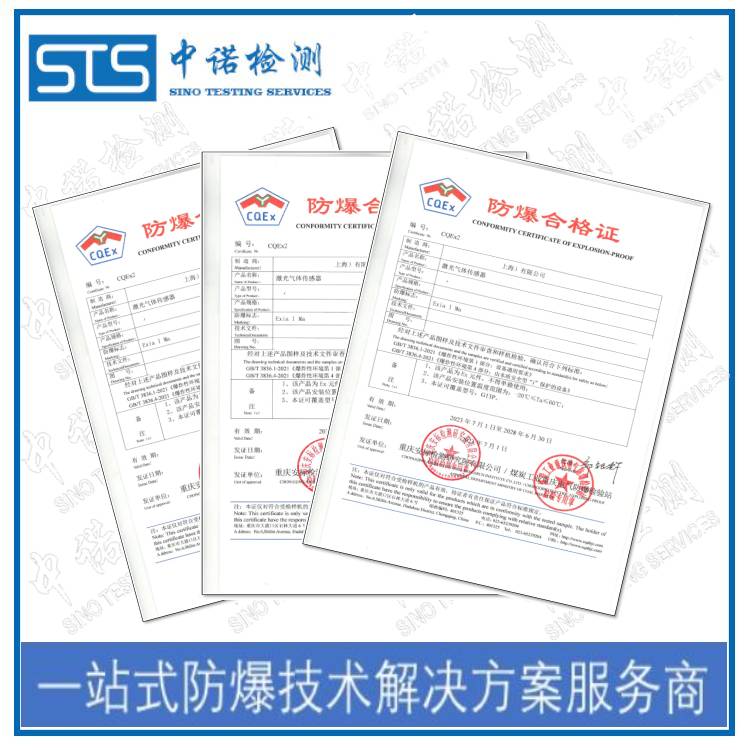

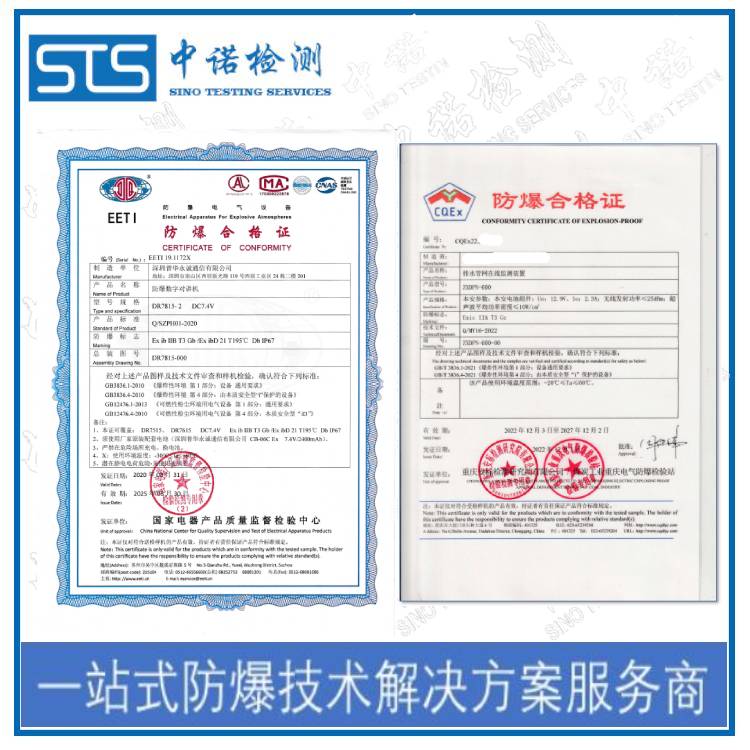
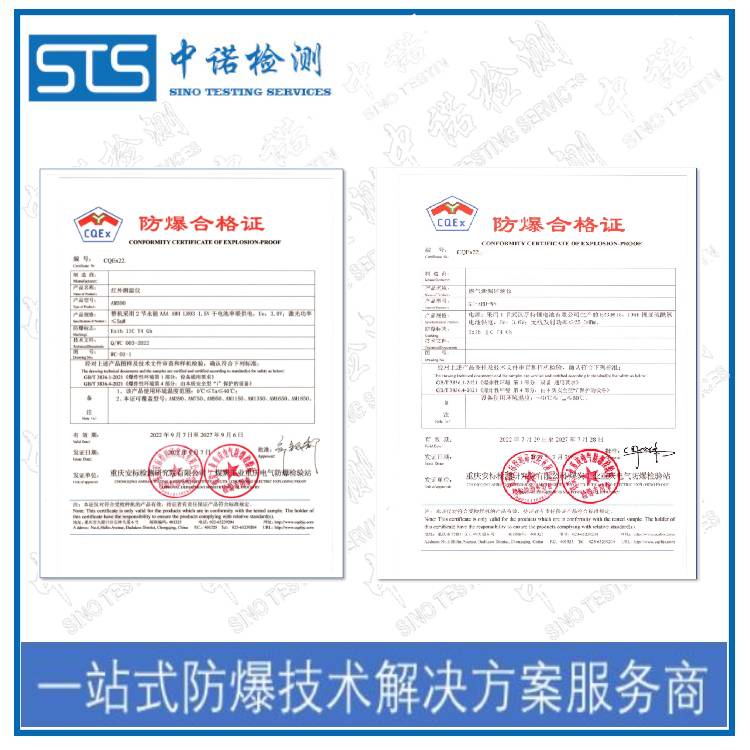










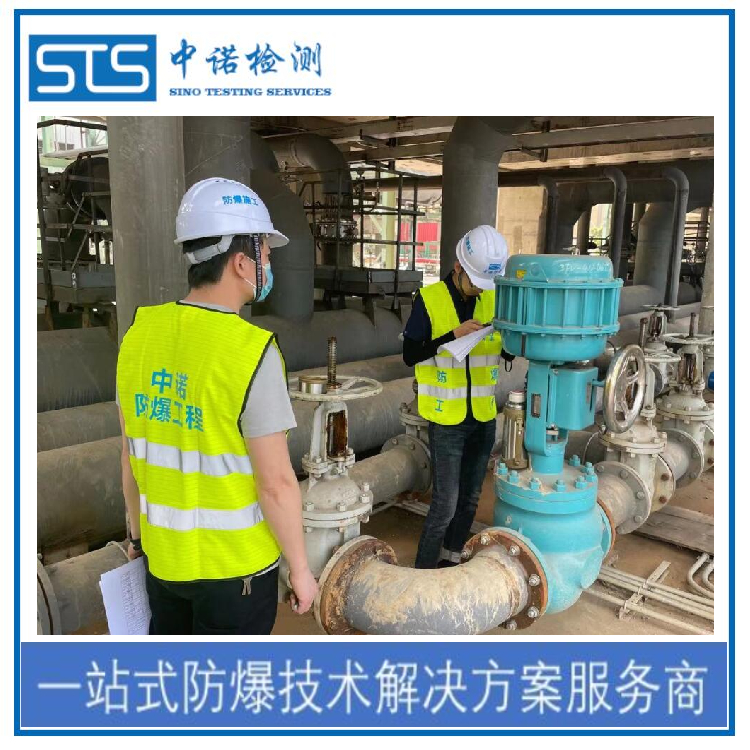
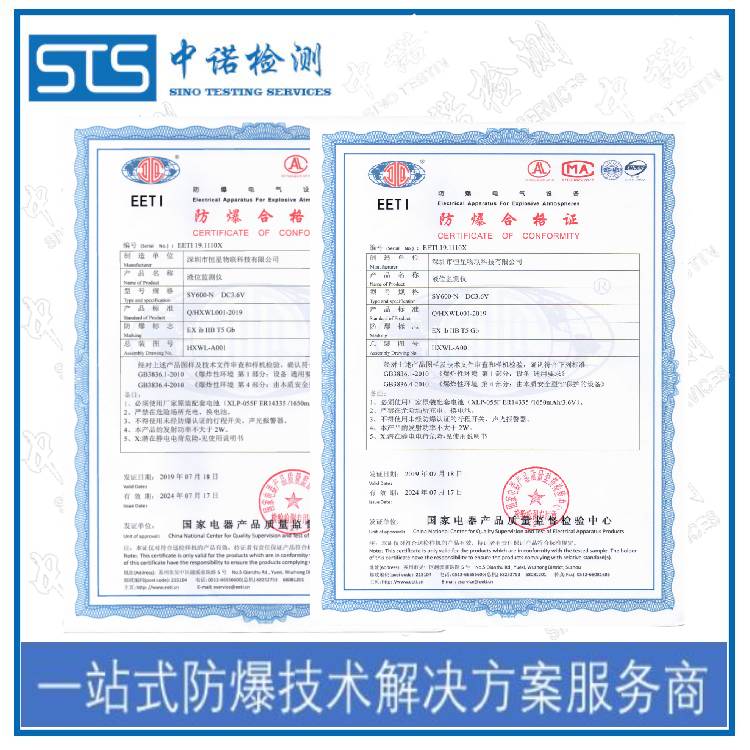
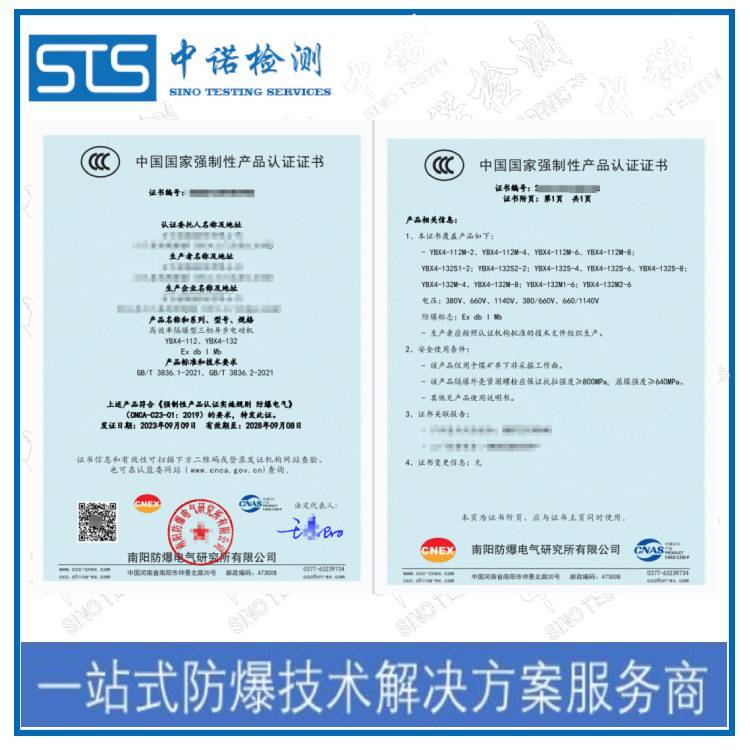
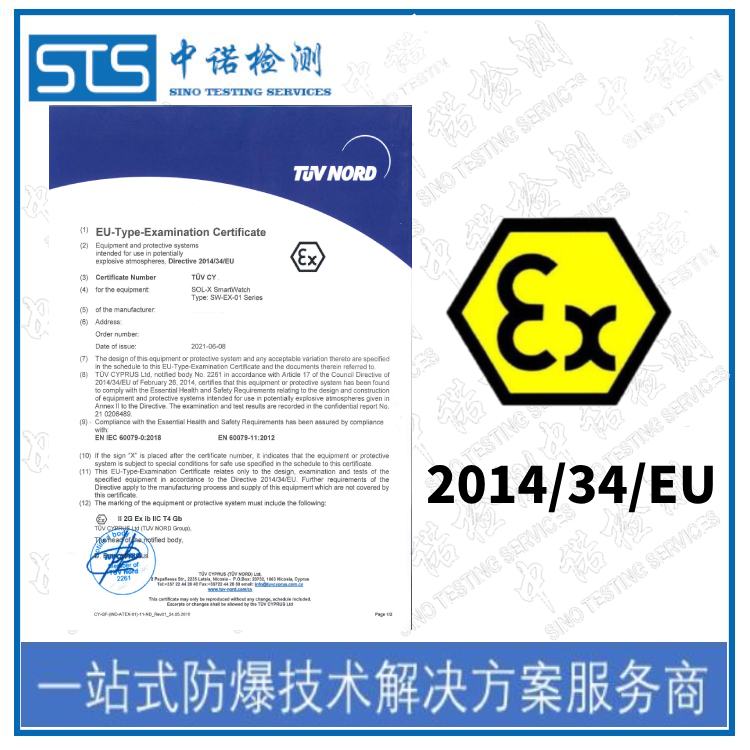
Shenzhen Zhongnuo Testing Technology Co., Ltd. is based in South China and specializes in explosion-proof certification and coal safety certification application consulting services, offering one-stop explosion-proof technology consulting services.
Gas explosion-proof certification and dust explosion-proof certification, commonly referred to, are categorized based on the applicable locations of the equipment.
Explosion-proof equipment for various hazardous gas environments undergoes gas explosion-proof certification, while equipment for combustible dust areas undergoes dust explosion-proof certification.
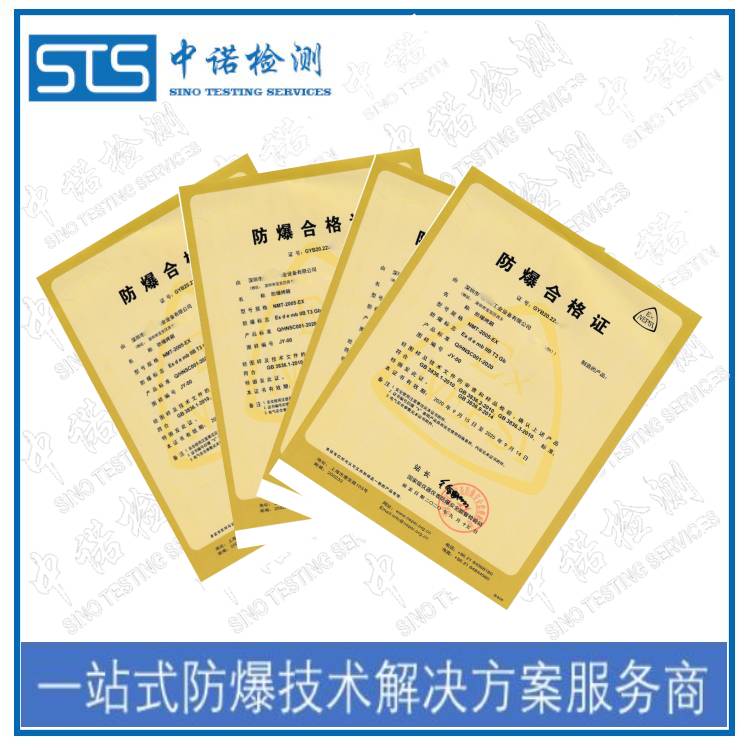
In explosion-proof certification, gases are categorized as IIA, IIB, and IIC, while dusts are classified as IIIA, IIIB, and IIIC. Their characteristics and environments differ, necessitating different explosion-proof protection measures for equipment. These two should not be mixed. Of course, some products are designed to meet both gas and dust explosion-proof standards during the certification process, allowing them to be used in both gas and dust environments. The explosion-proof certification certificate also indicates whether it is for gas or dust explosion-proof certification through the explosion-proof marking.
Learn more about explosion-proof information, feel free to contact us anytime!
Shenzhen ZhongNuo Inspection & Technology Co., Ltd. has been long dedicated to the explosion-proof field, boasting extensive evidence-gathering experience and a skilled technical team in the current explosion-proof certification sector. With experienced intrinsic safety electronics engineers, we offer services including intrinsic safety design, cloning, circuit evaluation, and rectification, to help avoid pitfalls for enterprises and facilitate their explosion-proof certification process.
Currently, explosion-proof products are categorized into mining and non-mining types.
Mining explosion-proof products for coal mine sites require the Coal Safety Certification, which involves both explosion-proof performance testing and product standard testing. The certification process includes product inspection, factory audit, and supervisory assessment, commonly known as factory audit and annual audit. Applicants must have a production facility or an OEM factory.
Non-mining explosion-proof products require two types of explosion-proof certifications: the Explosion-Proof Certificate and the Explosion-Proof 3C Certification.
In the explosion-proof 3C certification catalog, explosion-proof products require obtaining an explosion-proof 3C certification. This involves product testing, factory audit, and supervisory assessment.
Products not listed in the explosion-proof 3C certification catalog only require product testing. A certification of conformity can be issued upon meeting the requirements of GB/T 3836 standards for product testing.
Explosive-proof products for export require different safety certifications based on the destination country's standards, such as ATEX certification, IECEx certification, etc. For more details, please consult CN Testing for further information.
We specialize in long-term domestic and international explosion-proof consulting services, well-versed in standards and requirements. With experienced explosion-proof engineers and factory audit consultants, we can facilitate your company's easy application for explosion-proof certification.
Key aspects to understand the meaning of explosion-proof certification symbols include:
Section 1: Explosion-Proof Type
Common types include explosion-proof represented by "d", increased safety by "e", intrinsic safety by "i", etc.
Different explosion-proof types indicate the use of various explosion-proof techniques to prevent accidents. For instance, the隔爆型 (blast-proof type) involves enclosing components that might generate sparks or high temperatures within a robust shell. In the event of an internal accident within the shell, it can withstand pressure and prevent flames from spreading outward.
Section II: Equipment Categories
Categorized into Class I, Class II, and Class III.
Category I is primarily used in environments containing hazardous mixtures, such as underground coal mines.
Class II applies to flammable and explosive environments other than coal mines, such as environments with combustible gases and steam commonly found in the petrochemical, gas, and other industries.
Class III for environments with combustible dust, such as flour mills and wood processing plants where combustible dust is present.
Section 3: Gas Categories
For II category equipment, further categorization is based on the characteristics of flammable and explosive gases. For example, categories such as IIA, IIB, IIC, etc. Gases in different groups have variations in ignition energy and ignition limits. For instance, IIC group gases are generally more hazardous, with lower ignition energy and a wider range of limits.
Section 4: Temperature Categories
The equipment is allowed to have a high surface temperature range represented by letters. For example, T1 to T6, where T1 indicates the high surface temperature of the equipment can reach 450°C, and T6 indicates the high surface temperature does not exceed 85°C. The higher the temperature group, the lower the allowed surface temperature, and the safer it is in a hazardous environment. When selecting equipment, it is essential to ensure that the temperature group of the equipment is suitable for the ignition temperature of flammable and explosive gases that may exist in the environment.
By comprehensively understanding this information, one can accurately determine the application scope, explosion-proof performance, and safety level of an explosion-proof device, ensuring proper use and installation in hazardous environments.
Certification standards for explosion-proof equipment used in environments with explosive gas:
GB/T 3836.1-2021 Explosive Atmospheres – Part 1: Equipment – General Requirements
GB/T 3836.2-2021 Explosive Atmospheres, Part 2: Equipment protected by explosion-proof enclosures "d"
GB/T 3836.3-2021 Explosive Atmospheres, Part 3: Equipment protected by increased safety "e"
GB/T 3836.4-2021 Explosive Atmospheres, Part 4: Equipment protected by intrinsic safety "i"
GB/T 3836.5-2021 Explosive Atmospheres, Part 5: Equipment protected by positive pressure enclosure "p"
GB/T 3836.6-2017 Explosion-proof Environment Part 6: Equipment Protected by Immersion-Type "o"
GB/T 3836.7-2017 Explosive Atmospheres, Part 7: Equipment protected by filling with sand of type “q”
GB/T 3836.8-2021 Explosive Atmospheres, Part 8: Equipment protected by "n" type of protection
GB/T 3836.9-2021 Explosive Atmospheres, Part 9: Equipment protected by encasing of type “m”
Explosion-proof Certification Application Consultation Services - Shenzhen ZhongNuo Inspection Technology Co., Ltd.
WeChat Official Account

Scan to follow Official Account