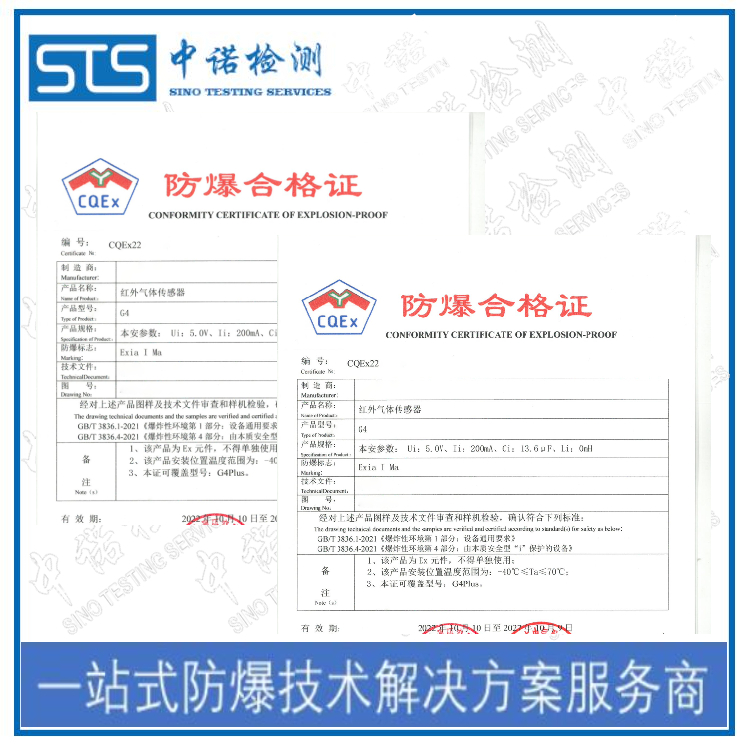

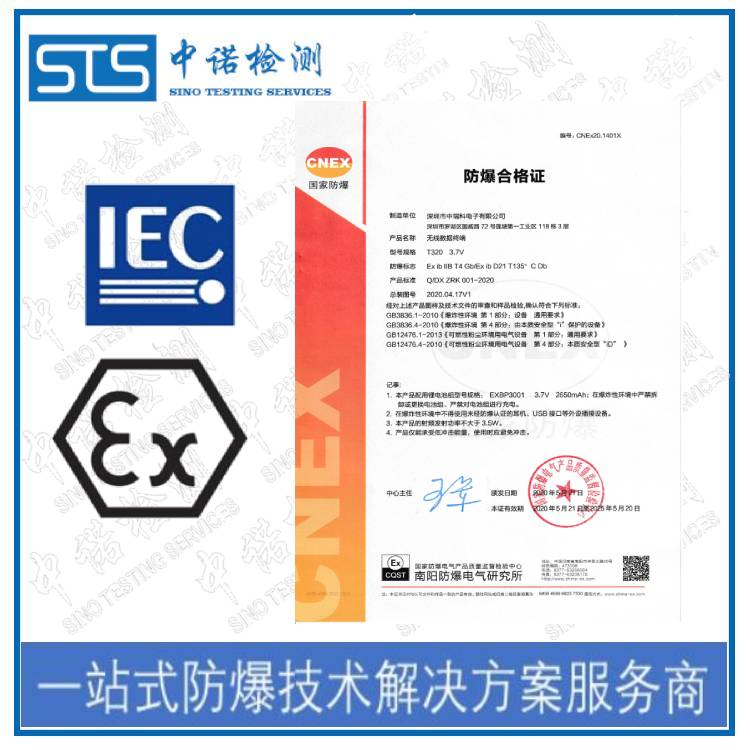









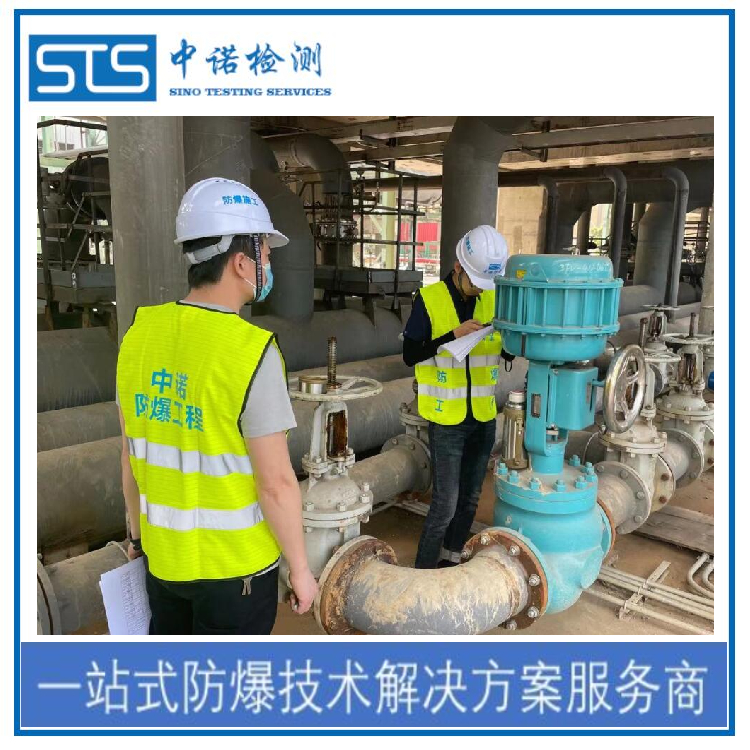
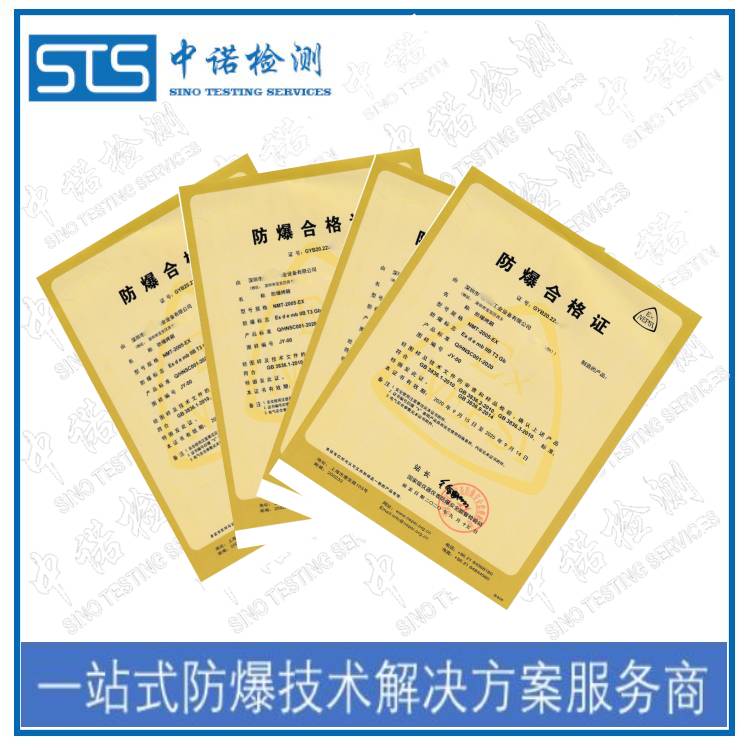
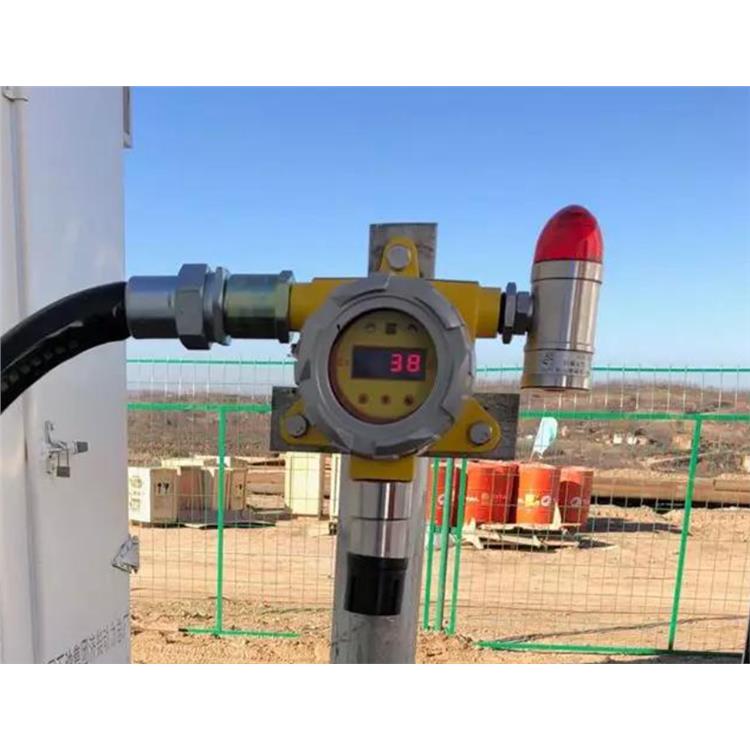
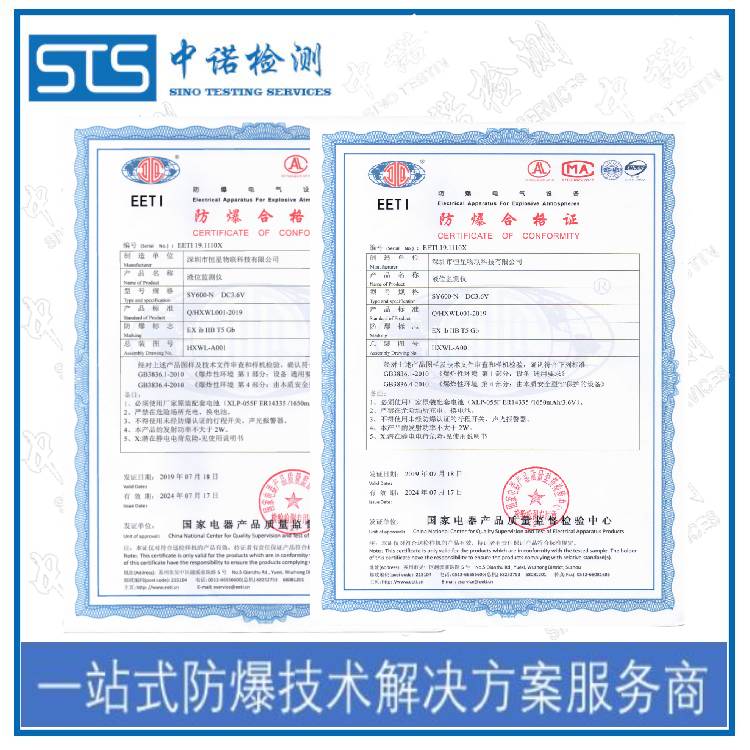
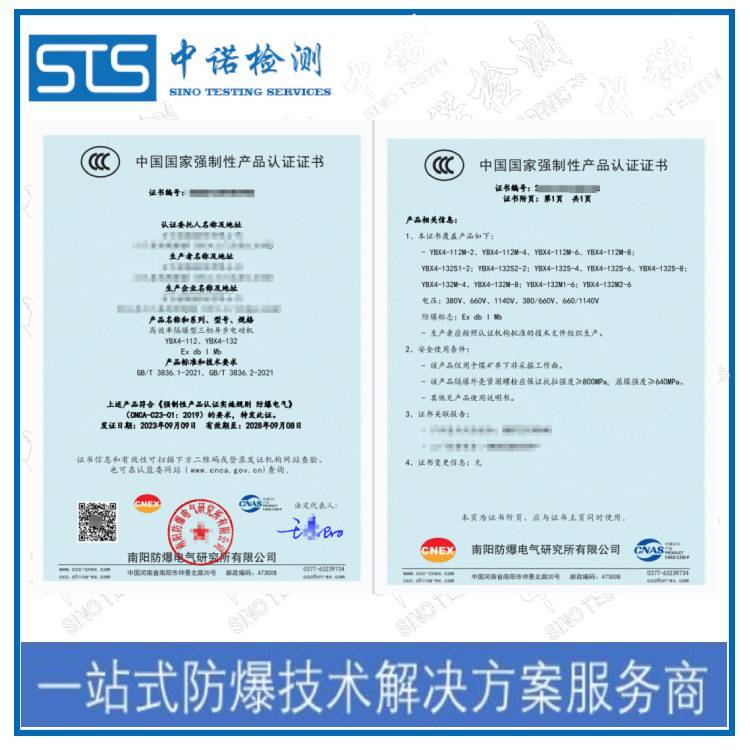
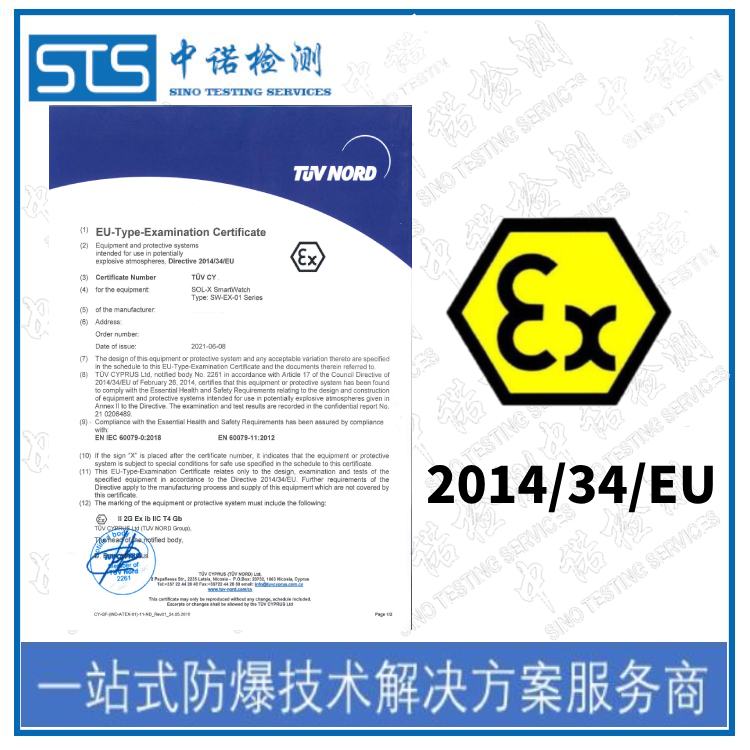
Shenzhen Zhongnuo Testing Technology Co., Ltd. is based in South China and specializes in explosion-proof certification and coal safety certification application consulting services, offering a one-stop explosion-proof technology consulting service.
IECEx Certification
IECEx is an explosion-proof electrical product certification system promoted by the International Electrotechnical Commission (IEC), aimed at eliminating discrepancies in equipment and services used in explosive environments, promoting international trade, while maintaining the level of equipment safety requirements. The current explosion-proof standard is IEC 60079. IECEx certification has become a pathway for products used in all hazardous areas to obtain international safety certification, and is now recognized in many parts of the world (including Australia, New Zealand, Brazil, Canada, China, Japan, South Korea, Malaysia, Singapore, South Africa, and the United States). Certificates issued by IECEx are automatically uploaded to the IECEx website, where manufacturers and end-users can find relevant documents.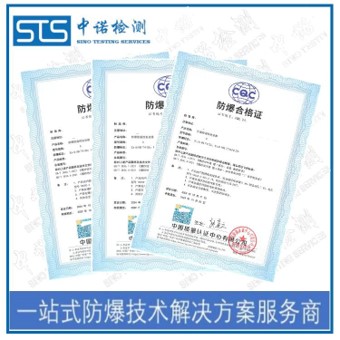
The explosion-proof grade is a classification used to identify the safety performance level of equipment or environments in flammable and explosive hazardous areas. It is primarily applied in industrial sectors such as oil, chemical, mining, and gas, where flammable gases, vapors, or dusts are present.
Selecting the explosion-proof grade requires a comprehensive consideration of the type of hazardous environment, characteristics of explosive substances, equipment usage scenarios, and relevant standard requirements. When choosing the explosion-proof certification grade, the following points should be noted:
Choosing the explosion-proof grade is not about going higher, but rather matching it with factors such as product structure, installation method, and usage location. As long as the product structure meets the requirements, the higher the explosion-proof grade chosen, the wider the applicable range. However, be aware that an overly high explosion-proof grade may increase product cost and complexity, so choose based on actual needs.
Explosion-proof ratings and protection ratings (IP ratings) are not the same; they should not be confused. The protection rating mainly concerns the dust and water resistance of the equipment, while the explosion-proof rating focuses on the safety of the equipment in flammable and explosive environments.
Temperature class is also a factor to consider when selecting the explosion-proof grade. Temperature class indicates the high surface temperature of the equipment under adverse conditions. For flammable and explosive hazardous areas, the lower the high surface temperature of the equipment, the safer it is.
Explosion-proof and intrinsic safety are two different types of explosion prevention methods, both capable of achieving explosion prevention, each with its own advantages and disadvantages. What suits the product structure and environment is safe, not necessarily that explosion-proof is always safer than intrinsic safety.
If you have any questions regarding the selection of explosion-proof ratings or obtaining explosion-proof certifications, feel free to consult Shenzhen ZhongNuo Testing Technology Co., Ltd. at any time.
Is ATEX certification the same as explosion-proof certification? What are the differences between them?
Explosion-proof certification refers to a type of safety certification for equipment and products used in explosive hazard areas.
Products must take certain measures to meet the requirements of explosion-proof certification standards, which we refer to as explosion-proof protection types.
Common explosion-proof protection types include intrinsic safety, flameproof, positive pressure, and increased safety, etc.
Clearly, intrinsic safety is just one type of explosion-proof protection.
Different explosion-proof protection types have varying design requirements for products.
intrinsically safe design limits electrical energy, even in the event of a fault.
A type of explosion-proof protection that the energy produced is not sufficient to ignite the surrounding explosive environment.
Therefore, intrinsic safety type has limitations on the current, voltage, capacitance, inductance, etc., of electrical equipment and is generally suitable for low-power devices.
Simultaneously, specific requirements are in place for the power supply method of intrinsically safe equipment, the material of the housing, and wireless transmission.
As a long-term specialized third-party consulting agency in the field of explosion-proof certification.
ZhongNuo Inspection has dedicated engineers specializing in intrinsically safe circuit and structural design.
We offer technical consulting services for explosion-proof circuit design, drafting, and modifications. We have extensive experience in designing and obtaining certifications for intrinsic safety ia, ib, and ic explosion-proof classifications.
If you require certifications in this area, feel free to send us a private message!
Classification of Explosion-proof Certification -- Shenzhen ZhongNuo Testing Technology Co., Ltd.
Electrical equipment for explosive gas atmospheres:
Explosion-proof type d
(2) Increased safety type e
(3) Intrinsically Safe i
(4) Positive Pressure Type P
(5) Immersed Type
(S6) Sand-filled type q
(7) Molding Sealing
(8) N-type
2. Electrical Equipment for Combustible Dust Environments
Dust-Proof Ignition-Proof Housing
(2) Positive Pressure Type
(3) Intrinsically Safe
(4) Cast-in-place
3. Explosion-proof type S
4. Composite:防爆型式 consisting of two or more of the above-mentioned types
Explosion-proof Certification Application Consulting Service - Shenzhen Zhongnuo Testing Technology Co., Ltd.
WeChat Official Account

Scan to follow Official Account