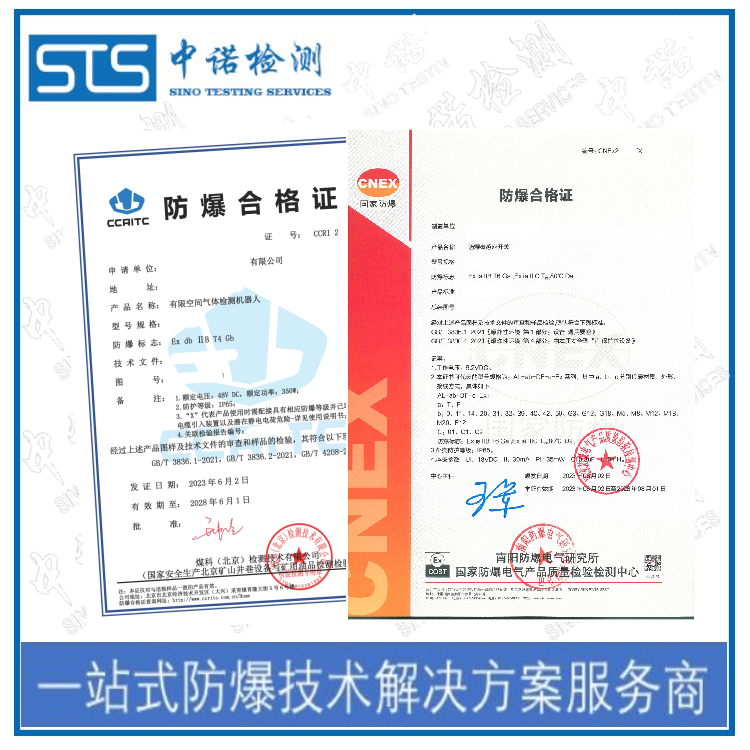

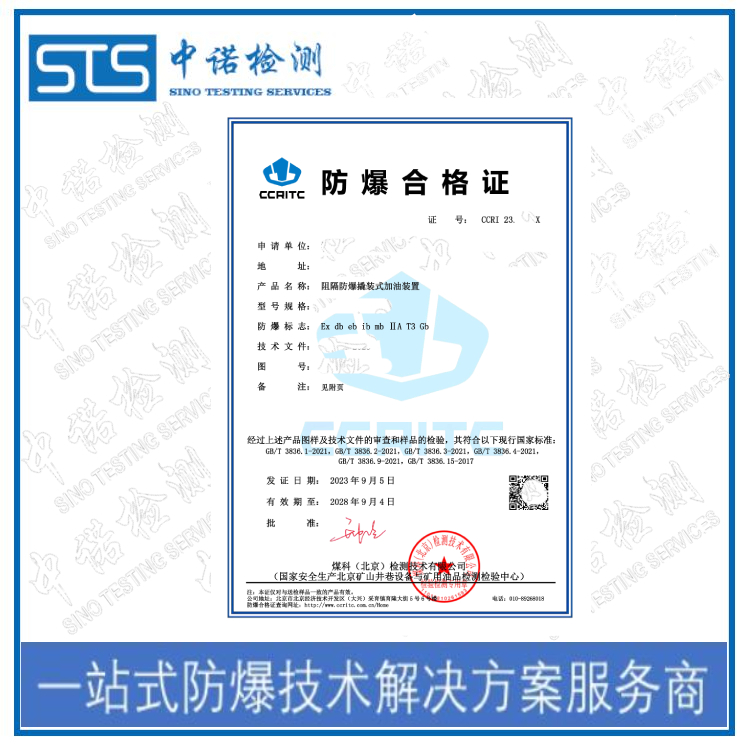










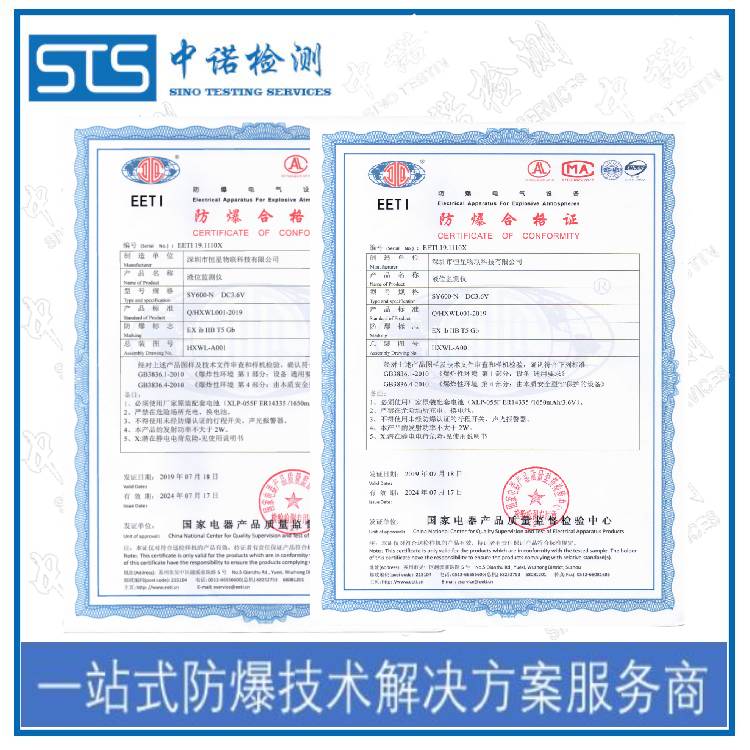
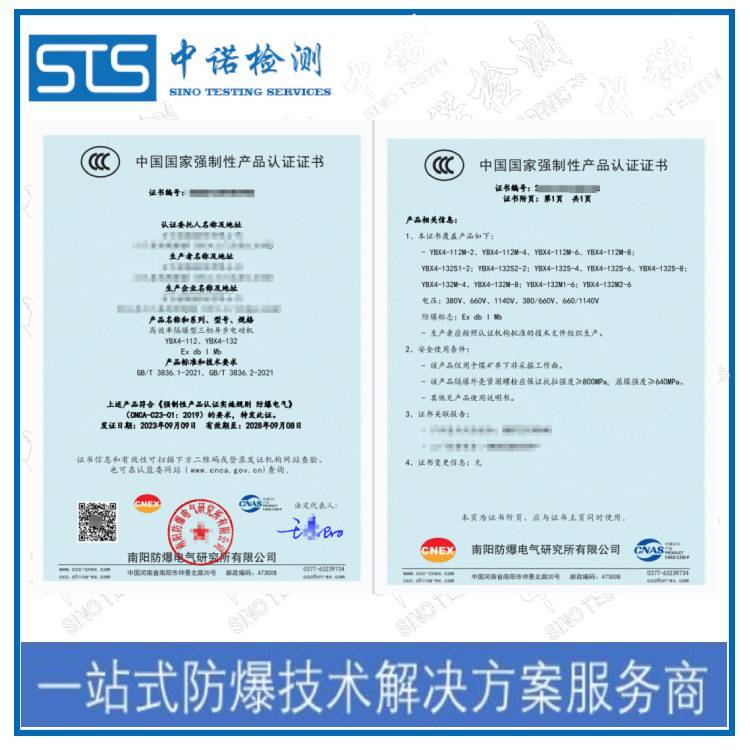
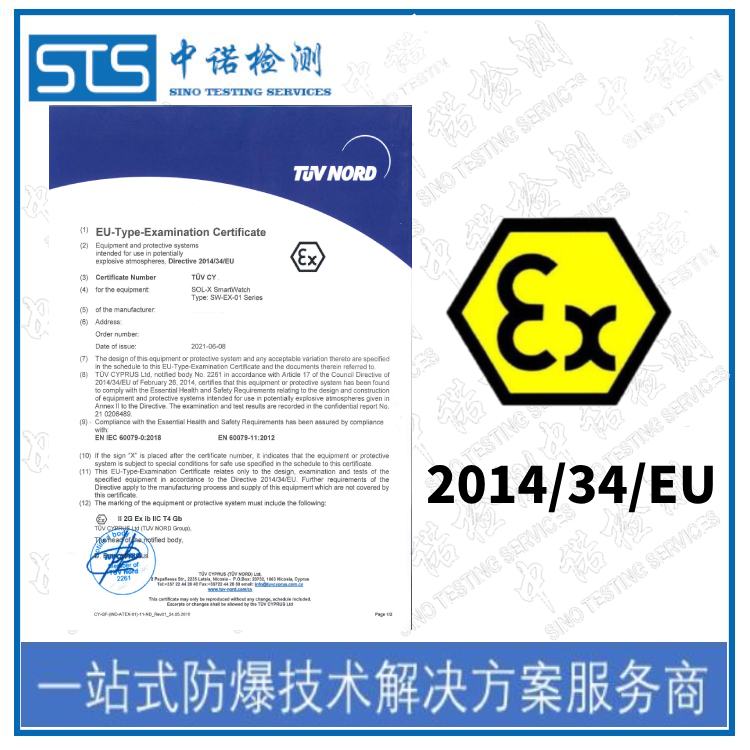
Shenzhen Zhongnuo Testing Technology Co., Ltd. specializes in consulting services for the explosion-proof CCC certification. We have a wealth of consulting cases in the field of explosion-proof 3C certification. We are well-versed in the application process and technical requirements for explosion-proof 3C certification, and can provide clients with consulting services such as application assistance and factory audit guidance.
Requirements for materials needed to apply for the explosion-proof CCC certification:
1. Product Documentation: When applying for a防爆 certification for intrinsically safe electrical equipment, the company must provide assembly drawings, circuit diagrams, printed circuit board layouts, silk-screening diagrams, material lists for components, and label drawings, among others. For non-intrinsically safe electrical equipment, the technical documents submitted for inspection should include drawings that reflect the sample's explosion-proof performance (including assembly drawings and component drawings). If the overall drawing clearly indicates the product's explosion-proof parameters and structure, only the overall drawing needs to be submitted for inspection.
2. Technical Documents: Include corporate standards/technical requirements. The corporate standards/technical requirements for the product should be written in the specified format, and their content should not only include the performance requirements of the product but also related防爆 aspects: such as basic parameters, explosion-proof markings, operating environmental conditions, explosion-proof performance requirements, relevant tests for explosion-proof performance, and markings related to explosion-proof.
3. Additional Information: For products with adhesive bonding or casting, provide the model names, performance descriptions, and relevant process documents for the adhesive and casting agents. For plastic shell products, supply the material and corresponding performance documents. Battery-operated products require the provision of battery specifications.
Basic Content of Factory Audit for Explosion-Proof CCC Certification:
A. Factory inspection conclusions are typically categorized into four types: "Factory Inspection Passed," "Written Verification Passed," "On-Site Verification Passed," and "Factory Inspection Failed."
"Written Verification Passed" refers to the case where there are non-conformities, the factory takes corrective actions within the specified time frame, and the certification body verifies the written report as effective, resulting in a pass; "On-Site Verification Passed" refers to the case where there are non-conformities, the factory takes corrective actions within the specified time frame, and the certification body verifies on-site as effective, resulting in a pass.
B. Factory audits typically require整改 to be completed within 40 days of any non-compliance issues.
C. Basic Review Items
(1) Specify if the test results are satisfactory.
(2) Are the key resources sufficient to ensure product consistency or compliance with standards?
(3) Product consistency issues, such as changes in product structure or critical components, whether they meet the specified requirements.
(4) Existence of defects in certified products, which may lead to quality safety accidents.
(5) Is the effective implementation of change and consistency control for certified products being enforced?
(6) Did the factory take corrective measures during the suspension of the certification certificate?
(7) Proper use of the CCC mark or certificate, including forgery, rental, lending, misuse, sale, transfer of the CCC mark or certificate, and theft of the CCC mark; continued use of the CCC mark or certificate after being notified of its revocation or suspension; intentionally applying the CCC mark on products without obtaining the CCC certificate; other cases of intentional illegal use of the CCC mark or certificate.
(8) Does the factory have any instances of obtaining certification certificates through deceit, bribery, or other improper means?
(9) Are there any other circumstances that directly threaten product consistency or compliance with standards?
Electrical equipment used in flammable dust environments, applying for the explosion-proof CCC certification standards
Ex-proof Type: Intrinsically Safe
Applicable explosion-proof standards:
GB/T 3836.1-2021 Explosive Atmospheres, Part 1: Equipment – General Requirements
GB/T 3836.4-2021 Explosive Atmospheres – Part 4: Equipment protected by intrinsic safety “i”
Exlosion-proof Type: Dust ignition-proof housing
Applicable explosion-proof standards:
GB/T 3836.1-2021 Explosive Atmospheres Part 1: Equipment General Requirements
GB/T 3836.31-2021 Explosive Atmospheres, Part 31: Equipment protected by dust ignition-proof enclosures "t"
Explosion-proof Type: Encapsulation Type
Applicable explosion-proof standards:
GB/T 3836.1-2021 Explosive Atmospheres, Part 1: Equipment, General Requirements
GB/T 3836.9-2021 Explosive Atmospheres, Part 9: Equipment protected by "m" type encapsulation
Explosion-proof Type: Positive Pressure Type
Applicable explosion-proof standards:
GB/T 3836.1-2021 Explosive Atmospheres Part 1: Equipment General Requirements
GB/T 3836.5-2021 Explosive Atmospheres, Part 5: Equipment protected by an "p" pressure housing
Exlosion-proof Type: Dust ignition-proof housing
Applicable explosion-proof standards:
GB/T 3836.1-2021 Explosive Atmospheres, Part 1: Equipment – General Requirements
GB/T 3836.31-2021 Explosive Atmospheres Part 31: Equipment protected by dust-protection enclosures “t”
Electrical equipment used in explosive gas environments, applying for the explosion-proof CCC certification standards
Exlosion-proof Type: Intrinsically Safe
Applicable explosion-proof standards:
GB/T 3836.1-2021 Explosive Atmospheres, Part 1: Equipment, General Requirements
GB/T 3836.4-2021 Explosive Atmospheres, Part 4: Equipment protected by intrinsic safety "i"
Explosion-proof Type: Intrinsic Safety Type
Applicable explosion-proof standards:
GB/T 3836.1-2021 Explosive Atmospheres Part 1: Equipment General Requirements
GB/T 3836.2-2021 Explosive Atmospheres, Part 2: Equipment protected by a flameproof "d" enclosure
Ex-proof Type: Increased Safety Type
Applicable explosion-proof standards:
GB/T 3836.1-2021 Explosive Atmospheres, Part 1: Equipment, General Requirements
GB/T36.3-2021 Explosive Atmospheres Part 3: Equipment protected by increased safety "e"
Exlosion-proof Type: Positive Pressure Type
Applicable explosion-proof standards:
GB/T 3836.1-2021 Explosive Atmospheres, Part 1: Equipment – General Requirements
GB/T 3836.5-2021 Explosive Atmospheres, Part 5: Equipment protected by positive pressure enclosures "p"
Ex-proof Type: Immersed Oil Type
Applicable explosion-proof standards:
GB/T 3836.1-2021 Explosive Atmospheres Part 1: Equipment General Requirements
GB/T 3836.6-2017 Part 6: Equipment protected by liquid immersion type “o” for explosive atmospheres
Explosion-proof Type: Sand-filled Type
Applicable explosion-proof standards:
GB/T 3836.1-2021 Explosive Atmospheres, Part 1: Equipment - General Requirements
GB/T 3836.7-2017 Electrical Equipment for Explosive Gas Atmospheres – Part 7: Sand-filled Type “q”
Explosion-proof Type: "N" Type
Applicable explosion-proof standards:
GB/T 3836.1-2021 Explosive Atmospheres – Part 1: Equipment – General Requirements
GB/T 3836.8-2021 Explosive Atmospheres Part 8: Equipment protected by "n" type protection
Explosion-proof Type: Encapsulation Type
Applicable explosion-proof standards:
GB/T 3836.1-2021 Explosive Atmospheres Part 1: Equipment General Requirements
GB/T 3836.9-2021 Explosive Atmospheres, Part 9: Equipment protected by “m” type enclosures
Explosion-proof 3C Certification Business Consultation Services - Shenzhen Zhongnuo Testing Technology Co., Ltd.
WeChat Official Account

Scan to follow Official Account