








I. Overview of Electric Lubrication Pumps
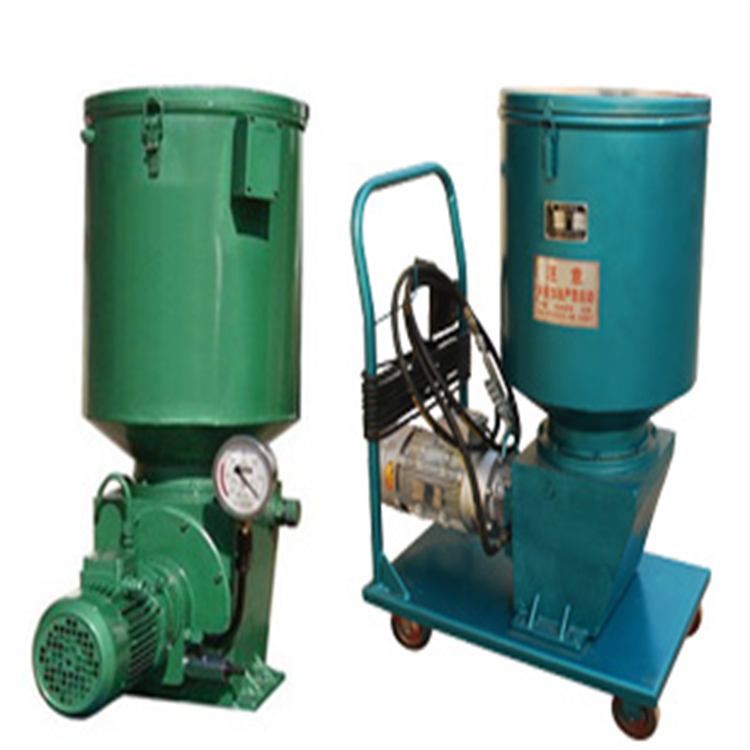
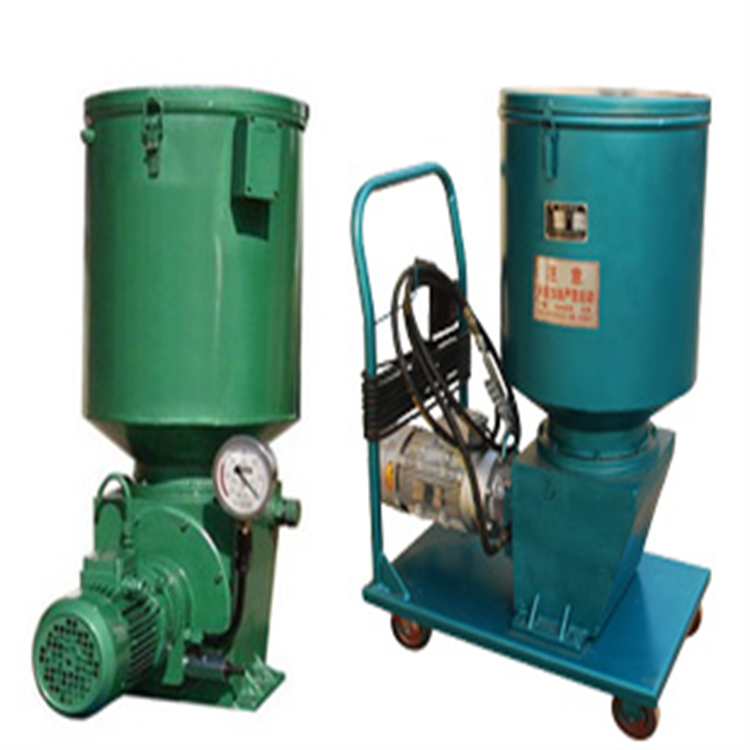
The DRB-P series electric lubrication pumps are suitable for single or double-line centralized lubrication systems with high lubrication frequency, long piping lengths, and dense lubrication points. They serve as a lubricant supply unit. They can also be equipped with mobile trolleys, hoses, oil guns, and cables to form a portable electric lubrication pump unit, ideal for machines with low lubrication frequency, fewer lubrication points, large oil supply volumes, and where centralized lubrication is not feasible. This series of lubrication pumps is electrically driven and high-pressure plunger type. The working pressure can be adjusted arbitrarily within the nominal pressure range, featuring dual overload protection. The oil storage tank is equipped with an automatic oil level alarm. If equipped with an electrical control box, the lubrication pump can achieve automatic control of the double-line centralized lubrication system and system monitoring.
Section II: Technical Specifications of Electric Lubrication Pumps
DRB-P Electric Lube Pump
Use grease with a penetration not less than 220 (25°C, 150g) 1/10mm (NLGI 0#-3#) and oil with a viscosity grade greater than N68.
III. Working Principle of Electric Lube Pump
The decelerating motor is mounted on the connecting flange of the pump assembly, driving the sliding fork to perform a straight reciprocating motion via the eccentric shaft, and rotating the spiral oil-pressing plate and scraper plate clockwise (this mechanism is not present when using lubricating oil), uniformly pressing the softened grease around the pump assembly's oil intake.
The pump housing contains two sets of pistons, each set consisting of one working piston and two control pistons. When the working piston in one set completes the suction process, the working piston in the other set pushes grease towards the outlet. As shown in the diagram, when the slider moves to the left, the upper set of pistons completes the suction, while the lower set completes the pressure, initiating a new working cycle. At this point, pistons 1 and 2 of the lower set move to the left; piston 2, under spring force, reaches its limit position to close the outlet, while piston 1 continues to move to the left. This creates a vacuum between pistons 2 and 1, which increases as piston 1 moves left. When the slider reaches its limit position, piston 1 opens the suction port, and grease is drawn in. If the spring force is insufficient to push piston 2 to its limit position, rod 3 will be forced to push piston 2 to its limit position by the slider. Meanwhile, pistons 1, 2, and 3 of the upper set move to the left, with piston 1 first closing the suction port, and the grease it吸入 moves to the left under the force of piston 1. When piston 2 opens the outlet, the movement of piston 2 and rod 3 stops. Piston 1 continues to move left, pushing grease out of the outlet. Pistons 1 and 2 have reached their limit position, completing half a cycle. This process repeats, with the two sets of pistons alternately pushing grease out of the outlet. The grease is then filtered through a filter on the pump's connecting flange before being supplied to the system.
DRB-P Series Electric Lubricator
Principles of Electric Grease Pump Usage
The series of electric grease pumps should be installed in an environment that is suitable, low in dust, and easy to adjust, inspect, maintain, and clean as well as convenient for replenishing lubricant.
2. The series of electric grease pumps should be positioned as centrally as possible within the system to minimize piping length, maintain the lowest pressure drop, and ensure the pump generates enough pressure to overcome the back pressure at the lubrication points.
3. The set pressure of the pressure regulating valve for the pump can be adjusted freely within the range of 0 to 40 MPa, but it is not allowed to exceed the nominal pressure of the pump (40 MPa) during operation.
4. Regularly clean the filter screen at the pump outlet filter to prevent clogging.
5. In the event of a fault causing the pressure to reach approximately 50MPa in the series, the safety plate will burst. Investigate the cause and eliminate it before installing a new safety plate.
6. Refilling the lubricant into the storage tank must be done using the DJB-H1.6 electric refilling pump, adding through the refilling port of the storage tank.
7. The thin-film capacity indicator in the oil storage tank is only suitable for grease. When using a lubricating oil medium, a float ball type capacity indicator must be switched.
8. The electric reducer must be topped up with an appropriate amount of 3# molybdenum disulfide grease through the exhaust plug hole within the first two months of use. Subsequent top-ups should be performed every four months.
9. This series of electric grease pumps is designed for indoor installation. When used outdoors or in harsh environments, protective measures must be taken.
Electric Lubrication Pump Order Instructions
1. When ordering a portable electric lubrication pump unit, the length of the included hose and cable must be specified in the contract. If not specified, all will be supplied with a cable of 10 meters and a hose of 3 meters.
2. This series of electric lubrication pumps is compatible with the following three types of standard electrical control boxes, which can be selected and ordered according to different control requirements.
2.1 Model GDK01 Unmonitored Electric Control Box
2.2 GDK02 Model with Monitored Electrical Control Box
2.3 GDK03 Type with Monitoring, Fully Automatic Control Electrical Box
3. This series of electric lubrication pumps is designed for intermittent operation. If customers require continuous operation for extended periods, please specify in the contract.
Electric lubrication pump with spare parts supplied
1. 10 insurance plates (stored in the screw holes below the pump outlet)
2. 2 sets of filter screens


Product Introduction:
Electric lubrication pump