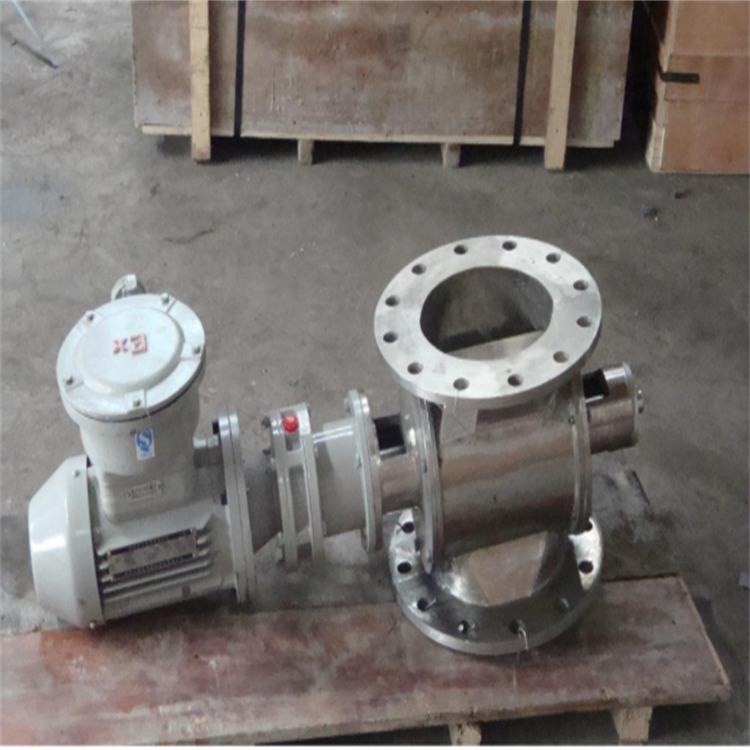


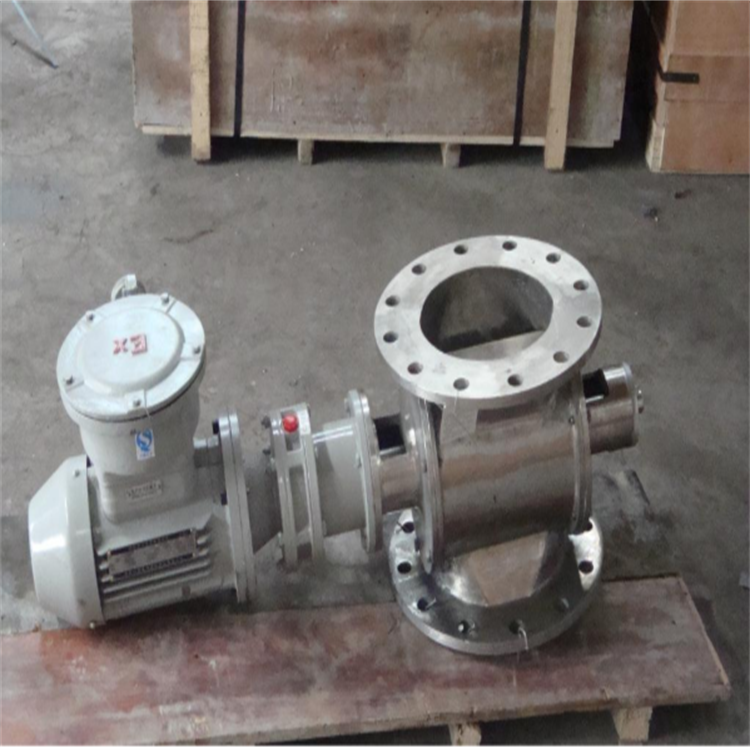


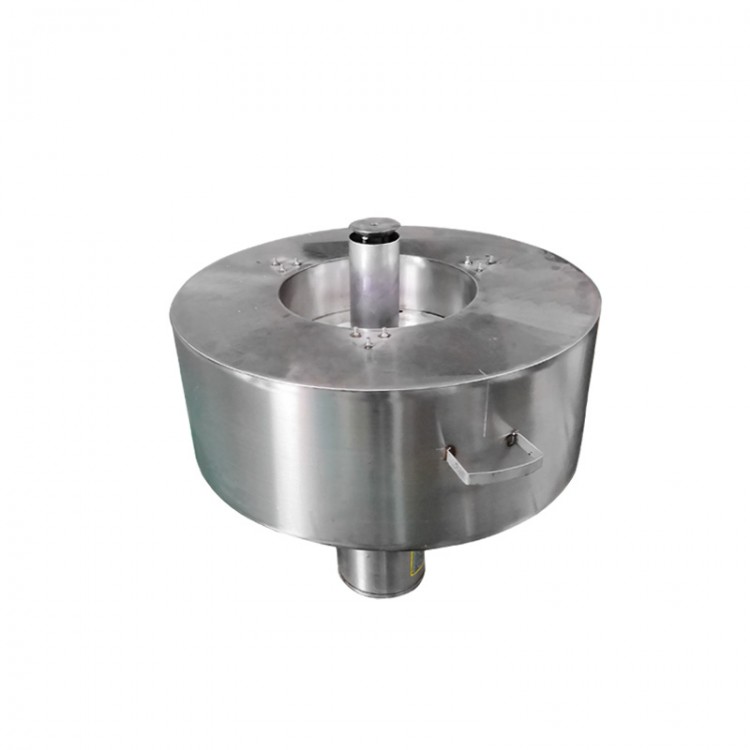





Star valveThe working principle involves a rotating discharge valve with a rotor containing multiple blades. Materials from the upper hopper fall under gravity and fill the gaps between the blades. As the rotor rotates, the materials are discharged through the lower discharge port. Since the spaces between the rotor blades are uniform, the rotor speed can be either constant or variable. This makes the rotating discharge valve widely used in industries such as environmental protection, metallurgy, chemicals, grains, cement, road construction, etc., for discharging, feeding, and metering/packaging of powdered and granular materials. What's more, with the development of microcomputer technology, there is a growing demand for real-time supply of powdered and granular materials across various industries. The combination of the rotating discharge valve with frequency conversion and speed control devices has become the most ideal solution for real-time feeding.
Star valveModel No.:
(One) Standard Type - Code J
The top and bottom flanges of the star valve are generally square or round, or can be specified by the user. The standard type is typically suitable for windless pressure conditions.
(D) Wear-resistant Impeller Code N denotes
The features of the star valve include the tips of the rotor blades being made of special wear-resistant material, ensuring good contact between the blade tips and the inner wall of the housing. After wear, the blade tips can be easily adjusted to maintain good contact with the inner wall of the housing. A sealed rotor type offers better locking gas performance, while the wear-resistant type is mainly suitable for materials with strong grinding properties.
(3) High-Temperature Resistant Model - Code H
The temperature of the material handled by the star valve can reach up to 280°C, with the bearings at both ends isolated from the impeller to prevent ultra-fine powder from contacting the bearings.
Please provide the following information when purchasing a star valve:
1. Is it real-time supply, full supply, or gas locking?
2. Material supply rate: kg/h
Star ValveCalculation Method for Material Supply Capacity:
W(m3/h)=V(l/rev.)×N(rpm)×60×η(%)/1000
Discharge Rate (m³/H)
V: Displacement (l/rev)
N: Rotor Speed (rpm)
η: Material filling rate ≤ 100%
Material filling rate selection:
Pelletized Material: η ≈ 0.6 - 0.9
Powdered Material: η ≈ 0.5-0.8
The above fill rate is for reference only; for certain special materials, it is recommended to measure after actual operation.
3. Material conveying properties, name, particle size, bulk density, temperature, moisture content, and angle of repose.
4. Name of the conveyed gas and pressure difference between the upper and lower flanges of the discharge valve.
5. Flange specifications.
Selection of star valves:
1、Star valveBefore placing an order, it's essential to familiarize yourself with the product's technical specifications, installation dimensions, rotation speed, and application range to select the appropriate accessories to avoid unnecessary losses.
2. The installation dimensions and rotational speed in the star valve's instruction manual are our factory's standard specifications. If your company requires special specifications, our factory can design and produce to meet your needs.
3. The star-shaped valve body is made of standard cast iron, and we can also produce cast stainless steel, cast aluminum, cast copper, ball mill cast iron, welded casings, etc. Additionally, we offer special material cutting valves for specific industries and environments, such as the special material Inconel 600 used in the chlor-alkali industry.
4. The star valve is paired with standard Y-series general-purpose motors, and can also be equipped with explosion-proof motors, variable-speed motors, inverters, etc. according to the actual needs of the user.
Product Introduction:
Star valveThe working principle involves a rotating discharge valve body with multiple blades. Materials from the upper storage bin fall due to gravity and fill the gaps between the blades. As the rotor rotates, the materials are discharged through the lower outlet.