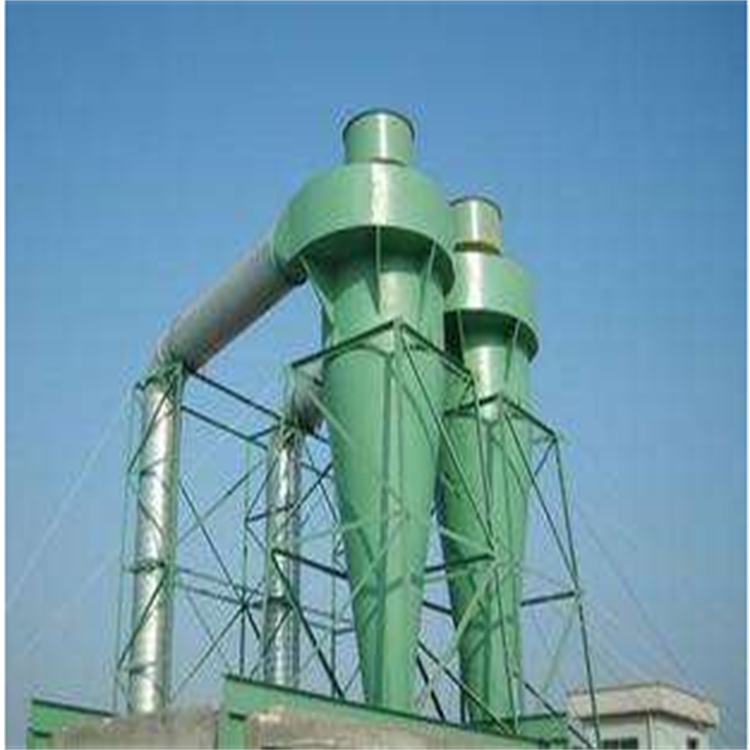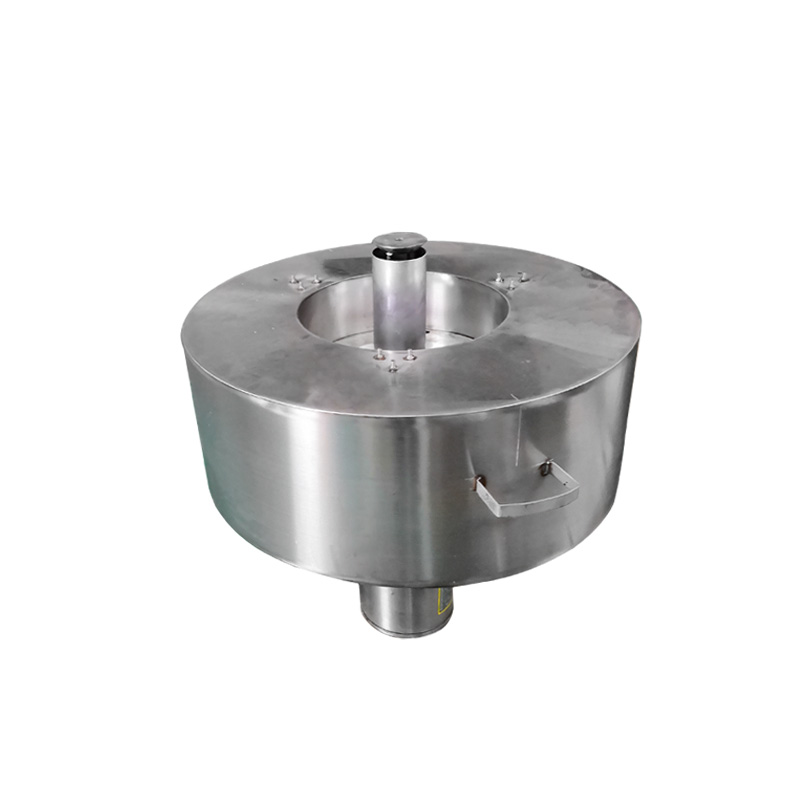

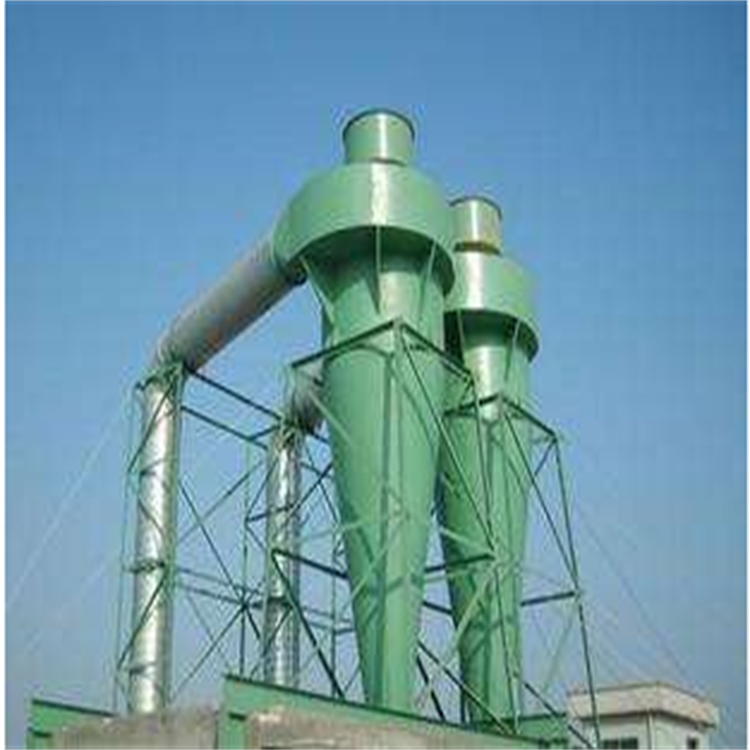

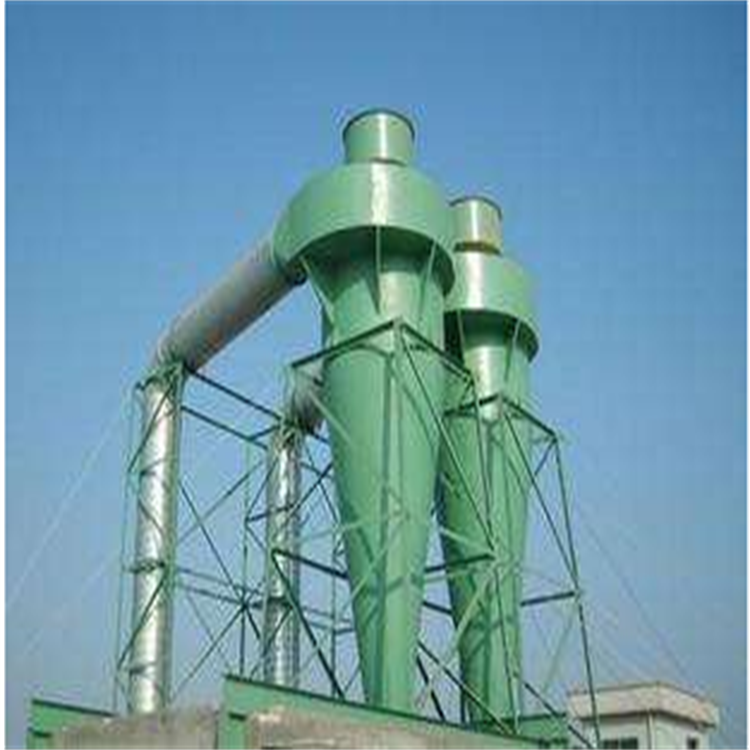


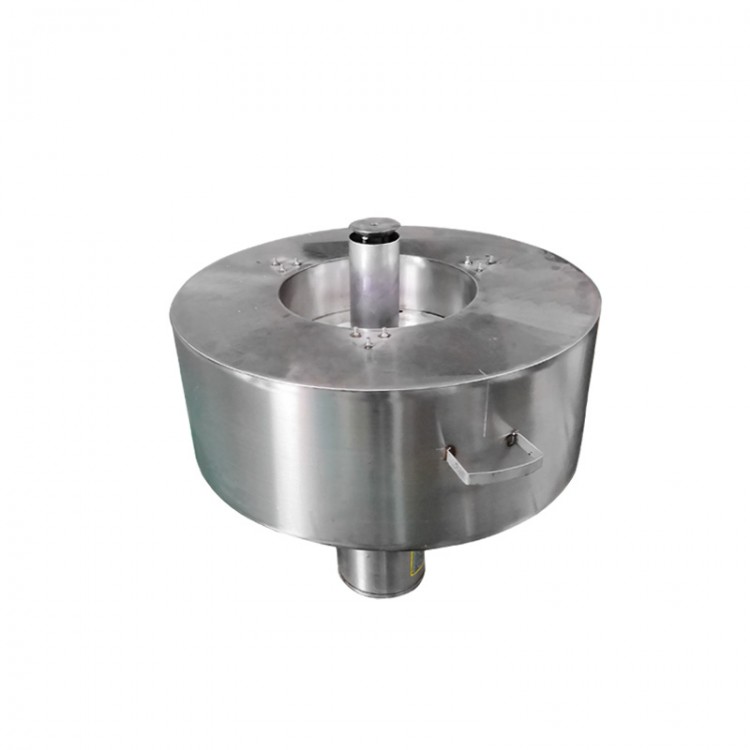





The cyclone separator consists of three parts: the cyclone筒 body, the ash collector, and the conical shell (or wind collecting hood). This dust removal equipment features low resistance, high dust removal efficiency, large air volume handling capacity, stable performance.
Compact footprint, simple structure, practical features. Cyclone separators are generally used to collect particles larger than 5-15μm. The drawback of cyclone separators is that their efficiency in collecting particles smaller than 5μm is not high.
The principle of operation of the cyclone separator involves the movement of air flow and dust particles within the separator: the majority of the rotating air stream follows the wall of the cylinder, spiraling downward from top to bottom towards the bottom of the cone, forming
The descending swirling airflow with dust, during the intense rotation, generates centrifugal force that propels dust particles, with densities far greater than the gas, towards the wall. Once the dust particles come into contact with the wall, they lose their inertial force.
The momentum from the entry speed and its own gravity causes it to fall downward along the wall into the ash collection bin. As the rotating descending air stream reaches the bottom of the cone, it turns upward along the axis of the dust collector.
Form an ascending swirling airflow, which is then exhausted through the dust collector's exhaust pipe. A smaller portion of the airflow entering from the intake port flows towards the top cover of the cyclone separator, then along the exterior of the exhaust pipe.
Sideways flow, upon reaching the lower end of the exhaust pipe, reverses upwards and rises with the central air current, exiting through the exhaust pipe, with the dust particles dispersed within also rising along with it.