







Structural Characteristics of Steam Temperature Reducers
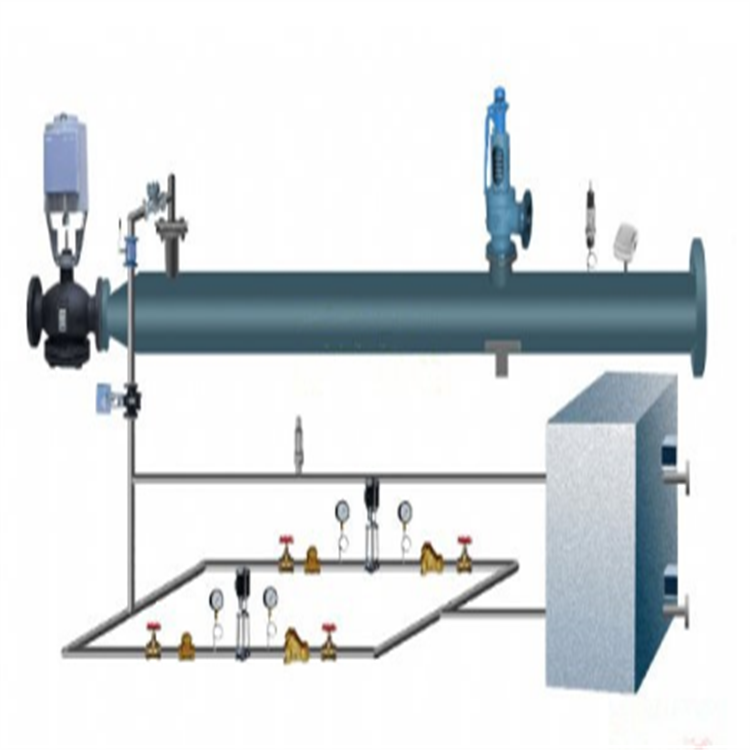
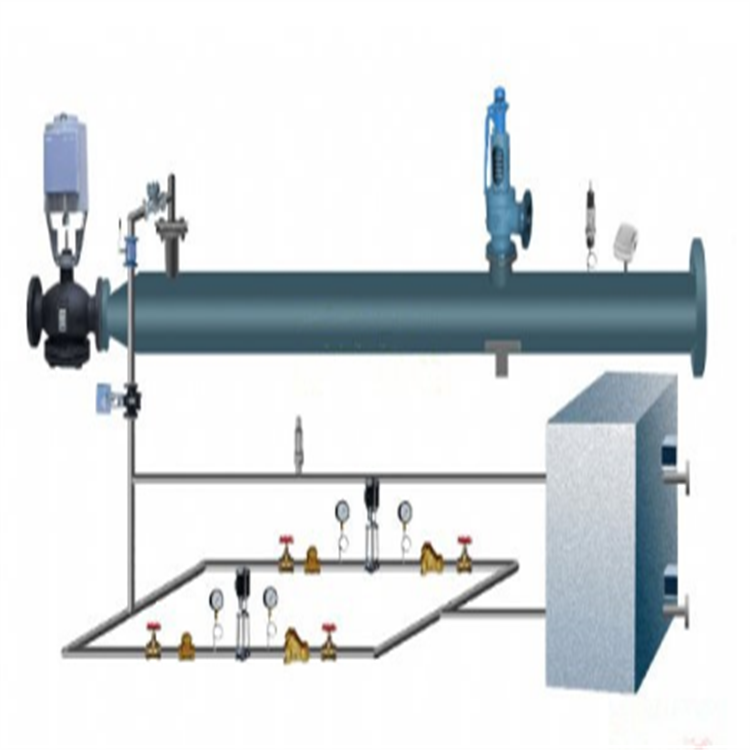
This device consists of a control system, a pressure-reducing system, a water-spraying temperature-reducing system, and a safety protection system. Its features are as follows:
1. Control System: The main controller features an original imported high-precision multi-functional digital controller, equipped with powerful function modules, an intuitive human-machine interface, and a fast and accurate PI control loop.
Achieve intelligent unattended operation, with flexible parameter adjustments, and capable of expanding functions according to customer requirements.
2. Pressure Reducing Device: This component reduces high-pressure steam through throttling to the pressure required by the user. It consists of a balanced electric pressure reducing valve, pressure sensor, multi-functional controller, and throttling device.
The pressure sensor assembly is installed downstream of the steam pipeline, continuously monitoring the steam pressure after reduction, and regulating the valve opening in PI (proportional-integral) mode. Regardless of how the upstream pressure changes.
Downstream loads have varied, yet the downstream steam pressures have remained stable.
3. Temperature Reduction Unit: This is the part of the system that achieves steam temperature reduction, consisting of the temperature reduction unit and the temperature reduction water system. The temperature reduction unit is directly connected to the steam pipeline, with the temperature reduction water being injected at high pressure by the pump.
Cooling body, atomizing fine droplets through nozzles, rapidly mixing with superheated steam, vaporizing, and absorbing the heat energy of the superheated steam to reduce the temperature of the superheated steam. Based on downstream temperature
Sensor feedback signals adjust the waterway regulating valve in the PI control mode of the control system, fine-tuning the amount of cooling water.Original U.S. imported professional nozzle design, made of stainless steel, featuring a rotating interior.
Propeller blades, with forceful water droplets ejected, accommodate spiral motion, enhancing steam absorption, effectively preventing cavitation/flash vaporization. The particles are finely and uniformly distributed, resulting in significant atomization effects.
Performance Features
1. Streamlined design, elegant and tasteful, made to standard JYD specifications
2. Compact structure with flange connection for easy installation and maintenance.
3. Original imported Siemens controller, with flexible operation and customizable parameters to meet various requirements.
4. High control accuracy, smooth operation, effectively eliminates static error effects, noise below national standard requirements.
5. And can be extended with additional features as per user requirements (such as adding a touch screen display).
6. Can be adjusted for dew point and humidity according to the customer's production process requirements (special design required).
Applications of Steam Condensers
1. Combined heat and power thermal network centralized heating. 2. Power plants, industrial boilers, or thermal power plants. 3. Steam inlet of heat exchange station or heat exchanger. 4. Steam-powered inlet of lithium bromide refrigeration unit.
5. Petrochemical, light industry, papermaking, pharmaceutical, and food processing equipment for power and heat usage.

Main Types of Steam Condensers:
1. Porous steam cooler
2. Venturi Steam Condenser
3. Contact Steam Condenser
Due to the unique nature of the steam desuperheater in terms of usage and operating conditions, it is necessary to facilitate the rapid vaporization of the injected desuperheating water to ensure the steam cooling process is completed as quickly as possible within the shortest possible distance.
Ensure the economizer achieves the desired effect. Kindly provide the following process parameters and operating conditions to the client, so we can promptly design and manufacture a qualified and usable steam economizer for you.
a. Temperature, pressure, and flow rate before steam desuperheating
b. Temperature after steam desuperheating and its application;
c. Initial temperature, pressure, and water quality of the cooling water;
d. Materials and placement of steam desuperheaters.