






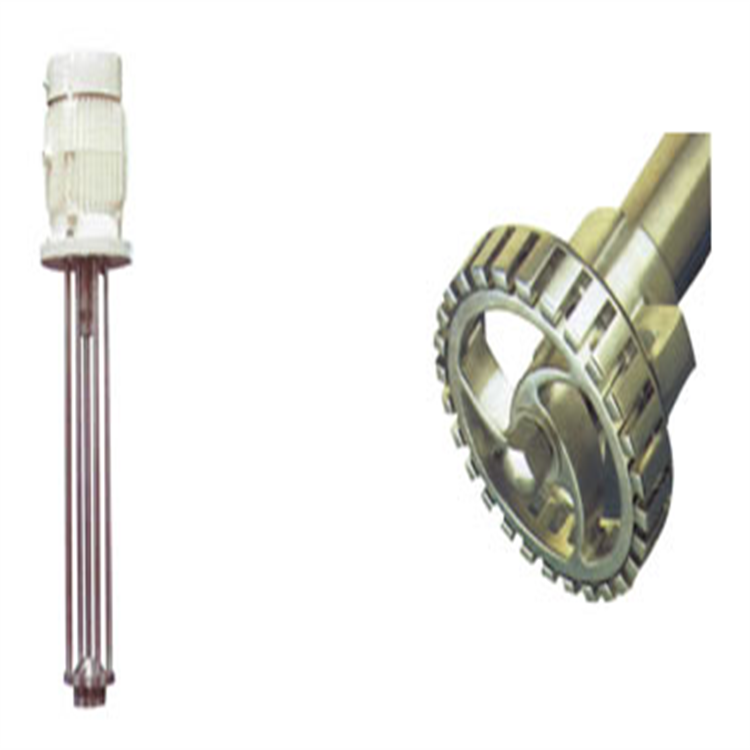
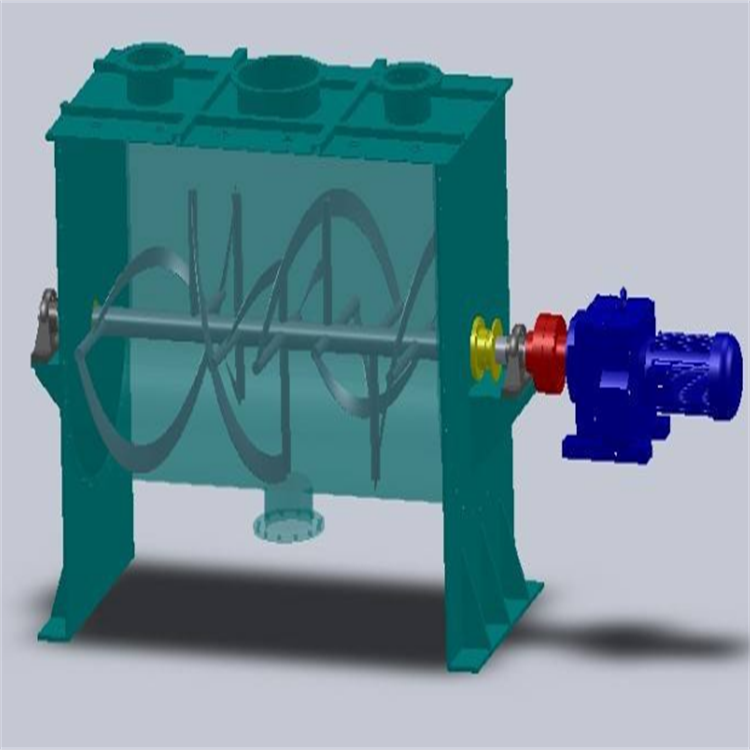
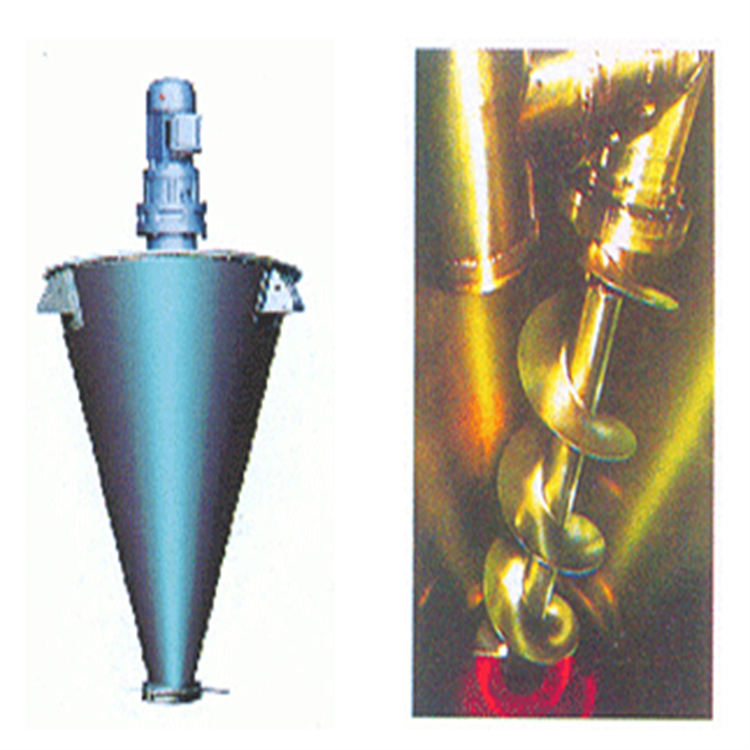
Product Features of High Viscosity Heat Exchange Mixer
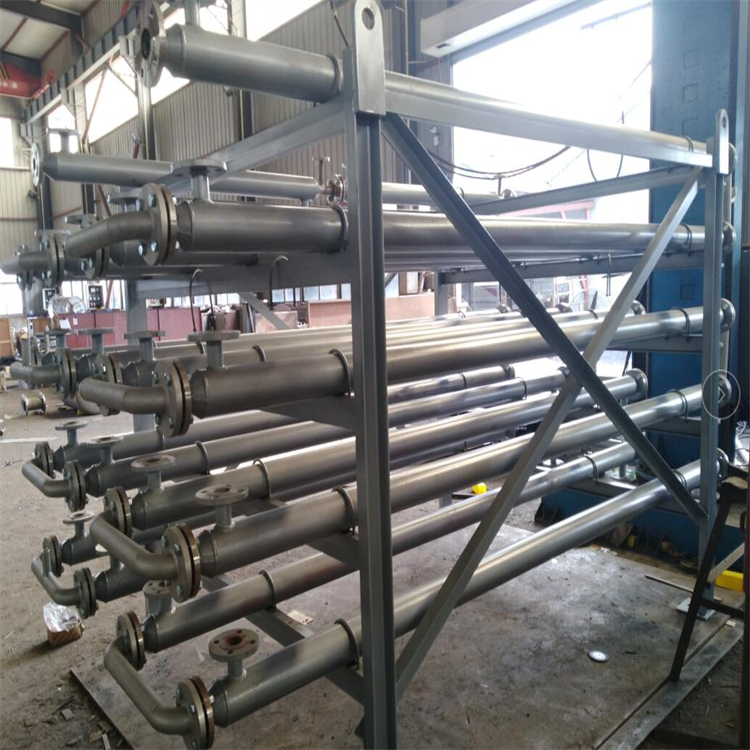
High viscosity heat exchange mixer, it is made of pipes to construct the internal units, thus not only enhancing the heat transfer coefficient for various high viscosity media, but also maintaining a high specific volume heat transfer area after enlargement.
Ensured high volumetric heat transfer rate. For high-viscosity media with a viscosity greater than 3,000 centistokes, the heat transfer coefficient of the JHF type can reach 200-400 W/m²°C, which is 4-5 times higher than that of a typical shell and tube heat exchanger.
Used for heating, cooling, and heat recovery processes in high-viscosity media. Another prominent advantage of the JHF type is that the temperature distribution at each identical cross-section of the heat exchanger is uniform. It does not rely solely on fluid flow from
Bi-directional flow between the shell wall and the shell center. It ensures uniform material temperature and provides even heating (or cooling) from the inside. This advantage of the JHF type allows it to essentially eliminate when used as a polymerization reactor.
In addition to the uniformity of polymerization being improved due to the even distribution of temperature, it is beneficial for enhancing the quality of the polymer, and greatly advantageous in reducing energy consumption and increasing conversion rates. Standard specifications can be adjusted according to process conditions and requirements.
Design and manufacture JHF static mixers with a heat transfer area of over 100m². The table below lists the most commonly used small JHF static mixers, which, unlike other models, are specified by the numeric value of their heat transfer area.
Please provide the Chinese content to be translated.
2. Examples of High Viscosity Heat Exchanger Applications
High viscosity heat exchange mixers have industrial applications in two categories: the first is for the heat exchange process of high viscosity media, and the second is used as a polymerization reactor. In the food industry, the heating and cooling of fats and oils.
Melting and cooling of thermoplastic resins and plastics, heating and cooling of polymer solutions, heating and cooling of cosmetics in the daily chemical industry, heating and cooling of adhesives, and waste processing in the oil industry.
Heating and cooling of oils, heavy oils, crude oil, molten asphalt, and heating and cooling of emulsified explosives in the explosives industry, etc., all belong to the first category.
Industrial Use. Used as a polymerization reactor for polystyrene, a production unit for styrene-butadiene-acrylonitrile (SAN) copolymers, a production unit for acrylonitrile butadiene styrene (ABS) copolymers, and as a polymer for nylon.
Aggregating reactors of size 6 and the like fall under the second category of industrial applications.
3. Ordering Instructions for High Viscosity Heat Exchanger Mixers
A high-viscosity heat exchange mixer is an advanced, energy-efficient unit equipment in the chemical industry. Proper design and selection are crucial to achieving its optimal performance. The design of a high-viscosity heat exchange mixer's...
Calculating is a highly professional and targeted task. Generally, we offer design services free of charge to our clients, and we also hope that users can provide as much detail as possible regarding the situation. Users find it difficult to specify.
Supply design conditions, we will also access the database and strive to assist in resolving the issue. The relevant situations include the following aspects:
What process are you preparing for? It would be great if you could provide information about the relevant process details.
What are the names and flow rates of the fluids involved?
3. Operating temperature and pressure?
4. Various physical and chemical data of the involved fluids under operating temperatures and pressures, including density, viscosity, interfacial tension, thermal conductivity, etc.
5. Balance relationships, reaction kinetics data, etc., (or inform of any small-scale trial conditions and current production status).
6. Are the liquids transported via a high-level tank or a pump? What is the height from the high-level tank to the static mixer? What is the pump's head (output pressure)?
7. Are the gases transported using a fan or a compressor? What is the pressure head (output pressure) of the fan or compressor?
8. What is the allowable pressure drop for the high viscosity heat exchanger mixer?
9. What are the process requirements for the high viscosity heat exchange mixer? If used for mixing, what level of uniformity is required? If used for extraction, what extraction rate is needed to achieve?
Description: (1) Items 6, 7, and 8 mentioned above may sometimes be determined by the designer, meaning the user needs to select a pump or fan based on the design results.
(2) In cases where the user does not specify the degree of uniformity for the mixture, it is generally designed based on the coefficient of unevenness a×x^1/2 ≤ 1%.
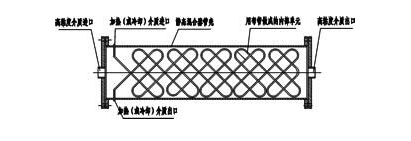
Product Introduction:
High-viscosity Heat Transfer Mixing Unit, made of pipes for its internal components, not only enhances the heat transfer coefficient for various high-viscosity media but also maintains a high specific volume heat transfer area even when scaled up, ensuring a high specific volume heat transfer rate.