







The butterfly central lab bench is a commonly used basic equipment in laboratories, featuring sturdy durability and resistance to acidic and alkaline corrosion. The following is its detailed introduction:
Structure and Material
Top Surface: Available in various materials such as 12.7mm thick core理化 board, resistant to strong acid and alkali corrosion, and heat-resistant up to 140℃; 20mm thick solid ceramic board with features like resistance to contamination, easy cleaning, and impact resistance, capable of withstanding most chemical reagents. Colors include black, gray-white, and more for selection.
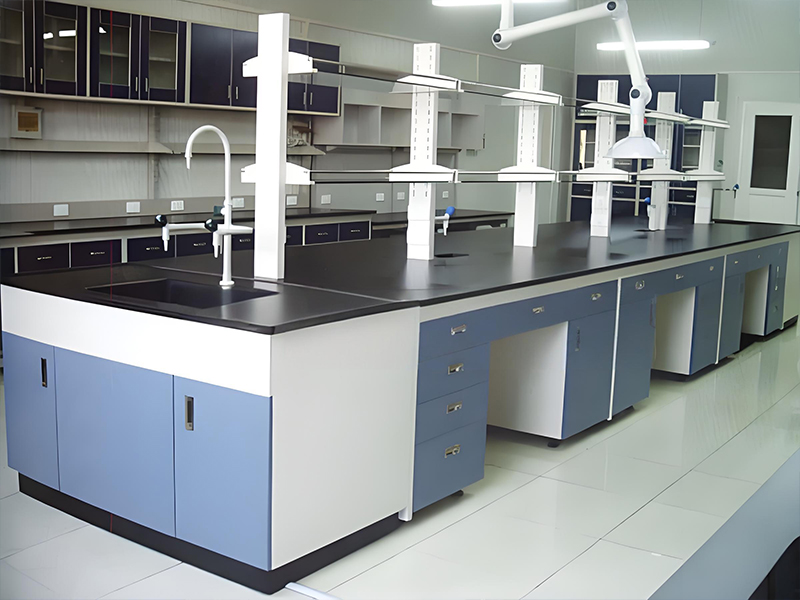
Cabinet: Constructed with premium cold-rolled steel sheets ranging from 1.0-1.2mm thick, treated with acid pickling and phosphatization, and coated with electrostatic powder spray of epoxy resin for excellent acid and alkali resistance. The frame's support beams are made of 60*40mm cold-rolled rectangular steel tubes, with supporting pillars made by welding two identical tubes together and inlaying cold-rolled channel steel, capable of static load > 250 kg.
Reagent Rack: Typically made from high-quality cold-rolled steel plate with a thickness of 1.2mm, the shelves are 10mm thick frosted glass or 12mm thick tempered glass. The double-layer design features adjustable holes of various heights for flexible height adjustment.
Accessories: Roller sliders incorporate advanced German technology, featuring three-section heavy-duty ball sliders with strong load-bearing capacity and silent operation; hinges typically sourced from the UK, offering high-quality chrome-plated steel hinges with a 175° opening; handles commonly use a single-letter concealed pull, made of aluminum alloy or PVC; sinks are laboratory-grade premium PP material, with copper ceramic valve cores for faucets, finished with electrostatic powder coating in epoxy resin.