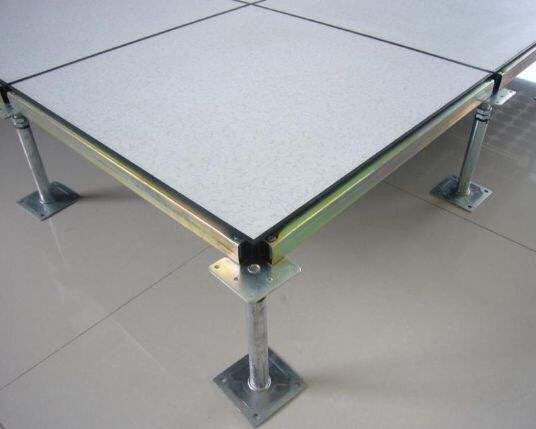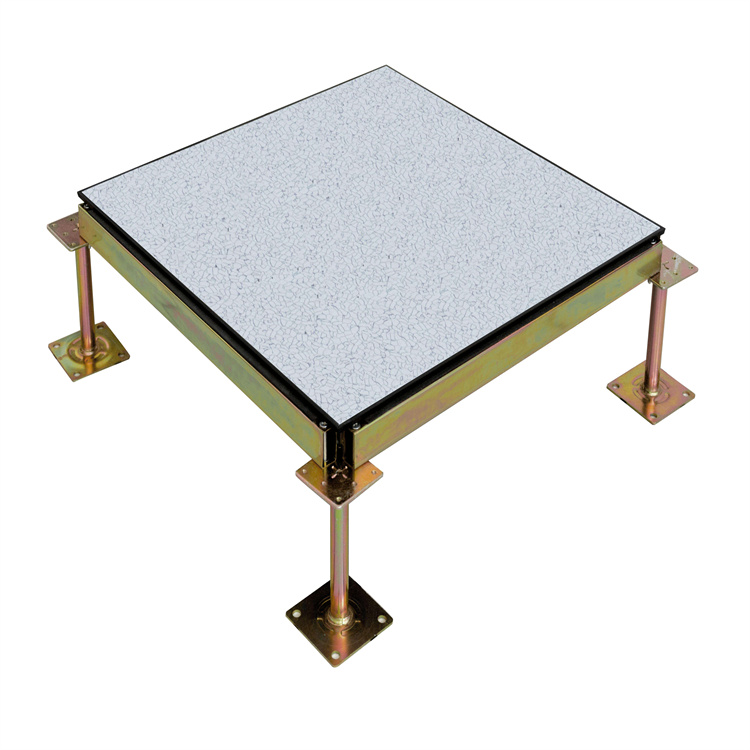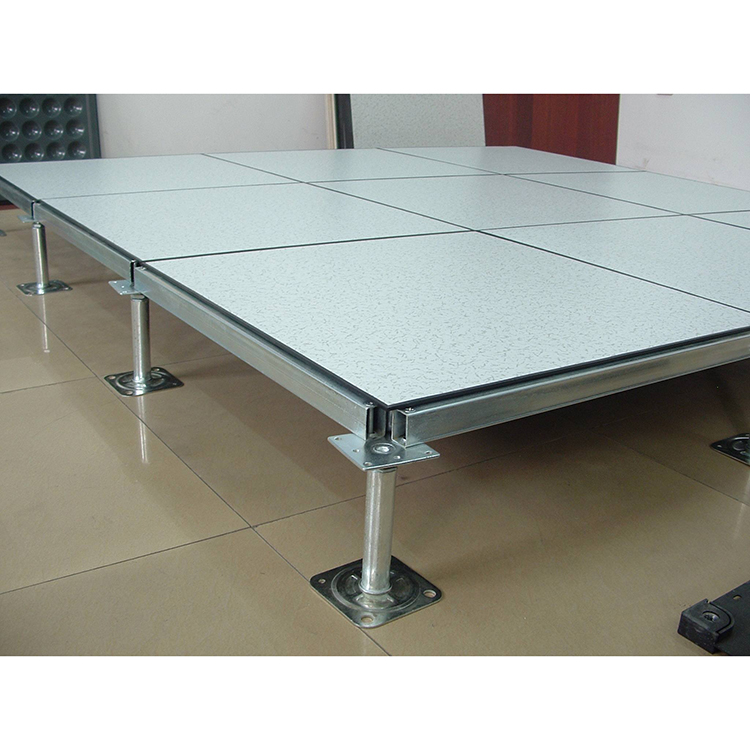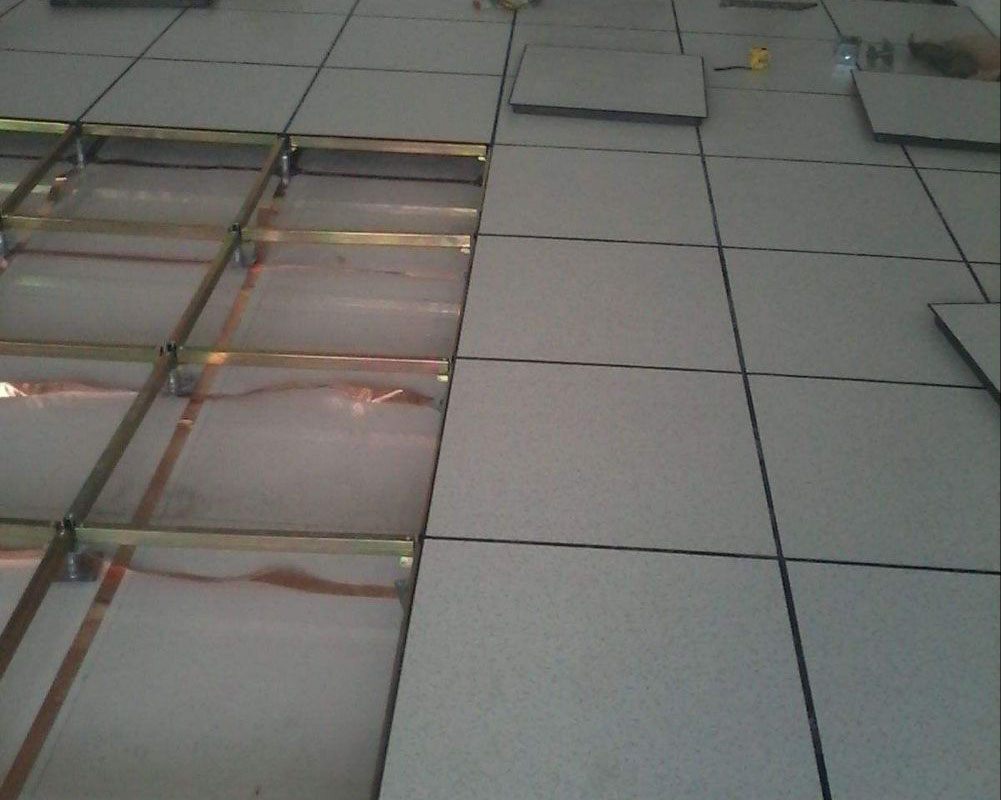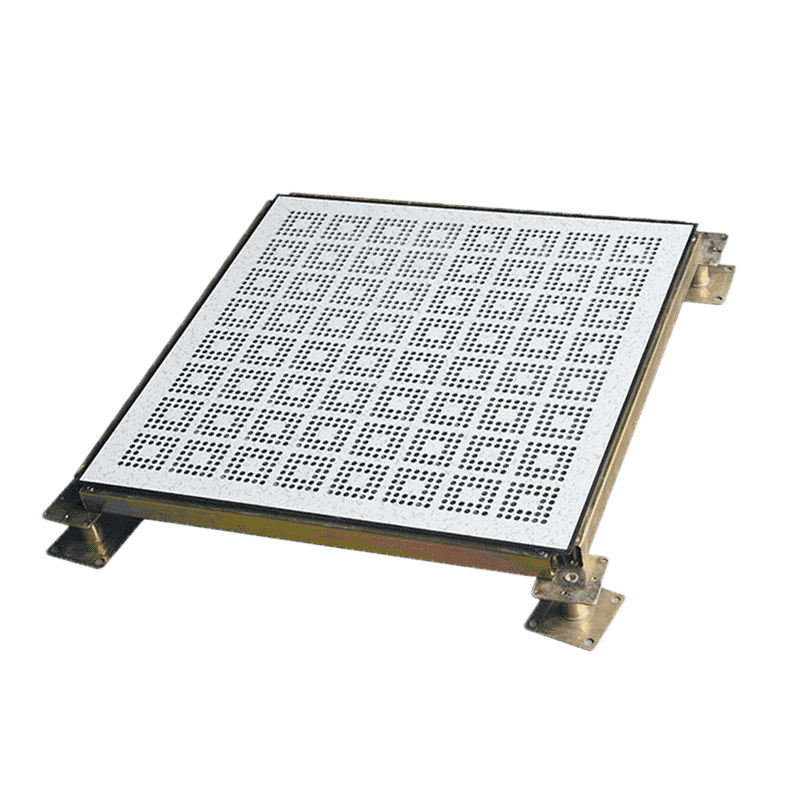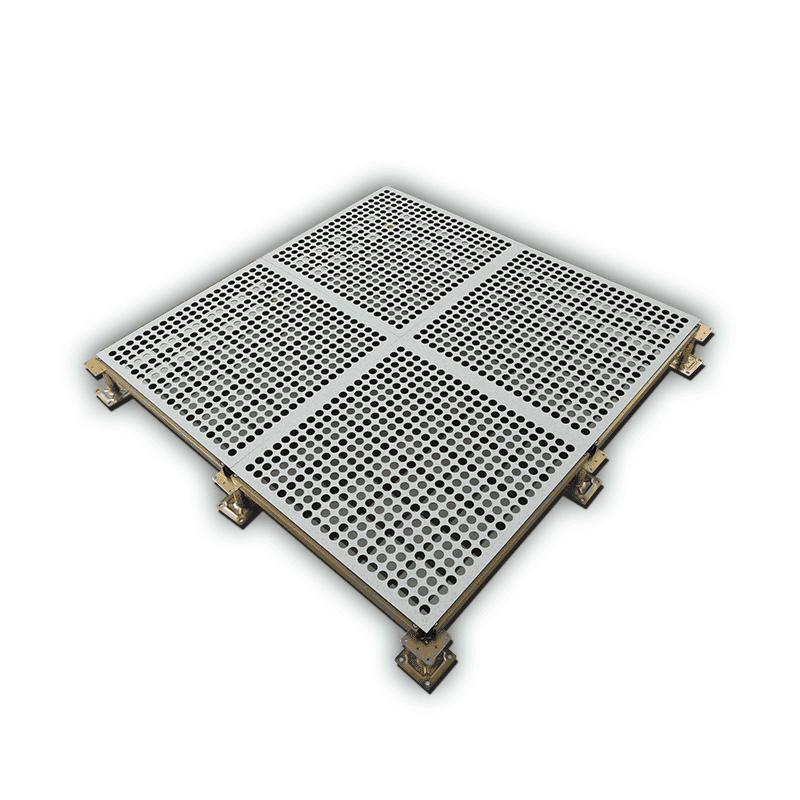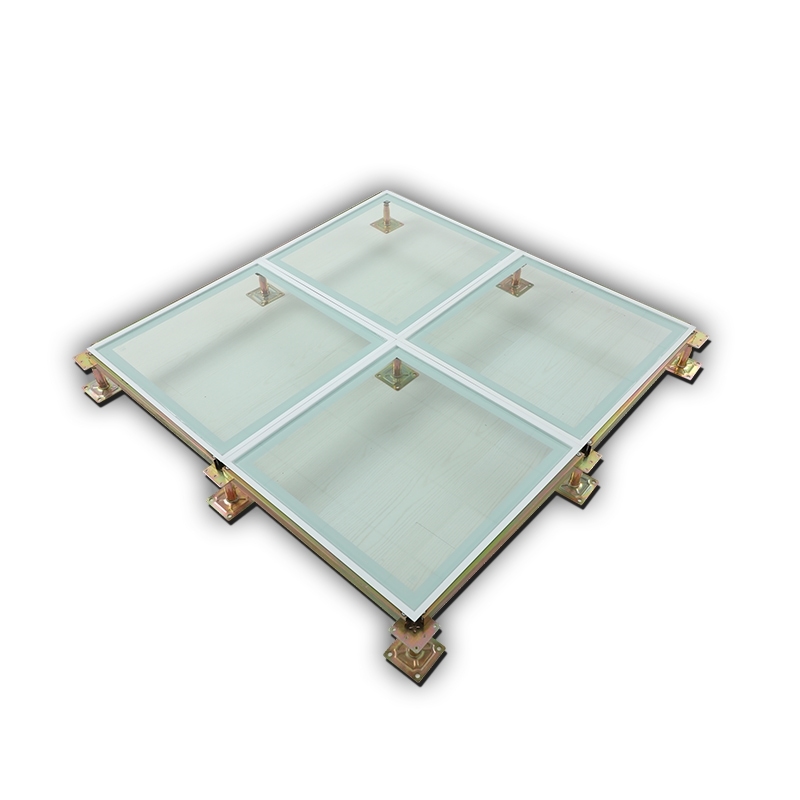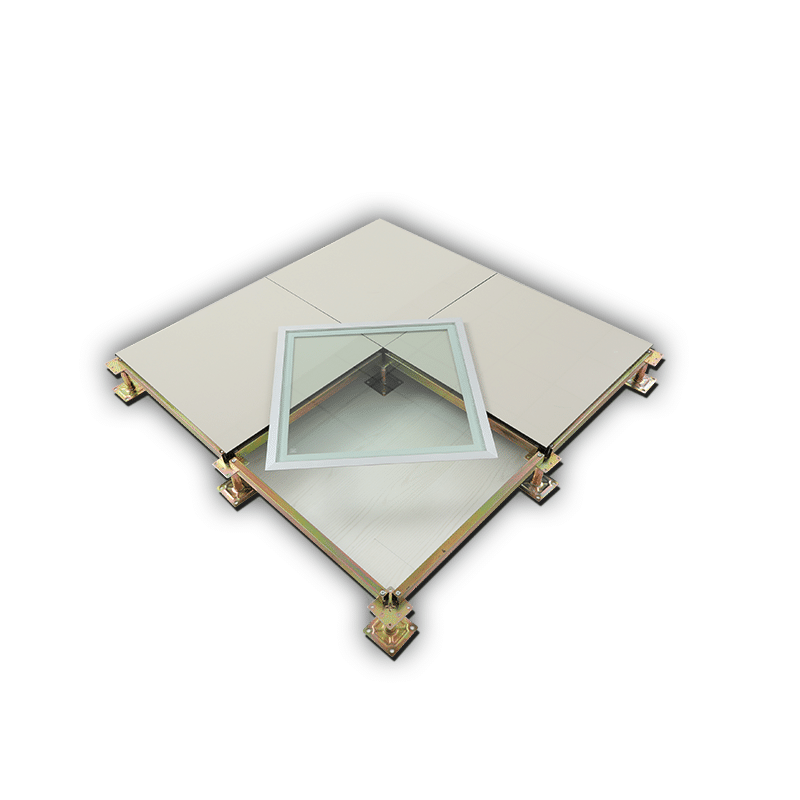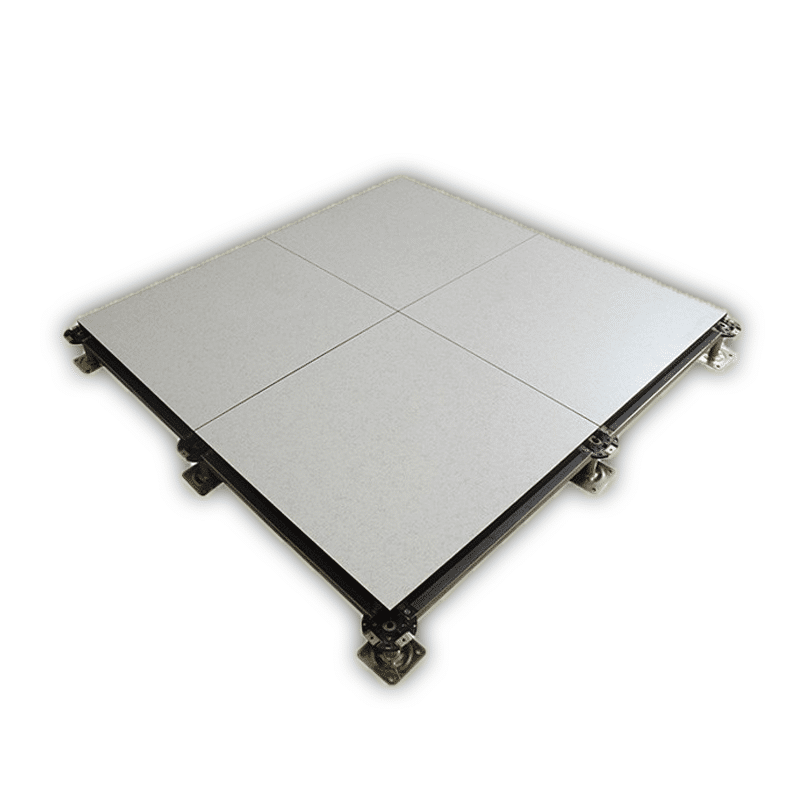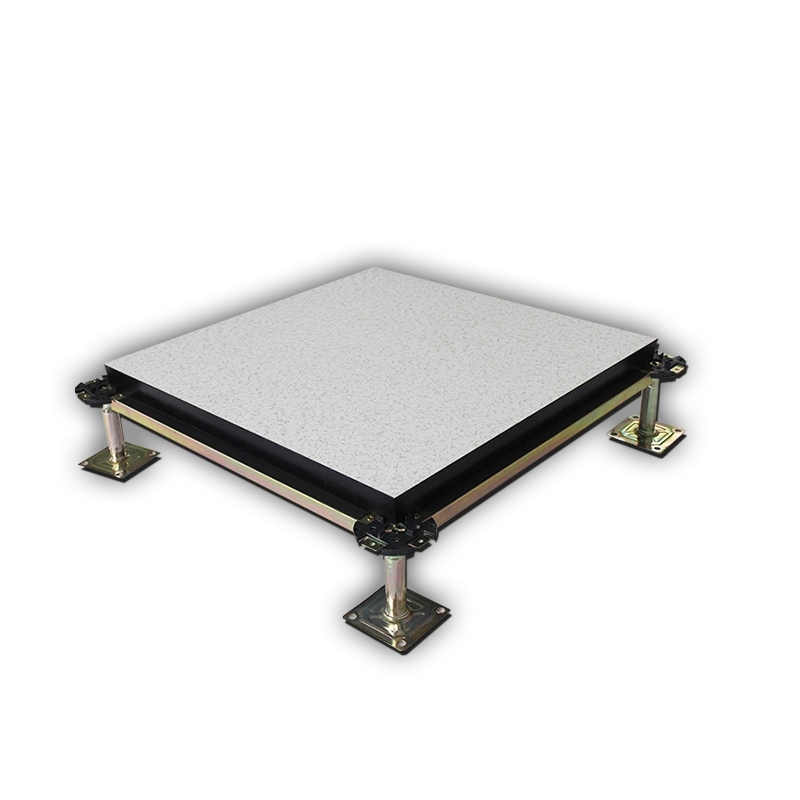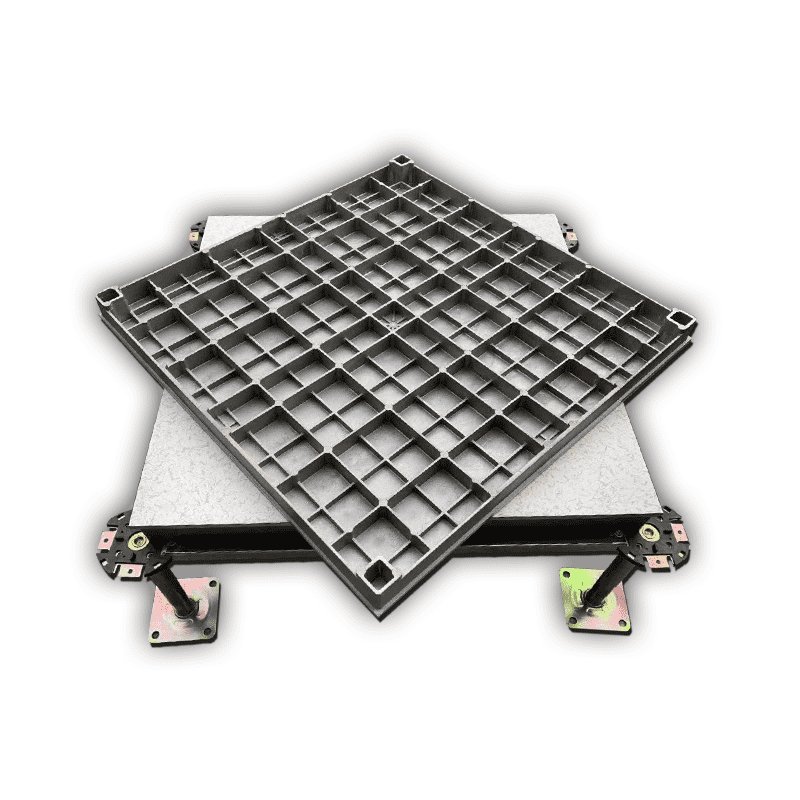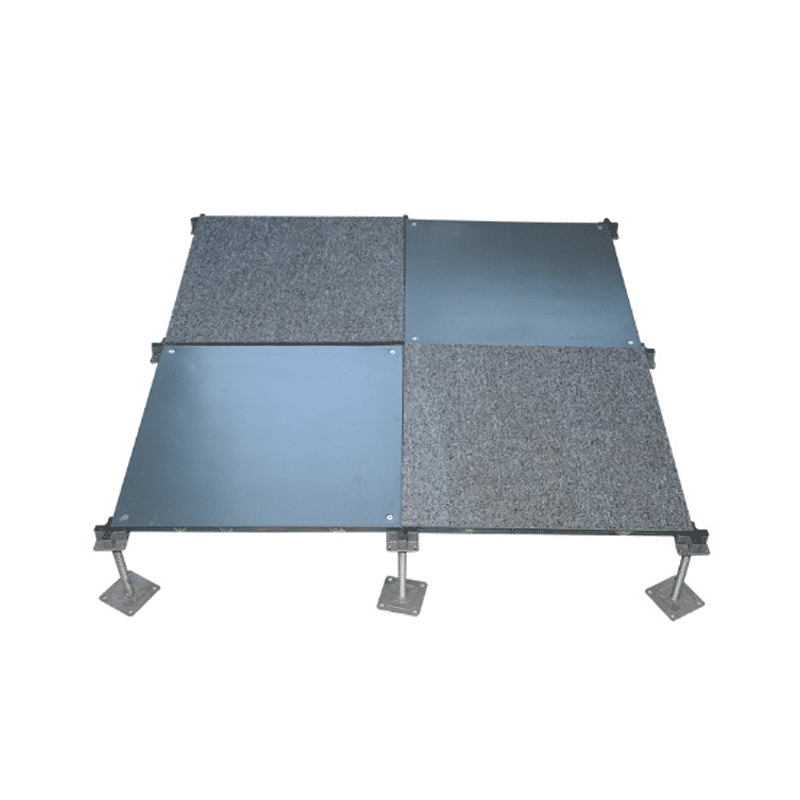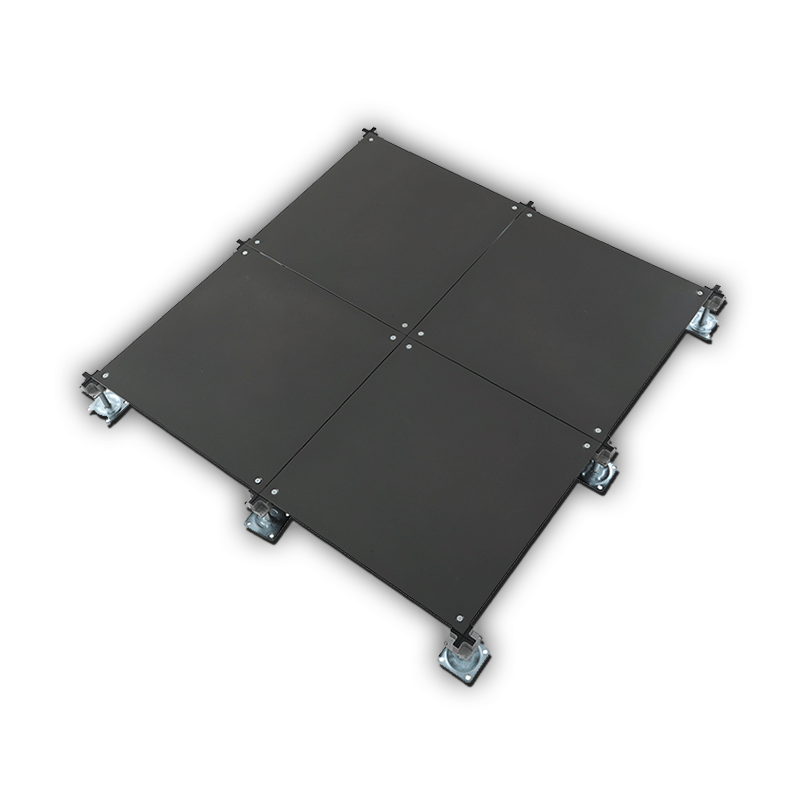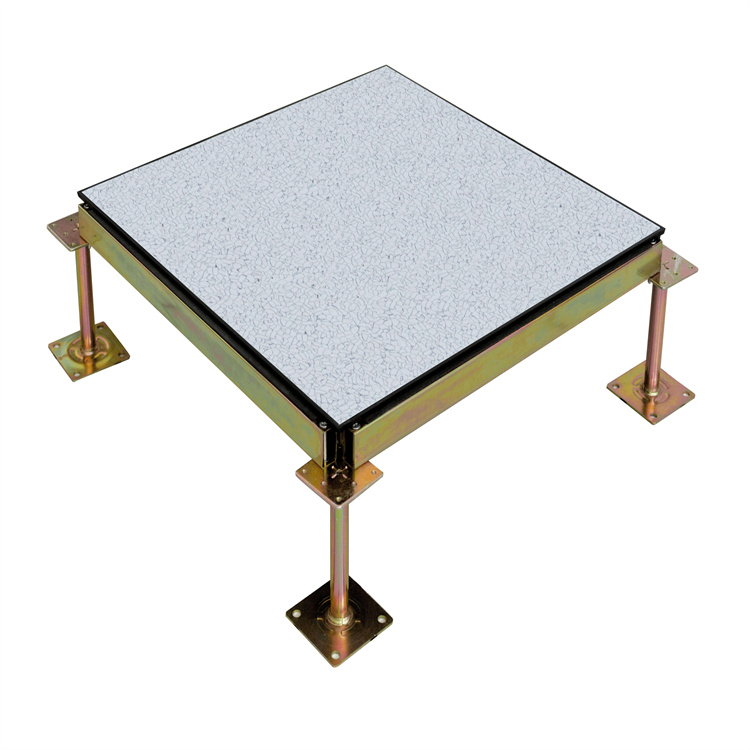

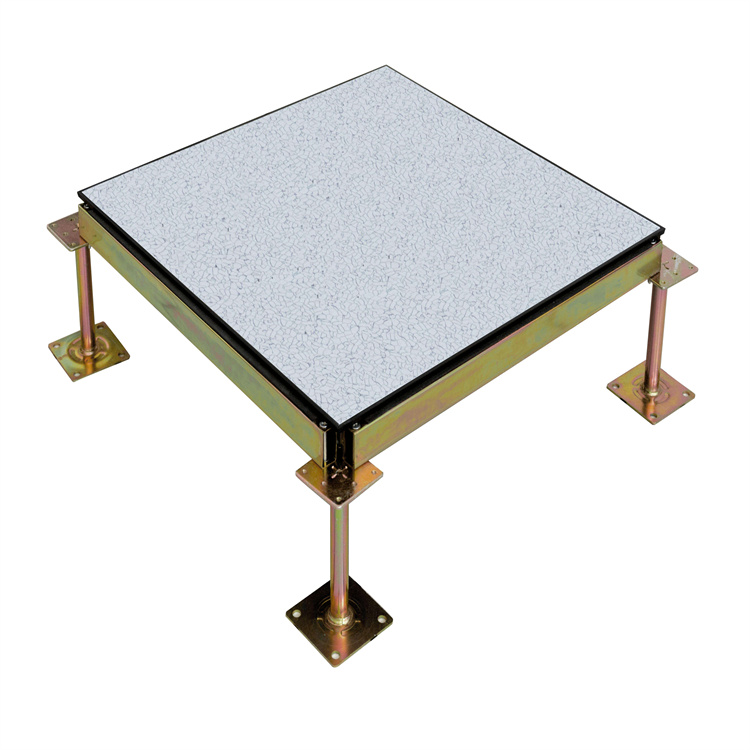

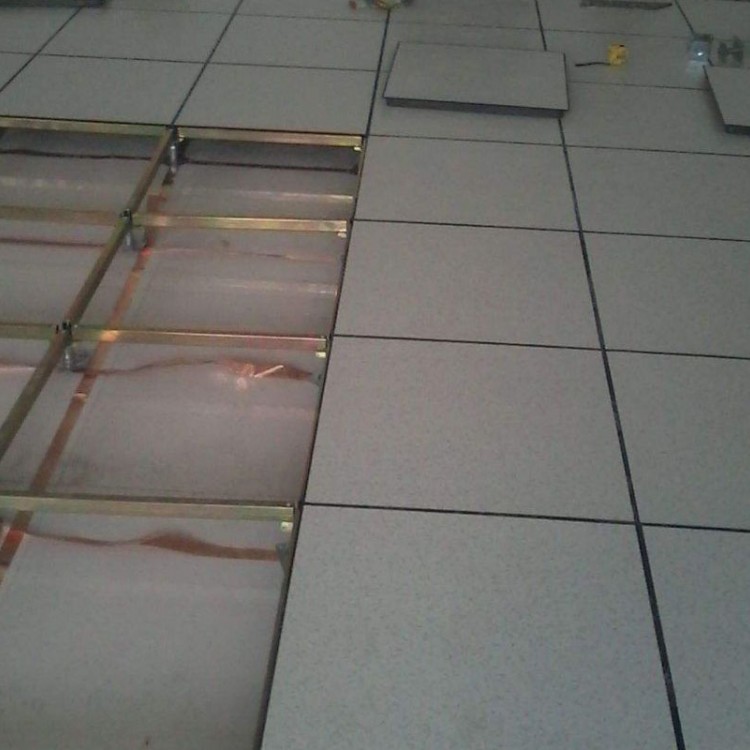


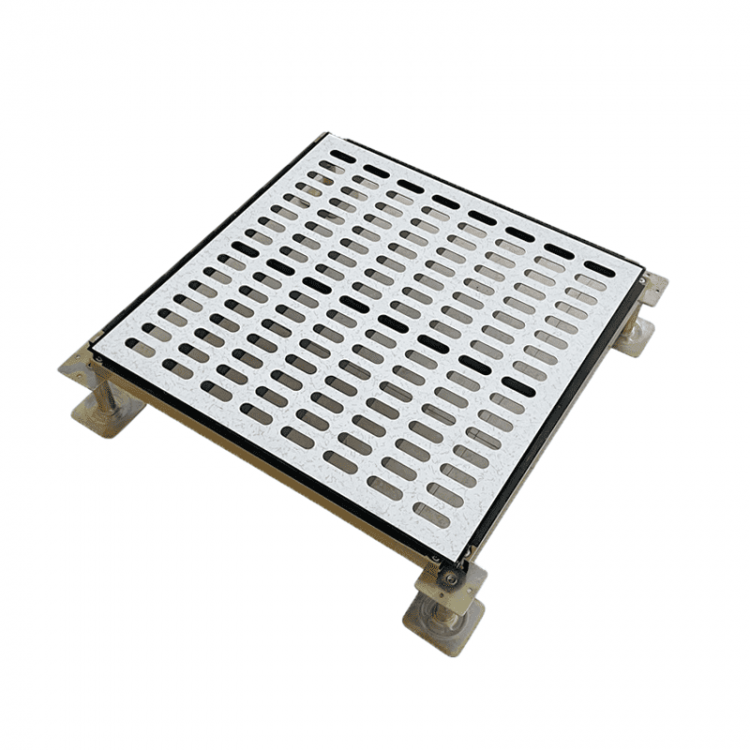
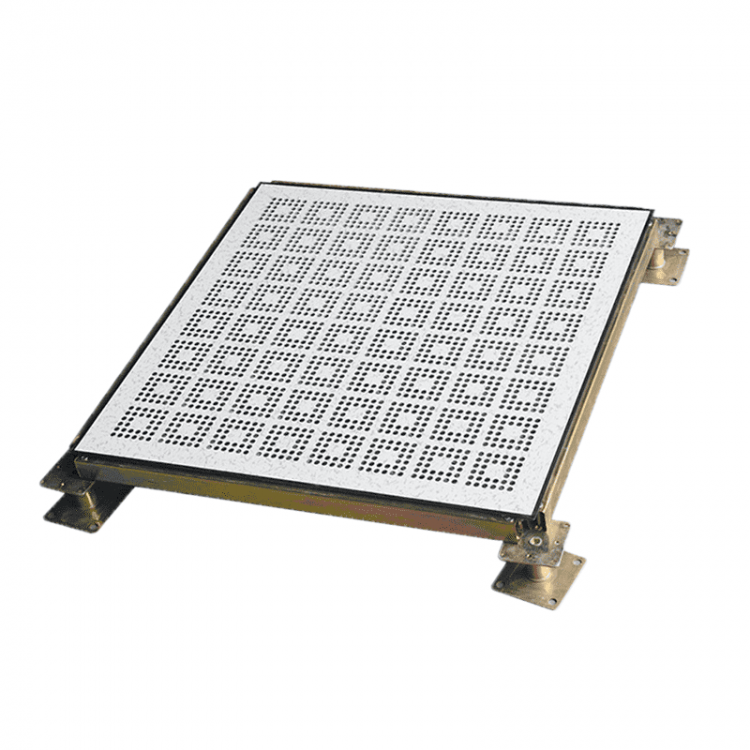
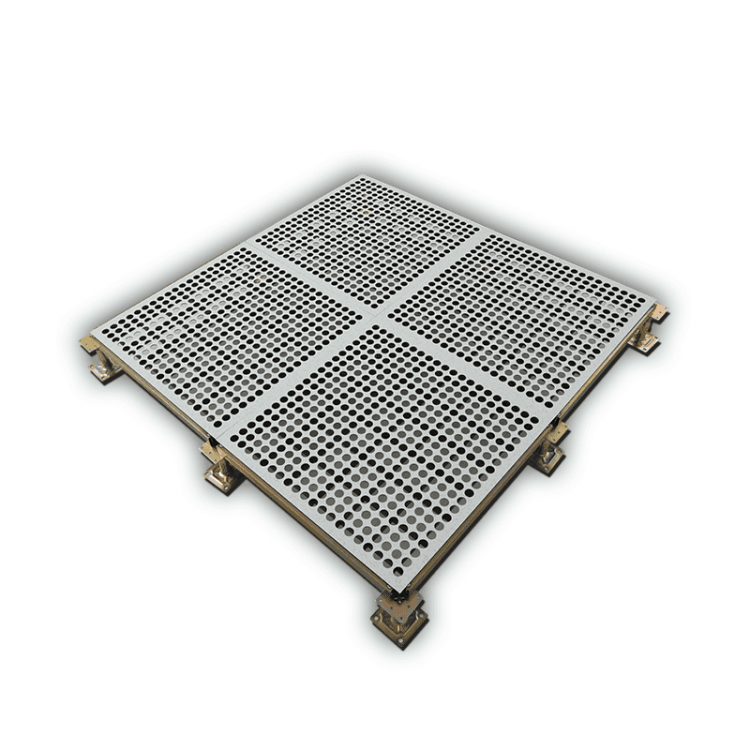
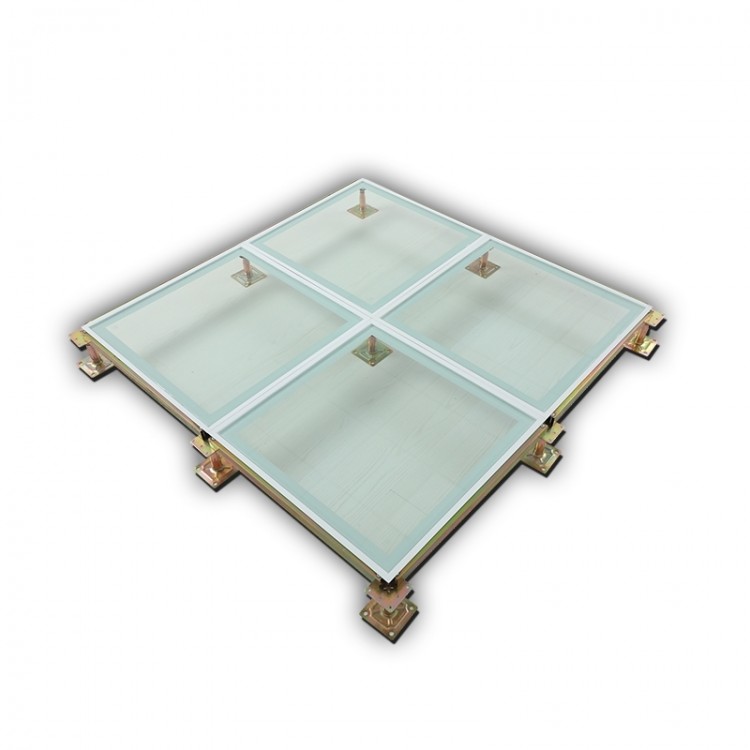
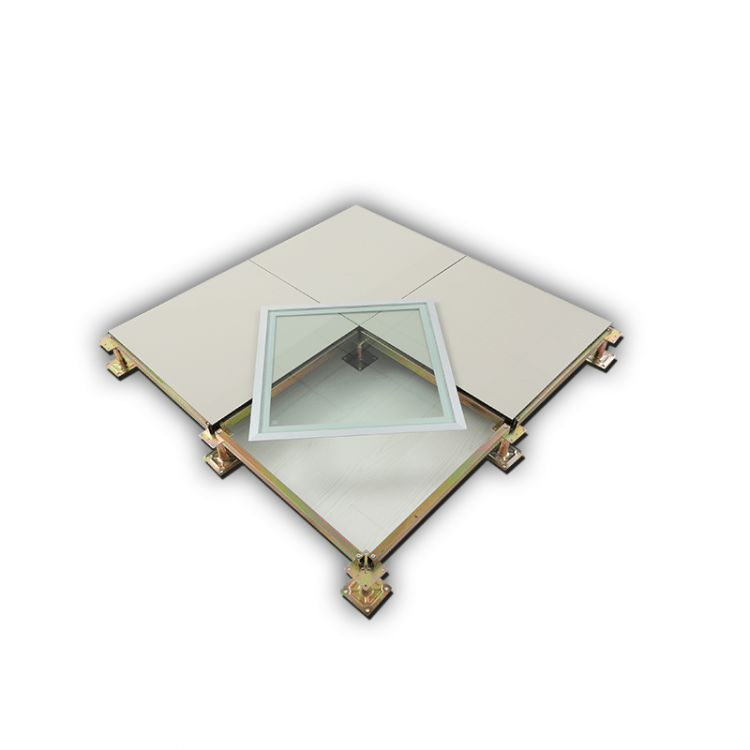





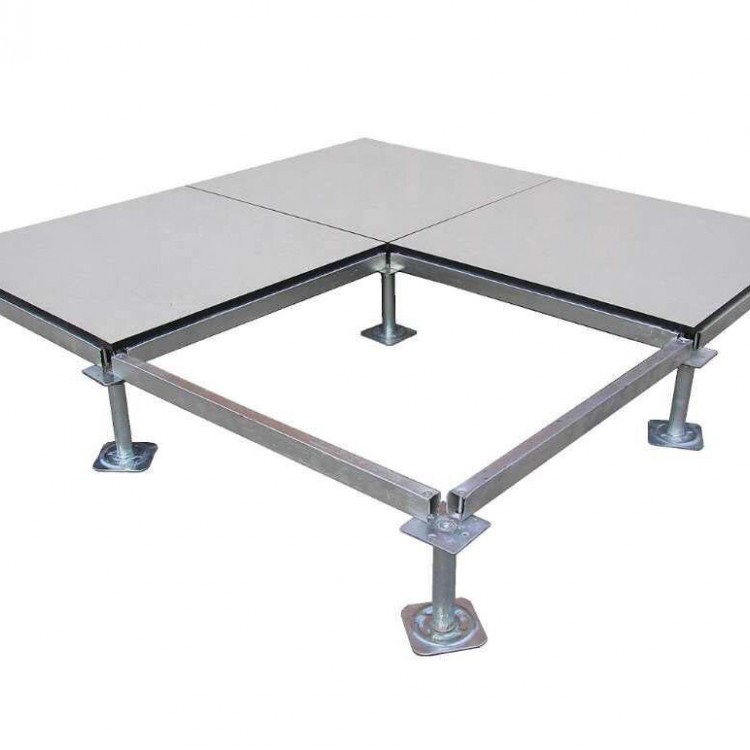
The working principle of antistatic flooring is to dissipate static electricity into the ground through a special layer on the floor surface, thereby reducing or eliminating the interference caused by static electricity. Its main characteristics include:
Static Dissipation Performance: The floor surface is treated with conductive materials to prevent the accumulation of static charges, thereby avoiding interference and damage to equipment from static electricity.
2. Safety: Static-dissipative flooring is made with flame-retardant materials, compliant with national fire safety standards, effectively delaying the spread of fire. Additionally, the special coating and structural design can withstand humid environments, preventing the floor from warping or molding.
3. Load-bearing Capacity: High-strength supporting structure can support heavy-duty equipment, preventing potential safety hazards caused by ground collapse.
4. Flexibility: The overhead design (usually 15~30cm above ground) creates a concealed "underground passage," facilitating the arrangement and adjustment of wires, network cables, and ventilation pipes.