








Product Description:
Electrically heated liquid. Ammonia evaporator background technology application
The reductant for the flue gas SCR denitrification unit installed in a thermal power plant is ammonia gas, which is primarily produced by the evaporation of liquid ammonia. Currently, there are two structural modes for ammonia evaporation units: one uses steam as the heat source, and the other uses electric heating. In one type of ammonia evaporation unit, steam is directly injected into the heat medium through a steam nozzle, with the temperature controlled by a heat medium temperature control unit. Liquid ammonia evaporates into ammonia gas inside the ammonia evaporation tube. This unit typically only utilizes low-pressure saturated steam, which generates significant noise when mixed with water. In the actual application of power plants, there is usually no low-pressure saturated steam available. An additional temperature-reducing and pressure-reducing unit is required to convert low-pressure superheated steam into low-pressure saturated steam, which is costly. Moreover, the ammonia gas produced generally has a high pressure, necessitating a separate pressure-reducing unit to reduce the pressure of the ammonia gas to meet process requirements. In the other type of electrically heated ammonia gas evaporation unit, liquid ammonia is heated in the shell of the heat medium by electric heating, and the liquid ammonia is heated and evaporated to the required process temperature through heat exchange with the heat medium. The heating source is an explosion-proof electric heater. The temperature control unit maintains the heat medium within a specific temperature range in the shell, with the liquid ammonia evaporating into ammonia gas inside the ammonia evaporation coil.
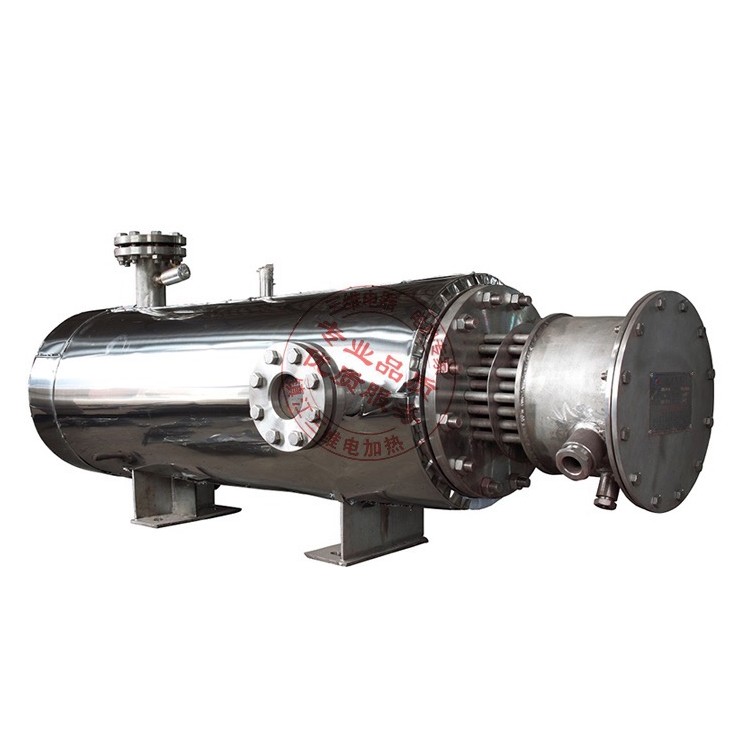
Electrical heating liquid ammonia evaporator is an ammonia evaporator that uses circulating heat medium as the medium for heat exchange, featuring noise reduction, energy saving, and adjustable characteristics. It directly provides the required heat and heat medium for liquid ammonia evaporation through electrical heating and promotes circulation convection, reducing operating noise, enhancing heat exchange efficiency, optimizing the process, adapting to changes in ammonia and gas pipeline conditions, ensuring reliable operation of downstream equipment and the entire process, while also saving costs, controlling the total project investment, achieving optimized benefit generation per unit cost, and creating a good working and production environment.
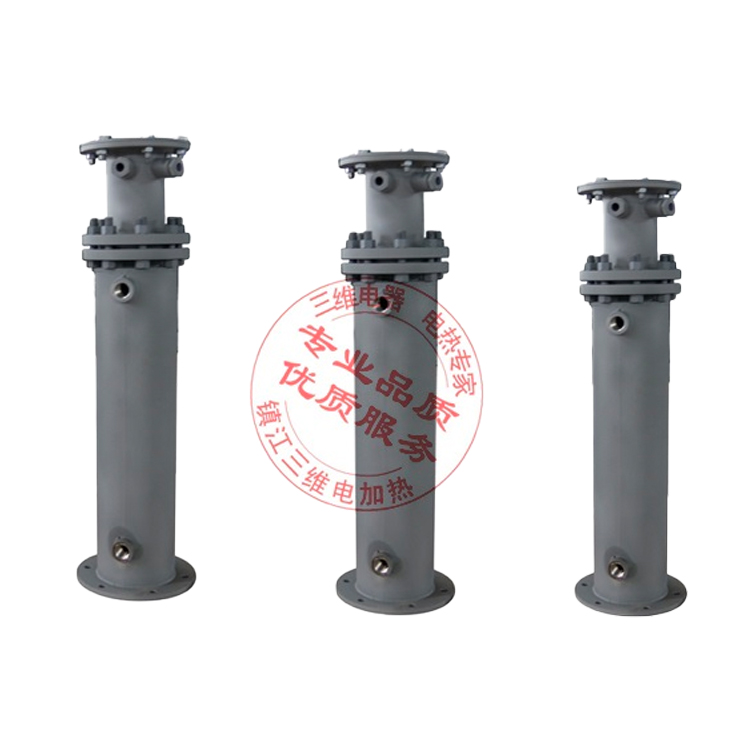
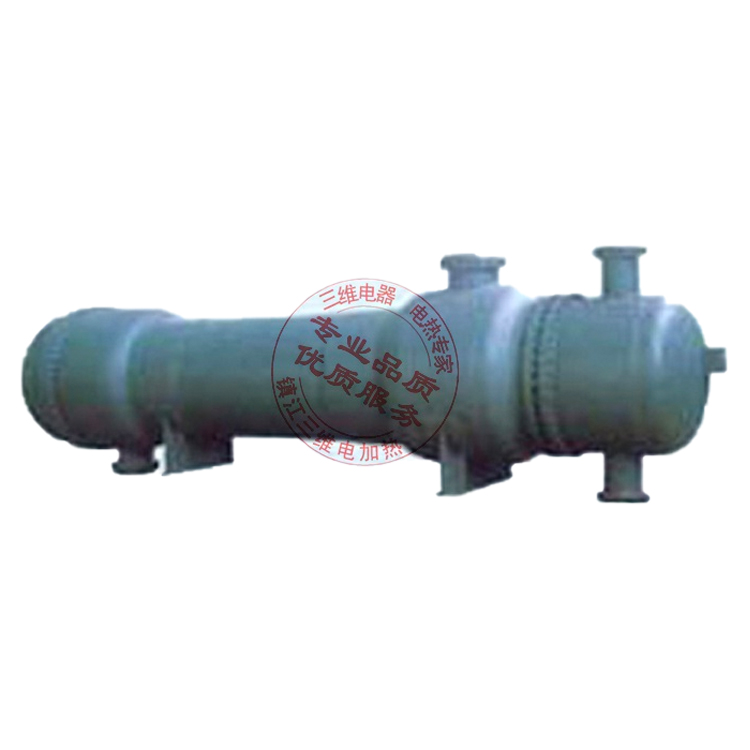
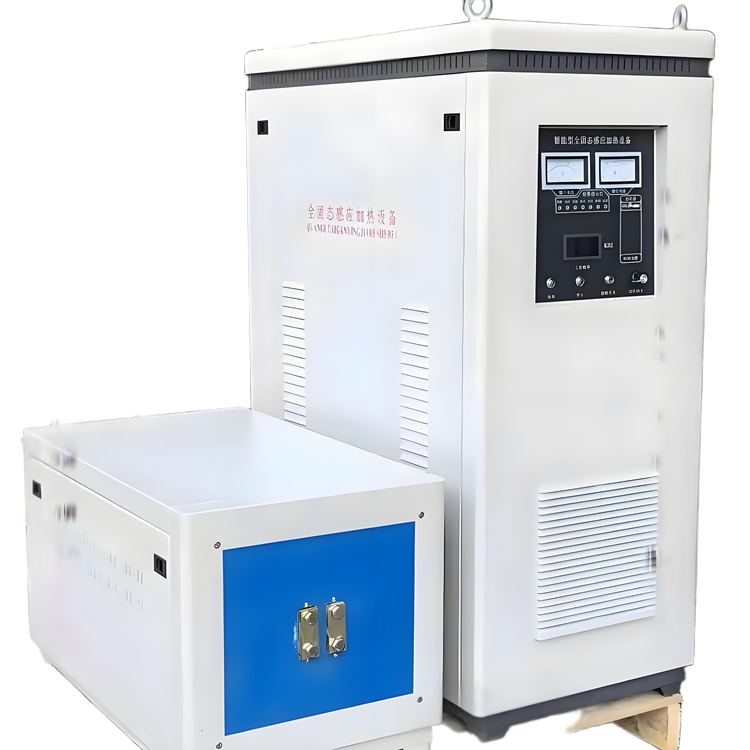
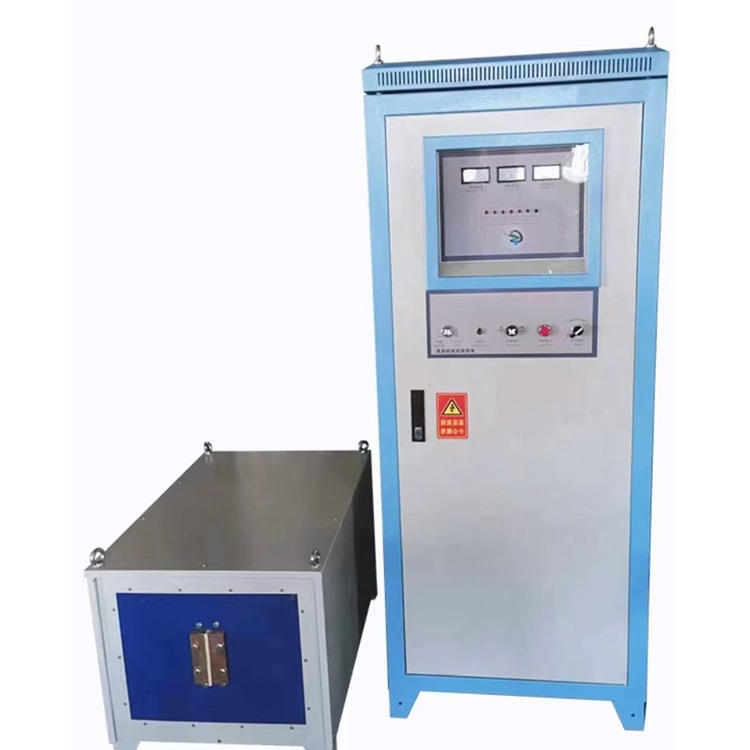
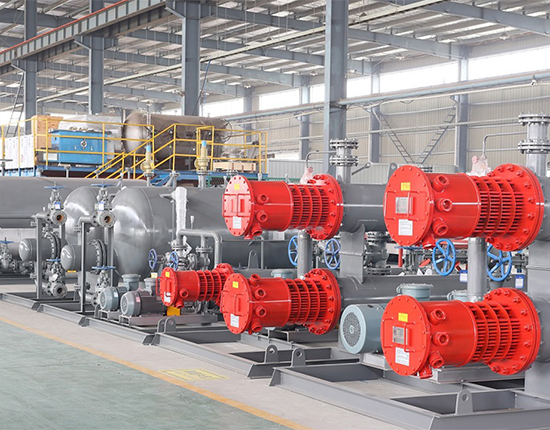
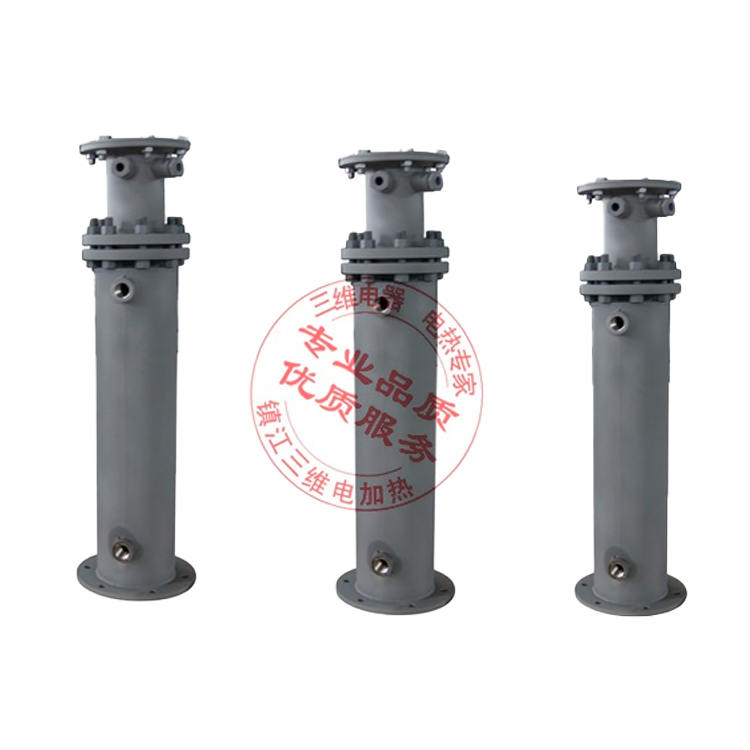
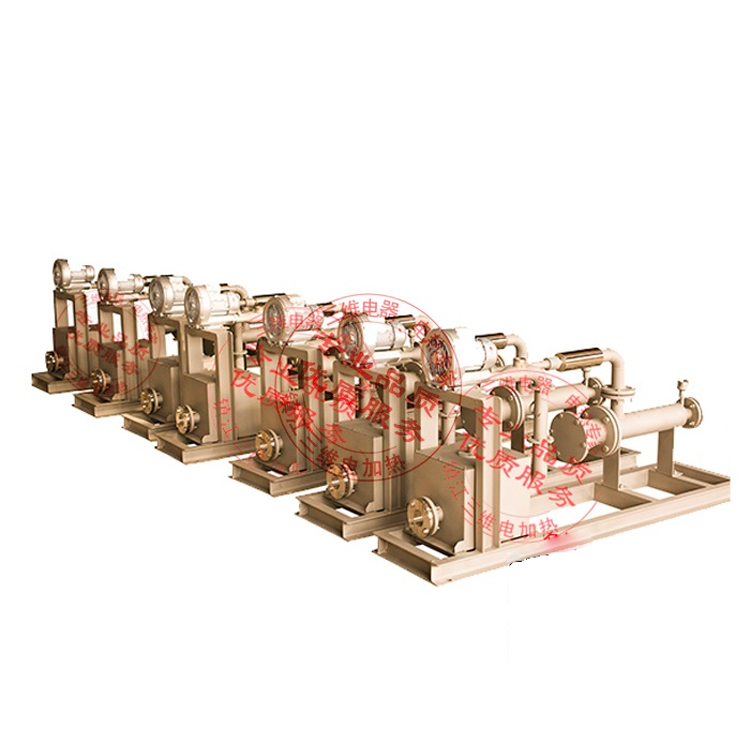
Electrically heated liquid. The ammonia evaporator is designed as a skid-mounted unit, including the housing, evaporator pipes fitted within the housing for connection to the liquid ammonia inlet, explosion-proof electric heater, thermal medium circulation pump, and an intelligent control system.