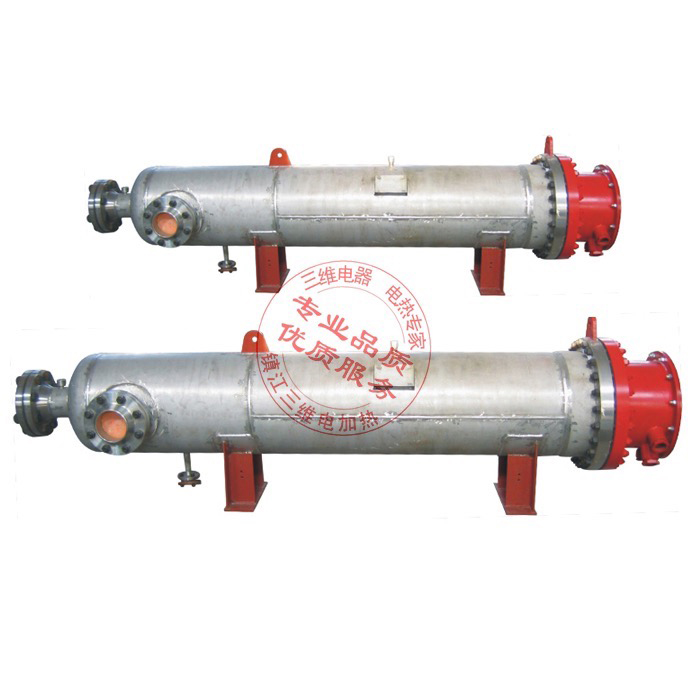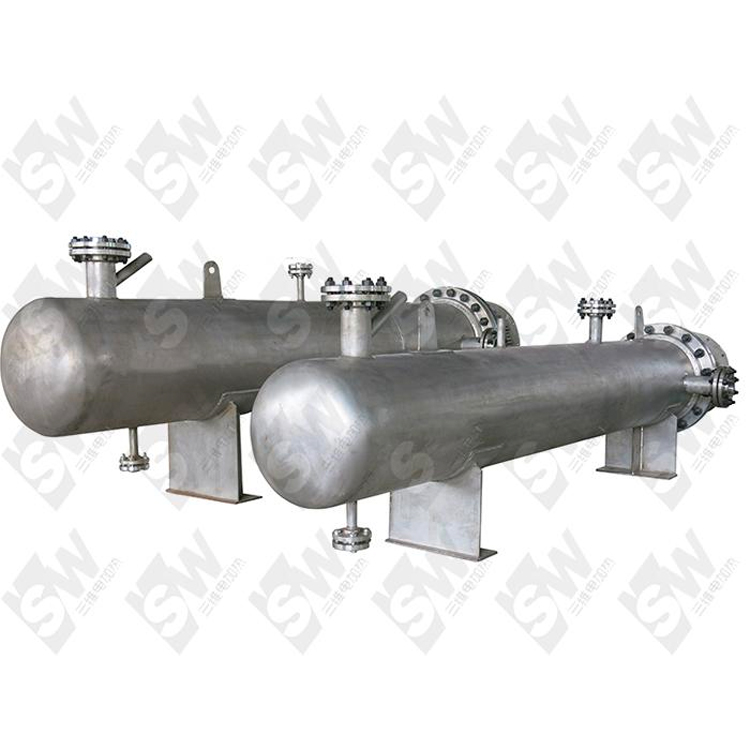

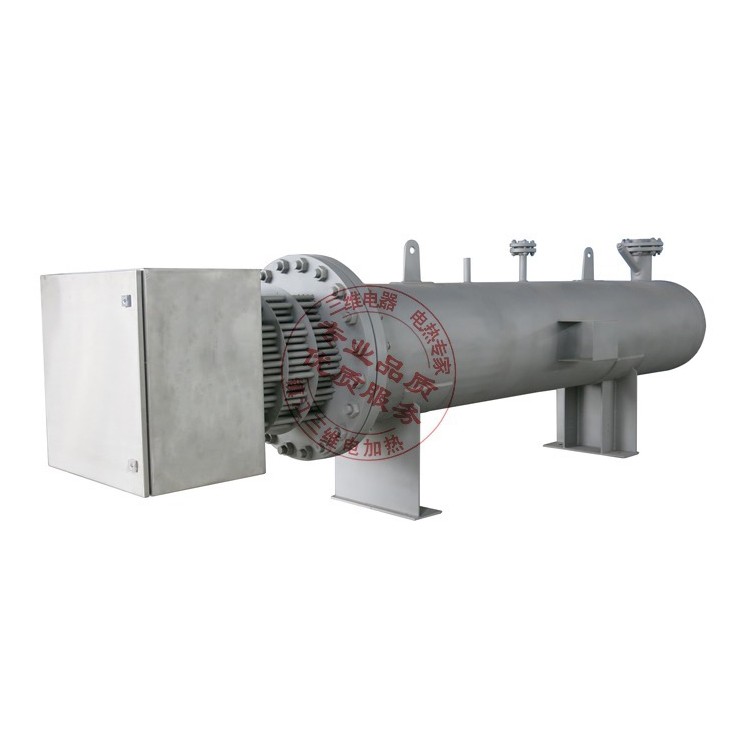

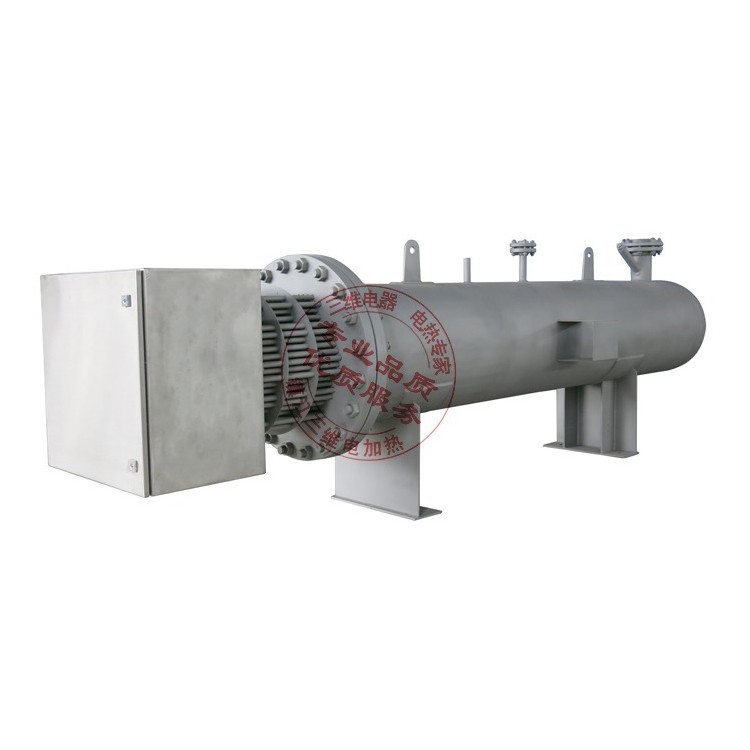
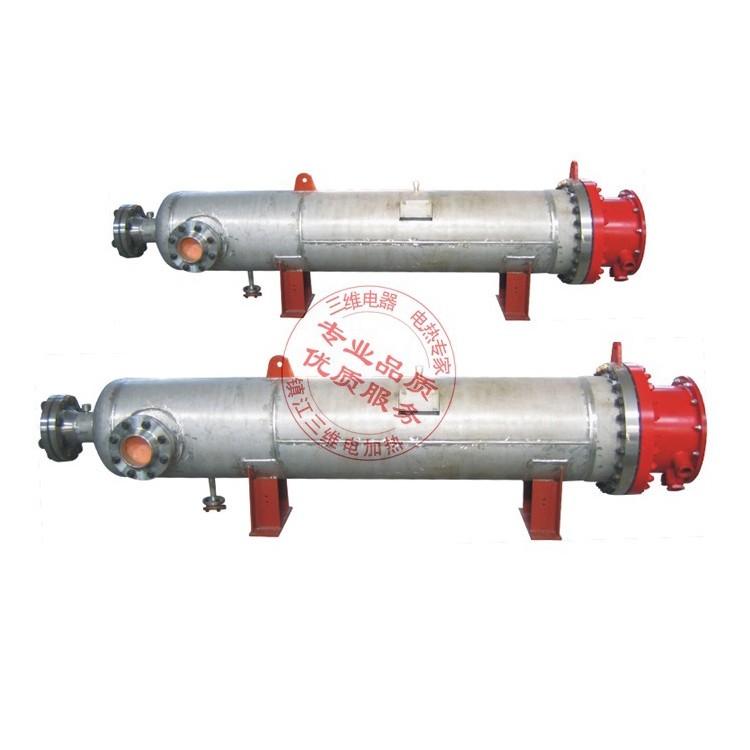
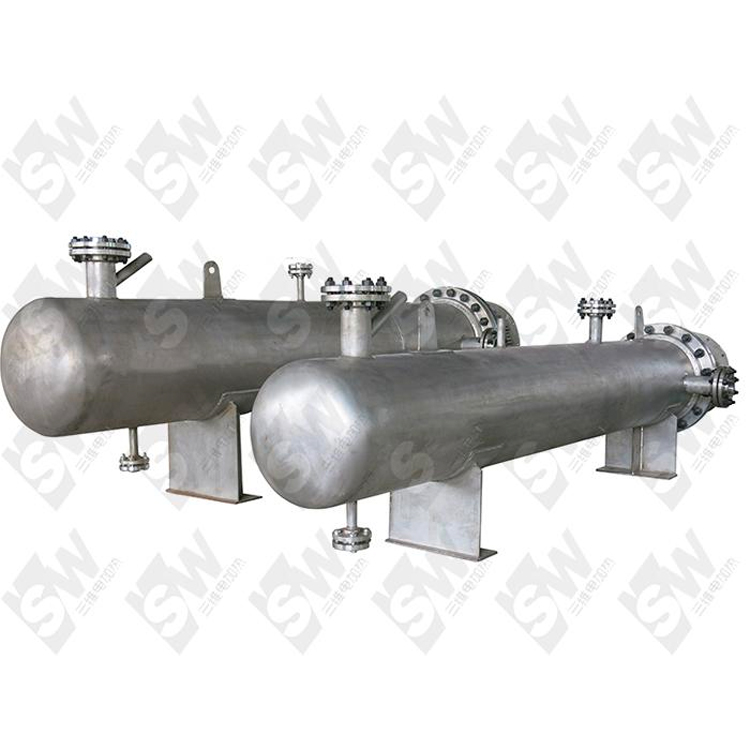







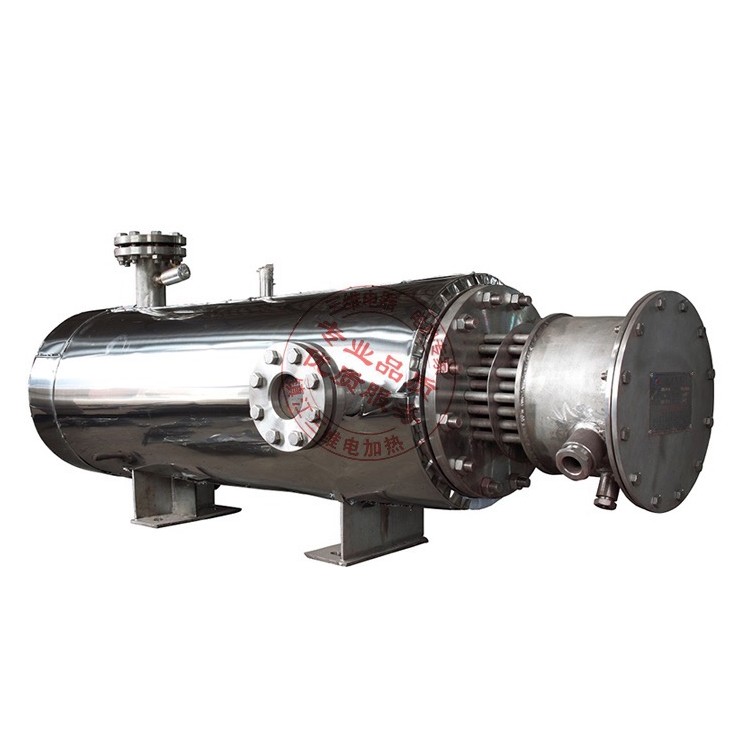

High-Temperature and High-Pressure Fluid Electric Heater Overview:
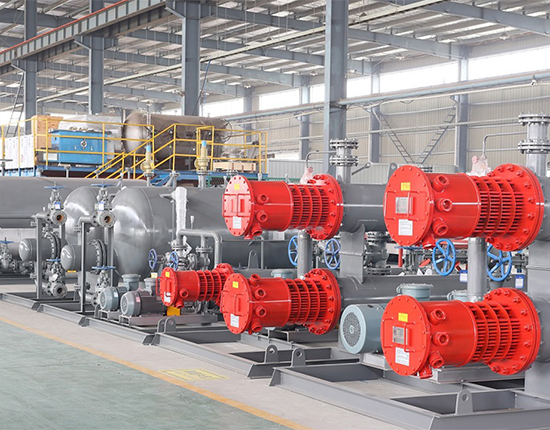
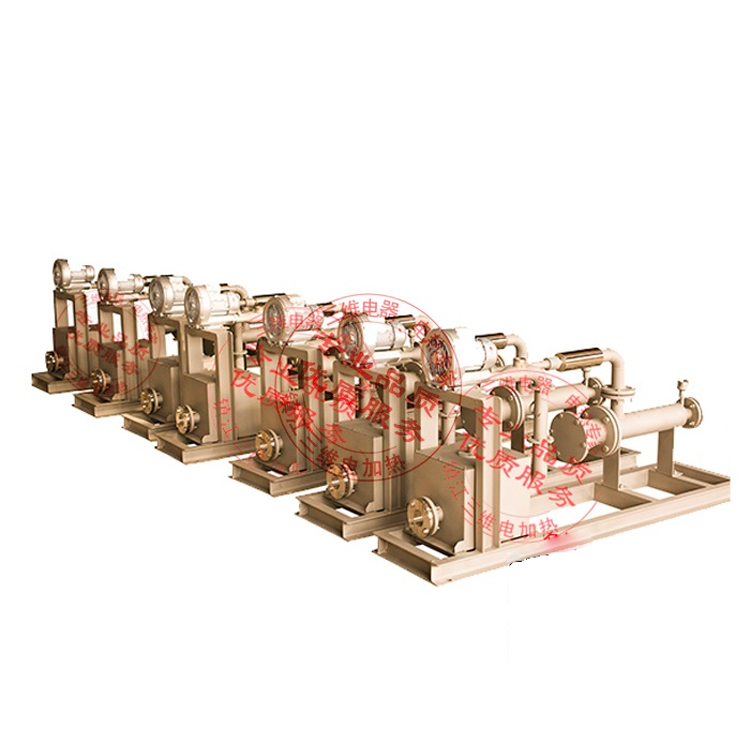
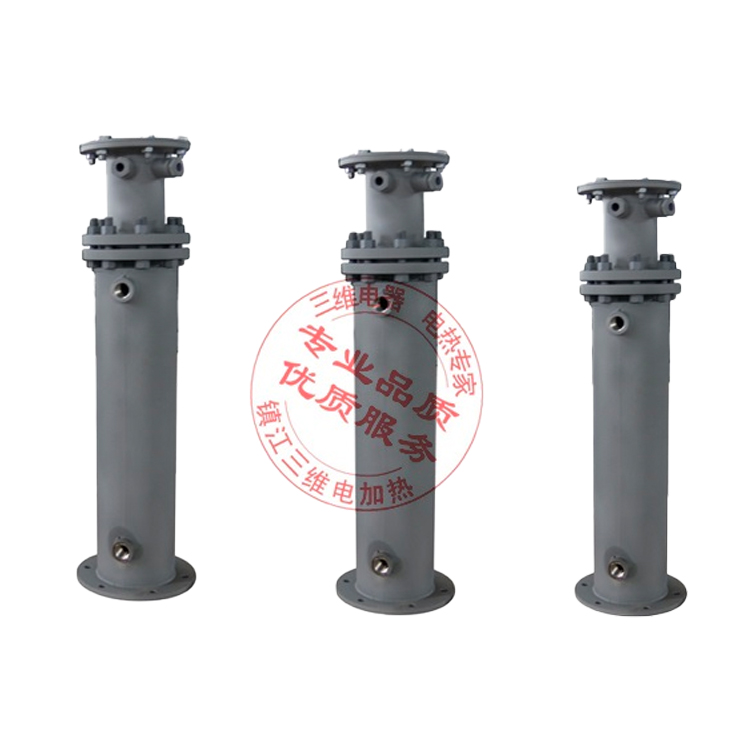
High-temperature and high-pressure fluid electric heaters, comprising a housing and a heating tube. The housing cavity is fitted with a metal tube, one end of which protrudes from the housing as the heating medium outlet, and the other end as the heating medium inlet. The heating tubes are evenly distributed along the inner diameter wall of the metal tube, with each tube tightly adhering to the inner diameter wall. The housing includes an insulation shell and an insulating layer covering the insulation shell. Consequently, this patent is capable of heating gaseous and liquid mediums under high temperature and high-pressure conditions, featuring high pressure-bearing capacity (up to IOMpa), high-temperature resistance (above 800 degrees Celsius), low cost (one-fifth of high-pressure and high-temperature boilers), rapid heating, and high efficiency.
A high-temperature and high-pressure fluid electric heater is an internationally popular, high-quality, long-life electric heating equipment. It is used for heating, temperature maintenance, and warming of flowing liquid and gaseous mediums. As the heating medium passes through the heating chamber of the electric heater under pressure, it uniformly carries away the tremendous heat generated by the electric heating elements during operation, according to the principles of fluid thermodynamics, thus achieving the temperature of the heated medium as required by the user's process.
Section 2: Working Principle of High-Temperature and High-Pressure Fluid Electric Heater:
A high-temperature and high-pressure fluid electric heater converts electrical energy into heat to heat the material requiring heating. During operation, the low-temperature fluid medium enters through the inlet under pressure, flows along a specific heat exchange channel inside the electric heating vessel, and follows a path designed based on fluid thermodynamic principles, carrying away the high-temperature heat energy generated by the electric heating elements. This raises the temperature of the heated medium, resulting in a high-temperature medium at the electric heater's outlet as required by the process. The internal control system of the electric heater automatically adjusts the output power based on the temperature sensor signal at the outlet to ensure uniform temperature of the medium. In the event of overheating of the heating elements, the independent overheat protection device of the heating elements immediately cuts off the heating power, preventing the heated material from overheating, which can cause coking, deterioration, carbonization, and in severe cases, damage to the heating elements. This effectively prolongs the service life of the electric heater.
Section 3: Application Scope of High-Temperature and High-Pressure Fluid Electric Heating Elements:
Typical applications for high-temperature, high-pressure fluid electric heaters include:
1. Chemical industry: material heating, drying under certain pressure, chemical processes, and spray drying.
2. Hydrocarbon heating, including crude oil, heavy oil, fuel oil, thermal oil, lubricating oil, paraffin, etc.
3. Heating fluids such as process water, superheated steam, molten salt, nitrogen (empty) gas, and water gas.
4. Featuring advanced explosion-proof structure, the equipment is widely applicable in industries such as chemical, military, oil, natural gas, offshore platforms, ships, mining areas, and other explosion-proof environments.
Four, High Temperature and High Pressure Fluid Electric Heater Model Specifications:
Model Meaning: SW-△-△ △: Power (KW) △: Medium A: Gas W: Water T: Oil
Table of Mechanical Specifications (This table shows horizontal models; please inquire for vertical models)
Specs/Parameters | Rated Power (KW) | Rated Voltage (V) | Control Grading | Estimated Weight (KG) |
SW-□-10 | 10 | 380V | 1 | 160 |
SW-□-30 | 30 | 380V | 1 | 380 |
SW-□-50 | 50 | 380V | 1 | 450 |
SW-□-100 | 100 | 380V | 1 | 580 |
SW-□-150 | 150 | 380V | 1 | 800 |
SW-□-200 | 200 | 380V | 4 | 950 |
SW-□-250 | 250 | 380V | 5 | 1200 |
SW-□-300 | 300 | 380V | 6 | 1450 |
SW-□-350 | 350 | 380V | 7 | 1550 |
SW-□-400 | 400 | 380V | 8 | 1680 |
SW-□-450 | 450 | 380V | 9 | 1800 |
SW-□-500 | 500 | 380V | 10 | 1900 |
V. Operating Conditions for High-Temperature, High-Pressure Fluid Electric Heaters:
Electric heating system operating conditions, installation location
Ambient Temperature: -15~45℃
Relative Humidity: 46% - 91%
*Altitude: Above Sea Level
Control System: Indoor installation, non-corrosive, non-explosive area.
Field operation box and equipment combined to form an integral lifting block installed in防爆Zone 2
Electric Heater: Indoor or outdoor installation, non-corrosive, explosion-proof zone 2
Section 6: Features of High Temperature and High Pressure Fluid Electric Heater:
Small in size, high in power: The heater primarily utilizes a bundled tubular electric heating element.
2. Fast thermal response, high temperature control accuracy, and high overall thermal efficiency.
3. High heating temperature: The heater is designed to operate at a temperature of up to 850°C.
4. Uniform medium outlet temperature with high temperature control accuracy.
5. Wide Application Range & Strong Adaptability: This heater is suitable for both explosion-proof and general environments, with explosion-proof ratings up to dⅡB and C, and pressure resistance up to 20MPa.
6. Longevity and High Reliability: This heater is manufactured with special electrical heating materials, featuring a low surface power load design and multiple safety protections, significantly enhancing the safety and lifespan of the electric heater.
7. Fully Automated Control: Through the design of the heater circuit, automatic control of parameters such as outlet temperature, flow rate, and pressure can be conveniently achieved, and it can be networked with computers.
8. Significant energy-saving effect, the heat generated by the electrical power is transferred to the heating medium.