








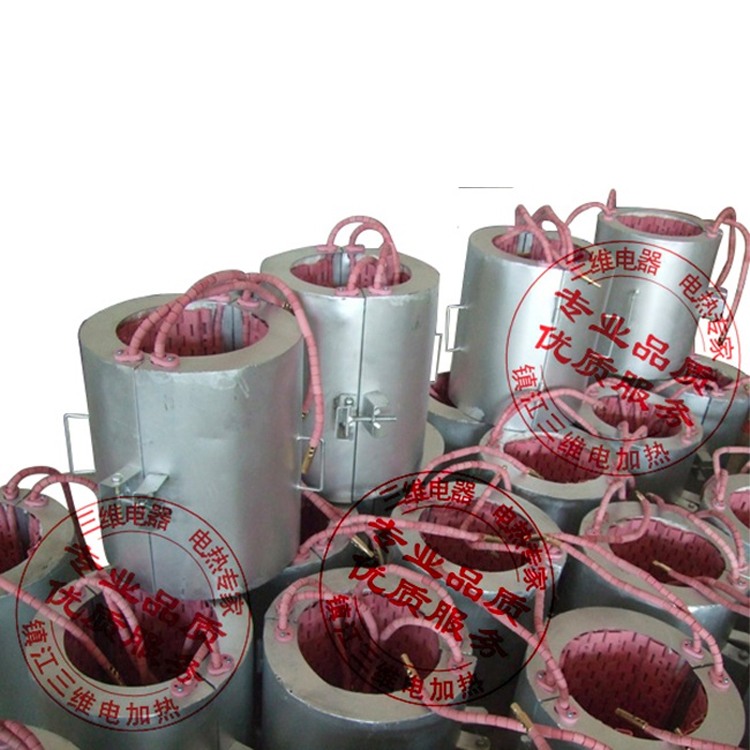
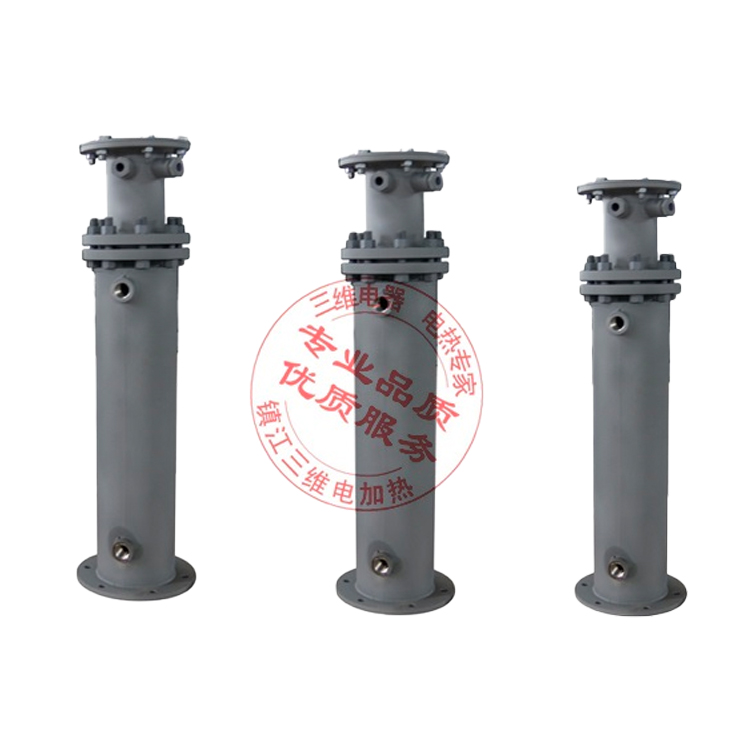
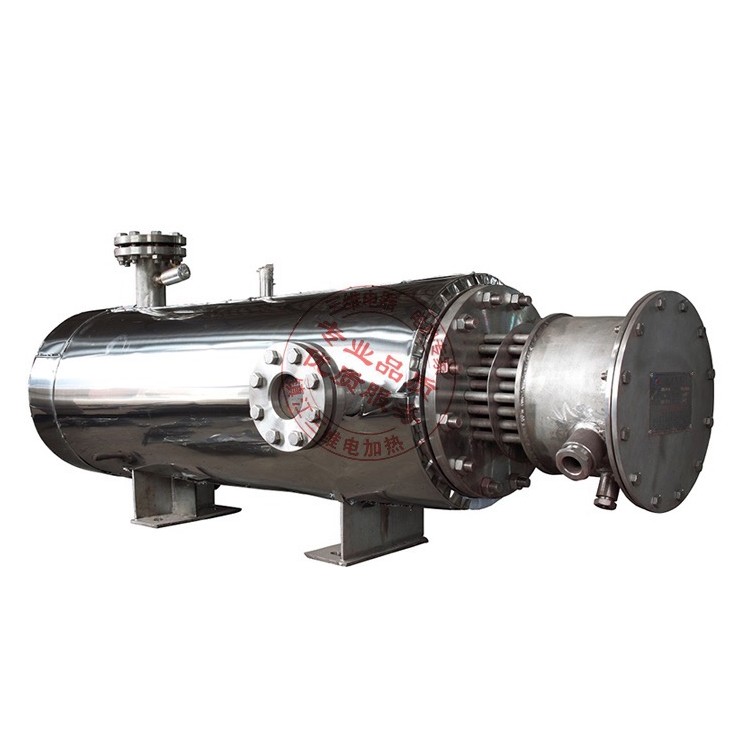
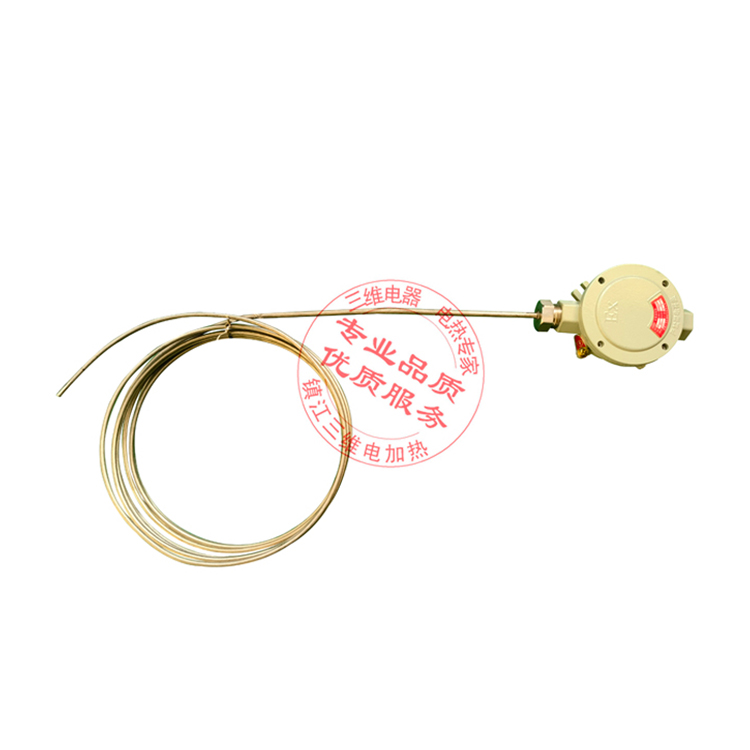
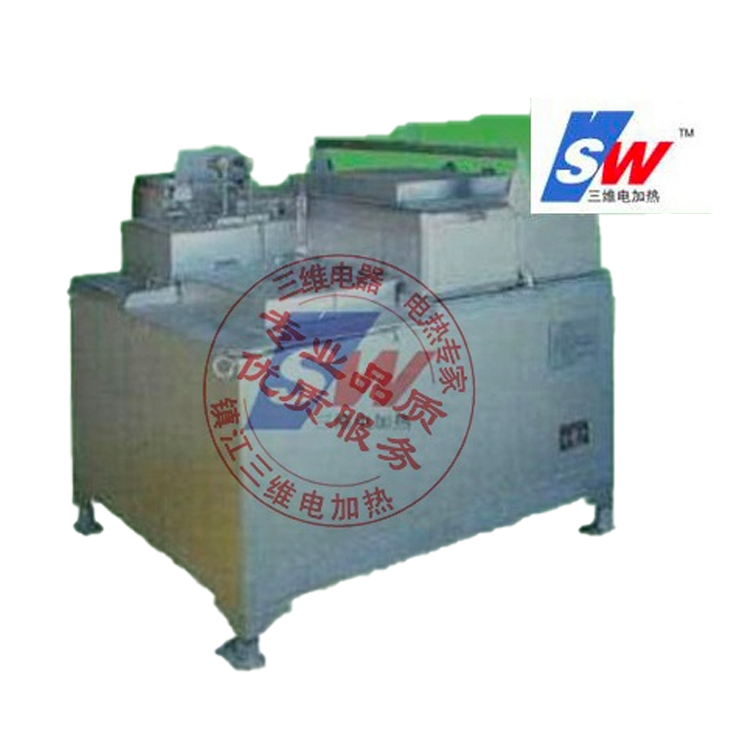
200KW Electric Heating Thermal Oil Heater
One, Technical specifications of 200KW electric heating thermal oil furnace:
1. Heating Medium: Thermal Oil
2. Heating Temperature: 0-350℃
3. Power: 60 kW
4. Flow Rate: 18 m³/h; 5. Description of Similar Specifications:
| Model | Voltage (V) | Supply Heat kcal/h | Power (KW) | High temperature ℃ | Recirculation pump | Pipe diameter for import/export | ||
| Flow Rate (m³/h) | Power (KW) | Imported | Export | |||||
| SWDL-T-50 | 380 | 43000 | 50 | 320 | 8 | 1.5 | DN32 | DN32 |
| SWDL-T-80 | 380 | 69000 | 80 | 320 | 10 | 2.2 | DN40 | DN40 |
| SWDL -T-100 | 380 | 86000 | 100 | 320 | 12.5 | 3.0 | DN50 | DN50 |
| SWDL -T-125 | 380 | 107500 | 125 | 320 | 20 | 4.0 | DN50 | DN50 |
II. Overview and Working Principle of 200KW Electric Heat Conducting Oil Furnace:
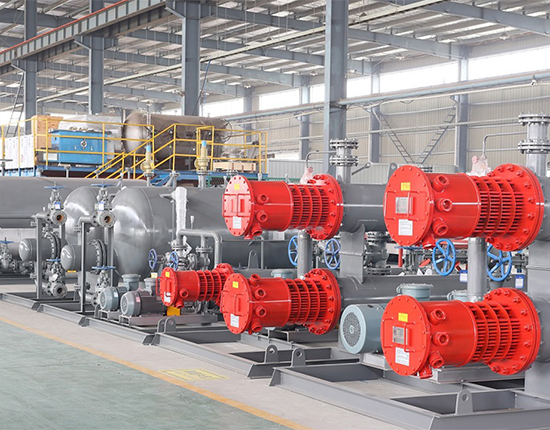
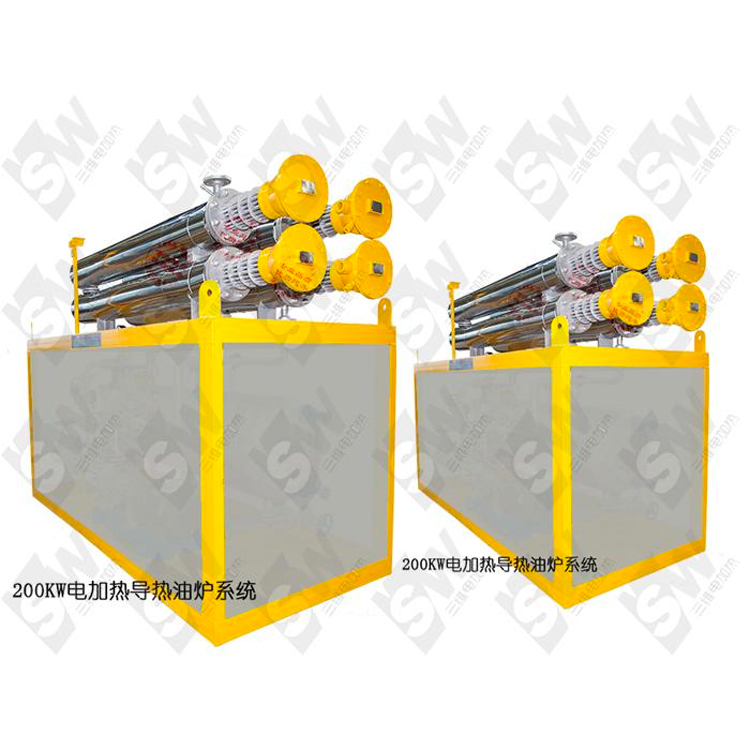
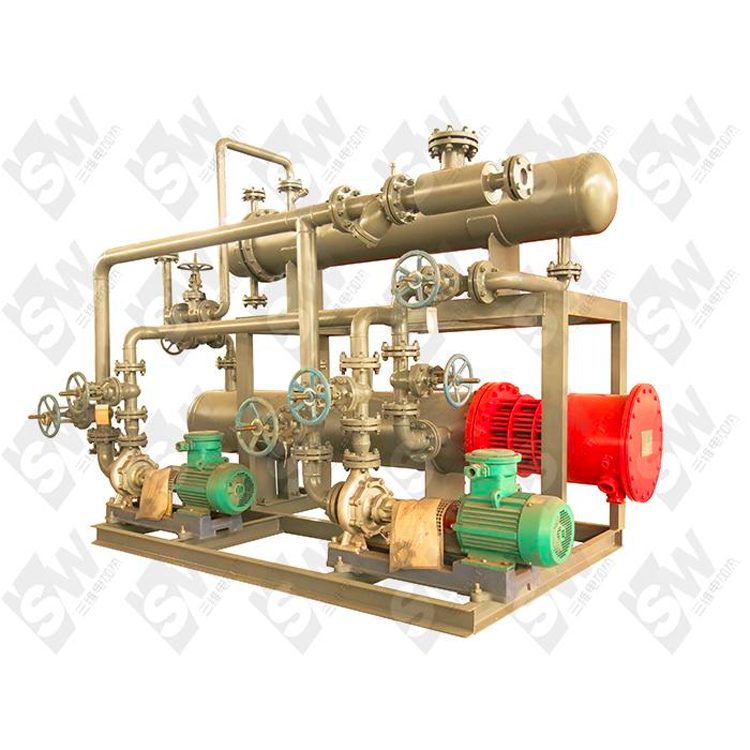
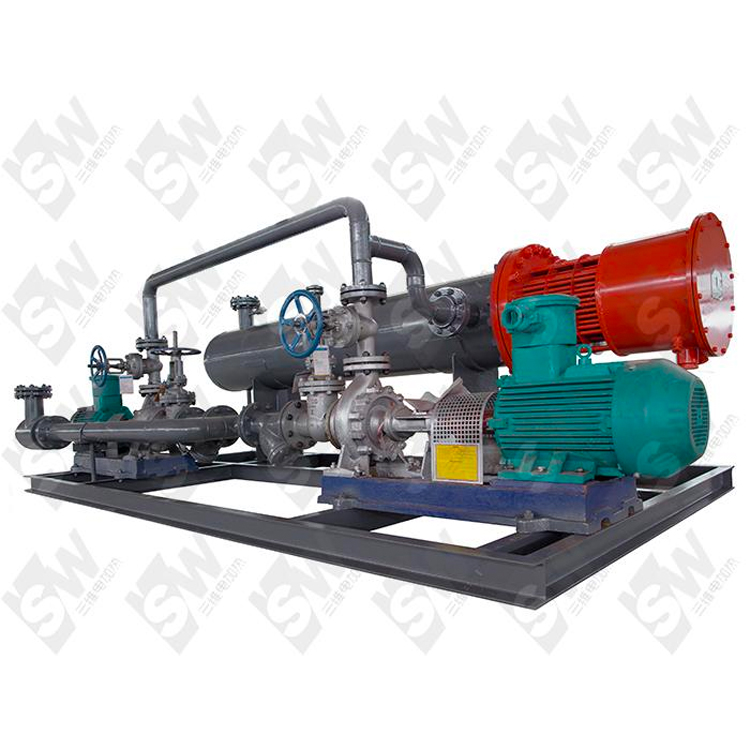
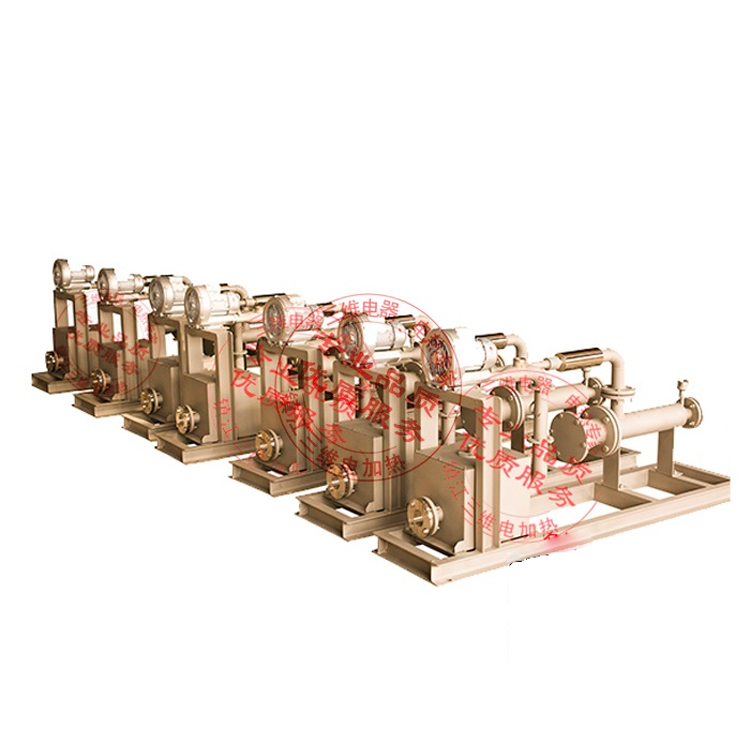
1. Overview of 200KW Electrically Heated Thermal Oil Heater: The 200KW electrically heated thermal oil heater is a new type, safe, high-efficient, energy-saving industrial furnace that operates at low pressure (under atmospheric pressure or lower pressure) and provides high-temperature thermal energy. It uses thermal oil as the heat carrier, circulated by a thermal oil pump to transfer heat to the heating equipment. The electrically heated thermal oil system is a module composed of explosion-proof electric heaters, organic thermal carrier furnaces, heat exchangers (if any), on-site explosion-proof control boxes, thermal oil pumps, expansion tanks, etc. Users simply need to connect the power supply, the inlet and outlet pipes of the medium, and some electrical interfaces to start using it.
2. Working Principle of 200KW Electric Heat Conduction Oil Heater: In an electric heat conduction oil heater, heat is generated and transmitted by electric heating elements immersed in the heat conduction oil. Using the heat conduction oil as a medium and a circulating pump, the heat conduction oil is forced into a liquid-phase circulation. This transfers heat to one or more heating equipment. After the heat is unloaded by the heating equipment, it is re-circulated back to the heater through the pump, where it absorbs more heat and is then transferred to the heating equipment again. This cycle continues, achieving a continuous transfer of heat and raising the temperature of the heated object to meet the heating process requirements.