






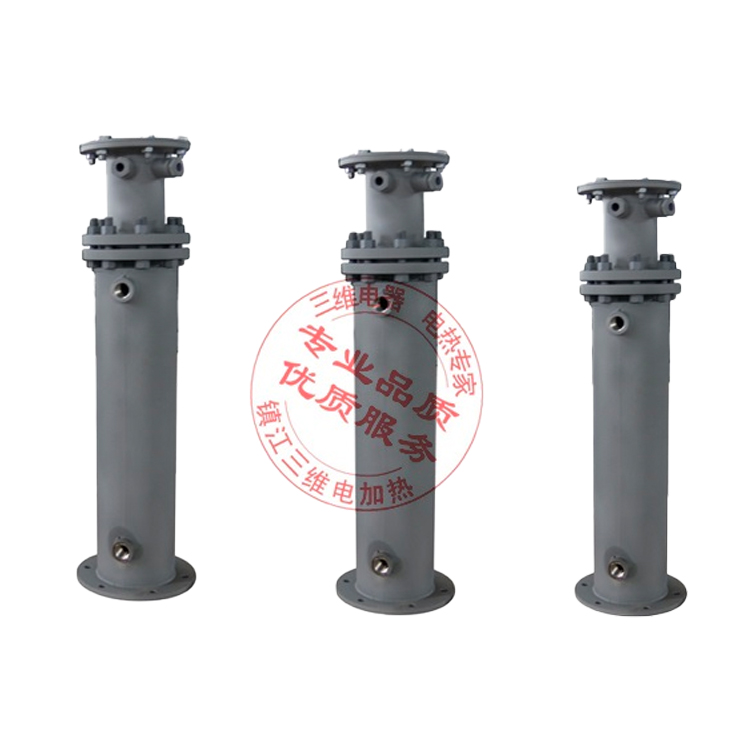
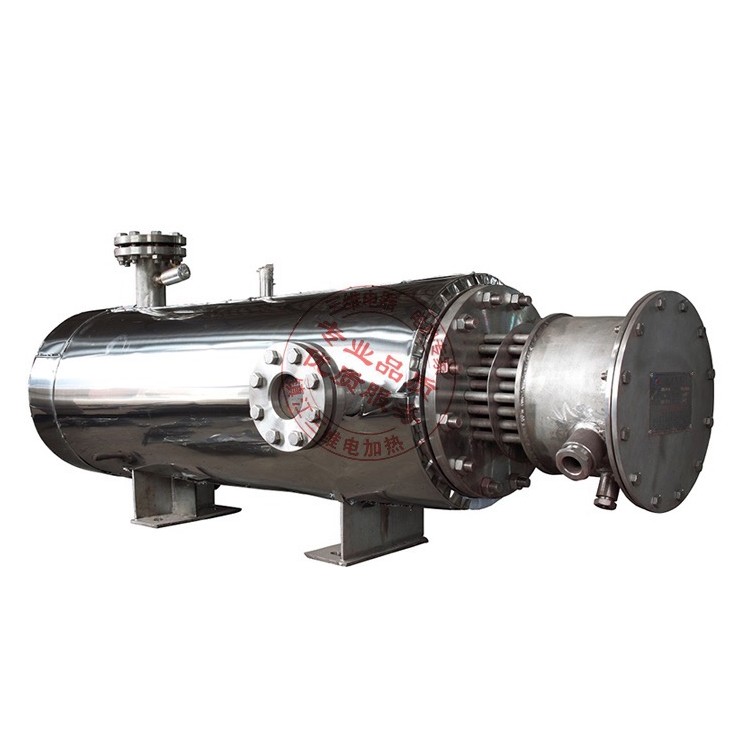

Thermal Salt Furnace (Niter Salt) Electrically Heated Furnace
Design of nitrate salt furnace
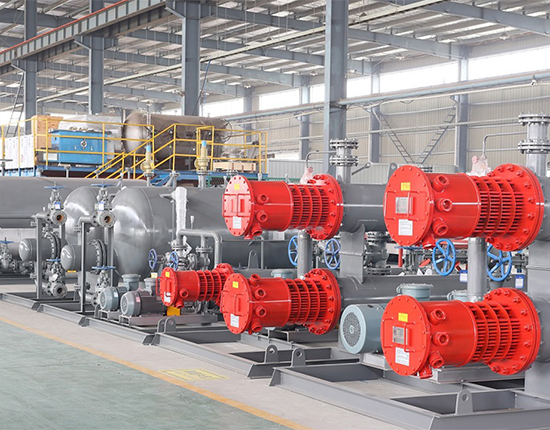
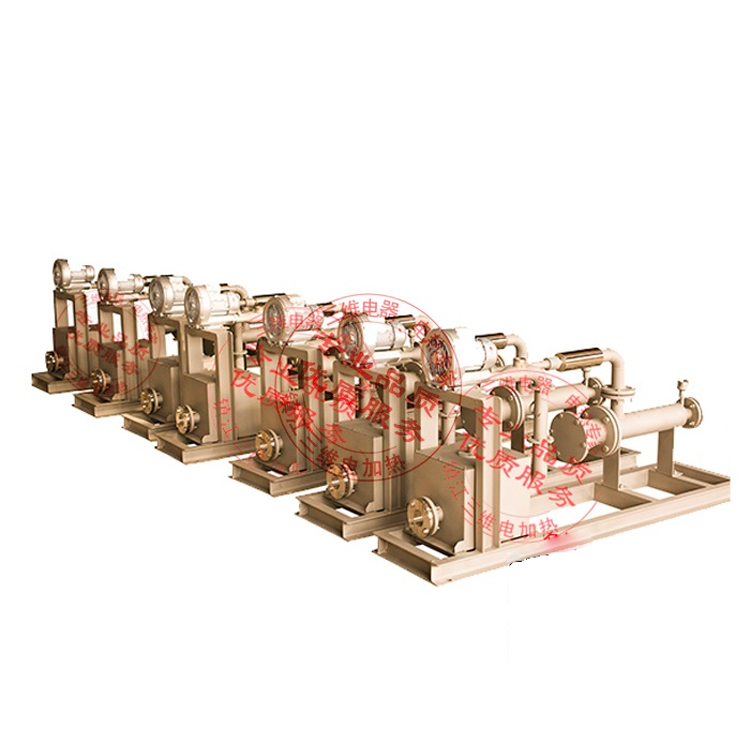
A molten salt furnace, also known as an nitrate salt furnace or nitrate pot, heats nitrate salt using tubular electric heating elements, using the molten nitrate salt as the heating medium.
Schematic Diagram of an Internal Heating Nitrate Salt Furnace
2.1 Nitrate Furnace Power Calculation
2.1.1 Volume of molten salt calculation: P = KV (KW)
Equation: V—Volume of Molten Salt (M3)
K—Power per unit volume (KW/M3)
Table 2-1 - Molten Salt Unit Volume Power
Melted Salt Volume (M3) | <1 | 1~2 | 2~5 | >5 | |
Power per Unit Volume (KW/M3) | 40 | 35 | 25 | 20 |
2.1.2 Calculated by furnace thermal efficiency: P=Q/ηK
Equation: Q - Heat required for heating the workpiece (KW)
η - Salt nitrate furnace thermal efficiency, η = 0.4~0.5
κ — Voltage Reduction Impact Coefficient, κ = 0.81
2.2 Installation of Tubular Electric Heating Elements
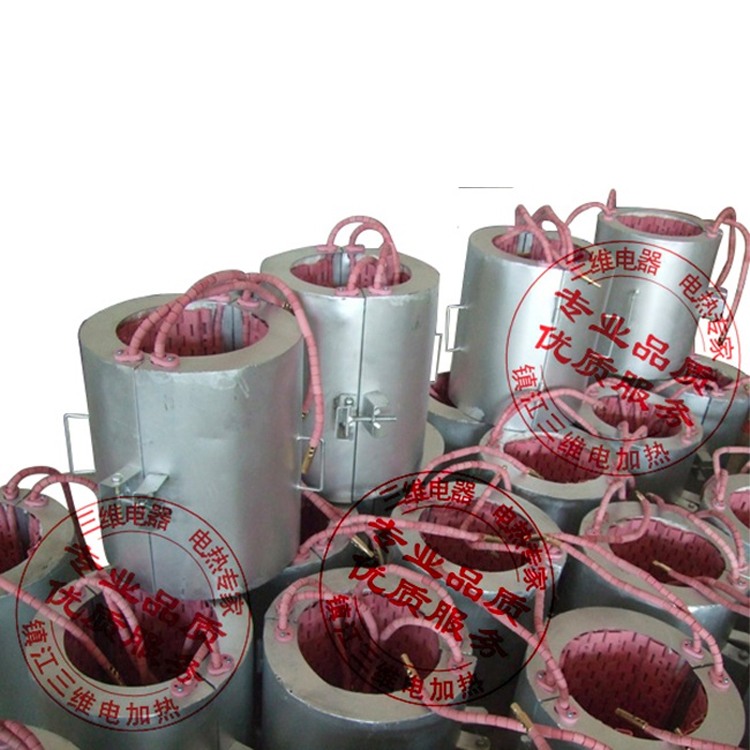
Select the model and quantity of tubular electric heating elements based on the furnace's heating power. The common structural forms, technical specifications, and dimensions of tubular electric heating elements are shown in (Figure 1), (Tables 2-6), or for more details, please refer to pages 21-26 of the electric heating tube catalog.
When installing components, leave a distance of 60~120mm between the bottom of the component and the bottom of the slot to clear debris from the slot and as an expansion gap for the component. Fill the gap between the component and the slot wall mounting holes with asbestos rope to prevent the diffusion of nitrate salt vapor through the mounting holes to the busbar area, which may cause conductive arcing. The level of the nitrate liquid must not be below the effective height of the component, which is marked with a red line.
To accommodate the high initial heating power (required to heat, melt the nitrate salt, and bring it to operating temperature) and the lower power during normal operation, electrical heating elements should be connected in various wiring configurations for switching during the heating process.
2-2 Nitrate Salt Furnace Initial Heating Schedule
Molten Salt Volume (m³) | <1 | 1~5 | 5~10 | >10 |
Initial Heating Time (h) | 8~12 | 12~24 | 24~30 | 30~40 |
3. Molten Salt Furnace Electric Heating Control:
Primary Functions
1. Standard electrical protection is provided, such as flow and short-circuit protection.
2. A separate over-temperature alarm system independent of temperature control, which, upon the internal temperature of the electric heater exceeding the set value, will shut down the electric heater without automatic reset and output a contact signal.
3. A separate low-level alarm system is in place, which automatically shuts off the electric heater and sends a signal when the liquid level falls below the required value.
4. Offer multiple interlock interfaces for connection with other equipment such as pumps, flow (pressure) switches, etc., to ensure that there is a certain flow rate of medium in motion during the heater's operation, thereby guaranteeing the safety of the system.
5. The control can provide signals to the DCS system such as heating system operation, stop, over-temperature alarm, level signal (low level alarm), interlock status, and temperature signal (4~20mA). All signals except the temperature signal are passive contacts; it can accept start and stop operation commands from the DCS, and the required contact capacity is also 220V 1A.
6. Equipped with PID temperature control function, the heating system can program the temperature rise curve of the medium, and can control the pump according to process requirements in case of insufficient flow or after heating stops. This control system employs multi-stage control technology, dividing the heater into several groups. The largest group can adjust pressure continuously. Based on the outlet temperature and after calculation, the control system automatically controls the on/off of each heater group and the output power of another heater group, achieving stepless power adjustment. This effectively improves the accuracy of temperature control.
For detailed information or technical support, please contact our Technical Support Department.
Molten Salt Tank Electric Heater
4. Nitrate Salt
Nitrate Content (Weight Ratio) | Melting Point (°C) | Operating Temperature (°C) | Vaporization Temperature (°C) | Latent Heat of Fusion (KJ/Kg) | Average Specific Heat Capacity [KJ/(Kg.℃)] |
NaNO2100% | 271 | 300~550 | 220 | 1.76 | |
NaNO3100% | 317 | 325~600 | 380 | 189.66 | 1.84 |
KNO3100% | 337 | 350~600 | 106.34 | 1.38 | |
KNO355%+NaNO345% | 218 | 230~550 | 1.59 | ||
NaNO355%+NaNO245% | 137 | 150~500 | 1.63 | ||
KNO350%+NaNO350% | 230 | 300~550 | 148 | 1.00 | |
NaNO355%+NaNO245% | 220 | 230~550 | 1.8 | ||