














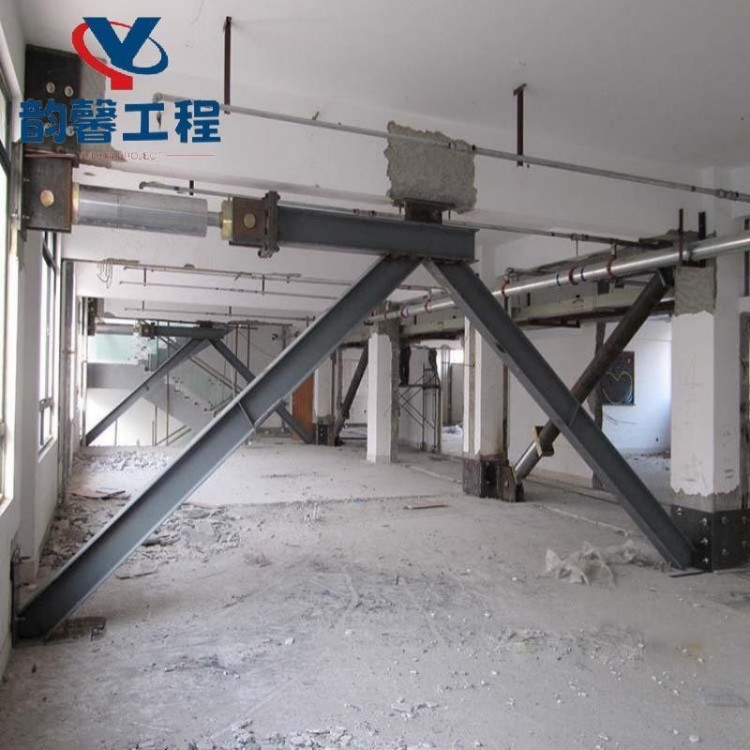
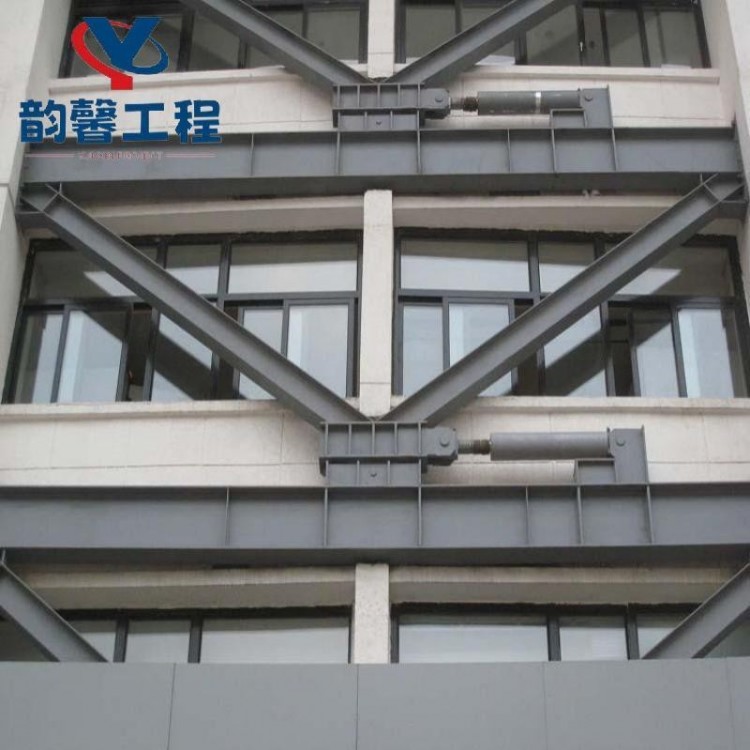
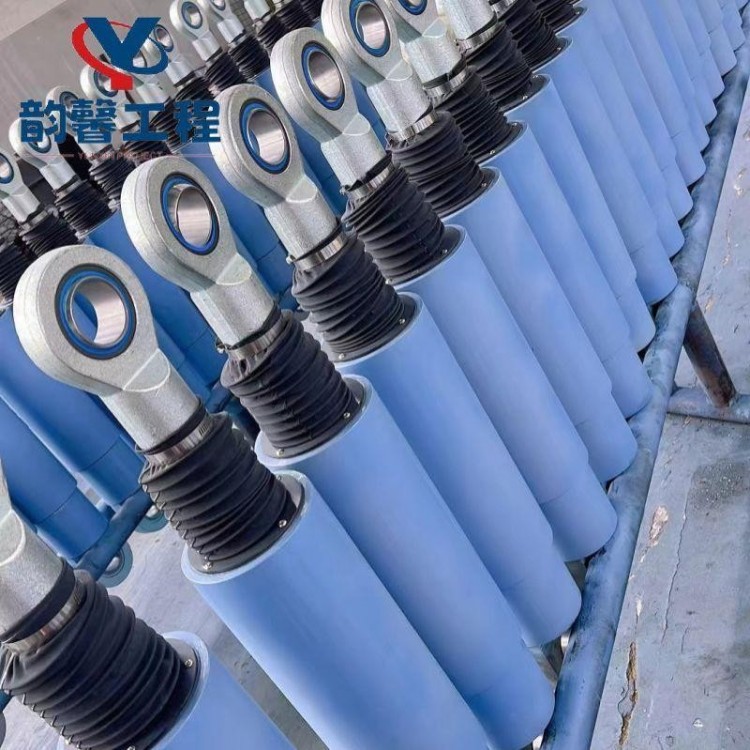
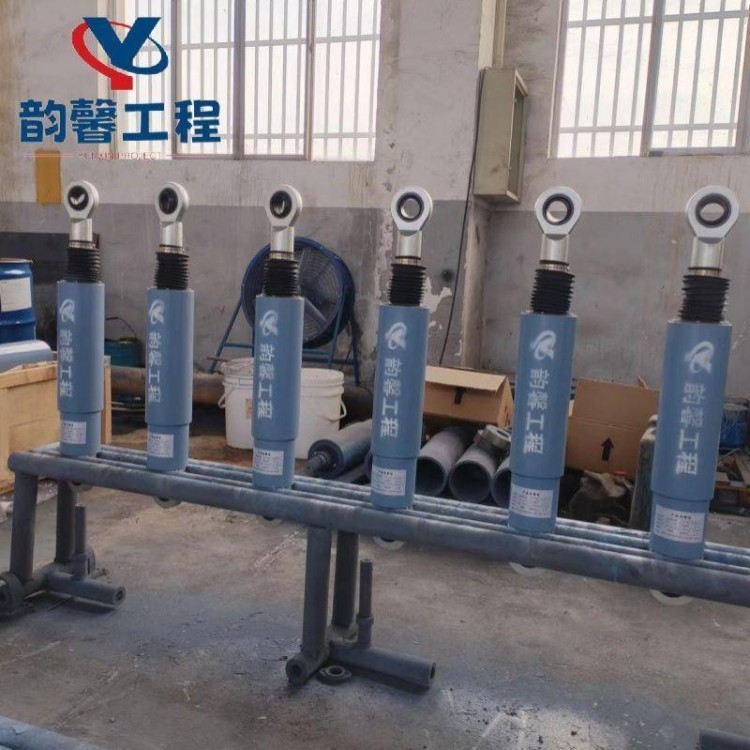
Isolation buildings (utilize isolation dampers to extend the vibration period and increase the damping ratio of the structure, dissipating the impact of earthquakes on buildings. This is achieved by converting the oscillation of the building during an earthquake into relative displacement with respect to the ground, with the energy transmitted to the building by the ground absorbed by the isolation dampers and dampers. This significantly reduces the distortion and bending of the building, as well as the degree of sway (reducing seismic acceleration), thus minimizing building damage. In the design of isolation buildings, key parameters such as earthquake period, intensity, maximum displacement, and building weight are considered. The rational use of isolation dampers and dampers can reduce the intensity of seismic activity.
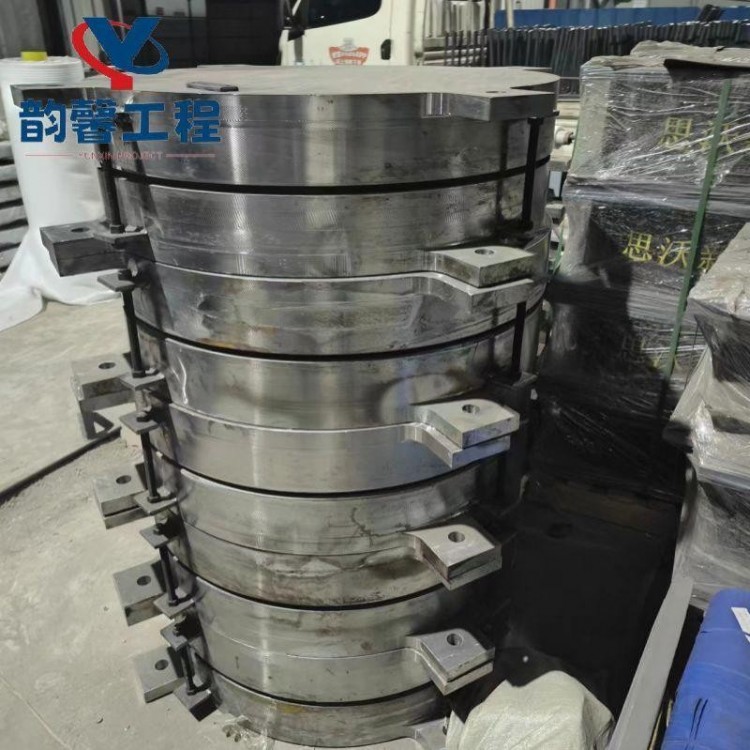
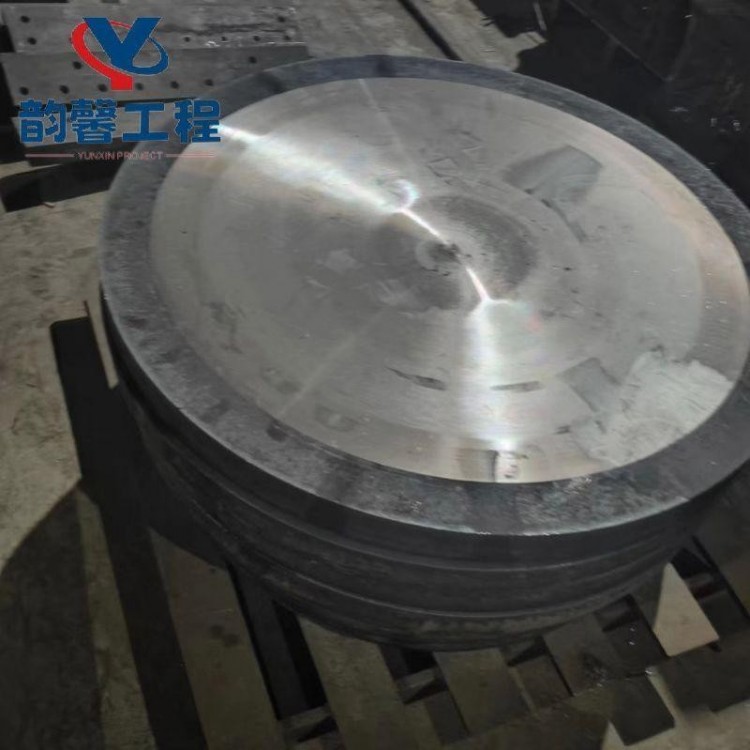
Isolation rubber pads are made by alternating layers of thin steel plates and thin rubber sheets, which are then vulcanized under high temperature and pressure. These pads ensure both vertical stiffness and bearing capacity while significantly reducing horizontal stiffness, thus providing seismic isolation for buildings. Isolation rubber pads can be divided into two types based on whether the central hole has an insert: the coreless type, composed of steel plates and stacked rubber; and the core type (lead-core rubber pad), which incorporates a cylindrical lead core within the multi-layer rubber pads.
Multi-layer rubber supports are designed to bear the load and horizontal displacement of buildings. High-damping rubber supports absorb a large amount of vibration energy through the internal friction of the rubber macromolecular chains and the synergistic action of the chain segments. Lead-core rubber supports absorb energy through plastic deformation during the shear deformation of multi-layer rubber supports, and the lead core recovers its mechanical properties through recrystallization at room temperature. The high-damping vibration isolation rubber supports, in terms of function, integrate shock absorbers and dampers into one, significantly saving space and reducing costs. Natural rubber vibration isolation supports have a damping rate not exceeding 5% and rely on the large deformation of layered rubber in the horizontal direction for vibration isolation, with the large deformation being an elastic deformation, which simplifies the design of the supports. Rigid sliding supports feature large displacement capability, relying on friction to dissipate energy horizontally with a general friction coefficient not exceeding 3%. Rigid sliding supports can be used in conjunction with other types of supports to reduce the equivalent stiffness in the horizontal direction, increase overall load-bearing capacity, and offer significant advantages on lighter buildings.
Building isolation rubber bearings have the following advantages:
Vertical load-bearing capacity – capable of stably supporting buildings.
② Ductility - Moderate flexibility to accommodate relative deformation between the building and its foundation.
③ Reasonable damping characteristics – capable of effectively controlling the seismic response of seismic isolation structures, particularly reducing the horizontal displacement of the upper structure.
④ Reset Function – Utilizing the high elasticity of rubber materials, the support can quickly return to its original position during wind and earthquake shocks.
⑤ Durability – lifespan that matches the building's.

















