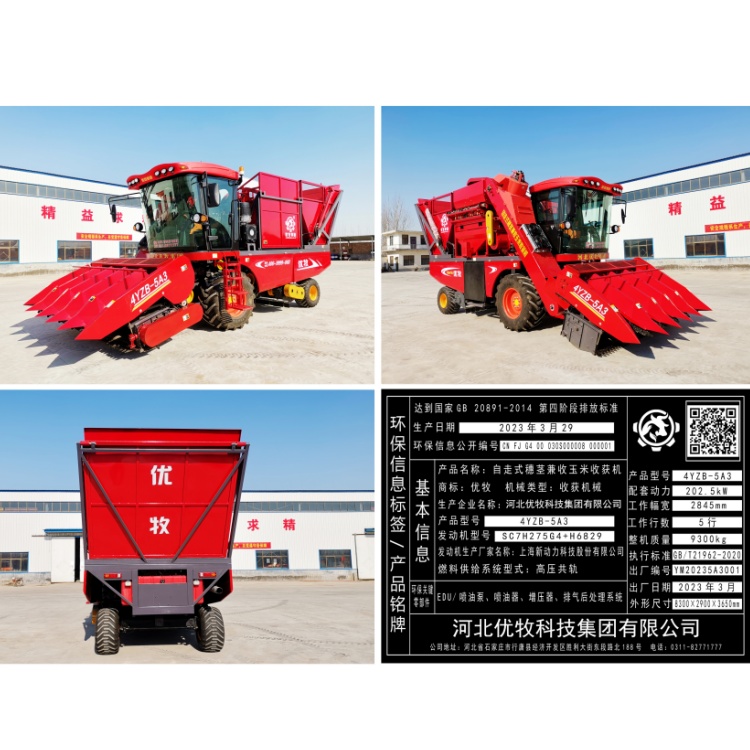


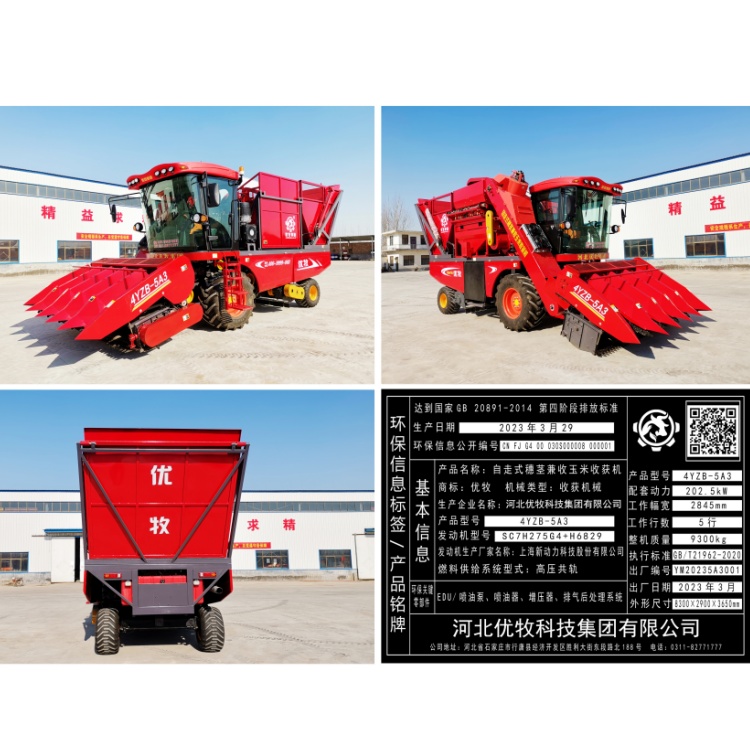










A stem-and-ear corn harvester is an efficient agricultural machine that combines corn ear harvesting and stalk recycling. It is mainly used for mechanized operations in corn planting areas. It can complete the processes of corn ear picking, peeling, and bin collection, as well as stalk cutting, crushing, and collection all at once, significantly improving work efficiency and reducing labor intensity. It is suitable for large-scale planting and the need for stalk resource utilization.
I. Primary Structure and Functions
Cutting Deck System
Equipped with a separator and ear-picking roller, accurately locates corn plants, efficiently harvests ears, and minimizes missed yields.
Some models support off-row harvesting, accommodating varying planting row spacing.
Threshing and Husking Equipment
Utilizing roller harvesting technology to reduce grain breakage rate (typically <3%).
The peeling machine can remove bracts, with a stripping rate of over 95%.
Stalk processing system
Cutting & Crushing EquipmentCut the stems into segments of 2 to 5 centimeters for subsequent use (such as silage feed, biomass fuel).
Collection MethodThe crushed stalks are collected into a collection box or directly scattered into the trailing transport vehicle via fans or conveyors.
Pome Cluster Harvesting System
After peeling, the fruit clusters are loaded into grain bins, and once full, they can be unloaded into transport vehicles using the hydraulic system.
Power and Transmission System
Frequently utilize high-horsepower tractors or self-propelled undercarriages for operation in complex field environments.
Section II: Technical Advantages
Dual-purpose machine, efficient resource utilization
Harvest corn kernels and stalks simultaneously, reduce secondary field operations, save time and fuel costs.
Stalk recycling can be used for animal feed, straw return to the field, or industrial raw materials, enhancing economic added value.
Adaptable
Can handle lodging crops; some models are equipped with flexible chain, reducing losses.
Modular design supports quick switching between operation modes (such as harvesting only the ears or both ears and stems).
Smart operation
Equipped with an electronic monitoring system, displaying operational parameters in real-time (such as grain loss rate, straw crushing quality).
The automatic alarm function can alert for malfunctions (such as clogs, abnormal oil pressure).
Section 3: Applicable Scenarios
Scale-up farming operationEnhance harvesting efficiency and reduce reliance on manual labor.
Livestock Farming AreaChopped stalks are directly used for silage feed, saving feed costs.
Comprehensive Utilization Project for StrawSupplies raw materials for biomass power generation and organic fertilizer production.
Section 4: Purchase and Usage Precautions
Select according to requirements
Focus on parameters such as working width (e.g., 4 rows, 6 rows), stalk粉碎 fineness, and power match.
Self-propelled models are suitable for large, contiguous areas, while牵引式models have lower costs but rely on tractor power.
Maintain and service
Clean up residue promptly after operation to prevent corrosion.
Regularly inspect tool wear to ensure粉碎 effectiveness.
Stem Processing Plan
If used for silage, control the moisture content of the stalks (65% to 70% is recommended).
When returning to the field, it is recommended to combine deep plowing to promote the decomposition of straw.
V. Examples of Market-Dominant Models
Domestic model: Brands like Zhongli Heavy Industry, Levigo, and Yongmeng Machinery offer high value for money and comprehensive after-sales service.
Imported ModelsJohn Deere, CLAAS, and others, advanced technology at a higher price point.
Summary
The corn harvester with both stalk and ear yield achieves the dual objectives of agricultural "loss reduction and efficiency enhancement" and "recycling utilization" through technological innovation, particularly suitable for the development needs of modern intensive and ecological agriculture. When purchasing, users should consider their own planting scale, stalk utilization direction, and budget to select the appropriate model, and pay attention to standardized operation and maintenance to extend the lifespan of the equipment.