













I. Overview
Coal powder sampler, a device used for sampling coal powder on the positive pressure straight-blowing pulverizing system's primary air conveying pipeline. During the daily operation of the coal mill, the wear of the grinding parts, changes in coal type and size, will cause significant fluctuations in the fineness of the coal powder, directly affecting the boiler's combustion efficiency and increasing power generation costs. Therefore, regular sampling and testing of the coal powder fineness is necessary. When the coal powder fineness exceeds the designed value, timely adjustments or replacements of the coal mill grinding parts or the adjustment of the separator's deflection door opening are required to achieve the designed coal powder fineness.

II. Product Features and Structural Forms
The coal powder sampler operates using compressed air as its power source, creating a vacuum in the sampling tube, separator, and sampling bottle to draw in coal powder for collection. It also uses compressed air to blow clean the sampling tube, preventing blockages. The equipment is equipped with a pressure regulating valve for compressed air, which allows adjustment of the pressure and flow to control the sampling speed and achieve isometric sampling, ensuring the collected coal powder is representative. The sampling tube features a push-in design, allowing it to be withdrawn from outside the coal powder pipeline when not in use, thus avoiding the impact of the coal powder flow on the tube and significantly extending its service life.
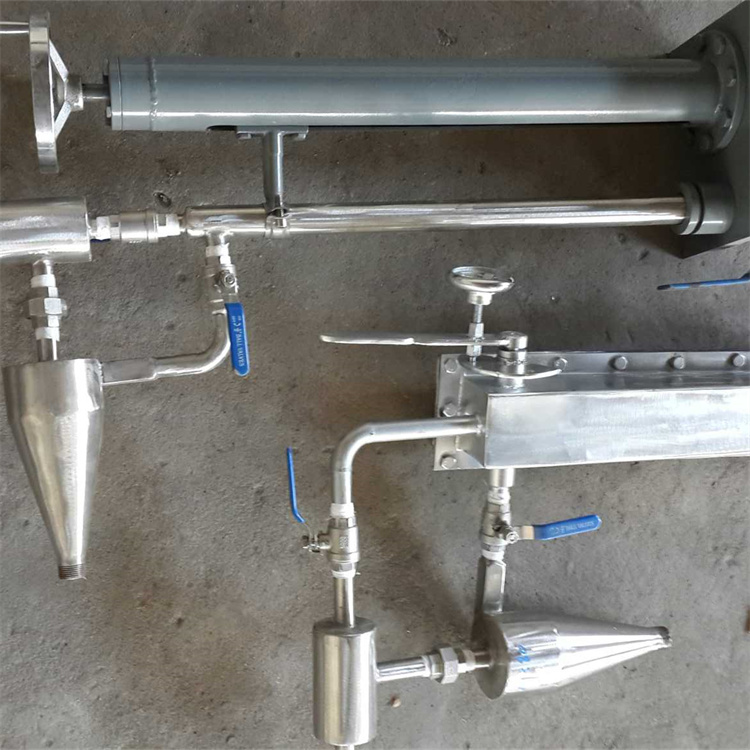
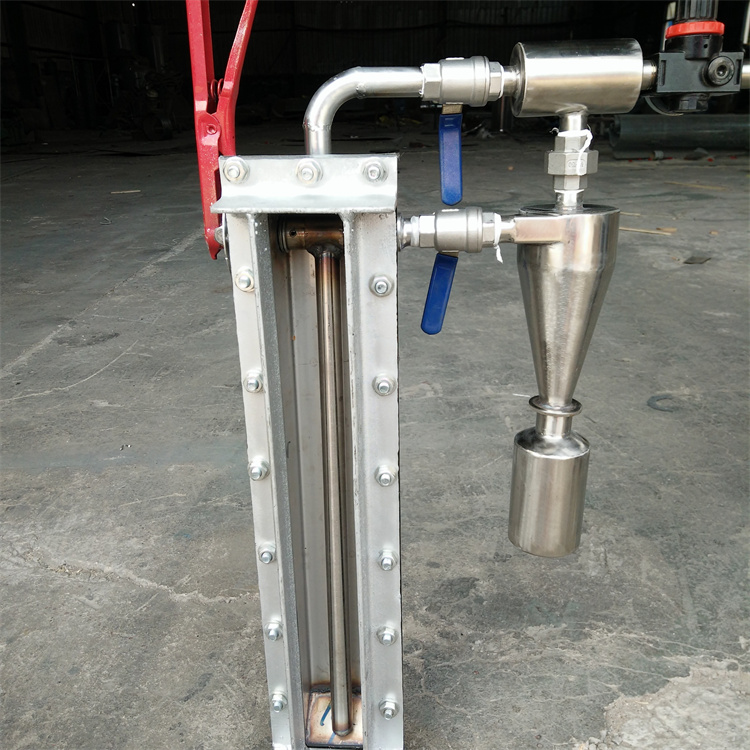
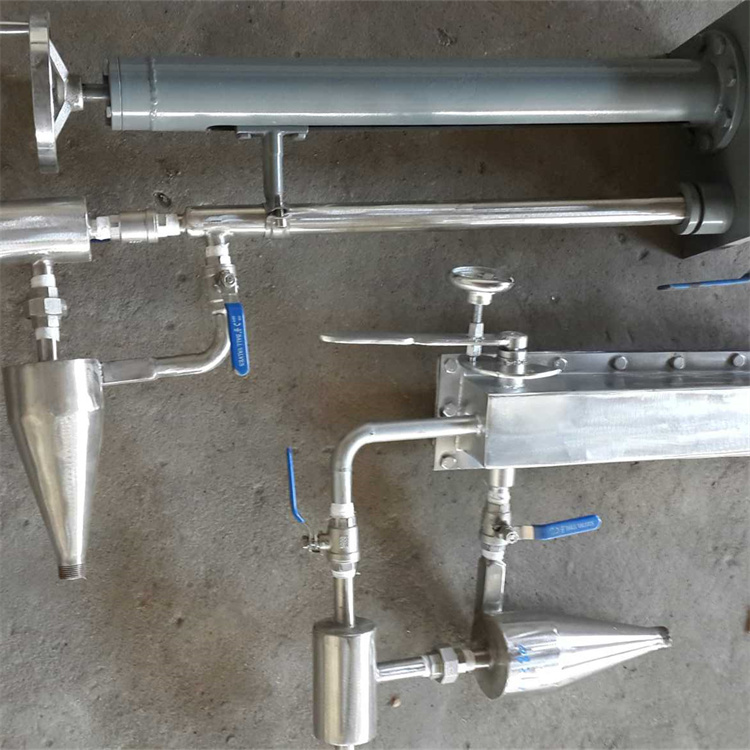
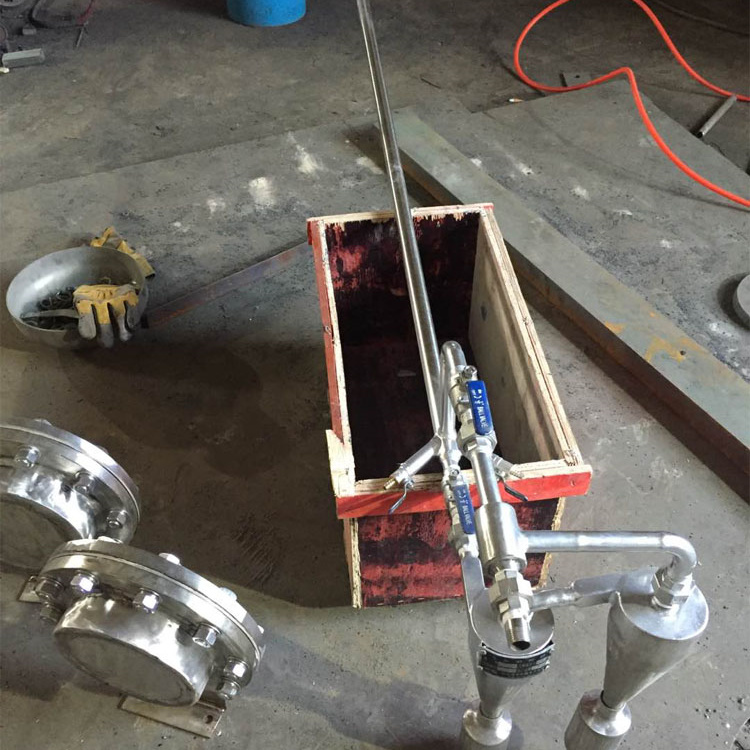
The push-in fixed coal powder sampler mainly consists of the following parts:
1. Sampling Tube – Inserts into the coal powder pipeline, with the sampling port facing the incoming coal powder airflow. Coal powder enters the sampling device through this tube. Sampling is multi-point.
2. Sampling Bottle - Collects the coal powder samples separated by the cyclone separator for calibration purposes. 3. Cyclone Separator - Separates solid and gas mixtures, where the coal powder is spun to the wall by the rotating air stream due to gravity and then falls into the ash collector. The separated gas rises along the central path to the top and is discharged through the top exhaust outlet. It is then suctioned back into the coal powder pipeline by the ejector blower, achieving separation of coal powder and gas.
4. Compressed Air Control Valve – Controls the on/off of compressed air.
5. Pressure Reducing Valve for Compressed Air — Adjusting this valve controls the pressure and flow rate of compressed air, as well as the speed of sampling. It enables uniform sampling speed.
6. Vacuum Pump – Driven by compressed air, it creates negative pressure in the sampling tube, cyclone separator, and sampling bottle, allowing coal powder to smoothly enter the cyclone separator for solid-gas separation.
7. Sweep Valve – Compressed air enters the coal powder pipeline through this valve. Closing the valve will sweep the entire sampling unit.
8. Transmission Mechanism — By shaking the transmission handle during sampling, the sampling tube can freely move in and out of the coal powder pipeline.
9. Sampling Valve - Opening or closing this valve controls the sampling or blowing of the sampling tube to prevent clogging.
10. Sealing Device——Close this valve after the sampling tube is withdrawn from the coal powder pipeline to prevent coal powder from leaking and contaminating the environment.
Section 3: Working Principle of Coal Powder Sampler
1. Sampling Principle
The Push-in Type Fixed Coal Powder Sampling Device is developed by utilizing the principles of negative pressure suction and cyclone separation to extract the gas-powder mixture from the coal powder pipeline and separate solid from gas. During the sampling process, the sampling tube is inserted into the coal powder pipeline with all valves open. As compressed air passes through the exhaust pipe and the ejector vacuum pump, the jet effect inevitably creates a negative pressure in the cyclone separator, sampling tube, and sampling bottle components, prompting the gas-powder mixture in the coal powder pipeline to flow into the sampling device through the sampling tube. The gas-powder mixture undergoes solid-gas separation in the cyclone separator, with the separated coal powder falling into the sampling bottle located beneath the cyclone separator, and the gas is drawn off by the compressed air and returned to the coal powder pipeline. The entire operation process does not produce pollution in the workplace. Before sampling, adjusting the pressure regulating valve for the compressed air can achieve uniform sampling speed, ensuring that the collected coal powder sample is representative. (The compressed air pressure generally does not exceed 0.1 MPa.)
2. Anti-blocking Measures
The coal powder sampler can be flushed with compressed air during operation to prevent the sampling tube from being blocked by coal powder.
3. Abrasion Prevention Measures
During sampling, shake the drive mechanism, and slowly push the sampling tube into the coal powder pipeline with the sampling port facing the incoming coal powder airflow. Open all valves to start sampling. After sampling, shake the drive mechanism, withdraw the sampling tube from the coal powder pipeline, and place it outside to avoid the impact of the coal powder airflow on the sampling tube, achieving the purpose of abrasion prevention.

Section 4: Procedures
1. Sample collection
Prior to sampling, all valves on the coal powder sampler are closed. First, open the compressed air control valve; adjust the pressure regulating valve for the compressed air based on the pressure gauge to bring the pressure within the required range. Open the purge valve; open the sampling valve; open the sealing valve, shake the transmission mechanism; gently push the sampling tube into the coal powder pipeline; begin sampling, and then slowly withdraw the sampling tube from the coal powder pipeline once it has been pushed all the way in. Close the sealing valve, the compressed air control valve, the purge valve, and the sampling valve; remove the sampling bottle; take out the coal powder sample and return the sampling bottle to its original position, ensuring the seal at the interface.
2. Blow-off
Open the compressed air control valve; close the blow-off valve; open the sampling valve; compressed air will flush through the sampling tube via the sampling valve.
V. Performance Features
1. The coal powder sampler is made of stainless steel, featuring a clean and compact design, with a long overall service life.
2. Simple structure, smooth and flexible operation of the transmission mechanism, easy and convenient sampling.
3. Push-in style, allowing for single or multiple-point, uniform sampling. The extracted coal powder samples are representative.
4. Use compressed air to blow clean the sampling tube to prevent coal powder from blocking it.
5. The sealing device fixed on the coal powder pipeline is sealed tightly, with no coal powder leakage at all, and does not pollute the working environment.
6. Insert the sampling tube into the coal powder pipeline during use. After collecting the coal powder sample, you can withdraw it outside the pipeline to avoid the scouring of the coal powder flow, ensuring a long service life.
7. One person can operate it, with minimal labor intensity for the operator.
Section 6: Installation Requirements
Provide 0.4—0.6 MPa compressed air on-site.
2. The coal powder sampler is vertically mounted on the coal powder pipeline at an operating platform level of 600-1000mm, with an opening for installation holes, and the fixed bracket is welded onto the coal powder pipeline.
Section 7: Order Instructions
Provide the diameter and wall thickness of the coal powder pipeline when placing an order.
2. Operation Method (Electric, Manual)