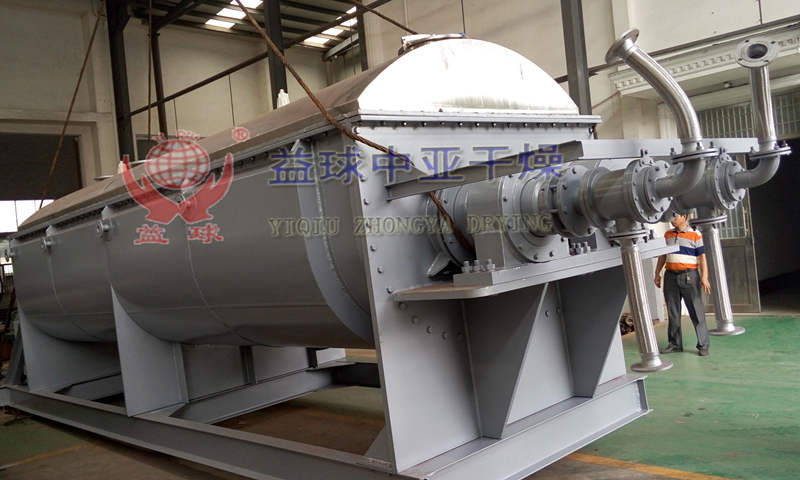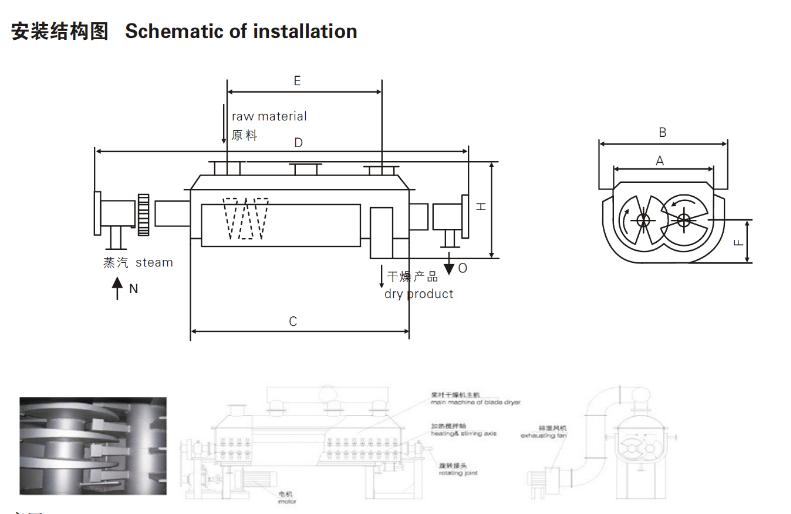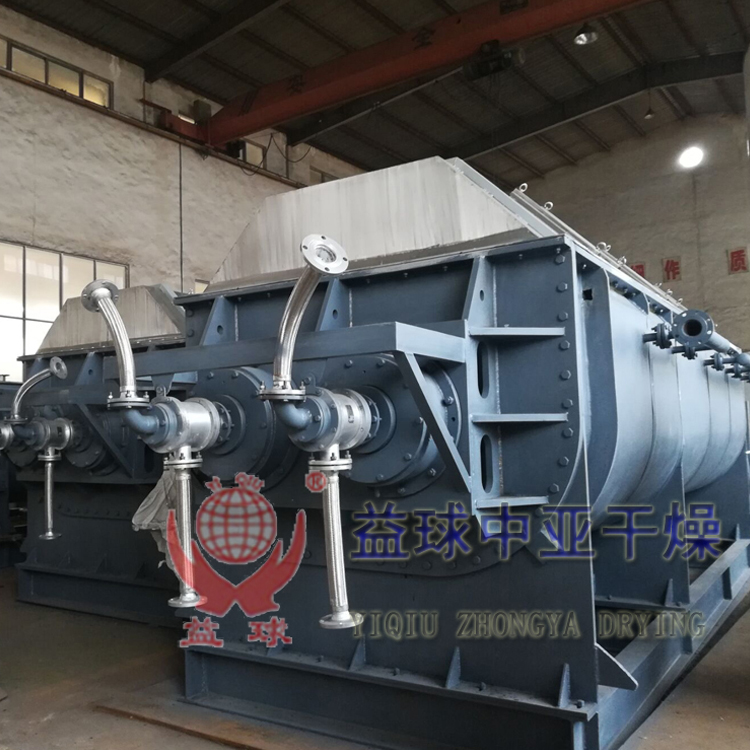


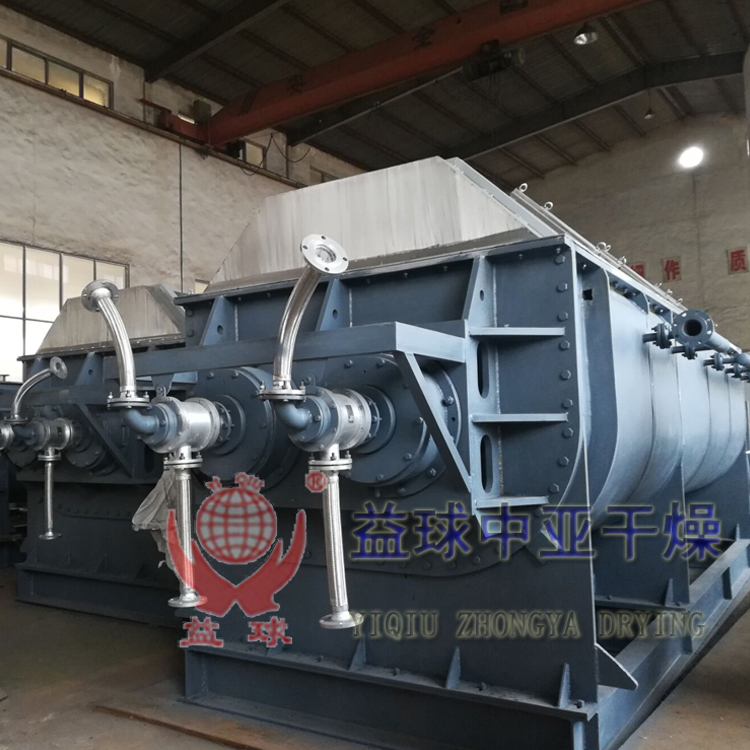
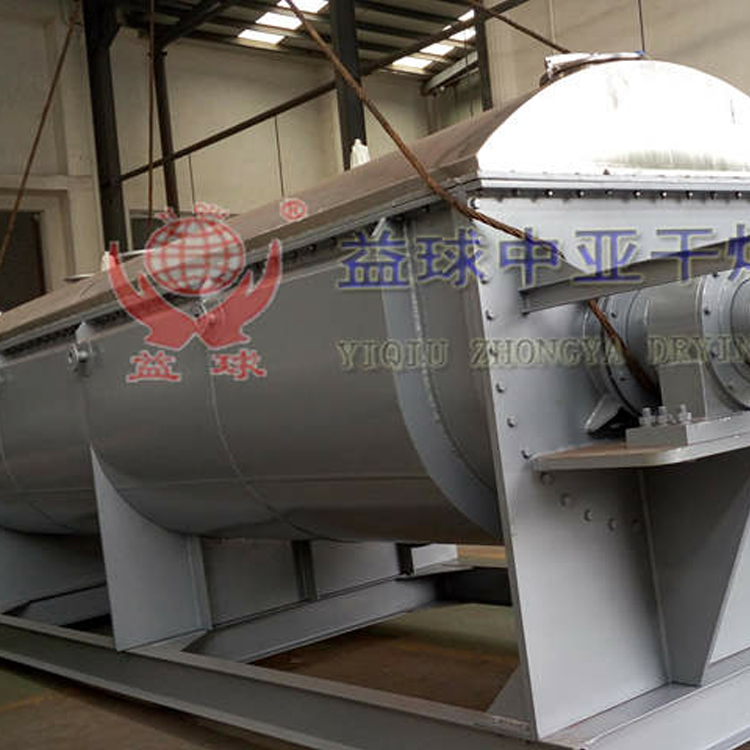
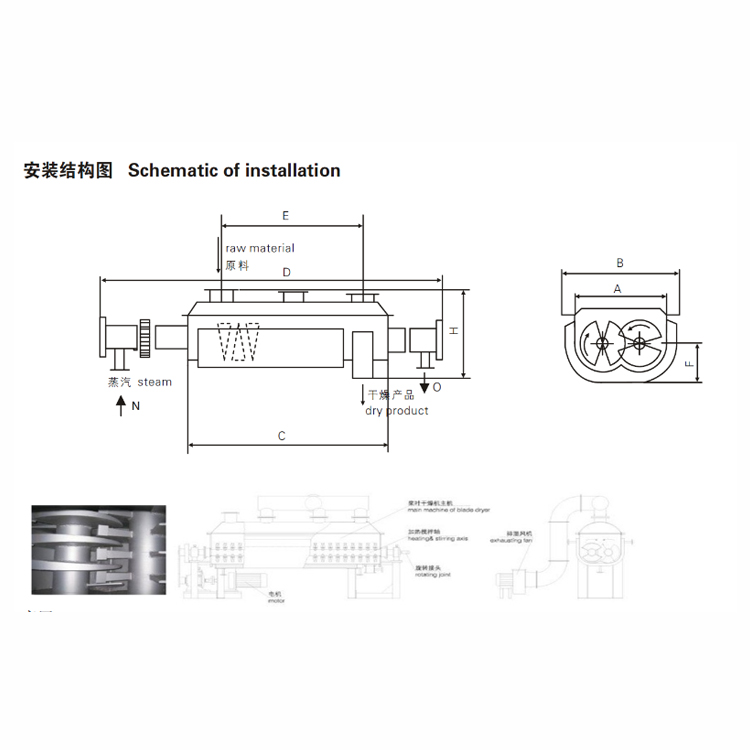







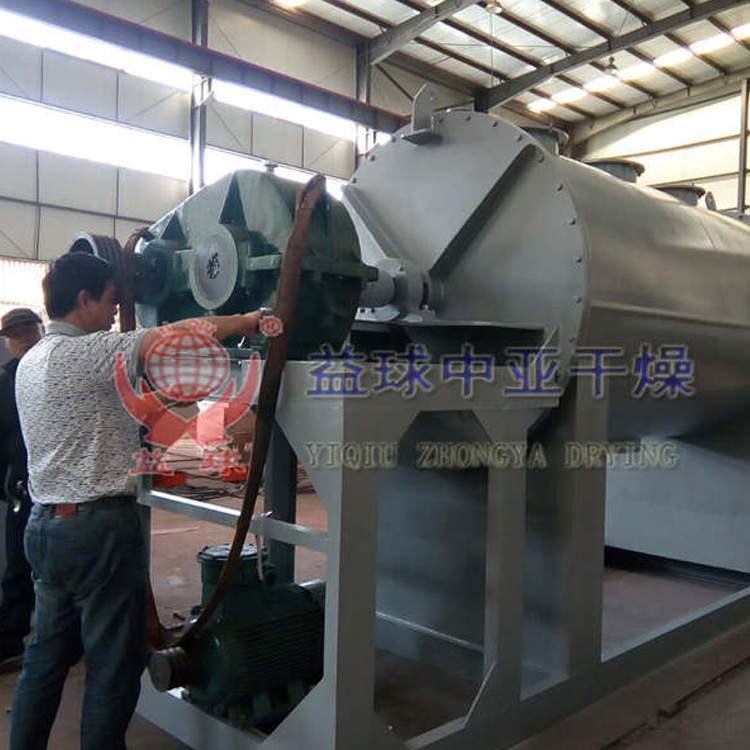
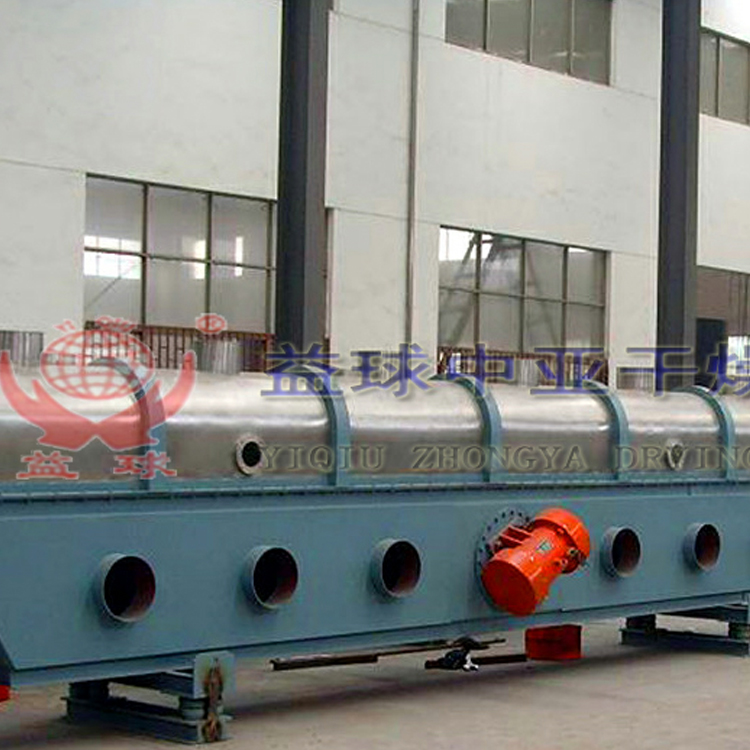
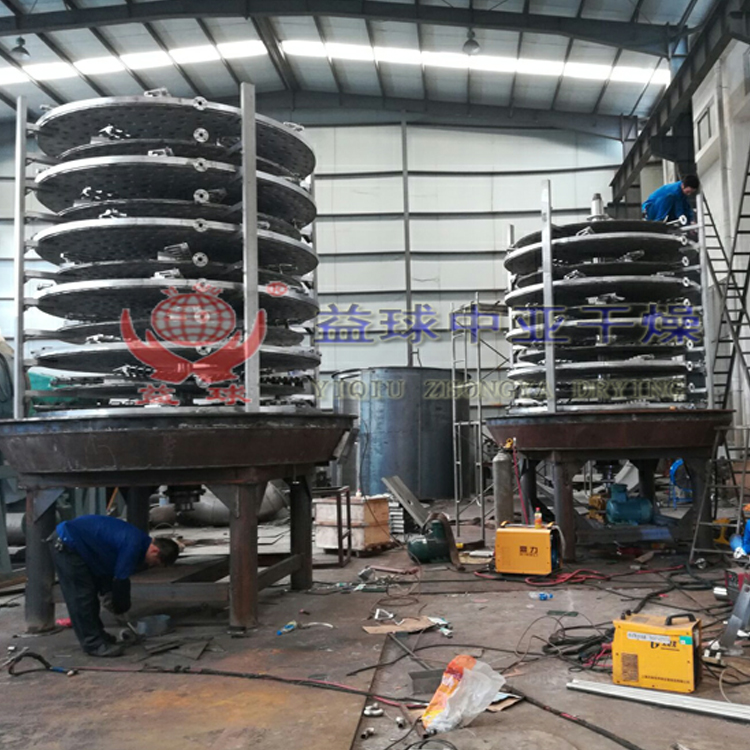
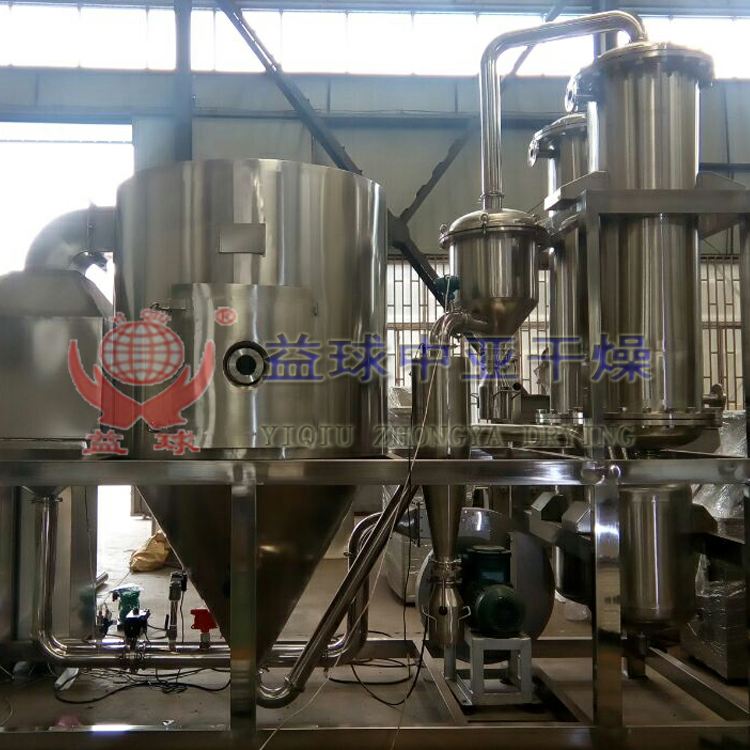
The hollow shaft is densely arranged with wedge-shaped hollow blades, and the heat medium flows through the blades via the hollow shaft. The heat transfer area per unit effective volume is very large, with the temperature of the heat medium from-40℃ to 320℃; can be steam or liquid, such as hot water, heat-conducting oil, etc. Indirect heat conduction, without air carrying away heat, ensuring all heat is used for heating the material. Heat loss is only due to the heat dissipation through the insulating layer of the equipment. The wedge-shaped paddle blade heat transfer surface has an automatic cleaning function. The relative movement between the material particles and the wedge-shaped surface generates a scrubbing effect, which can remove the adhered material from the wedge-shaped surface, maintaining a clean heat transfer surface during operation. The drum dryer's shell is W-shaped, typically containing two to four hollow mixing shafts inside. The shell is equipped with a sealed end cap and an upper cover to prevent the leakage of material dust and to collect solvent vapor from the material. A shutoff valve is set at the discharge outlet to ensure the material level, covering the heat transfer surface and ensuring its full functionality. The heat medium flows through a rotating joint, through the shell jacket and the hollow mixing shafts, which have different internal structures depending on the type of heat medium to ensure effective heat transfer.