











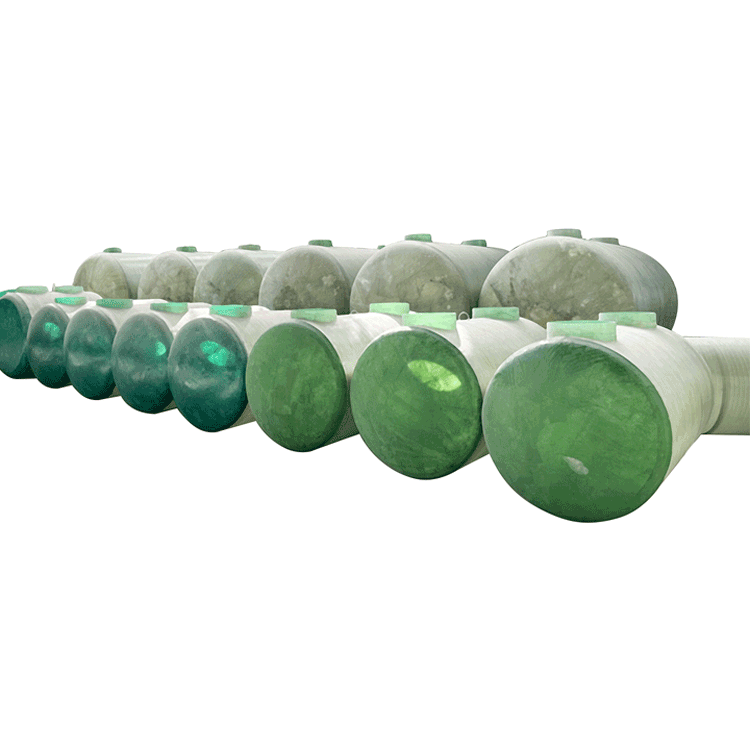

Dispersed Wastewater Treatment Tank
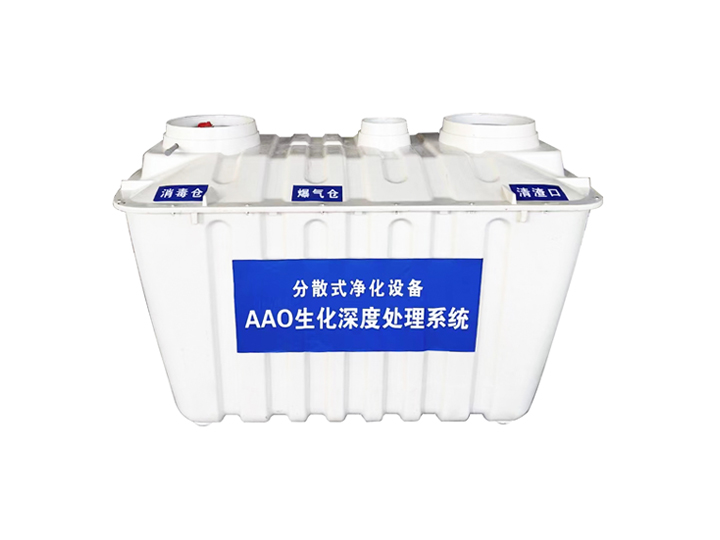
Product Introduction
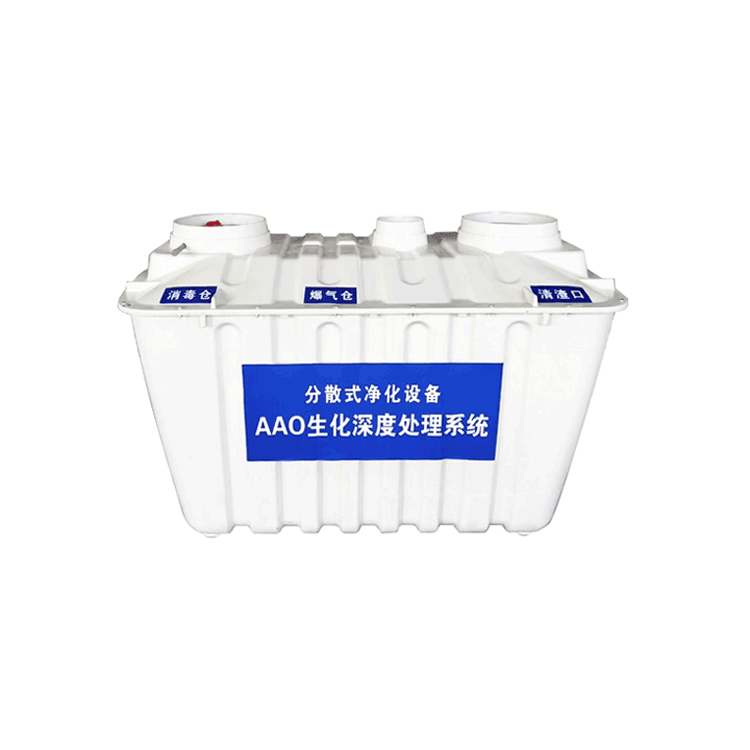
Clarification Tank, a small-scale domestic wastewater treatment unit, is designed for the treatment of decentralized domestic wastewater or similar effluents. It is a decentralized wastewater treatment system that employs sedimentation and anaerobic fermentation principles to remove suspended organic matter from domestic wastewater. The tank is internally partitioned with baffles, which have misaligned holes to prevent short-circuiting and divide the tank into three sections: primary anaerobic chamber, secondary anaerobic chamber, and clarification chamber. The bottom of the primary and secondary anaerobic chambers are interconnected, and they are filled with suspended ball media. This partitioning minimizes contact time between wastewater and sludge, allowing for separate acidic and alkaline fermentation processes without interference. Additionally, the presence of the media increases the contact surface area between wastewater, sludge, and anaerobic bacteria, significantly enhancing reaction efficiency.
Working Principle
The principle of the purification tank primarily involves physical, chemical, and biological actions. Specifically, it includes the following steps:
1. Water Entry: Wastewater first enters the purification tank through the inlet pipe, which may undergo pretreatment such as filtration or sedimentation.
2. Waterbody Separation: The water in the purification tank is divided into several distinct zones to promote various biological and chemical reactions. Generally, the purification tank consists of three zones: the Sedimentation Zone, the Biochemical Zone, and the Channel Zone.
3. Sedimentation Area: In the initial stage of the purification tank, suspended particles in the water will settle to the bottom of the sedimentation area, forming sediment.
4. Biochemical Zone: After sedimentation, the water flows from the sedimentation zone to the biochemical zone. The biochemical zone is a critical part of the purification tank, containing a series of biological filtration media, such as microbial populations and biodiversity. These microorganisms decompose organic pollutants and nutrients like nitrogen and phosphorus through processes like biological adsorption and oxidation degradation, converting them into harmless substances.
5. Channel Area: Clean water flows into the channel area after being processed in the biochemical zone. The channel area is typically located behind the purification tank to further remove suspended solids and particulates.
6. Outflow: Clean water is discharged from the purification tank, which can be transported through pipelines to the next treatment stage or directly released into the environment.
Additionally, some purification tanks are equipped with sterilization devices, which disinfect the outflow water to ensure water quality safety.
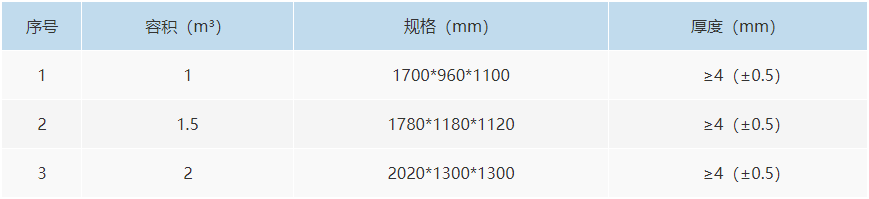
Product Specifications
Product Features
The residential small purification tank is an on-site wastewater treatment facility installed underground in residential foundations, capable of treating domestic sewage and discharging it locally. From the perspective of water environmental protection and cost-effectiveness, the residential small purification tank has the following advantages over the sewer system.
1. Installation of purification tanks requires minimal investment and low costs.
Household small purification basins are generally mass-produced in factories, with prices kept at an affordable level for household users. These purification basins occupy minimal land space and do not require complex land acquisition procedures or expensive land acquisition fees.
2. Installation is不受terrain影响, takes little time, and shows quick results.
Installing a residential small purification pond requires only a space as large as a compact car, with a short connection for the drainage pipeline, and it has minimal terrain requirements. Typically, it takes about a week to install a purification pond, and once it starts operating, its wastewater treatment function is immediately activated.
3. Maintaining water supply around the residential community
After treatment in the purification pond, the water is generally discharged into nearby streams or brooks, which significantly contributes to maintaining the water supply of the local streams, enhancing the water circulation within residential communities, and preserving the natural scenery in the surrounding area.
4. Sludge is relatively easy to utilize.
The purification trench is primarily used for treating domestic wastewater. The treated water and sludge it produces generally contain no toxic substances. Depending on varying needs, the treated water and sludge from the purification trench can be recycled and effectively utilized.
5. Stable water output, high pollution removal rate
BOD5 can reach below 20 ppm, with a removal rate exceeding 90%, and stable effluent with minimal fluctuations.
Application Fields
Closed and semi-closed sensitive water body wastewater treatment
Wastewater treatment in scenic spots and tourist attractions
Rural and suburban point-source wastewater treatment
Protected Drinking Water Sources & Eco-Protected Areas: Wastewater Treatment
Rural environment comprehensive improvement.
Hotel and guesthouse graywater recycling.