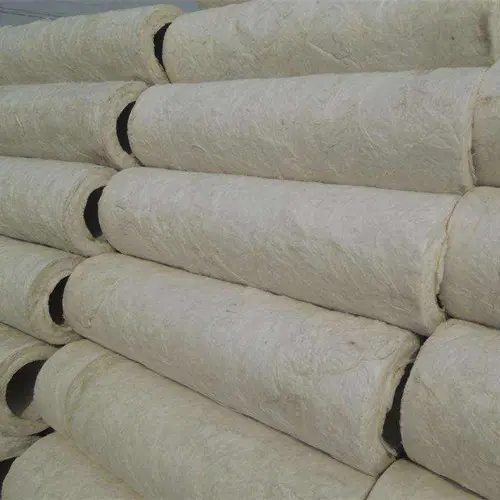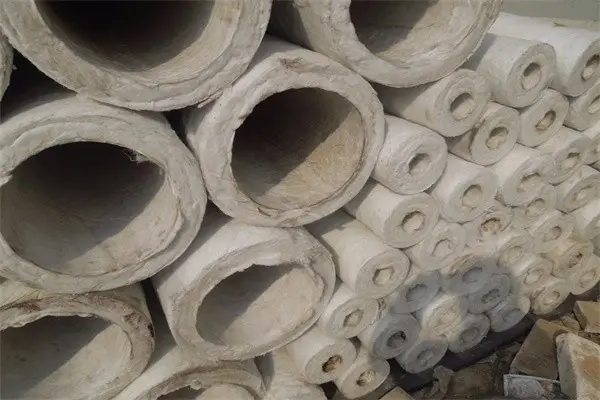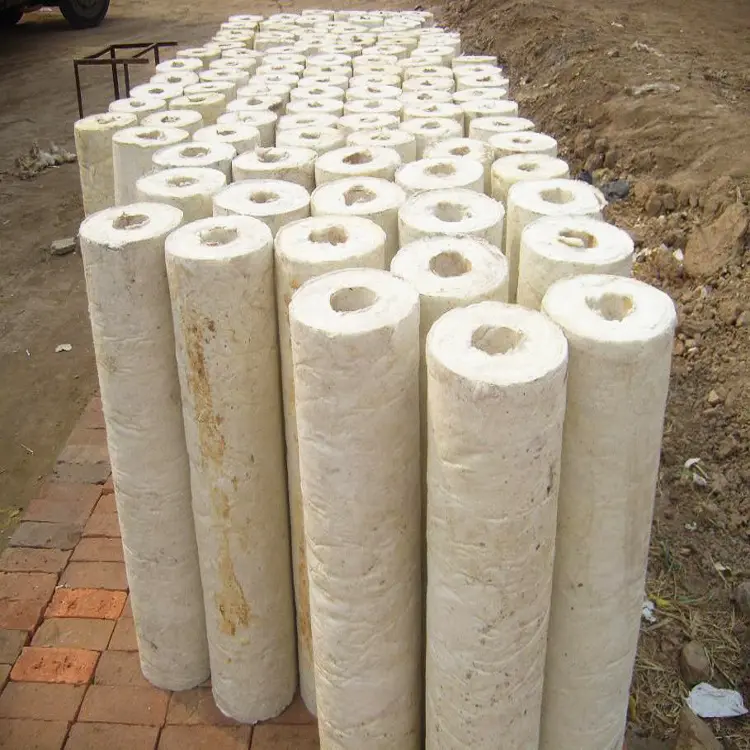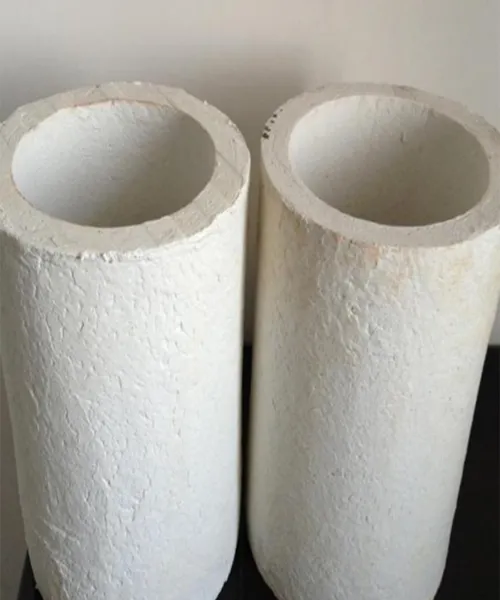







Alumina-silicate wool series products feature high bulk density, low thermal melting point, low thermal conductivity coefficient, excellent heat resistance, and superior mechanical vibration resistance.
Organizational structure
1. Porosity: This material features a high porosity with even distribution. Generally, the presence of air gaps is a necessary condition for various materials to perform insulating functions. The thermal conductivity of insulating materials depends on the number of pores, the size, shape, structure, and distribution. Materials with more uniformly distributed and closed microspherical pores have lower thermal conductivity.
2 Fiber Diameter
Furada's aluminum silicate fiber has a diameter of 1-4 micrometers, distributed uniformly in an interlaced pattern, requiring no adhesive or only a small amount. The heat transfer from the hot side to the cold side of the thermal insulation material includes conduction, convection, and radiation. As thermal conductivity increases with the density of the material, it is necessary for the fiber itself to be lightweight. To reduce the contact area between fibers while maintaining the same bulk density, the diameter of the fibers is decreased, thereby increasing the number of series connections and enhancing thermal resistance, ultimately lowering the material's thermal conductivity coefficient.
3. Bulk Density and Fines Content
Loose and light silica-alumina wool products can reach approximately 96 kg/m3, with slag content below 4%.
Physical and chemical properties
pH level
Furada's silica-alumina wool products have a pH value of 6.5-7, are essentially neutral, contain no soluble hydrides, and are non-corrosive to equipment and pipeline surfaces. The main components are SiO2 (50.6%) and Al2O3 (47.2%), and they do not pollute the environment, offering excellent chemical stability.
Operating Temperature
Fulda's aluminum silicate wool products come in four specifications: Standard Type at 1050°C, High Purity Type at 1100°C, High Aluminum Type at 1200°C, and High Temperature Type at 1250°C.
Performance usage
Furda's alumina silicate product line changes at 1150℃x6h.
Line variation ≤ 2.4% at (200-400)℃ for 6 hours
Line variation ≤ 0.2%
Thermal linear change refers to the crystallization, shrinkage, and destruction of the porous structure of thermal insulation materials under high temperatures, resulting in changes in performance. Generally, the thermal linear change of insulation materials is 5-10 times that of the material itself.
Thermal Conductivity
Furda's aluminum silicate products boast excellent thermal conductivity, with values of 0.03 at 200°C, 0.06 at 400°C, 0.09 at 600°C, and 0.1 at 800°C.
Determine Insulation Thickness