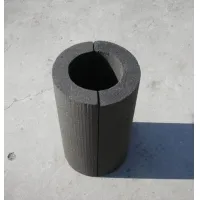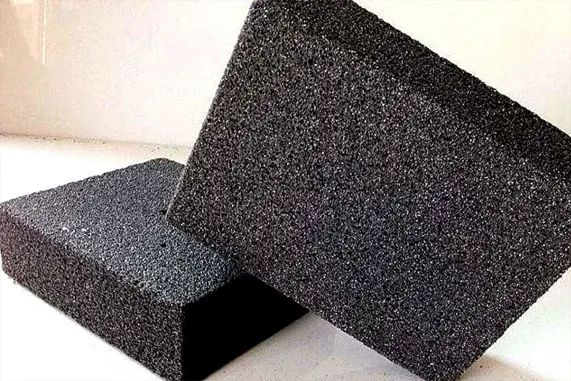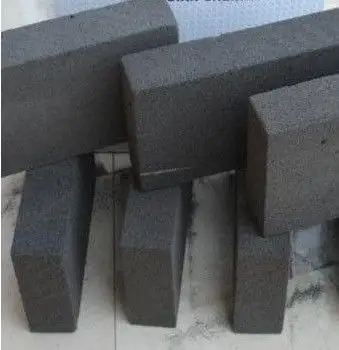







Foam glass, also known as porous glass, is an insulating glass composed of uniformly distributed pores with a porosity exceeding 90%. Its pore structure, with the physical properties of borosilicate, makes it suitable for use as an insulating material. It boasts advantages such as impermeability, non-flammability, non-corrosiveness, and non-contamination of food.
Cellular glass is non-toxic, non-radioactive, does not emit harmful substances, and does not contaminate the foundation or groundwater, making it environmentally friendly. It is also non-flammable, low in moisture and water absorption, with a service temperature range of 240-280°C. In addition, cellular glass is resistant to weathering, aging, and attacks by rodents, insects, and microorganisms.
Foam glass is a superior building and decorative material with excellent thermal insulation (cooling), sound absorption, moisture resistance, and fireproofing properties. Despite the emergence of numerous new thermal insulation materials, foam glass holds an increasingly significant position in low thermal insulation, moisture-proofing, and sound absorption applications due to its safety and high reliability. Its production is an example of reusing waste solid materials, serving as a model for environmental protection and substantial economic benefits.
Features and Advantages: 1. Non-toxic, non-radioactive, and does not release harmful substances; it does not contaminate the foundation or groundwater, making it an environmentally friendly material; 2. Non-flammable, low moisture and water absorption rate, with a temperature range for normal use of glass foam at 240~280℃; 3. Resistant to weathering, aging, and damage from rodents, insects, and microbial corrosion; 4. Can adjust bulk density, open and closed cell porosity, and other properties by modifying the formula and foaming process.