



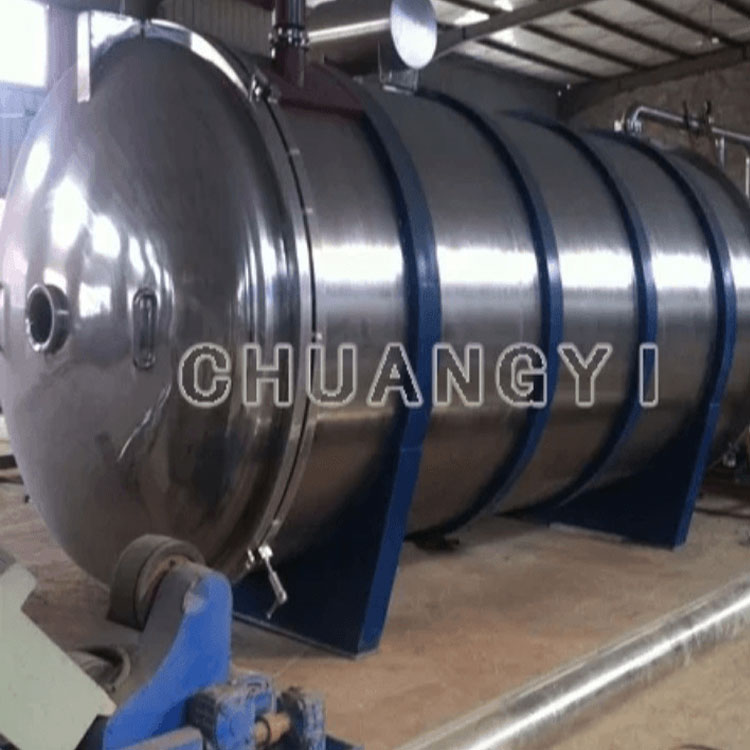


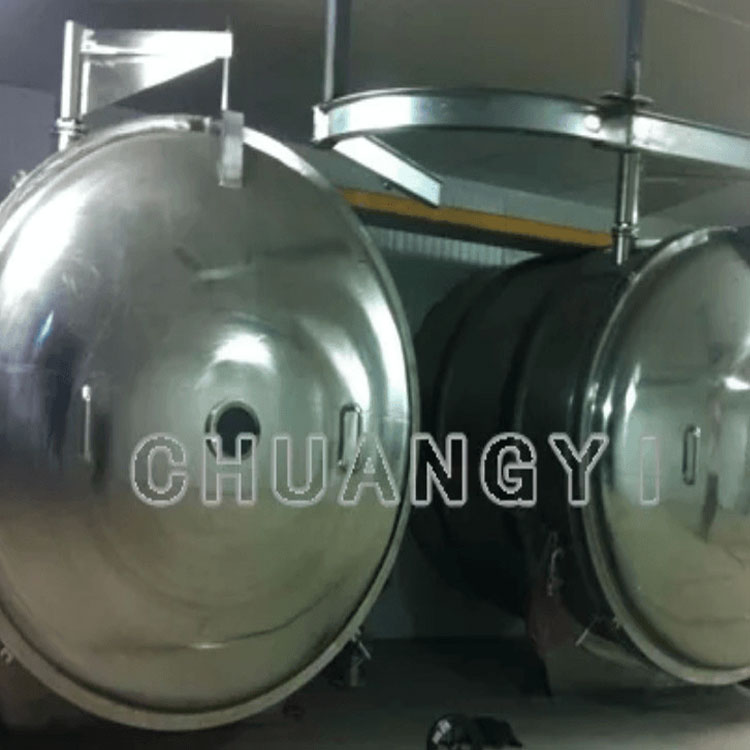
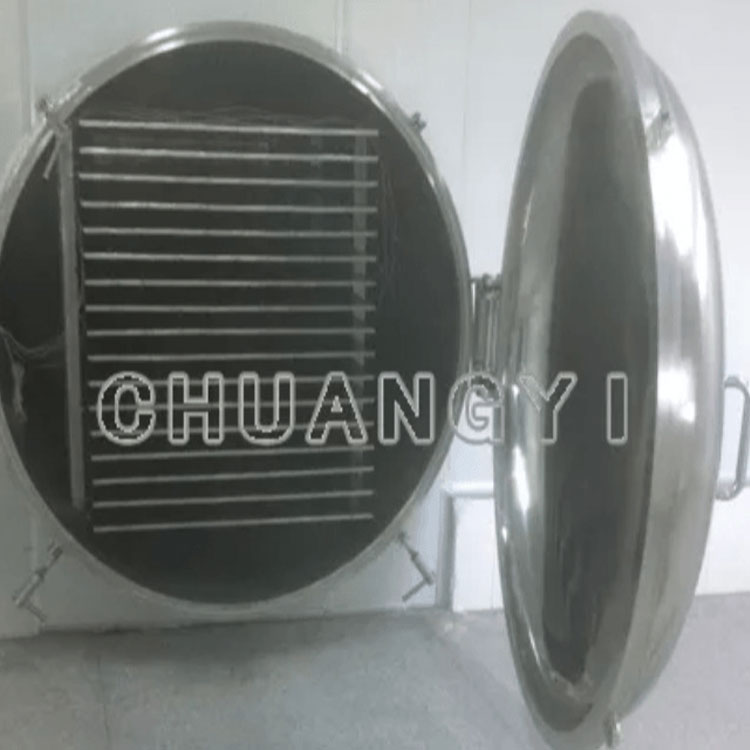


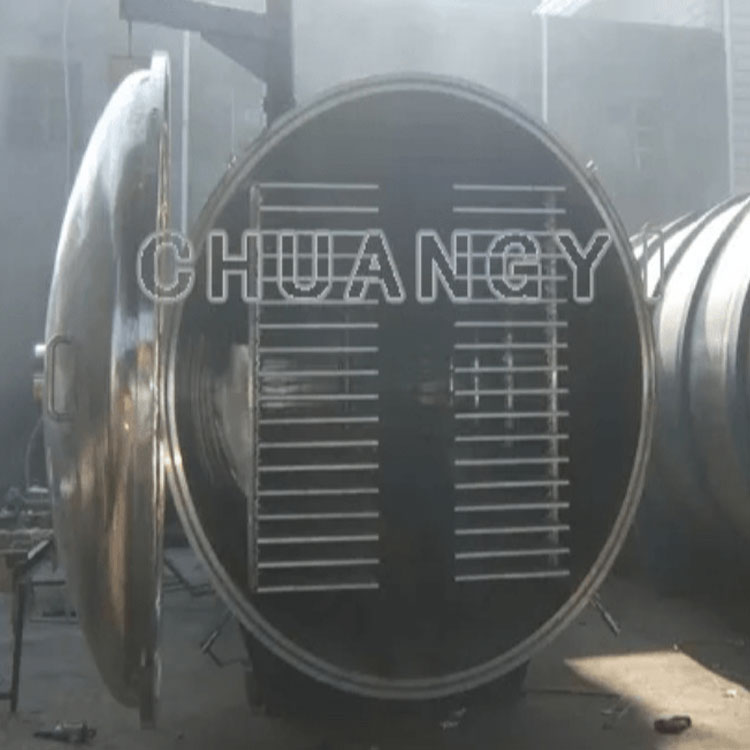
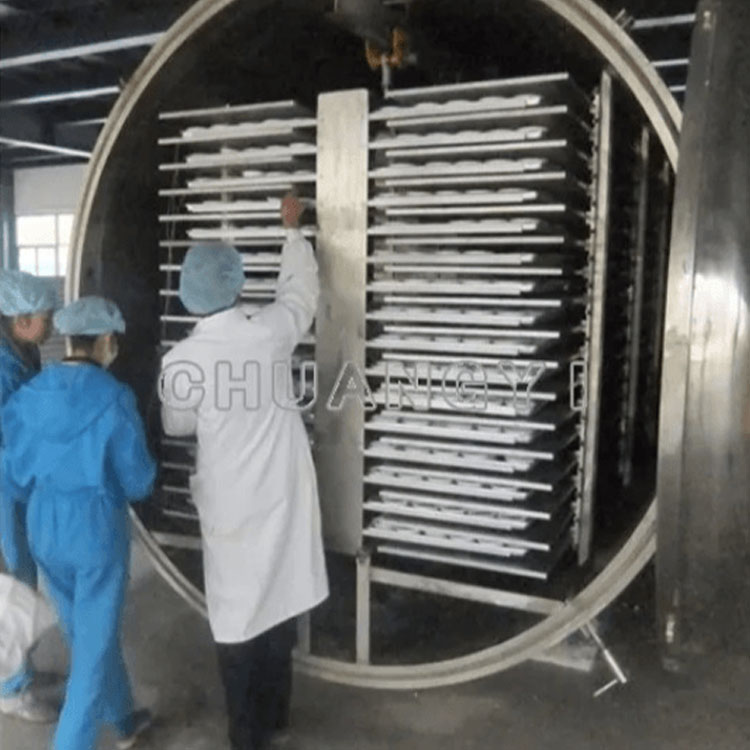







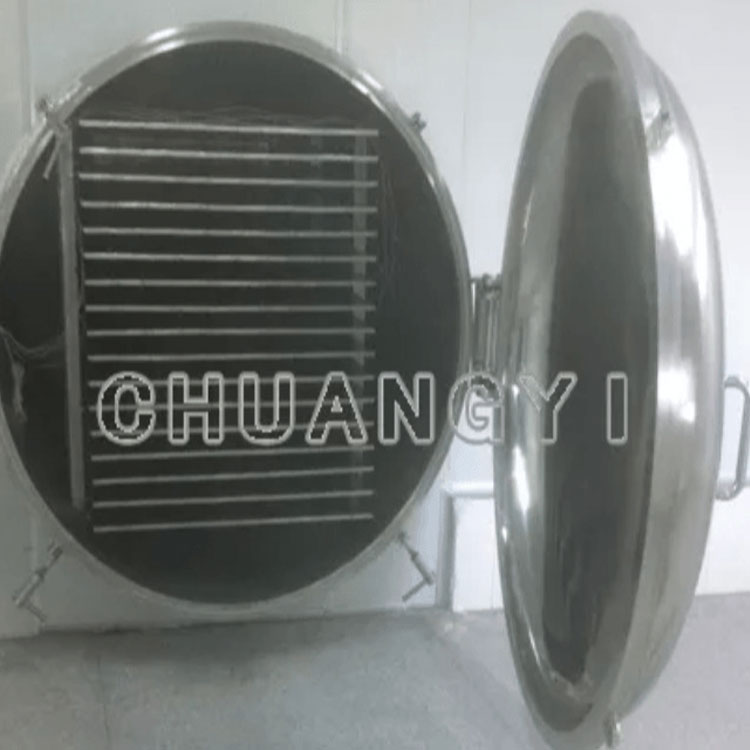
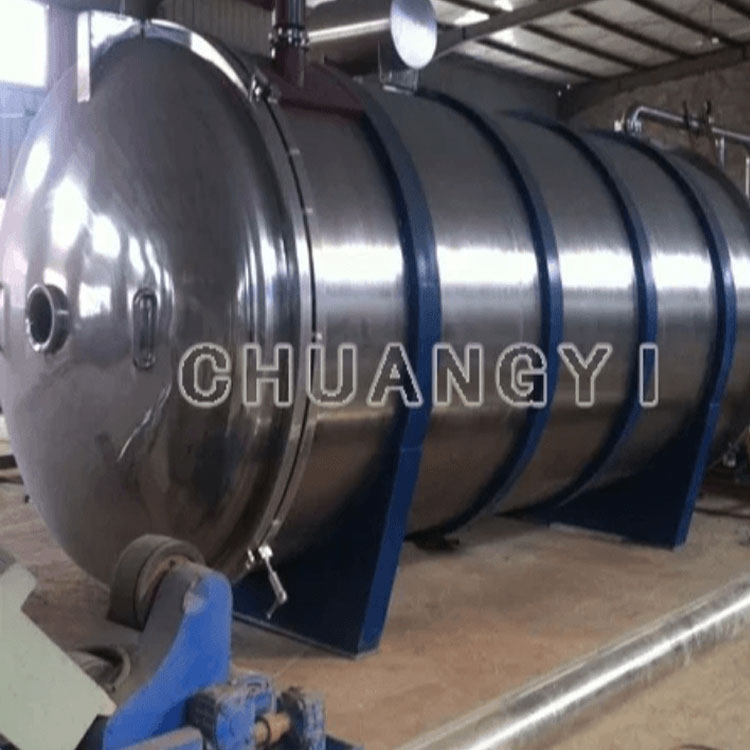
Technical Specifications
Material Quantity: 350 kg per batch
Low Temperature of Cold Trap: ≤-60℃
Large catch water capacity: 420kg/batch
Ultimate vacuum degree: ≤5 Pa
Total Power: 118 kW
Equipment installation area and height: 50m x 2.8m
Weight: 9,500 kg
Features of this machine
1. Pre-freezing and drying are completed in situ, with the freeze-drying process automated for easy operation.
2. The board layer circulates a medium with adjustable temperature, with a temperature difference of ≤1°C, ensuring more even cooling and heating effects.
Touchscreen operation, PLC control system, real-time monitoring of equipment operation.
4. Connectable to computers for remote control and storage of freeze-drying curves.
5. Integrated design for easy transportation and installation, saving space.
6. Features include CIP in-line cleaning, SIP in-line sterilization, hydraulic plug-in system, and more.
Equipment Application Fields
Pharmaceutical Industry: The freeze-drying technique can be used for the dehydration and preservation of various Chinese and Western medicines, including dry powders, pastes, vaccines, enzymes, antibiotics, hormones, etc.
2. Food Industry: Vacuum freeze-drying technology is primarily used in the food industry for drying coffee, leafy vegetables, juices, strawberries, whole shrimps, meats, specialty vegetables, etc. It preserves the color, aroma, flavor, shape, and nutritional content of the food, making it easy for long-term storage and transportation. It is highly suitable for the production of convenient and nutritious food products.
3 Nutritional Health Products: The vacuum freeze-drying technique is also suitable for drying royal jelly, pearl powder, ginseng, fish meal, ant powder, snake powder, and more. It effectively preserves their nutritional and active components for long-term storage.
Ensure the naturalness of nutritional supplements.
4. Biological Research: The vacuum freeze-drying technology can preserve bacteria, arteries, bones, skin, corneas, nerve tissues, and various organs for long-term storage. When in use, water can be supplied to regenerate, maintaining their integrity.
Its biochemical and physical properties.
5. Other applications such as in the production of aerospace thermal insulation ceramics, wood and silk artifacts in archaeology, preservation of products, specimen making, and preparation of special materials yield unique effects.
Principle of Freeze-Drying
Drying is one method of preserving materials from spoilage and deterioration. There are numerous ways to dry, such as sun drying, boiling dry, air drying, spray drying, and vacuum drying, among others. However, these drying methods are all based onPerform at temperatures of 0℃ or higher. The dried product is generally reduced in volume, hardened in texture, with some substances oxidized and most volatile components lost. Heat-sensitive substances, such as proteins, may denature. Microorganisms lose biological activity, and the dried material is not easily soluble in water. Therefore, there are significant differences in the properties of the dried product compared to the original, and the freeze-drying method differs from the above drying methods. The product is dried at temperatures below 0℃; that is, during the frozen state, until later stages when the product is raised to temperatures above 0℃ to further reduce residual moisture content, but usually not exceeding 50℃. Freeze-drying involves pre-freezing a substance containing a high water content into a solid, then allowing water vapor to sublime directly under vacuum, leaving the substance itself in the ice framework formed during freezing, resulting in a dried product that is loose, porous, and unchanged in volume. To decrease the product's temperature and slow the sublimation rate, heating is required to increase the sublimation speed and shorten the drying time. The entire drying process is carried out at lower temperatures.
Advantages of Freeze-Drying
1. Freeze-drying is carried out at low temperatures, making it particularly suitable for many thermosensitive substances, such as proteins and microorganisms, which do not denature or lose their biological activity. Therefore, it is widely used in the pharmaceutical industry.
2. During low-temperature dry explosion, the loss of volatile components in the substance is minimal, making it suitable for drying some chemical products, pharmaceuticals, and food.
3. During the freeze-drying process, microbial growth and enzyme activity are inhibited, thus preserving the original properties.
4. Due to drying in a frozen state, the volume remains almost unchanged, maintaining the original structure and no concentration occurs.
5. The dried substance is loose and porous, resembling a sponge. Upon addition of water, it dissolves quickly and completely, restoring its original properties almost instantly.
6. Since the drying process occurs under vacuum with minimal oxygen, some substances prone to oxidation are protected.
7. Drying can remove over 95% of moisture, ensuring the product can be preserved for a long period without deterioration.
Therefore, freeze-drying is currently widely used in the pharmaceutical industry, food industry, scientific research, and other sectors.













