







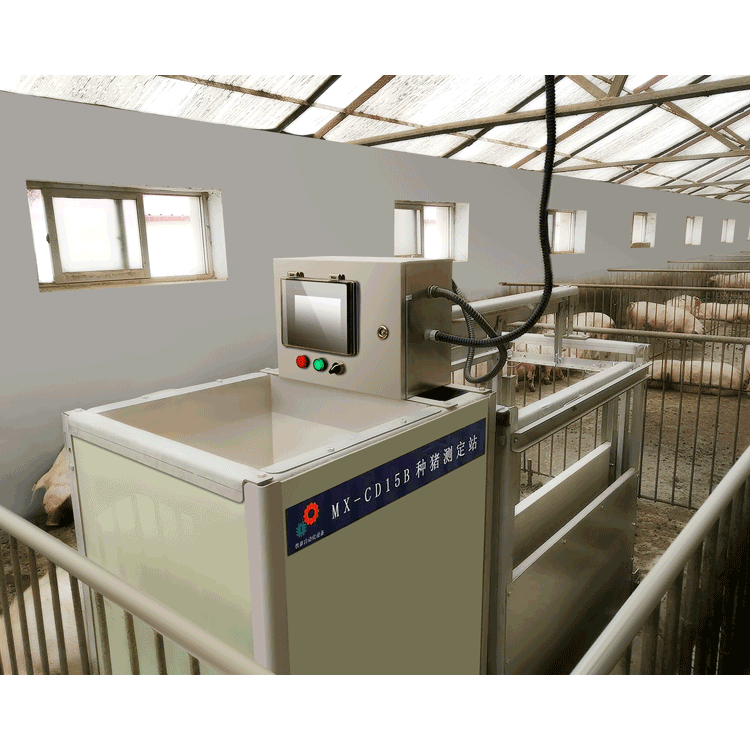
The Development History of Sow Feeding

Sows have been a constant companion in the development of the pig farming industry, playing a crucial role within it. A sow farm is akin to a production workshop, with the productivity of sows directly impacting the total number of pigs ready for market. Moreover, sows are a significant energy consumer in the farm, with their energy consumption often overlooked. Many farms excel in the rearing and fattening stages but fail to see returns, as the high-energy-consuming workshop that is the sow is sapping away the benefits. In the past, sow feeding did not consider limited feeding, and it was the same as feeding normal pigs, with only simpler food provided during the empty period. Sows were generally kept for over 5 years, with litters producing fewer than 10 piglets. While the sows were in good condition and had long usage periods, the small litter sizes and low annual litter frequency meant inadequate management. Overall productivity was low, primarily due to the unresolved issue of limited feeding for pregnant sows.
With further advancements in science, research has shown that pregnant sows must address the issue of limited feeding to increase the number of piglets per litter. To achieve precise feeding for each sow, people have been using individual stalls. Stage-wise feeding of sows can maintain their weight. Increasing the productivity of sows has been proven over the years. The benefits brought by individual stalls to the pig farming industry are far outweighed by the drawbacks, such as excessive sow diseases, reduced lifespan, and inability to reach optimal productivity levels. Individual stalls are no longer suitable for sow feeding management. Some informed pig farmers have started using semi-individual stalls or creating sow exercise areas to supplement the shortcomings of individual stalls. However, the existing problems are also evident, such as insufficient feeding amounts, not basing feeding on weight and backfat, feeding being subjective and imprecise, the need for a separate feeding amount for each pig, requiring a large workforce to complete the task, high construction costs for pig houses, and excessive land usage, among other factors.
Sow Intelligent Software Management System
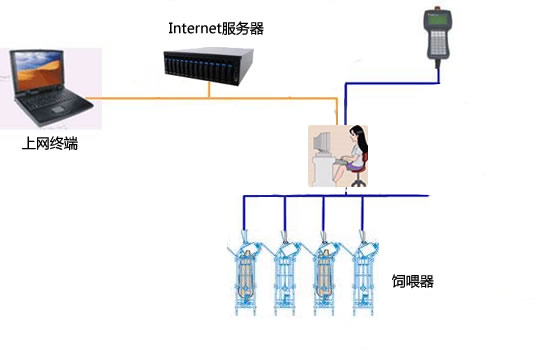
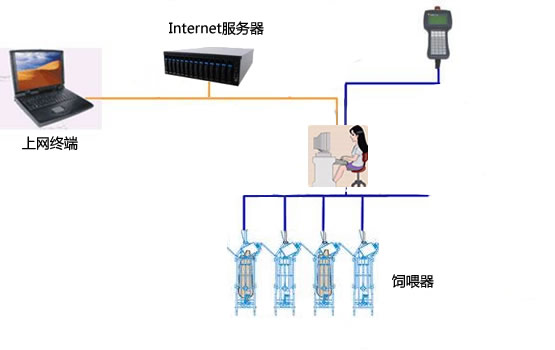
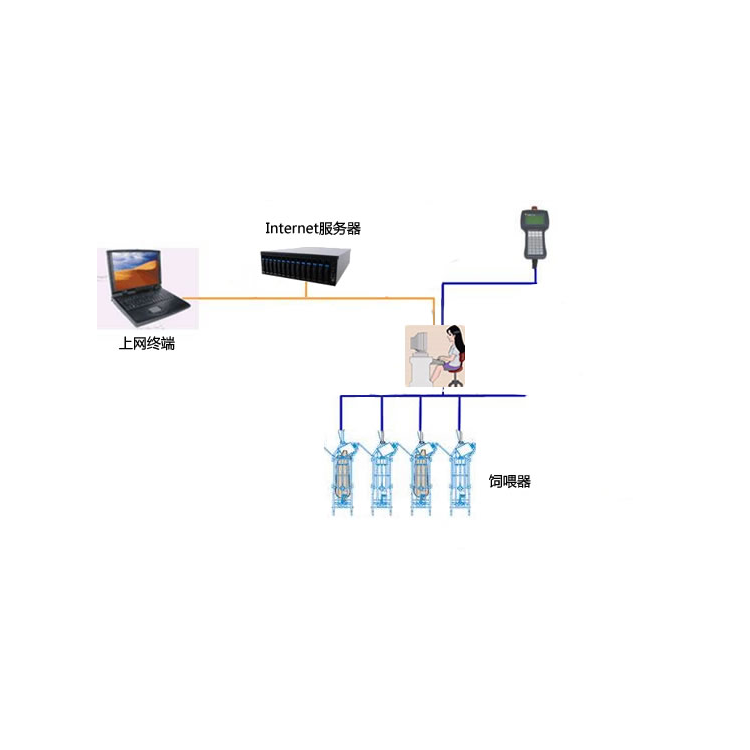
Animals are fitted with electronic ear tags, which are read by a scanning device to identify them. The information is transmitted to a computer, where a weight sensor also sends the pig's weight. Managers input the pregnancy date and other basic information. The system calculates the daily feeding amount based on the data obtained from the terminal (tag number, weight) and the data set by the computer manager (pregnancy date). This feeding amount is then divided by time and sent to the feeding equipment to dispense feed to the pig. The system also collects other information about the herd for statistical calculations. It provides the farm manager with accurate data for company operations analysis.
Achieve fully automatic feeding and data statistical computation functionality
Ear tag identification system automatically identifies pigs at feeding time.
The system records each pig's ear tag number, feeding time, duration, and amount consumed, and automatically calculates the daily feeding amount based on weight and gestation days.
Automatically measure the daily weight of pigs and calculate the daily weight gain.
System monitoring and detection of the operational status of control equipment, condition assessment, and abnormal situations in pigs, along with system alarms.
The system features real-time data backup functionality, displaying the current status of the feeding pigs.
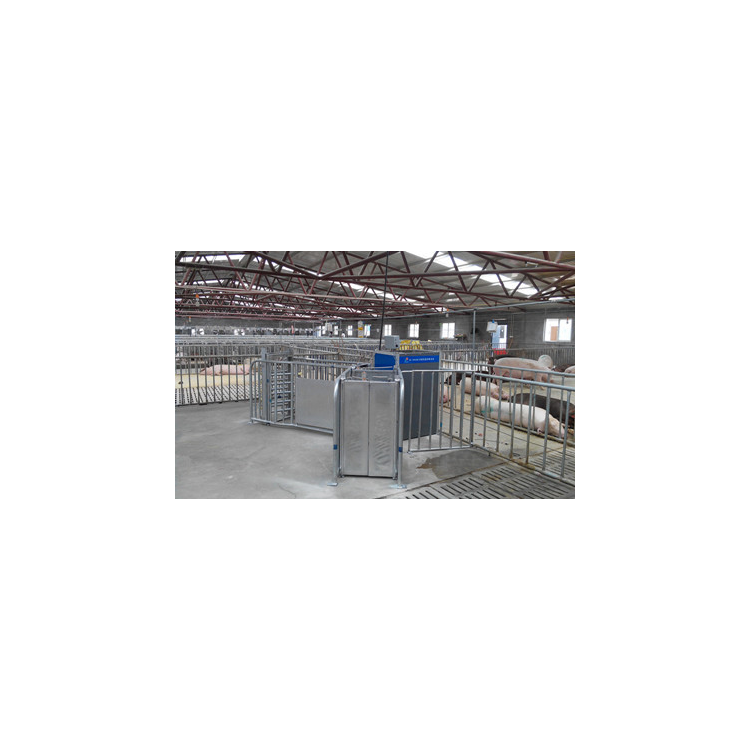
Intelligent sow feeding station technology principle
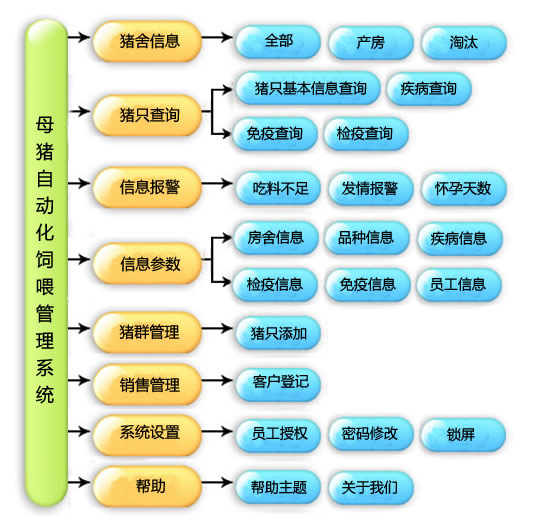
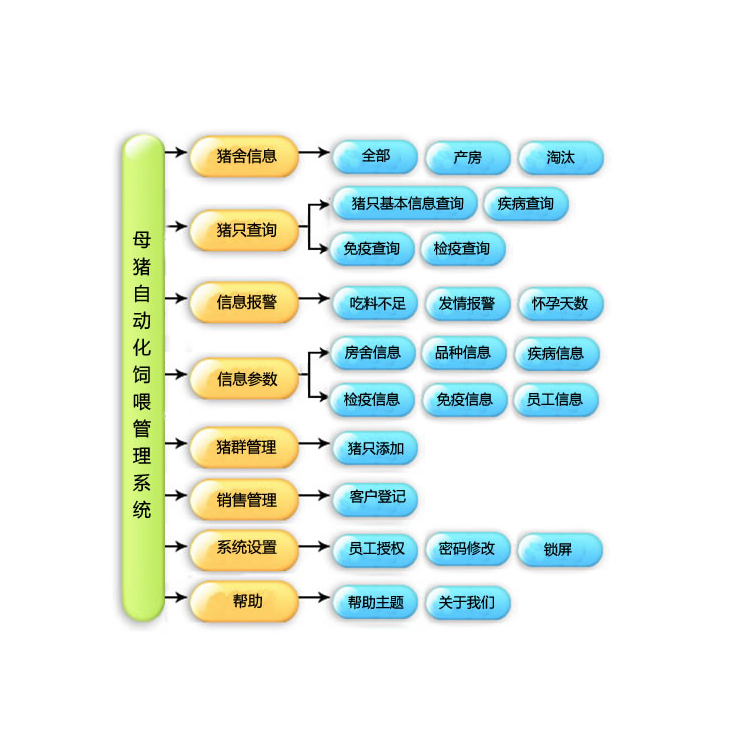
System management software provides a user-friendly interface for operators, offering reliable support for scientific managers, thereby effectively enhancing production efficiency and reducing costs. Within this system, the management software encompasses applications and databases, where the applications enable human-computer interaction, control assignments, data storage, data processing, displaying alarms for abnormal animal conditions, and generating reports. The database is utilized for data storage, facilitating managers in querying and backing up information.
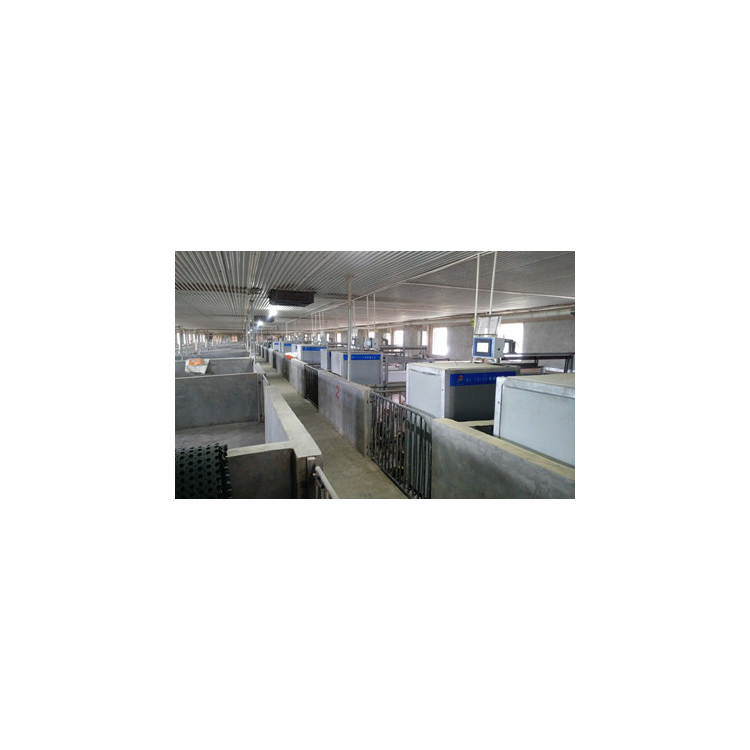
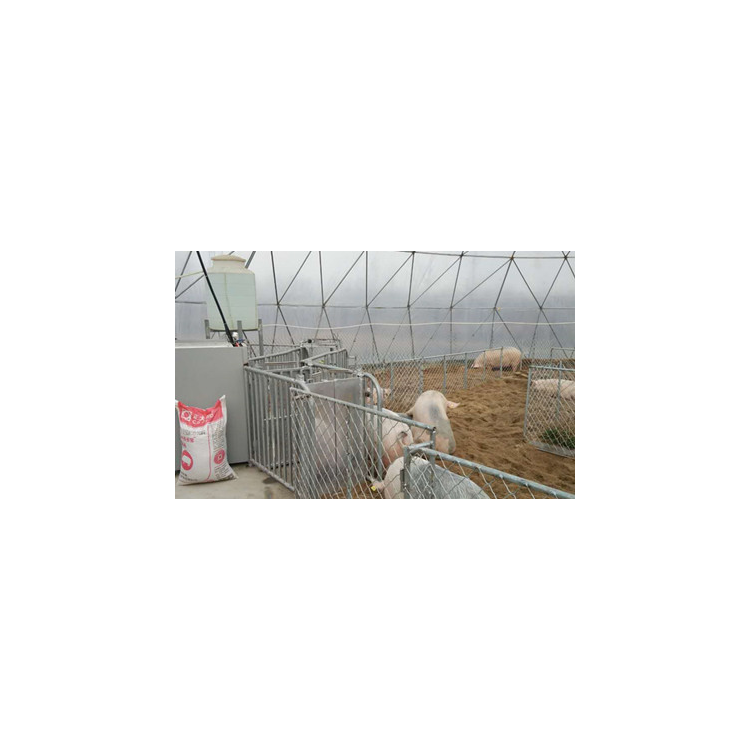
Sow Feeding Station Pen
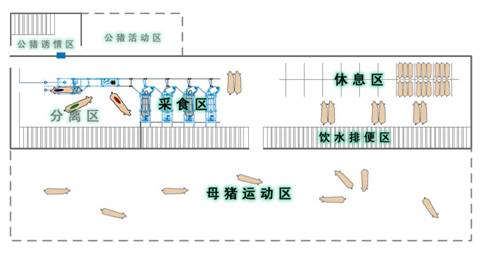
Feed using large pens, with a capacity of 200 sows per pen, capable of housing empty and pregnant sows together. Organized in groups of four individual pens, a separation system is in place. The large pens are equipped with feeding areas, resting zones, activity areas, and separation zones. Additionally, an estrus detection area is provided, where a boar is kept in the center, with an estrus detection system installed.
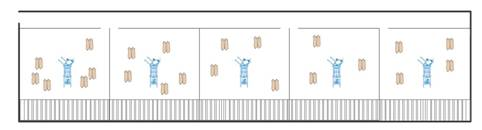
If feeding with small pens, separate empty and pregnant sows, with each pen housing 50 pigs. No separation system is used. Daily identification of sow conditions is done through an artificial observation system's spray-color device, e.g., pigs with 105 days of pregnancy are sprayed red, estrous sows are sprayed yellow, and sows that haven't eaten for a day are sprayed blue. The estrous identification system is set up next to the empty sow pen. Each pen has one 40cm and one 15cm automatic waterer for free drinking.