








With the continuous improvement of urban wastewater treatment rates in our country, the production of sludge from urban wastewater treatment plants has also increased dramatically. Currently, only a small portion of the sludge from urban wastewater treatment plants is treated through sanitary landfills, land application, incineration, and material utilization for construction. The majority remains untreated. Sludge contains pathogenic organisms, heavy metals, and persistent organic pollutants, among other harmful substances. Without effective treatment and disposal, it can easily cause secondary pollution to groundwater and soil, directly threatening the environment and public health, significantly reducing the environmental benefits of wastewater treatment facilities.
China's aquaculture industry is showing two major trends: the proportion it occupies in the total agricultural output value, and the shift towards large-scale farming. Currently, China has become a major producer of meat and eggs, with the issue of aquaculture pollution being extremely severe. Due to the majority of livestock and poultry farming being decentralized,
Widespread in the rural and urban areas of our country, environmental pollution is severe. As the waste generated during the breeding production process is not effectively treated, the pollution it causes has exceeded the total of local industrial wastewater and domestic sewage. It is evident that the main by-products of human life—faeces, sludge, and organic waste—are in large quantities and highly concentrated. If not disposed of promptly and effectively, they are prone to cause pollution.
The process of aerobic fermentation for feces, sludge, and organic waste first converts the easily decomposable organic matter into an organic nutrient soil that is easily accepted by the soil. Secondly, the high-temperature fermentation during the composting process kills most pathogenic bacteria and eggs, eliminating harmful pathogens. At the same time, it transforms waste into organic fertilizer, achieving resource recovery and meeting the requirements of resource utilization, promoting the benign cycle of matter in nature. It not only effectively addresses the issue of reducing the volume of feces, sludge, and organic waste but also solves the pollution problem associated with them.
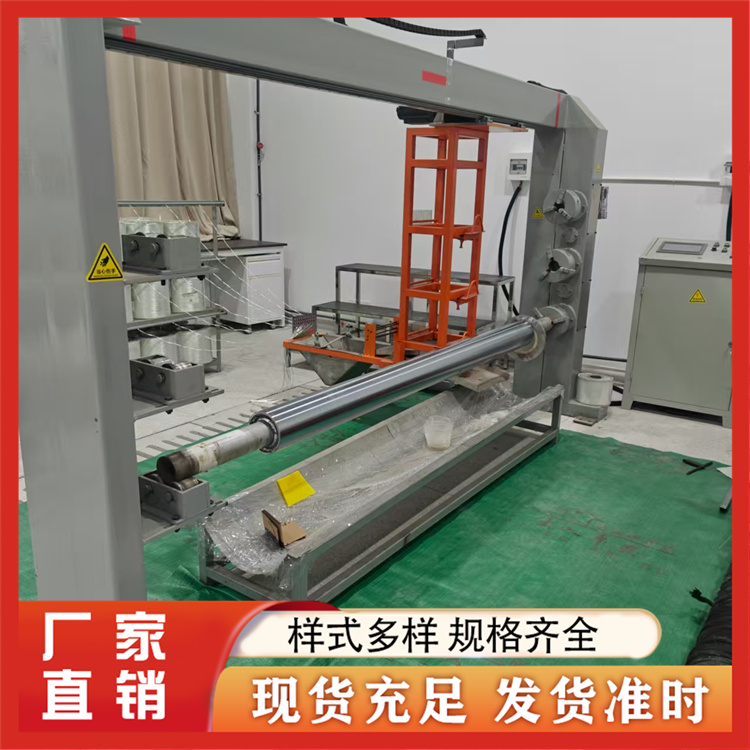
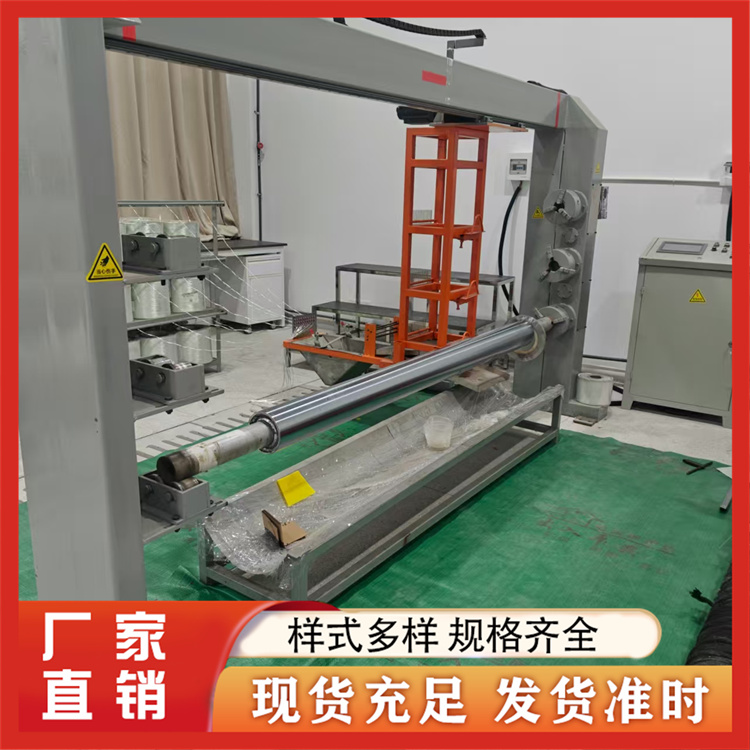
Horizontal rotary drum aerobic fermentation reactor, including horizontal drum fermenter, roller bearing assembly, rotating drive unit, feed-side cover and sealing device, discharge-side cover and sealing device; the horizontal drum fermenter, feed-side cover, feed-side sealing device, discharge-side cover, and discharge-side sealing device form a sealed fermentation space; the feed-side cover is equipped with a feed port and feed-side ventilation port, the discharge-side cover is equipped with a discharge-side ventilation port, and the bottom of the discharge-side cover is fitted with a discharge port; ventilation ports are sealed to external ventilation pipes. The rotating drive unit of the horizontal drum fermenter is a friction drive unit, with the coaxial rollers of the roller bearing assembly connected by a connecting shaft, which is then connected to a coupling on the output shaft of the reducer. The output shafts of the two reducers are connected to the connecting shafts through couplings, driving all the rollers on the connecting shafts. The rollers are frictionally connected to the drum of the horizontal drum fermenter, driving the drum to rotate. The ventilation ports of the horizontal drum fermenter are sealed to external ventilation pipes, and the reaction exhaust inside the fermenter is sent to an odor control device for centralized treatment. After recovering ammonia nitrogen, there is no pollution emitted. The movement of the material from the feed side to the discharge side inside the horizontal drum fermenter can be achieved by setting the fermenter at an angle to the horizontal plane.
Anaerobic fermentation of sludge is a biological process that utilizes microbial action to controlledly promote the conversion of biodegradable organic matter into stable humus-like substances. This is achieved by adding a certain proportion of aeration aids and conditioners (such as straw, rice husk, wood chips, or garden waste, etc.) to sludge, which allows microbial communities to oxidize and decompose various organic matter in a moist environment and transform them into humus-like substances. The aerobic fermentation process of sludge can effectively kill pathogenic bacteria, eggs, and weed seeds, as well as evaporate moisture, achieving stabilization, reduction, and harmless treatment of sludge. Moreover, sludge that has undergone aerobic fermentation has a loose texture, significantly increased cation exchange capacity, reduced bulk density, and increased nutrients that can be utilized by plants. China's research and application of aerobic fermentation of sludge started relatively late, and it mainly focuses on forced通风 tank-type static aerobic fermentation, with little research on dynamic aerobic fermentation methods and continuous, automated production equipment. The main issues with the currently more widely used tank-type static aerobic fermentation technology include: (1) large land area required, making it impossible for wastewater plants to provide more land for expanding sludge treatment facilities; (2) poor airtightness of treatment facilities, severe odor emissions, environmental pollution, and severe corrosion of surrounding equipment; (3) a multitude of equipment needed for operations such as spreading, moving storage, turning, aeration, etc., resulting in high investment and operation costs; (4) inability to operate automatically, poor continuous production capacity; (5) low fermentation temperature, long cycle, and incomplete killing of pathogens; (6) poor working conditions on-site, posing a serious threat to employee occupational health.
The银河High-Temperature Aerobic Sludge Drum Fermentation Equipment converts organic matter in sludge into humus rich in plant nutrients through the metabolism of aerobic microorganisms. The equipment maintains the material at a certain high temperature with a large amount of heat, reducing the moisture content to below 40%. The entire fermentation process achieves the resourceful, stabilized, and harmless disposal of sludge aerobic compost. During the fermentation process, targeted additives are added to effectively enhance the efficacy and functionality, mobility, and bioavailability of the fertilizer, while reducing heavy metal content.
For a long time, in our country, there has been a tendency in wastewater treatment plants, from design to operation, to prioritize water over sludge. Although the effluent quality of wastewater treatment plants meets the standards, the treatment and disposal of sludge is largely in a slow development state. Sludge treatment involves concentrating, dewatering, and subsequent biological activation to stabilize the sludge. Sludge disposal is carried out after reduction and harmless treatment. Municipal wastewater treatment plants in our country commonly use mechanical methods to dewater sludge, with the water content of the dewatered sludge generally ranging from 75% to 85%, appearing as a gelatinous粘结状. Sludge has "four high" characteristics: high water content; high organic matter content, which is prone to decay and produce unpleasant odors; relatively high heavy metal content; and high pathogen content, containing a large number of viruses. Without harmless treatment, sludge that is discarded arbitrarily or simply buried can easily pollute air, soil, and water sources, posing a serious threat to human health and the environment. Therefore, many countries regard sludge as "hazardous waste." Treating secondary pollution caused by sludge requires a higher cost. Currently, 80% of the sludge produced by our country's wastewater treatment plants has not been properly disposed of, and there is an urgent need to develop sludge disposal technologies and equipment of different scales.
One: Short fermentation cycle, space-saving
The high-temperature aerobic fermentation process is a dynamic fermentation treatment technology that achieves continuous and dynamic operation of sludge treatment. Compared to the traditional aerobic fermentation treatment mode for sludge, it implements a dynamic aerobic fermentation process with continuous feeding and discharging of materials, significantly shortening the fermentation cycle and reducing the space occupied by material preparation. Fermentation can be completed in 7 days. The equipment has a small volume and occupies less space.
Two, the sealed design fermentation equipment, without odor emissions, utilizes a sealed fermentation drum and is insulated. The steam and odors produced are directly drawn to the deodorization system by a blower, thus solving the issue of strong odors in aerobic sludge fermentation technology.
Volume large, size small
Compared to similar products, we offer higher yields in the same volume and smaller volume for the same yield.
High degree of mechanization and automation
The fermentation process is fully mechanized for ease of operation, maintenance, and management.
The odorless composting process of organic waste within the drum depends on several factors. One of them is the speed of the drum itself, as the drum reactor rotates slowly, allowing the material inside to gently roll. Conversely, this gentle rolling exposes each particle of waste to the oxygen present in the ambient air. Therefore, the naturally occurring aerobic bacteria in the waste "penetrate" into the oxygen, thereby promoting the growth and decomposition (edibility) of waste at a high rate. The by-products of this highly aerobic decomposition are merely water vapor (H2O) and carbon dioxide (CO2). Both gases are odorless and harmless. Thus, the compost discharged has almost no odor. The drum reactor quickly converts organic waste (within 4 to 7 days) into compost. It strictly controls the parameters of the composting process. In other words, this drum reactor provides an excellent environment for aerobic bacteria, allowing them to reproduce and decompose materials during high-oxygen processes. The bioreactor rapidly composts large amounts of organic waste, and this process does not produce harmful leachates or odors.
WeChat Official Account

Scan to follow Official Account