














MGXTSV-6B Optical Cable
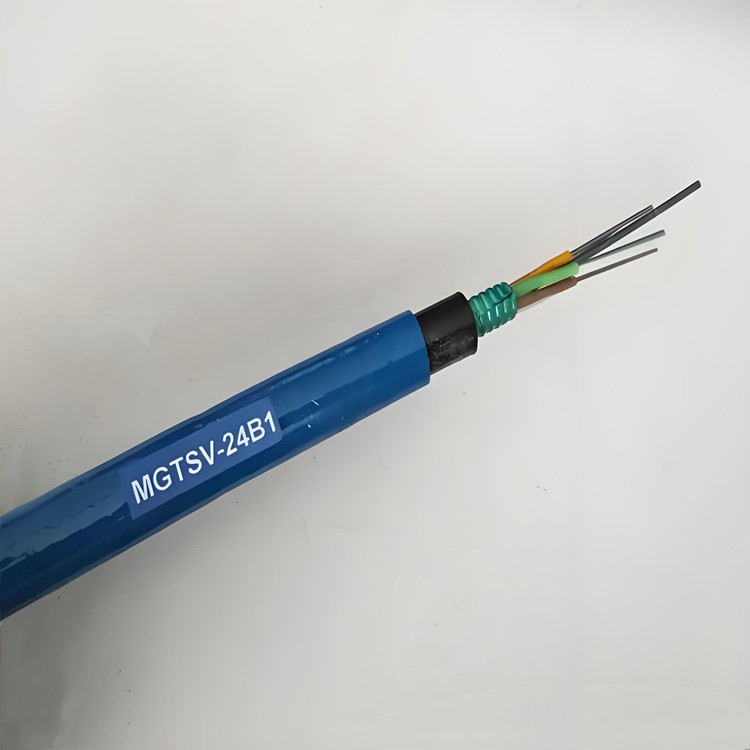
1. The mining cable MGTSV is a special application of fiber optic cables in the communication field, specifically designed for the coal mining industry as communication cables used in mines such as coal, gold, and iron mines.
2. The mining optical cable MGTSV not only inherits all the performance of optical fibers but also adds many special features due to the specific requirements of the coal mine industry.
3. Due to the lack of standards for other minerals like gold and iron, since the overall performance of coal mine cables is a standard for mining use and also a high requirement in this industry.
Standard execution, thus other mines generally design and produce according to coal mine optical cables.
4. The communication cable with ANS certification has only one model, MGTSV, and the corresponding requirements are as follows. Its practical application scope includes: mine shafts, tunnels, and galleries.
Mining Cable Structure
Categorized into:a- Centralized bundle cable (2-12 cores, due to the process, this technology can only produce up to 12 cores)
B- Braided (2-144 cores, center tube construction is generally preferred when less than 12 cores)
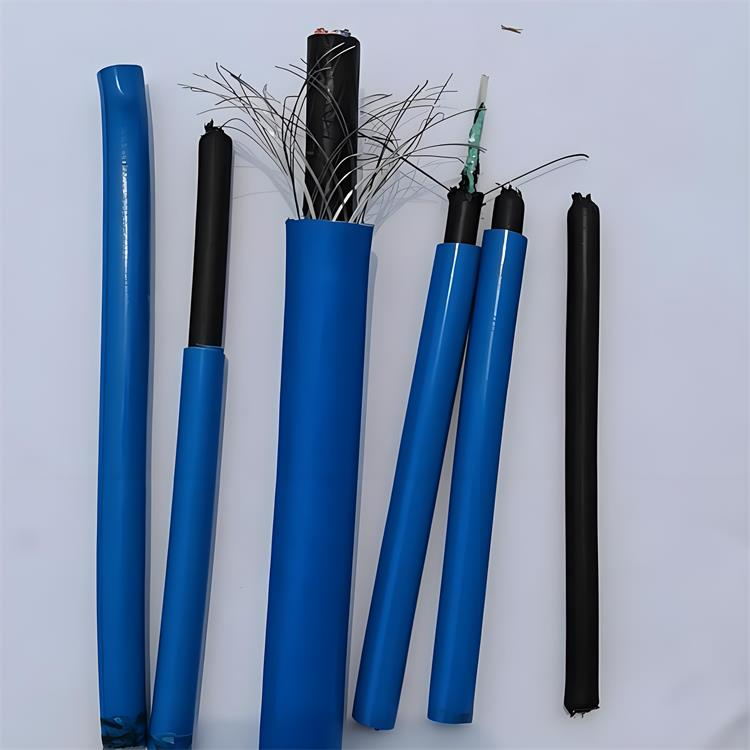
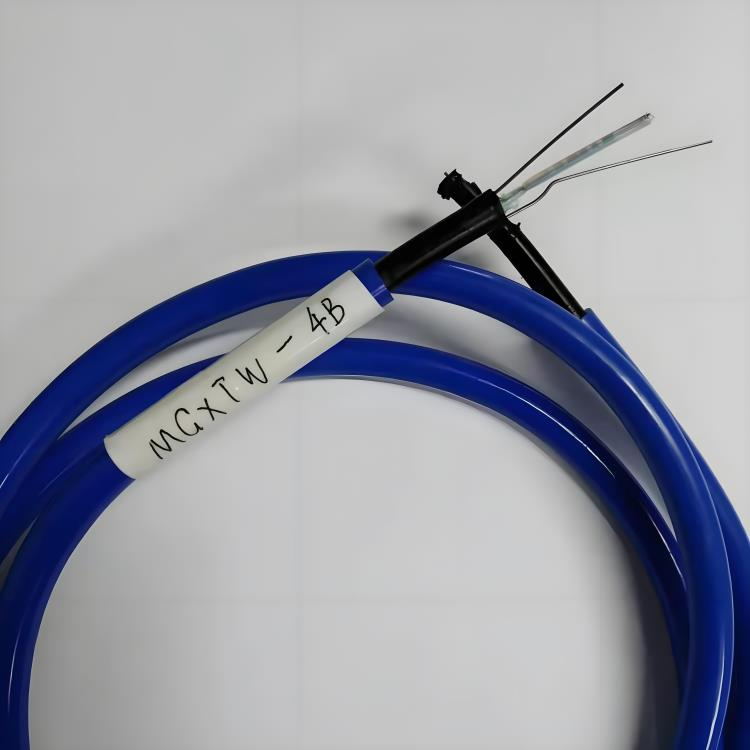
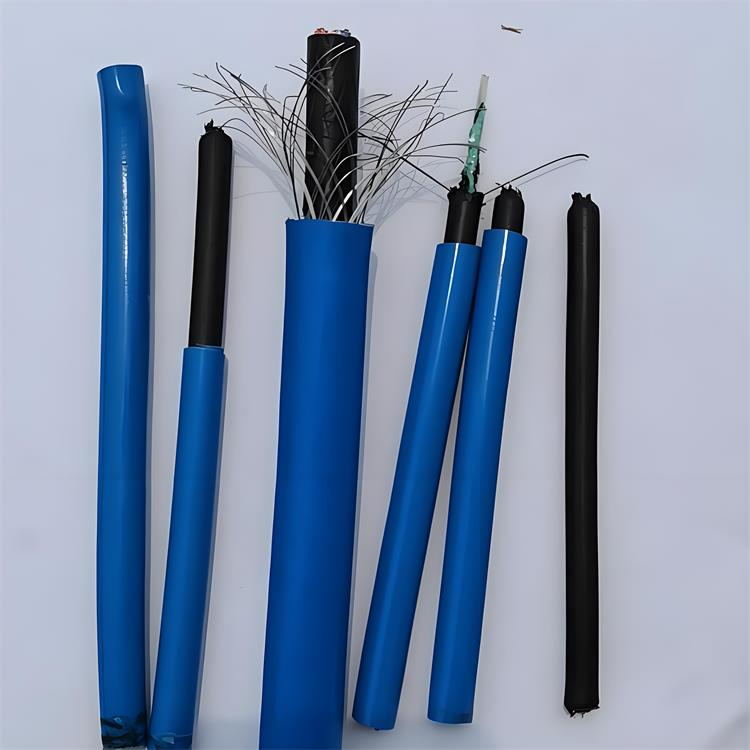
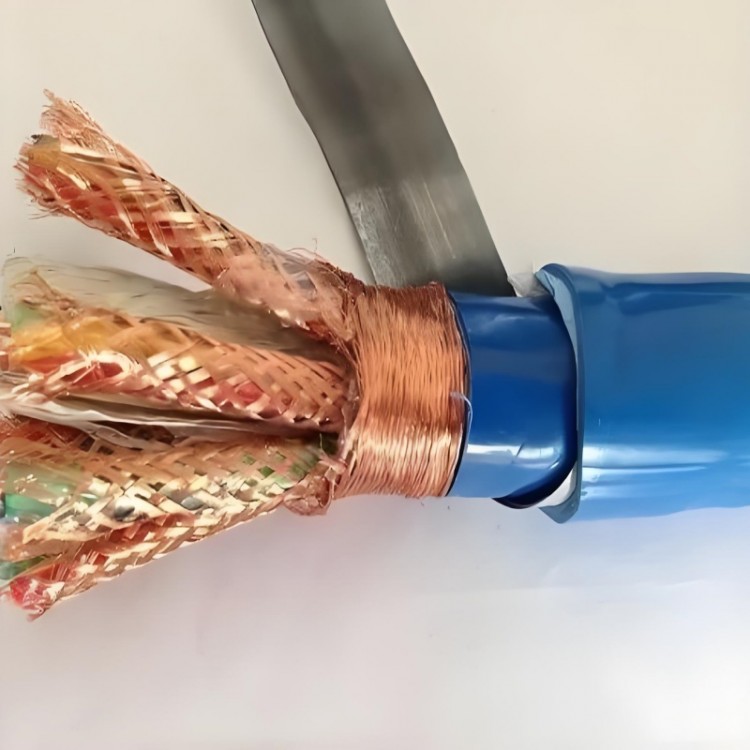
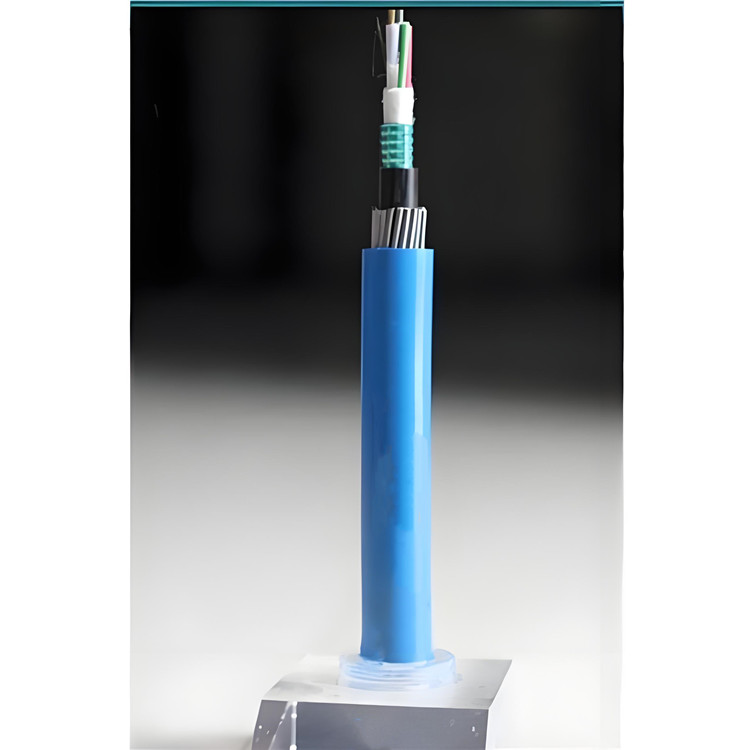
1. Central Conductor Tube: Fiber optic cable, fiber optic grease, loose tube, fine steel wire (multiple strands wrapped into a circle), steel strip, PE inner sheath, flame-retardant sleeve (blue)
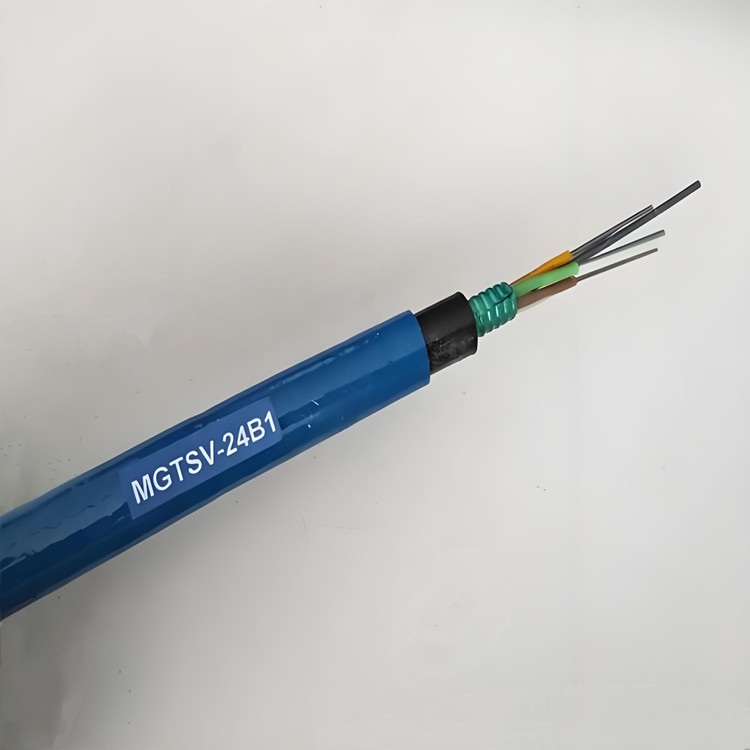
2. Stranded Construction: From the inside out, it consists of a central reinforcing element (usually phosphated steel wire), optical fiber, fiber grease, loose tube, tie wraps, cable grease, steel tape, PE inner sheath.
Flame-retardant sleeve (blue)
The structure of the flame-retardant optical cable for mining is to place single-mode or multi-mode optical fibers into a loose tube made of high-modulus plastic, with water-blocking compounds filled inside the tube.The cable core features a central phosphide steel wire or steel wire rope coated with polyethylene, with a loose tube (or filling rope and signal wire) surrounding the central reinforcing core to form a compact and circular cable core. The gaps within the cable core are filled with water-resistant filling material, and after bonding with steel-polyethylene, a blue flame-retardant PVC sheath is applied to complete the cable.