












Product Introduction
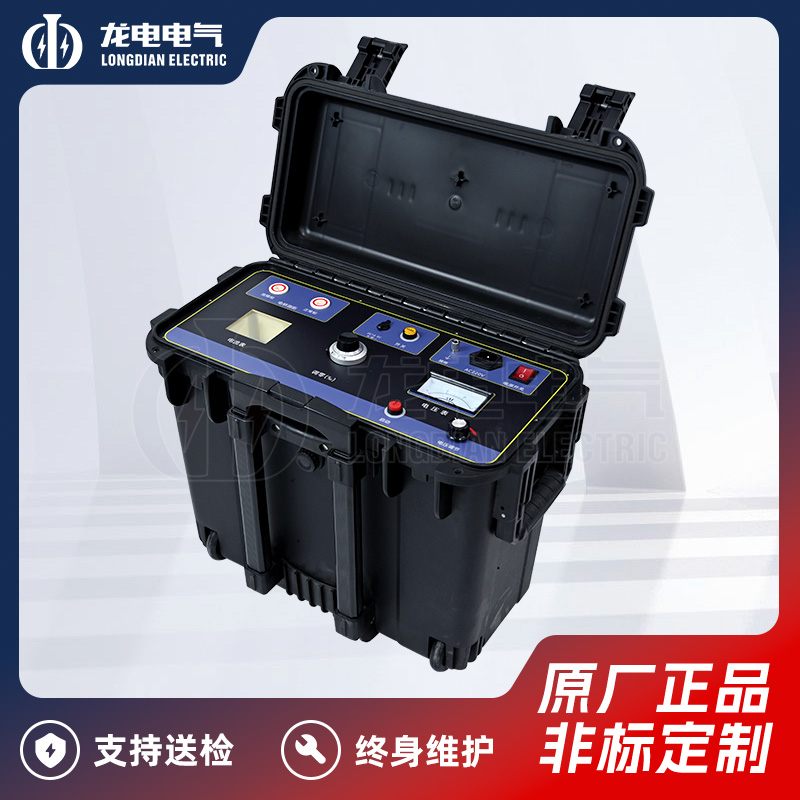
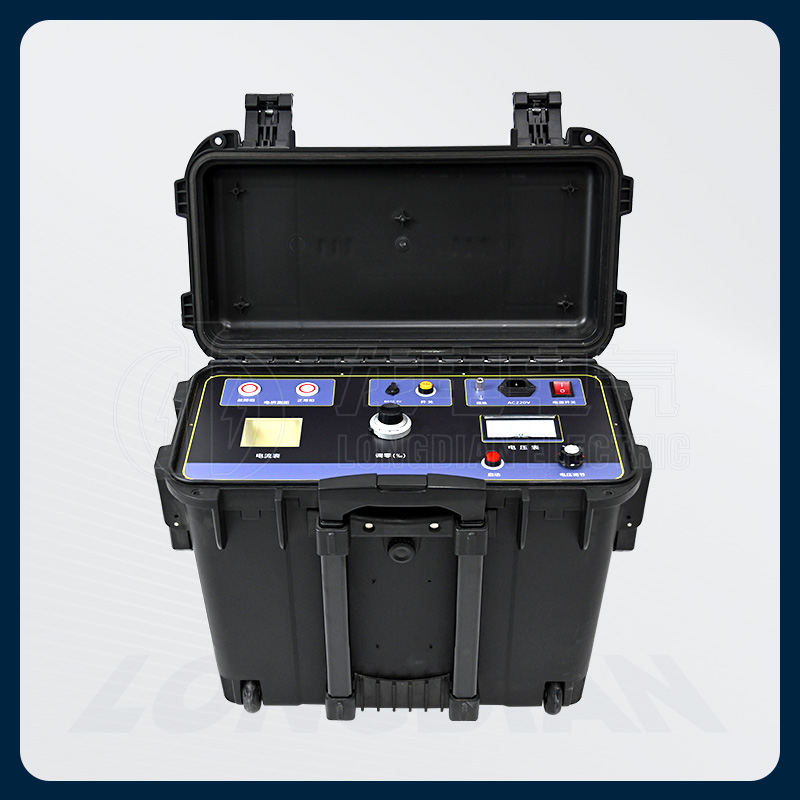
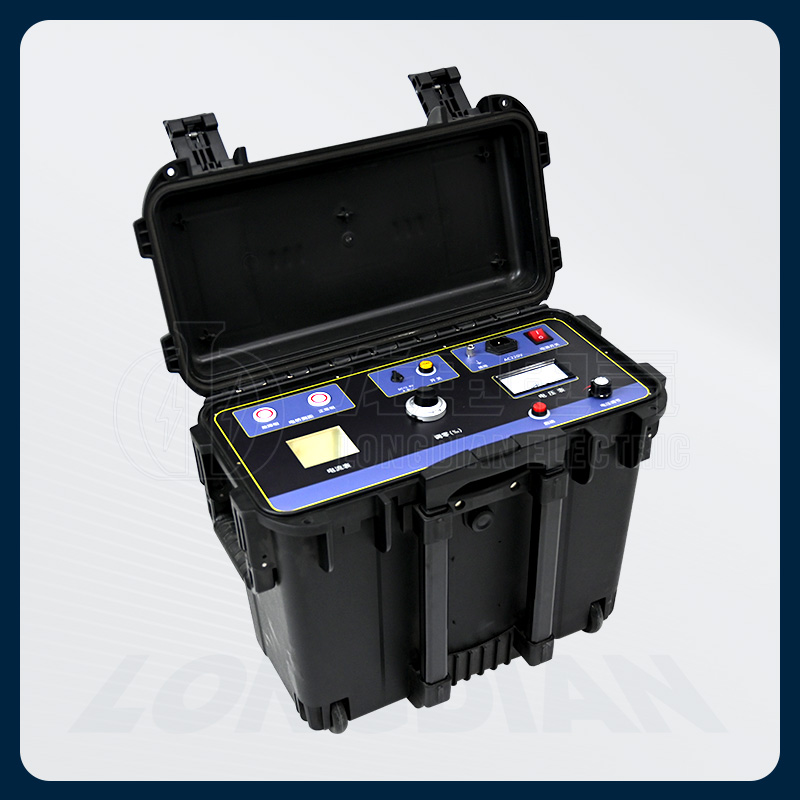
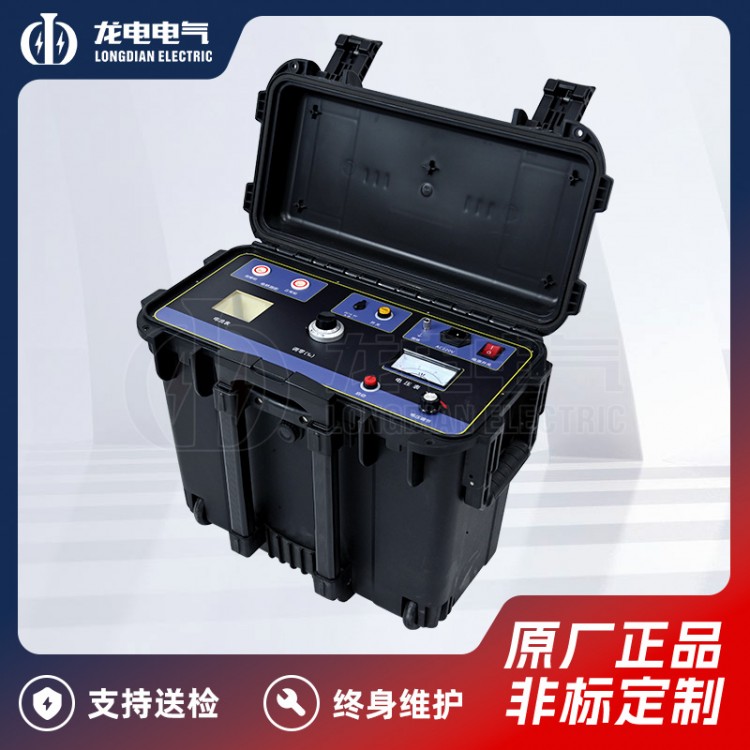
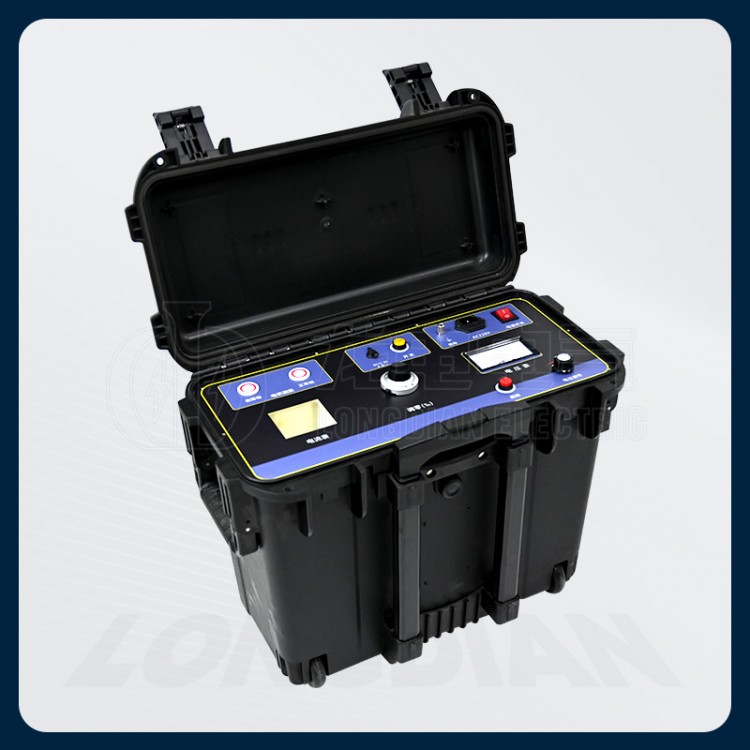
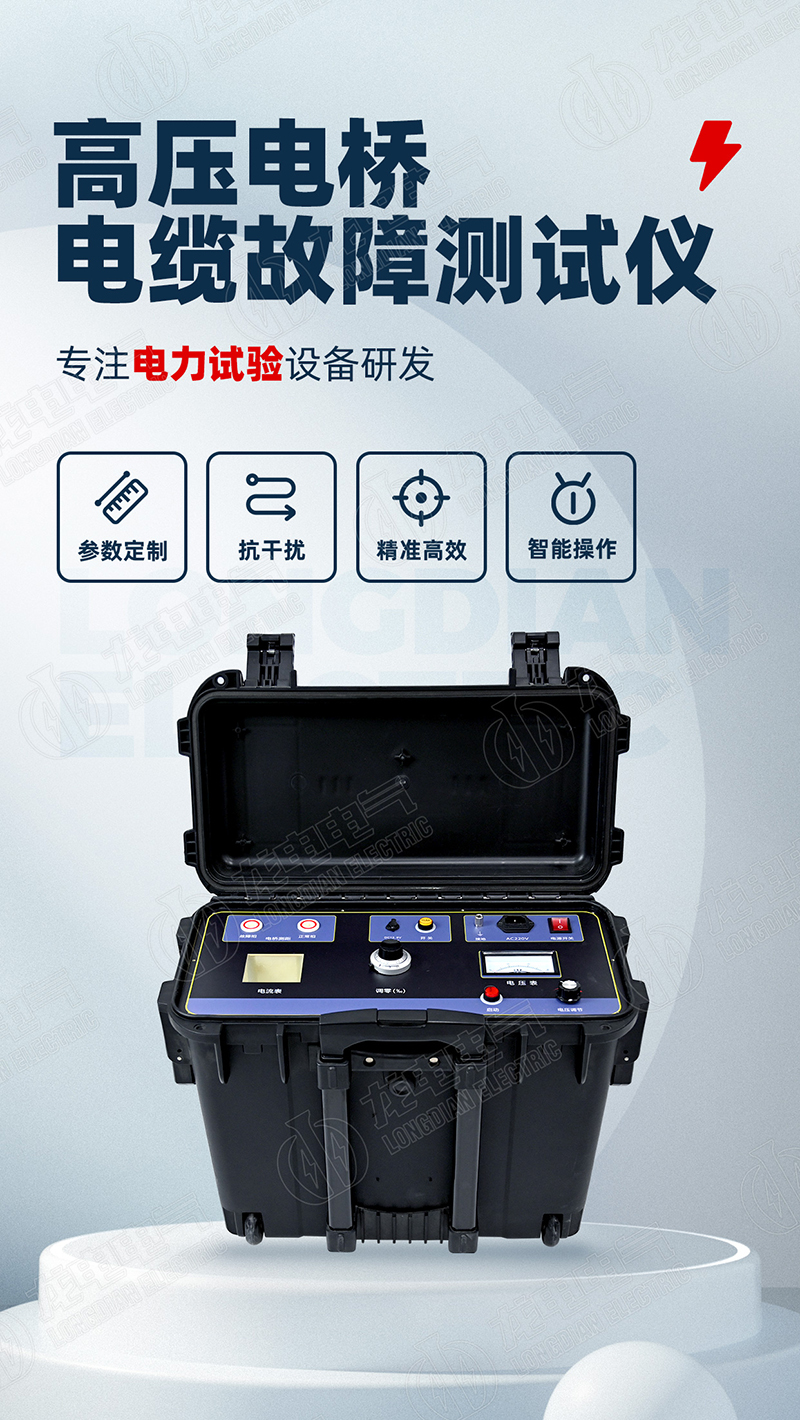
The High-Voltage Bridge Fault Tester is designed based on the MURRAY bridge principle and is suitable for locating breakdown points in various laid wires and cables, as well as defects with low insulation resistance values but no breakdown. It is also used for identifying faults in the outer sheath of high-voltage cables. Of course, it can also be applied for locating defects in various cables within cable factories.
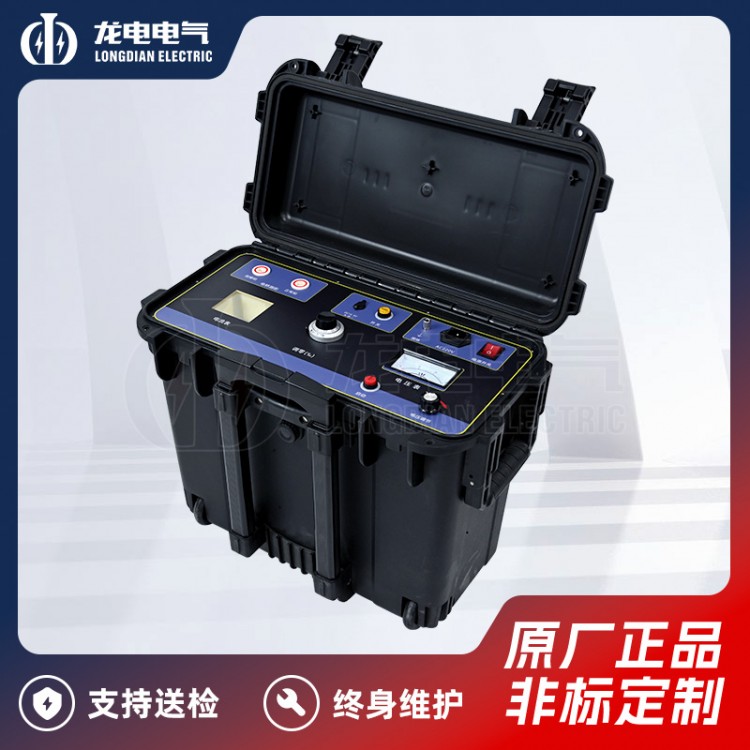
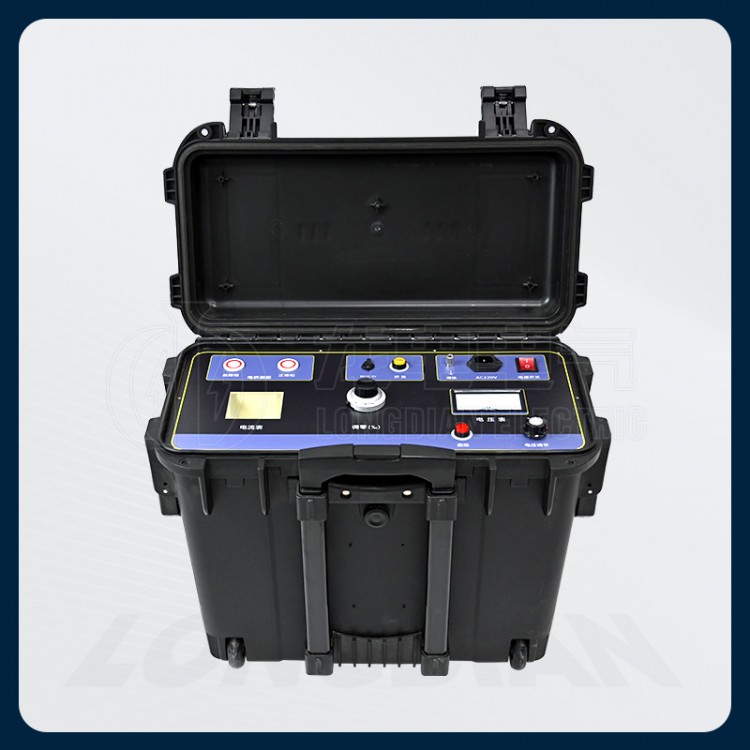
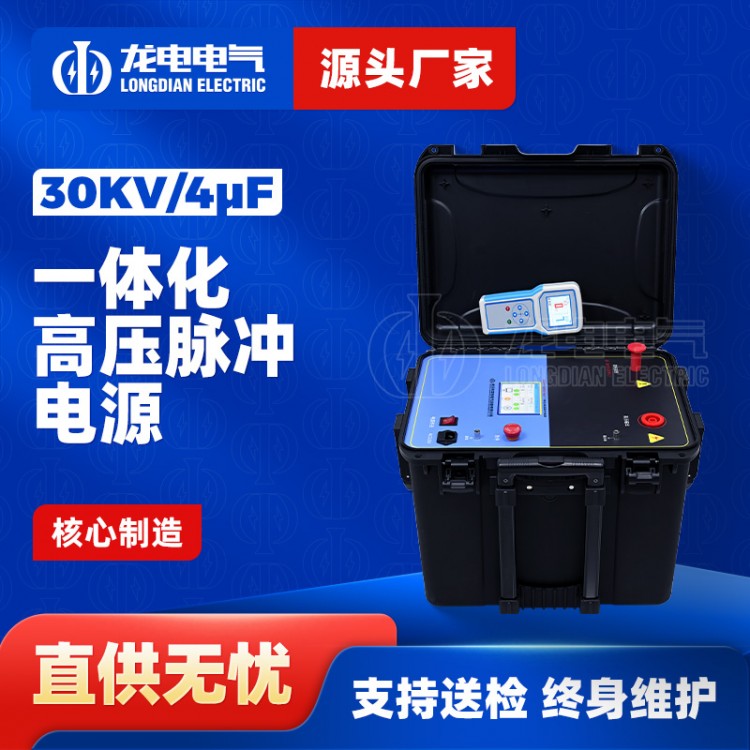
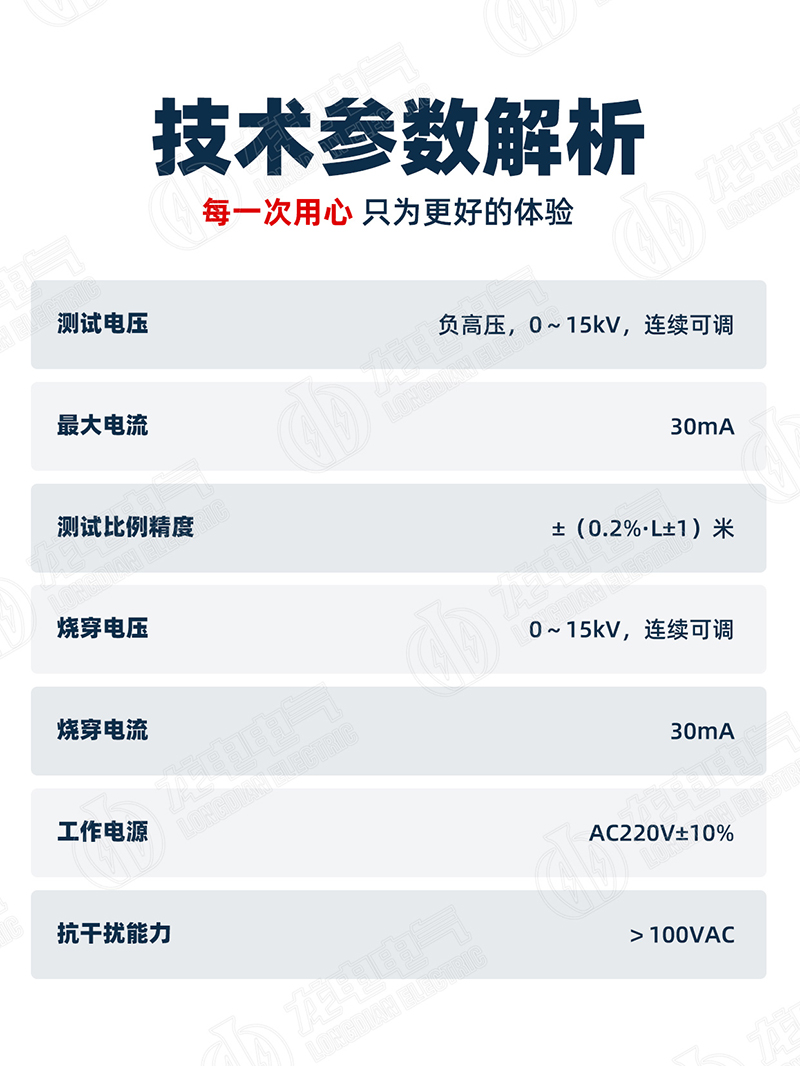
The high-voltage bridge fault tester employs a switch-mode power supply to form a high-voltage constant current source, with an unloaded voltage of -15,000V and a short-circuit current of 30mA. The tester uses a high-sensitivity amplifier and galvanometer to indicate balance, along with a potentiometer to form a balanced bridge, all positioned at a high potential. The test cables are specially designed double-core high-voltage rubber cables, utilizing a four-terminal resistance measurement method to avoid errors from lead resistance. The control buttons on the panel are at ground potential, operated through an insulated rod. The high-voltage constant current source and bridge are integrated into a portable industrial plastic enclosure. Thus, the equipment is characterized by high voltage, light weight, easy operation, and safe use.
Product Features
The high-voltage bridge fault tester features three functions:
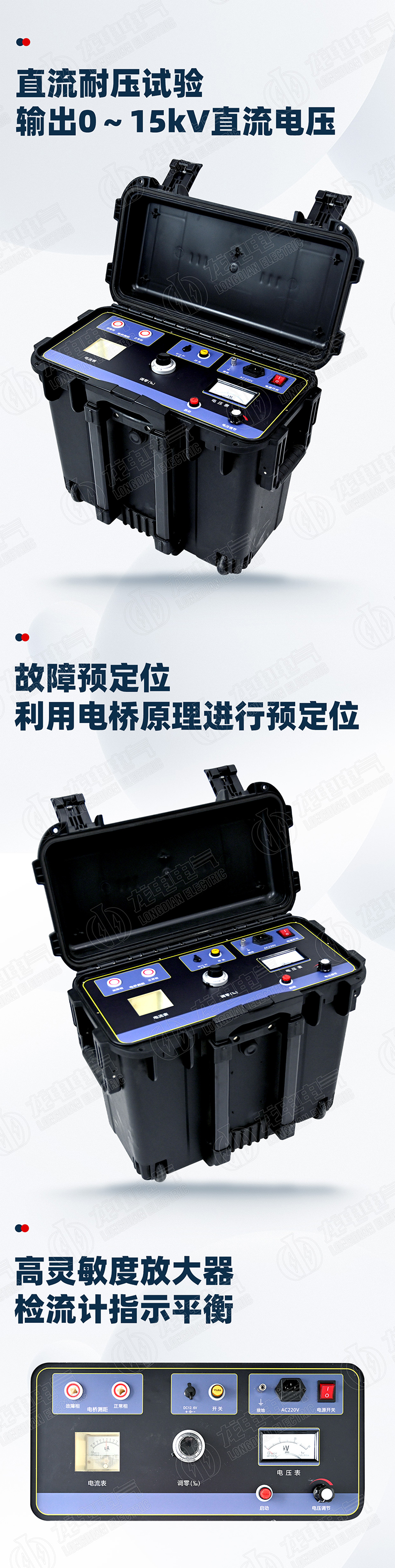
DC Withstand Voltage Test: The equipment can output 0~15kV DC voltage, suitable for cable DC withstand voltage testing.
2. Fault Preliminary Localization: Utilizing the bridge principle for preliminary localization, the four-terminal resistance measurement method avoids errors introduced by lead resistance.
At the same time, the high-voltage bridge fault tester is particularly suitable for:
1. High breakdown voltage after laying, especially for linear high breakdown points that are difficult to achieve low resistance, such as the linear high breakdown voltage at the intermediate joint of the cable.
2. Flashover breakdown points, where a constant current source can sustain an arc after breakdown, with a stable current passing through the bridge, which has sufficient sensitivity.
3. Defect points with low resistance but no puncture, such as insulation defects that do not puncture under operating voltage, discovered when the cable's resistance is found to be low using a megohmmeter.
Due to these features, the high-voltage bridge fault tester is favored by the following types of users:
1. Professional cable maintenance teams: such as cable maintenance teams in large and medium-sized power supply bureaus and large-scale power-consuming enterprises. The majority of cable breakdown points can be quickly located with a high-voltage bridge fault tester. When used in conjunction with the wave reflection method and a positioning instrument, each takes advantage of its strengths, resulting in faster and more reliable positioning.
2. Small Users: Such as small power supply bureaus and medium-sized power-consuming enterprises. Cables are not numerous, generally with clear routes, not very long, and limited in the number of faults. If a complete set of wave reflection locator is used, the price is high, and it requires a higher quality and experience of the personnel. The high-voltage bridge fault tester is a better choice due to its lower price, ease of operation, and ability to meet daily needs.