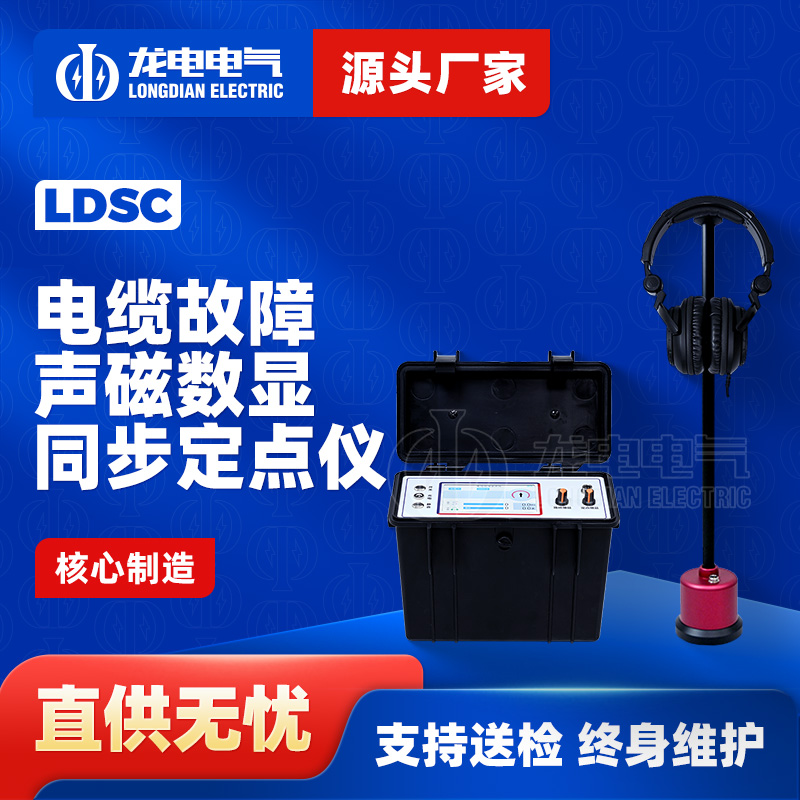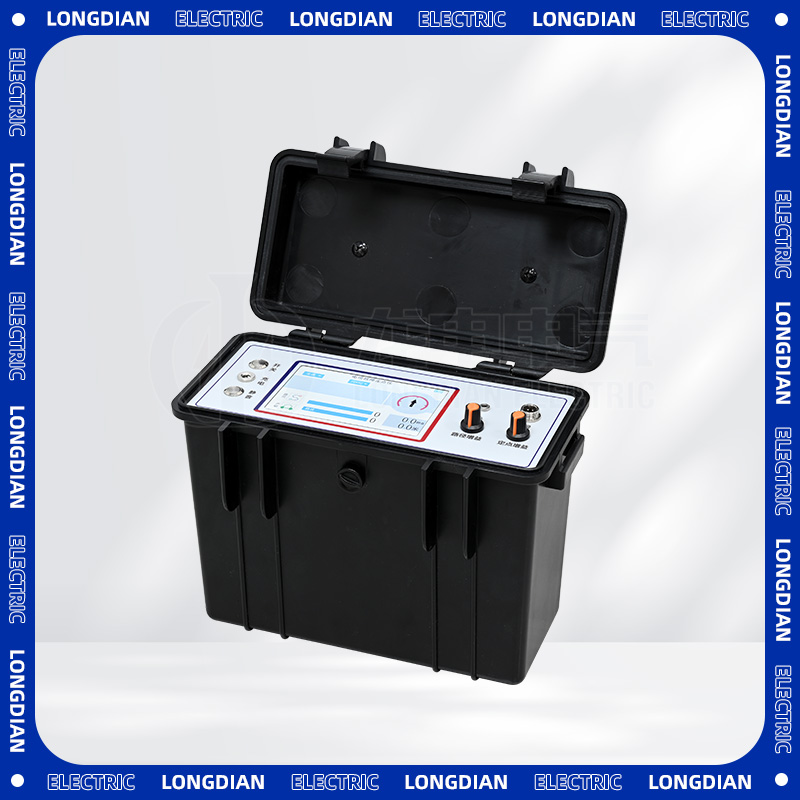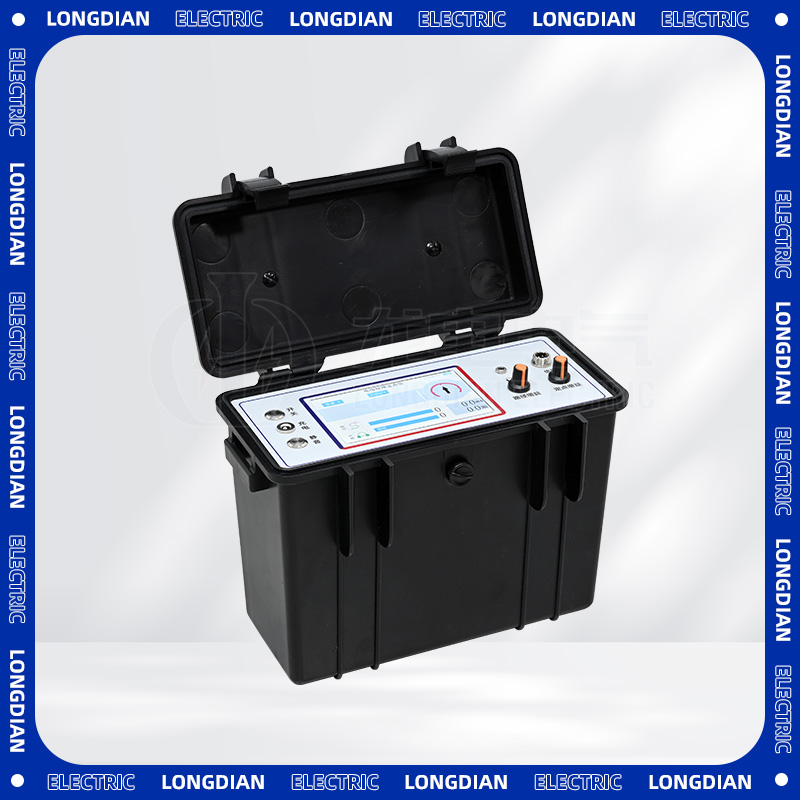

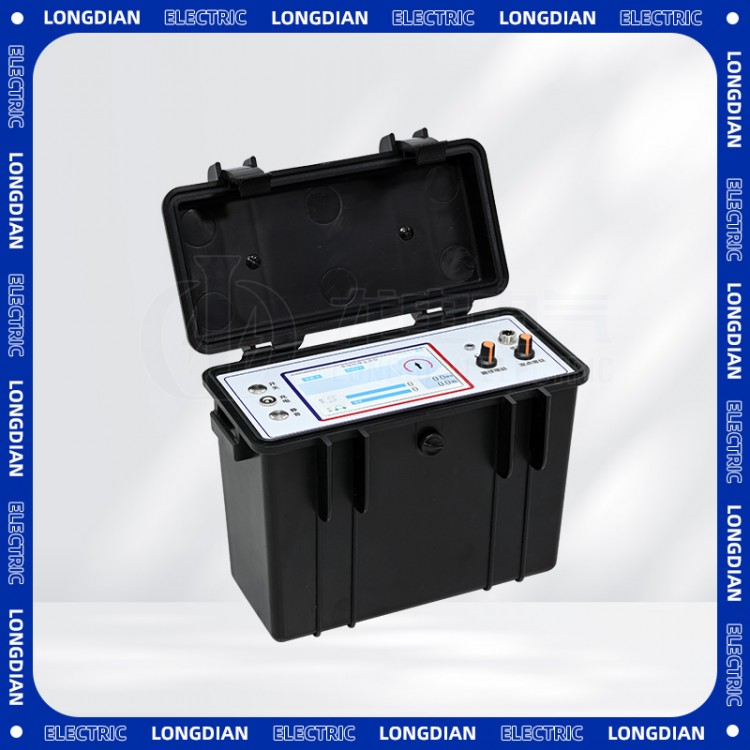










Product Introduction
The LDSC cable fault acoustic-magnetic digital synchronous positioning instrument operates on the principle of determining the distance of the fault point by analyzing the time difference between electromagnetic and sound signals. Since the propagation speed of electromagnetic signals is close to the speed of light, the time it takes for the signal to travel from the cable to the sensor can be negligible. In contrast, the speed of sound signals is much slower, on the order of several hundred meters per second. Therefore, by detecting the time difference between these two signals, the exact location of the fault point can be determined more accurately.
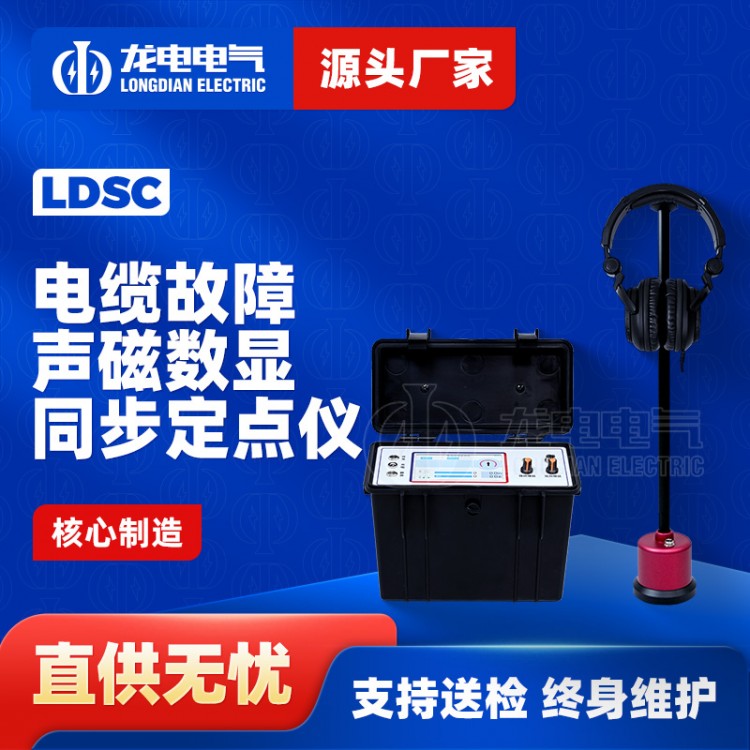
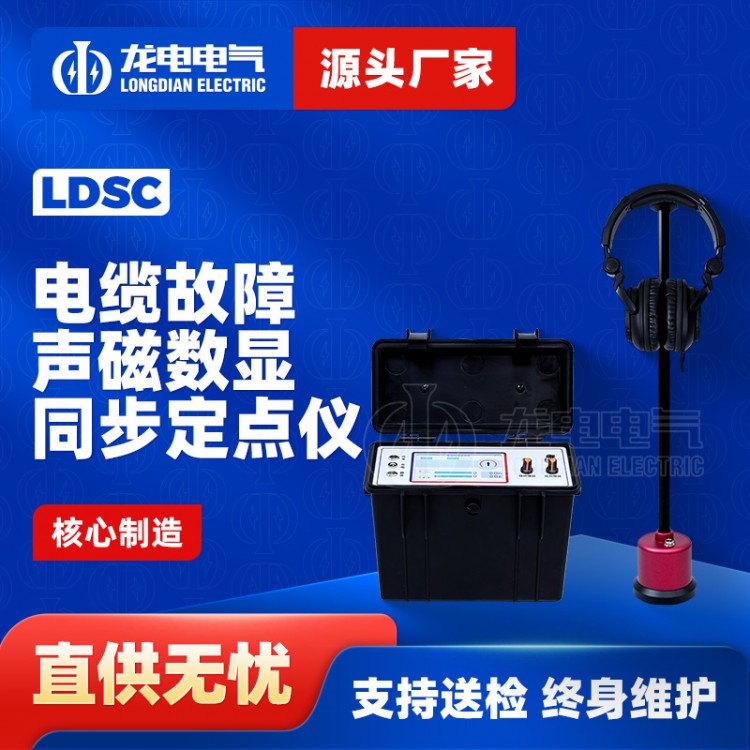
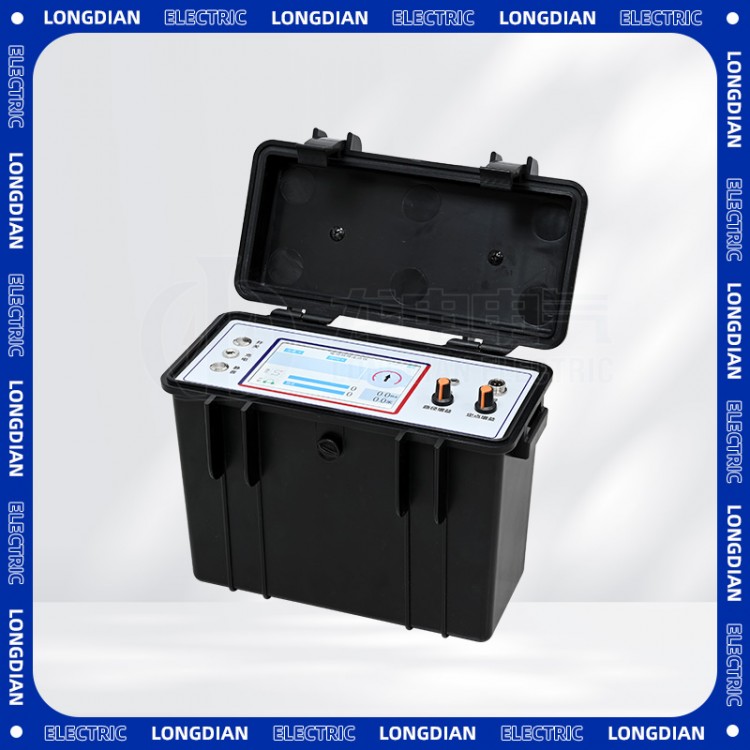
The LDSC Cable Fault Sound Magnetic Digital Display Synchronization Locating Instrument is a device for rapidly and accurately pinpointing the fault location of buried cables. It not only determines the precise location of the fault but also detects the burial path and depth of the cable (acquiring depth at the fault point).
◆ Efficiency: Digital display and advanced signal processing technology enable quick and accurate fault location, enhancing work efficiency.
Accuracy: High-sensitivity sensors and anti-interference technology ensure precise fault location.
◆ Usability: The intuitive operation interface reduces the operator's analysis and judgment of complex waveforms, lowering the difficulty of use.
◆ Multi-functionality: Offers both fixed-point functionality and the ability to detect paths and measure burial depths, catering to various detection needs.
Product Synonyms: Cable Fault Locating Device, Cable Fault Finder, Underground Cable Fault Locating Instrument, Cable Fault Meter, Power Cable Fault Testing Instrument, Cable Fault Tracing Device, Cable Fault Tracking Instrument, Portable Cable Fault Locating System, Cable Fault Flash Tester, Geographical Cable Fault Tester, Cable Path Instrument, Cable Fault Testing Instrument.
Product Features
High-sensitivity sensor with low-noise front-end amplifier:
Utilizing special-structured acoustic vibration sensors and low-noise dedicated components for the front-end amplification significantly enhances the instrument's sensitivity during fixed-point and path detection.
Digital Display Fault Distance:
In signal processing technology, displaying the distance between the fault point and the sensor probe digitally greatly eliminates the盲目ness during pinpointing, making the operation more intuitive and accurate.
Addressing the challenge of pinpointing sealed fault issues:
For suspended fault cables within cable trenches, traditional fixed-point instruments are difficult to pinpoint the exact location of sealed faults. The LDSC cable fault acoustic-magnetic digital synchronous fixed-point instrument, however, only requires the sensor probe to touch the fault cable or a cable nearby, to accurately display the fault distance and direction, quickly determining the fault location.
Robust suppression of high-frequency electric fields and anti-interference capability:
Utilizing frequency-adaptive cancellation theory and high-frequency notch technology, effectively suppresses the interference of 50Hz power frequency signals, enhances anti-interference capability in strong power frequency electric field environments, and reduces the fixed dead zone.
Acoustic-electric synchronous reception display technology:
This technology effectively overcomes the difficulty of pinpointing caused by on-site environmental noise interference, making fault location more stable and reliable.
Alternative to Flash Test Instrument's Rough Measurement Function:
Digital display of fault distance eliminates the need for operators to analyze complex waveforms, allowing for direct pinpointing of faults in cables hundreds of meters long without rough measurement, thereby enhancing work efficiency.
Path detection and burial depth measurement:
Employing 15kHz amplitude-modulated electromagnetic waves and amplitude detection technology for path detection and cable burial depth measurement, it avoids the interference of the television scanning frequency on the positioning instrument when using the original 15kHz amplitude signal source.