






Vibration Conveyer Price - Wholesale - Quotation - Suppliers - How Much 【Shanghai Baiken Machinery Equipment Co., Ltd.】
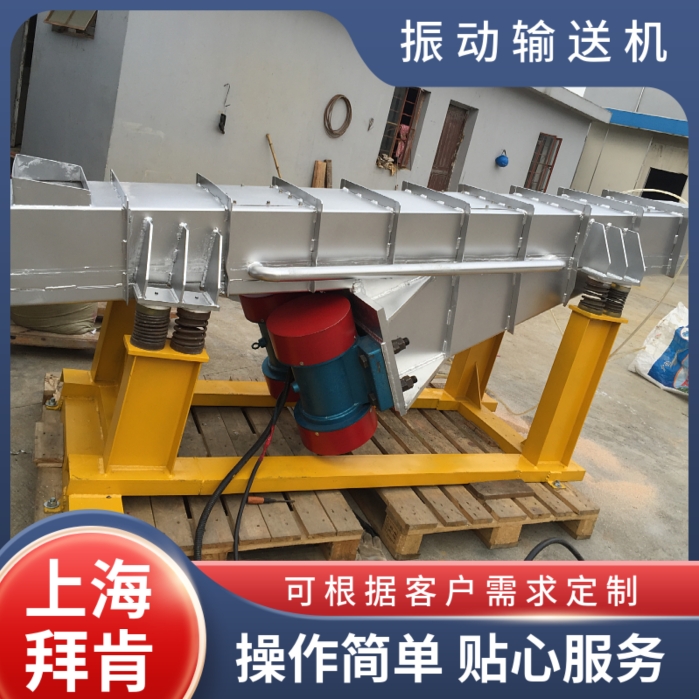
Vibration conveyors primarily use exciters to vibrate the material trough, causing the material inside to slide or throw in a certain direction for continuous conveying. They are categorized into three types: elastic linkage, electromagnetic, and inertial. ① Elastic Link Type. Composed of eccentric shaft, connecting rod, connecting rod end spring, and feed trough, etc. The rotation of the eccentric shaft causes the connecting rod end to move reciprocally, exciting the feed trough to vibrate in a specific direction. This promotes the continuous forward movement of the material within the trough. Generally, low frequency and large amplitude or medium frequency and medium amplitude are adopted. ② Electromagnetic. Composed of an iron core, coil, armature, and material slot, etc. After rectification, the current passing through the coil generates a cyclic electromagnetic attraction, causing the material slot to vibrate. Generally, high frequency and low amplitude are used. ③ Inertia type. Composed of eccentric blocks, main shaft, material troughs, etc., the centrifugal inertia force generated by the rotation of the eccentric blocks excites the vibration of the material trough. Generally uses moderate frequency and amplitude.Vibration conveyors use electric motors as a superior vibration source, lifting materials while propelling them forward to achieve the conveying goal; the structural types include open and enclosed; the conveying methods can be trough or tube conveyance, and the motor can be mounted on top, bottom, or side.
Usage and Features
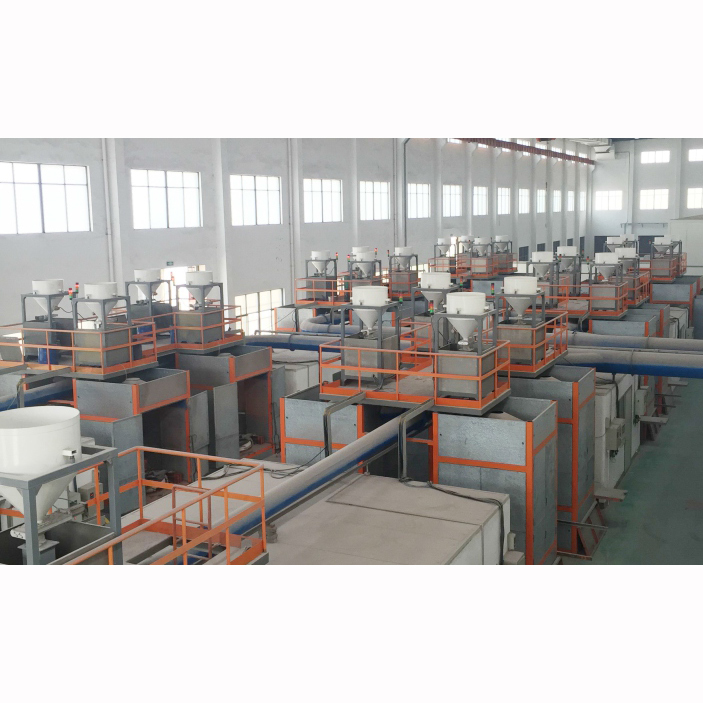
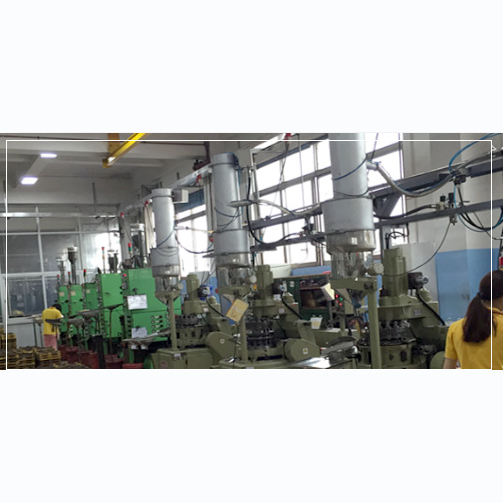
Application: Widely used in the transportation of powdered and granular materials in industries such as metallurgy, coal, building materials, chemicals, and food. Features: Simple structure, easy installation and maintenance, low energy consumption, no dust leakage, and low noise.