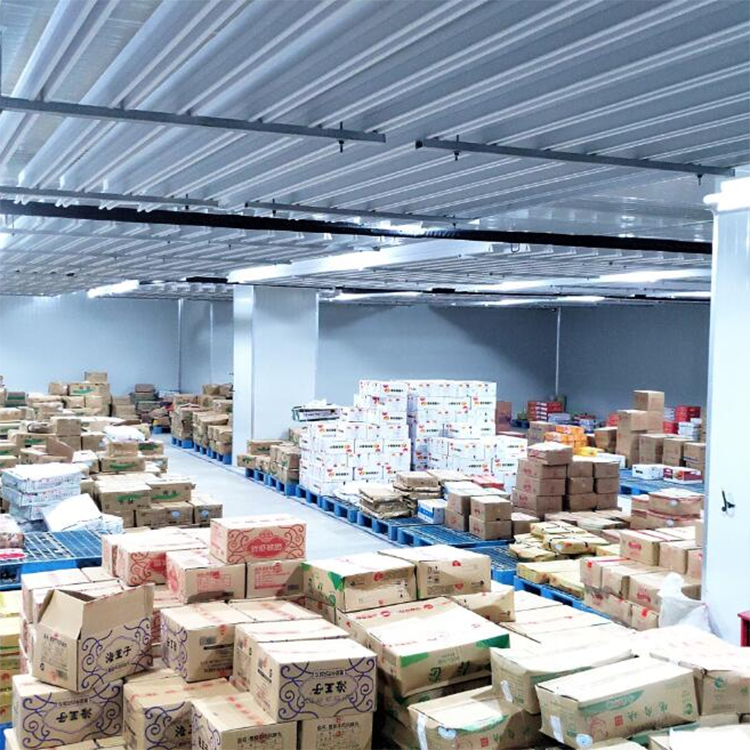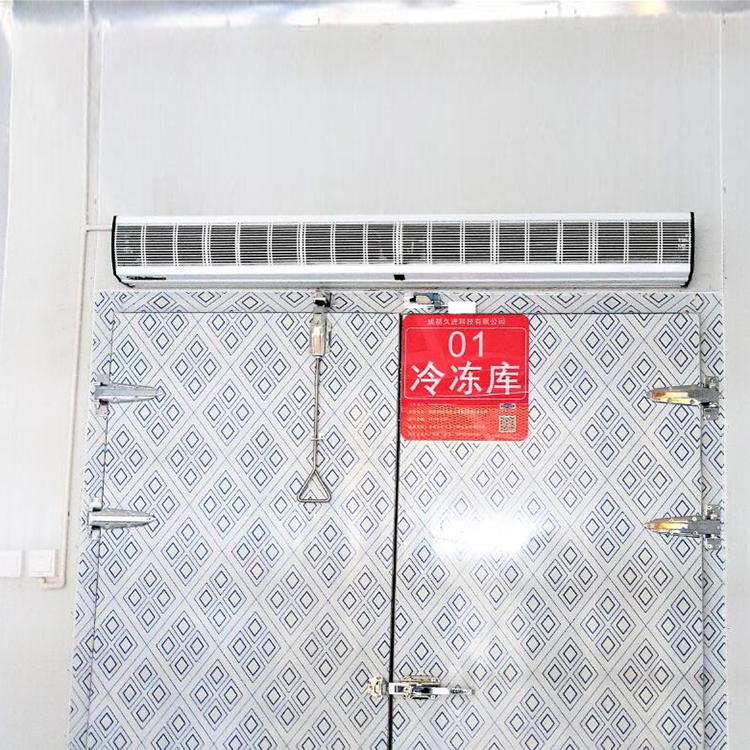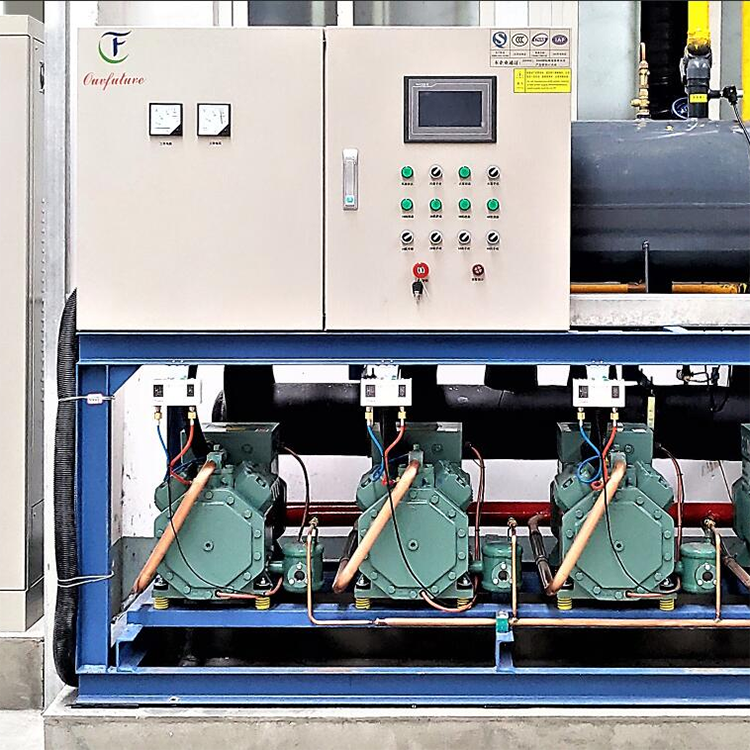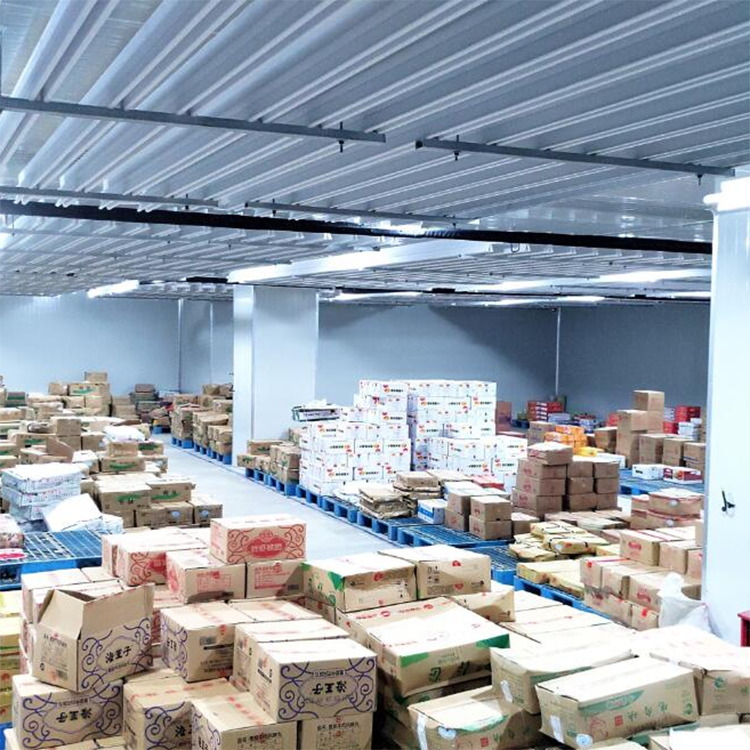










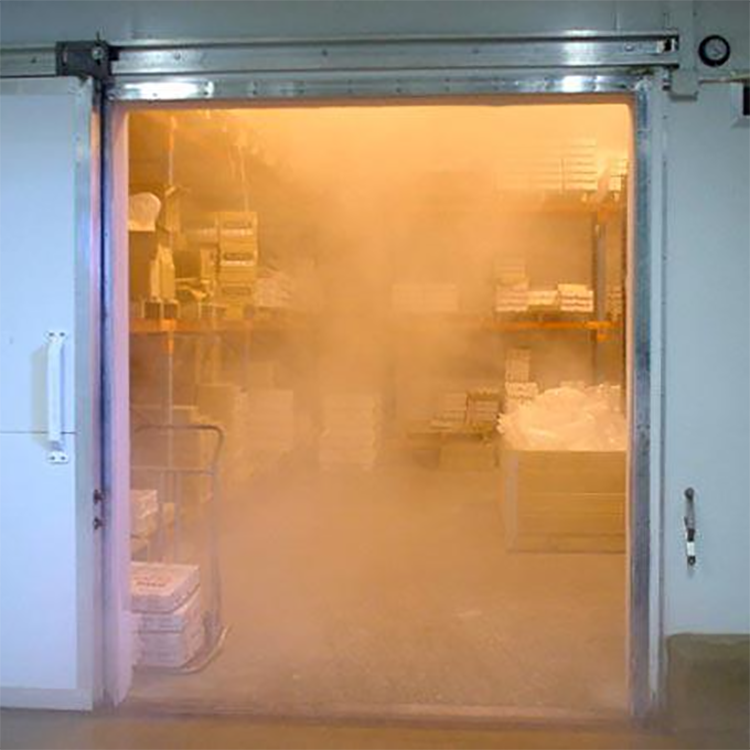


A refrigerated storage facility is a warehousing facility equipped with various cooling systems that can be manually controlled to maintain a stable low temperature. The basic components of a refrigerated warehouse include the cooling system, control devices, insulated storage rooms, and auxiliary buildings. The core of a refrigerated warehouse is the refrigeration unit, which supplies the cold source within the storage room. The control device acts as the brain of the refrigerated warehouse, commanding the stable operation of the cooling system and the supply of cooling capacity. The storage room serves as the location for storing products, its role is to maintain the stability of the low-temperature environment, and to minimize the impact of external heat sources on the temperature inside the refrigerated warehouse.
Common temperature for frozen storage rooms: -18℃ and below, mainly used for preserving frozen meats, poultry, seafood, and other frozen items in their frozen state. At around -18℃, products can be stored for a longer period without spoiling, maintaining the freshness and taste of meats and seafood, ensuring the original quality and freshness of the products.
The cold storage temperature around -25℃ is ideal for preserving products like ice cream and sorbet, as well as high-value meat and seafood products with lower storage temperature requirements, such as tuna. Ice cream must be stored at -25℃ to maintain its excellent taste and flavor.
Freezers below -30℃ can store items for longer periods and other goods, such as frozen fresh plasma.

Selection of thermal insulation materials:
Due to the fact that the temperature in refrigerated storage rooms is typically below -18°C, there is a high demand for the thermal insulation performance of the storage body to avoid excessive temperature differences, cold insulation material leakage, and condensation or frost formation on the exterior of the storage body, which leads to severe heat loss, increased equipment load, extended operation time, and even inability to reach the required temperature for use. Therefore, in addition to meeting the basic elements of standard cold storage construction design, there is a higher demand for the thermal insulation materials and storage body solutions, as well as for more precise equipment selection and matching. It is necessary to obtain a reliable overall design from a company with professional refrigeration qualifications. For instance, when the budget allows, it is recommended to prioritize the use of polyurethane insulation materials with a lower thermal conductivity and better thermal insulation properties.
Insulation materials are chosen as rigid polyurethane foam boards, which are environmentally friendly with beneficial properties such as low thermal conductivity, high compressive strength, moisture resistance, impermeability, non-absorbent, light weight, corrosion resistance, and long service life. Thickness specifications include 100mm, 150mm, 200mm, etc.
Refrigeration unit selection:
A small frozen storage facility can utilize a scroll-type split unit, such as a system equipped with an Emerson Copeland compressor with a nominal power of 20HP, which has ample refrigeration capacity to meet the freezing storage needs for 200~300 cubic meters of frozen goods.
Larger capacity allows for the use of higher-powered scroll compressors, but at this point, it's more advisable to opt for piston or screw compressor units. For medium to large refrigeration warehouses, parallel unit configurations can also be considered, such as German Bitzer piston compressors and screw parallel units. By operating multiple compressors in parallel, a single unit can achieve a combined cooling power of 100HP to 300HP or even higher. This can cater to the unified distribution of use in a single refrigeration warehouse of up to 1000m³ or even larger, or multiple refrigeration warehouses. The space occupied is minimal, the system efficiency is high, and the distribution of refrigeration performance is more reasonable.
Tip: Cold storage facilities, as the storage temperature is typically below -18°C, continuous operation can cause freezing and expansion damage to the concrete or soil layer beneath the storage, leading to phenomena such as foundation frost expansion, ground upheaval, and expansion, which can severely harm the insulation and structural stability of the storage body, even leading to its报废. It may also trigger unpredictable consequences such as collapses and over-temperature damage to items. Therefore, medium to large cold storage facilities should construct an elevated floor or ventilation pipe structure, or incorporate ground heating functionality before building the storage body to mitigate the adverse effects of ground foundation deformation.
Use Instructions:
1. Check all equipment gauges and operating conditions prior to use.
2. Strictly control the storage temperature.
3. Strict waterproofing.
4. Perform regular defrosting and ensure good ventilation and air exchange.
5. Protect the floor and slab to prevent frost heave damage.
6. Maintain regular maintenance and inspections.