













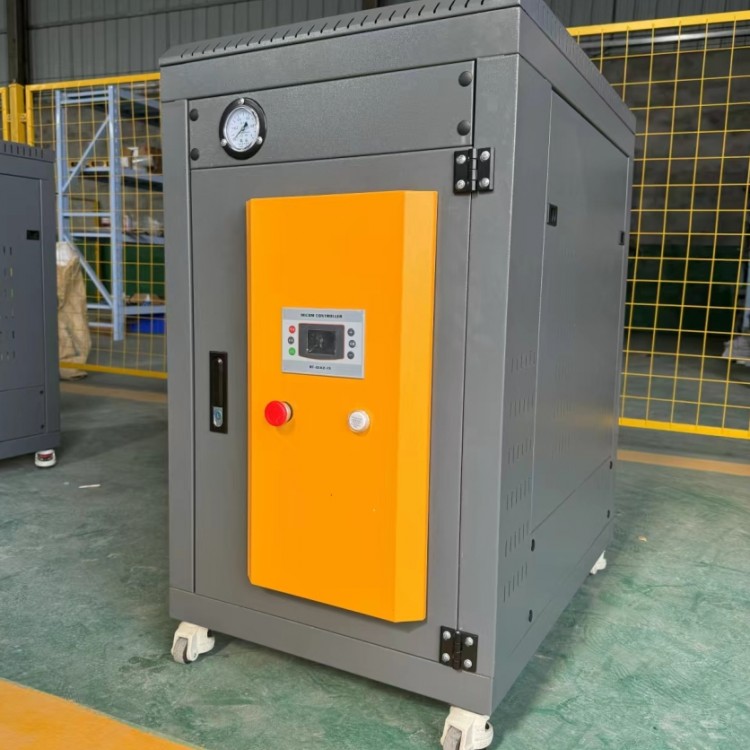
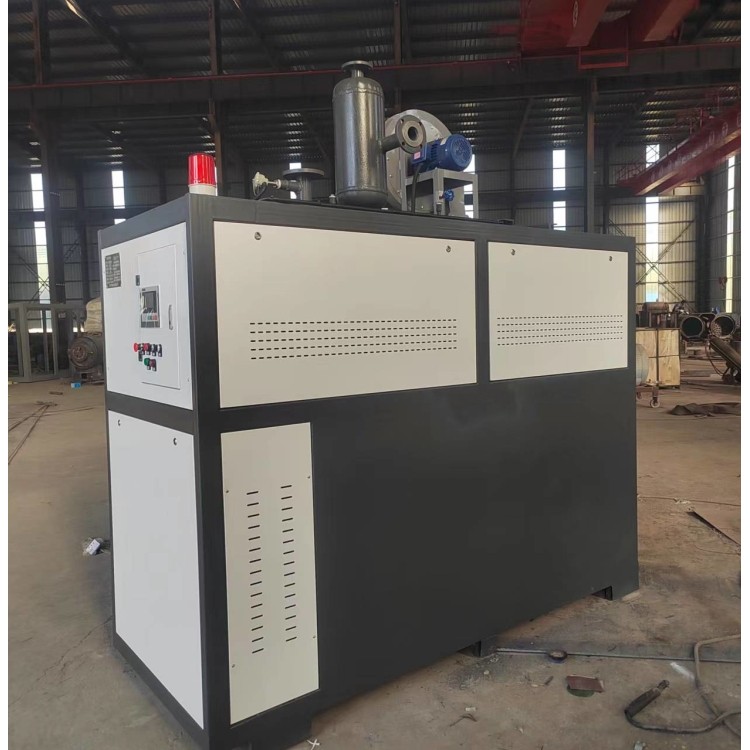

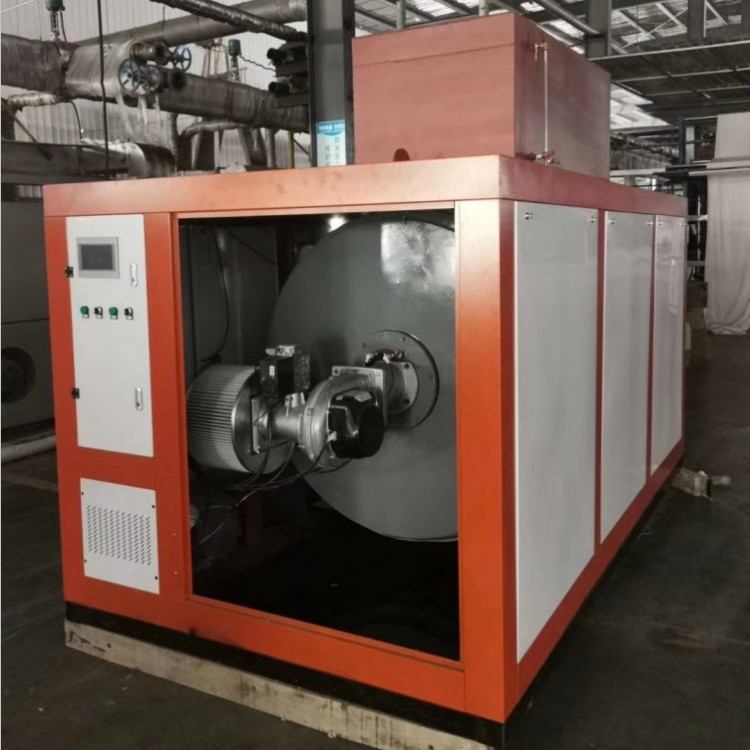


Henan Jingyu AutomaticUltra-Low Nitrogen Gas Steam Boiler Introduction
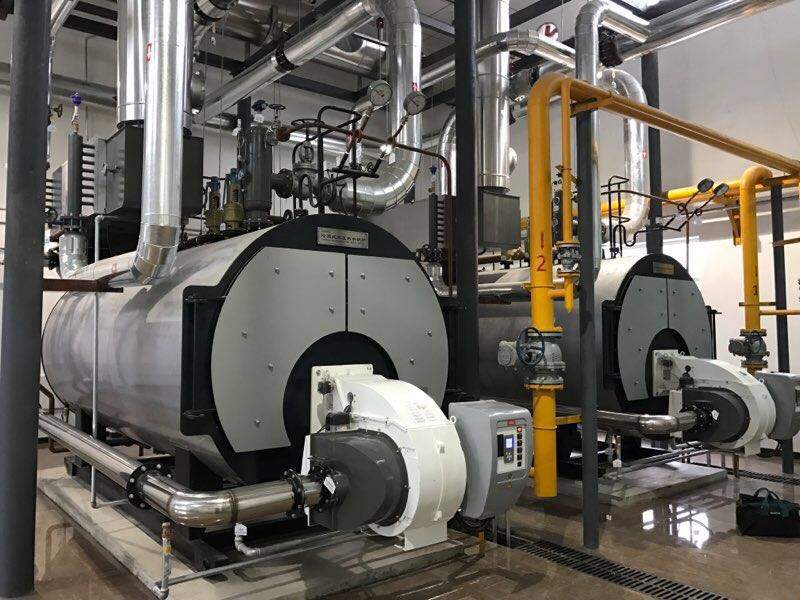
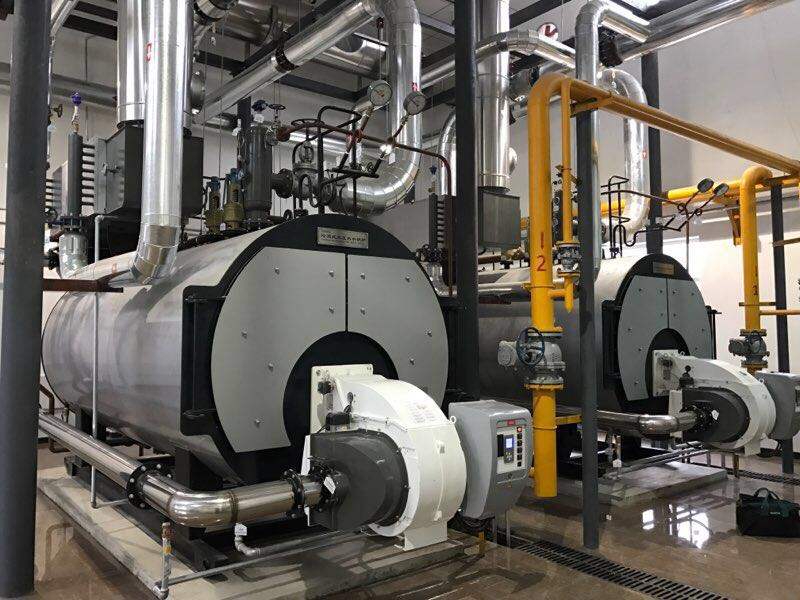
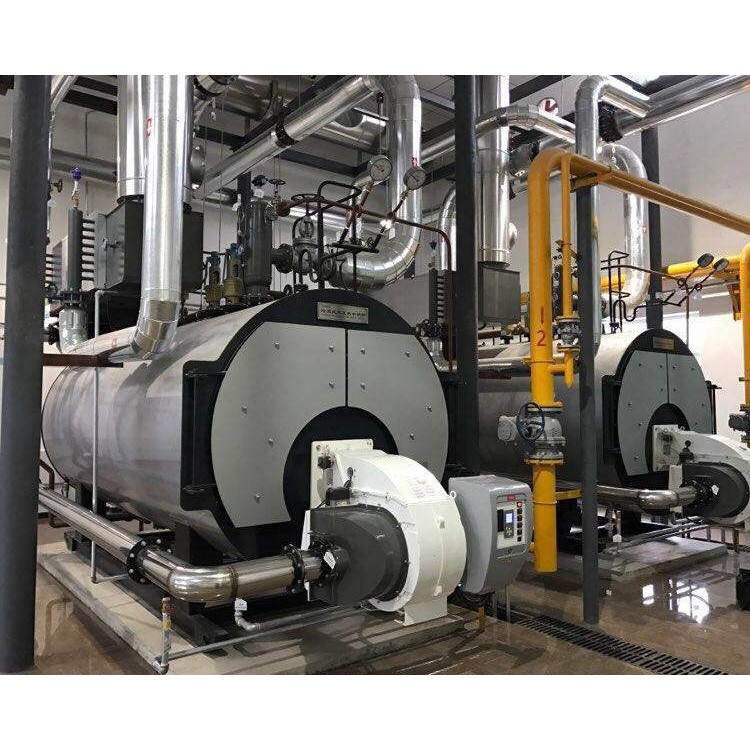
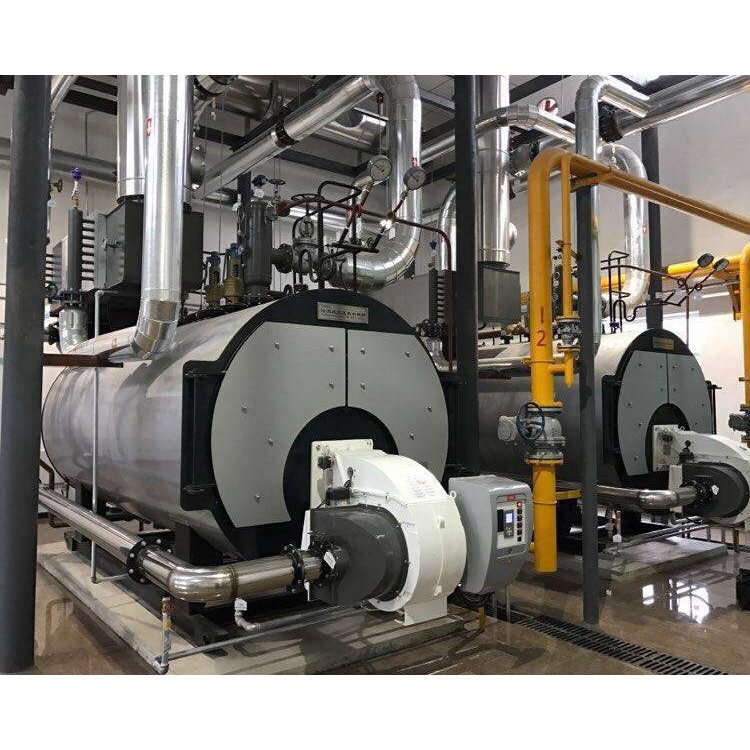
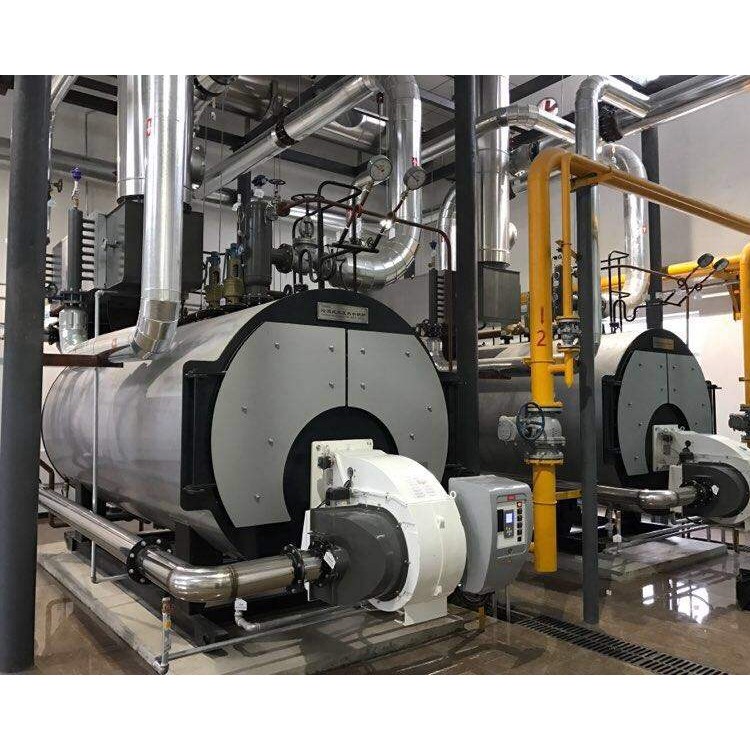
Henan Jingyu Thermal Energy Equipment ManufacturedFully Automatic Ultra-Low Nitrogen Gas Steam BoilerHorizontal quick-installation internal combustion three-pass fire-tube boiler. Equipped with a large furnace, multiple tube bundles, and an offset furnace drum wet-back structure. High-temperature flue gas sequentially washes the second and third pass flue tubes, then discharged into the atmosphere through the rear smoke chamber and chimney. The boiler is fitted with removable front and rear smoke box lids for easy maintenance.
The fully automatic low nitrogen gas boiler is an upgraded version of the standard type, with a significant advantage in nitrogen oxide emissions. There are two types of low nitrogen gas boilers: one with nitrogen oxide emissions below 80 milligrams, and the other with emissions below 30 milligrams. Of course, to achieve low nitrogen emissions, it is mandatory to use ultra-low nitrogen burners.
Henan Jingyu Ultra-Low Nitrogen Gas-Fired Boiler vs. Standard Gas-Fired Boiler:
1. The major advantage of a standard gas stove is its lower price, which is why it's the preference for most customers. Unless low nitrogen emissions are a mandatory requirement, this type is usually chosen.
2. A significant feature of the low nitrogen gas boiler is its low NOx emissions. It is suitable for regions with strict emission standards, such as Beijing. Local regulations require NOx emissions to be below 30 milligrams, hence the necessity to opt for a low nitrogen boiler.
Its drawback is the high cost. The cost of the boiler body is 60%-80% higher than that of a standard gas boiler of the same tonnage. For the burner part, the cost of 80 mg emissions is 30%-50% higher than that of a regular burner, while the cost of 30 mg emissions standards is 100%-200% higher than that of a regular burner.
Henan Jingyu Ultra-Low Nitrogen Gas-Fired Boiler Product Features:
1. Standard gas boilers are equipped with full premixed gas engines.
This solution is quite suitable; the nitrogen oxide emissions can reach below 30mg, but it has many drawbacks.
2. There are fewer fully premixed burners available, currently only produced by some domestic manufacturers and U.S. companies. However, the quality of domestic products is inconsistent, and U.S. prices are expensive.
3. Customers have reported that the fully premixed combustion boiler has a high level of danger, as it is inherently inefficiently burned, and the furnace is prone to explosive combustion (which is also the main reason why many customers do not opt for it).
4. Larger boiler drum, increased heating surface with low nitrogen combustion boiler configuration + flue gas recirculation technology
This is also the one currently promoted by the country, but its drawback is that the previous gas boiler may no longer be usable and will need to be replaced. However, it's still cost-effective.
Ultra-Low Nitrogen Gas Boiler Technical Specifications:
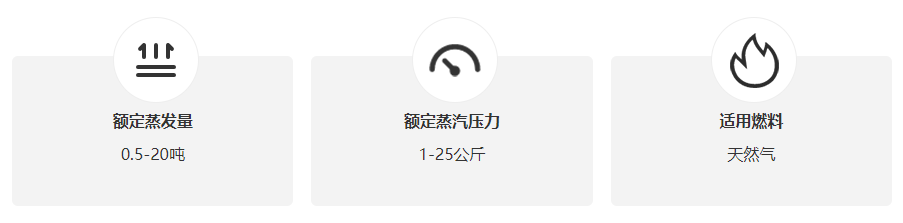
| Project and Model | WNS2 | WNS3 | WNS4 | WNS5 | WNS6 | WNS8 | WNS10 | WNS12 | WNS15 | WNS20 | WNS25 |
| Rated Evaporation Capacity T/h | 2 | 3 | 4 | 5 | 6 | 8 | 10 | 12 | 15 | 20 | 25 |
| Rated Working Pressure: Mpa | 1.25 | 1.25 | 1.25 | 1.25 | 1.25 | 1.25 | 1.25 | 1.25 | 1.25 | 1.6 | 1.6 |
| Rated heat output 100,000 kcal/h | 131 | 196.5 | 261.3 | 327 | 367.7 | 494.5 | 618.1 | 783.3 | 917.2 | 1229.0 | 1531.4 |
| Rated Steam Temperature: ℃ | 194 | 194 | 194 | 194 | 194 | 194 | 194 | 194 | 194 | 205 | 205 |
| Rated Inlet Water Temperature: ℃ | 20 | 20 | 20 | 20 | 20 | 20 | 20 | 20 | 20 | 20 | 20 |
| Thermal Efficiency % | 100.8 | 100.8 | 100.8 | 100.7 | 100.7 | 100.7 | 100.8 | 100.8 | 100.9 | 100.9 | 100.9 |
| Boiler Weight: t | 8.44 | 11 | 12.5 | 15.6 | 18.8 | 21 | 24 | 29.2 | 35.1 | 43.2 | 60 |
| Boiler Maximum Water Level t | 13.12 | 16.15 | 21.1 | 28.3 | 29.3 | 34.2 | 40.2 | 55.2 | 59.4 | 82.8 | 99.6 |
| Boiler Water Solubility: t | 4.68 | 5.5 | 7.3 | 10.8 | 11.8 | 13.8 | 16.2 | 21.4 | 24.3 | 34 | 39.6 |
| Burning Method | Micro-positive pressure room combustion | Micro-positive pressure, Indoor combustion | Micro-positive pressure room combustion | Micro-positive pressure chamber | Micro-positive pressure | Micro-positive pressure | Micro-positive pressure | Micro-positive pressure | Micro-positive pressure | Low-pressure positive | Micro-positive pressure |
| Burn Adjustment Method | Fully Automatic | Two fires | Ratio | Adjust | Fully Automatic | Fully Automatic | Two fire segments | Ratio | Adjust | Fully Automatic | Two flames |
| Natural Gas Consumption: Nm³/h | 155.0 | 232.0 | 309.0 | 386.0 | 401.5 | 534.7 | 668.6 | 801.6 | 1002.9 | 1332.5 | 1664.0 |
| Liquefied petroleum gas Nm³/h | 51.0 | 80.0 | 101.4 | 126.8 | 131.7 | 175.5 | 219.3 | 262.3 | 329.1 | 436.8 | 546.0 |
| City Gas Nm³/h | 322.0 | 488.0 | 648.9 | 773.4 | 843.2 | 1122.9 | 1403.6 | 1679.0 | 2106.1 | 2796.5 | 3494.4 |
| Diesel (Light Oil) - Kg/h | 128.0 | 191.0 | 254.5 | 318.5 | 330.6 | 440.9 | 550.4 | 664.1 | 832.1 | 1096.3 | 1370.6 |
| Using power | 380V/50Hz | As above | As above | As above | As above | As above | As above | As above |