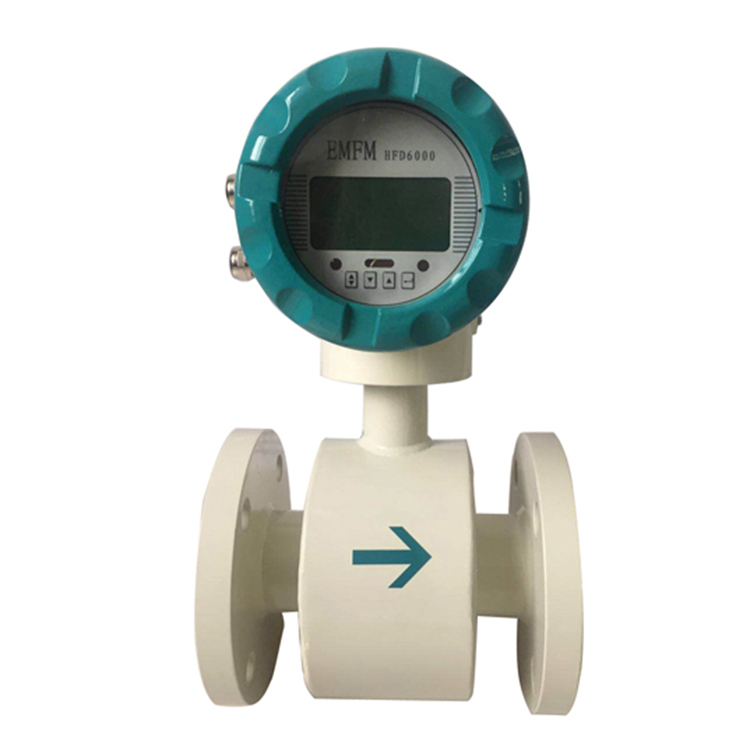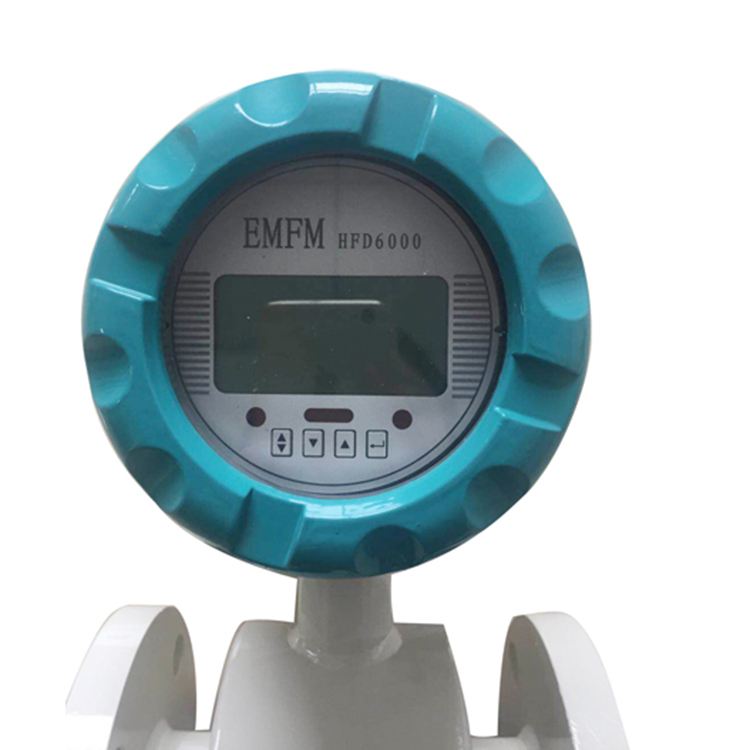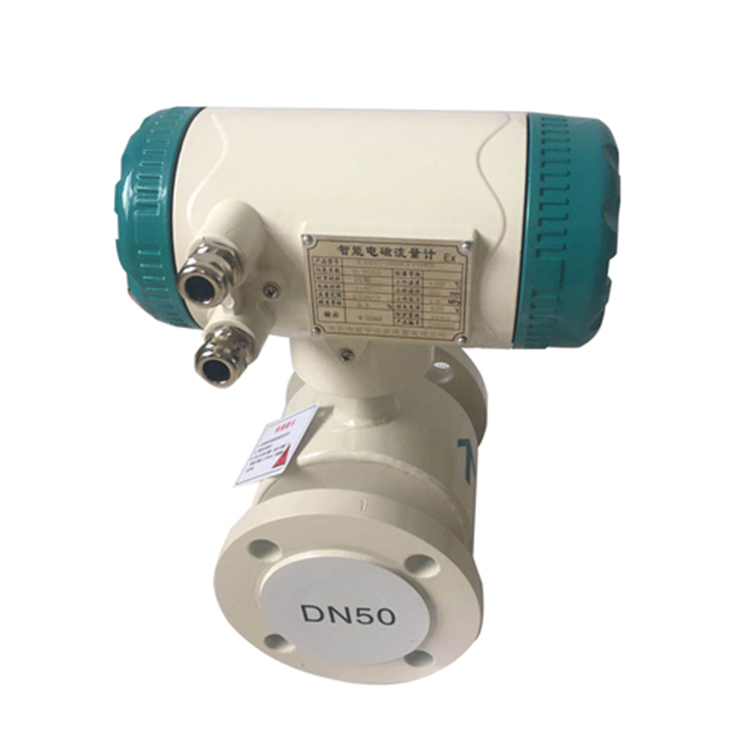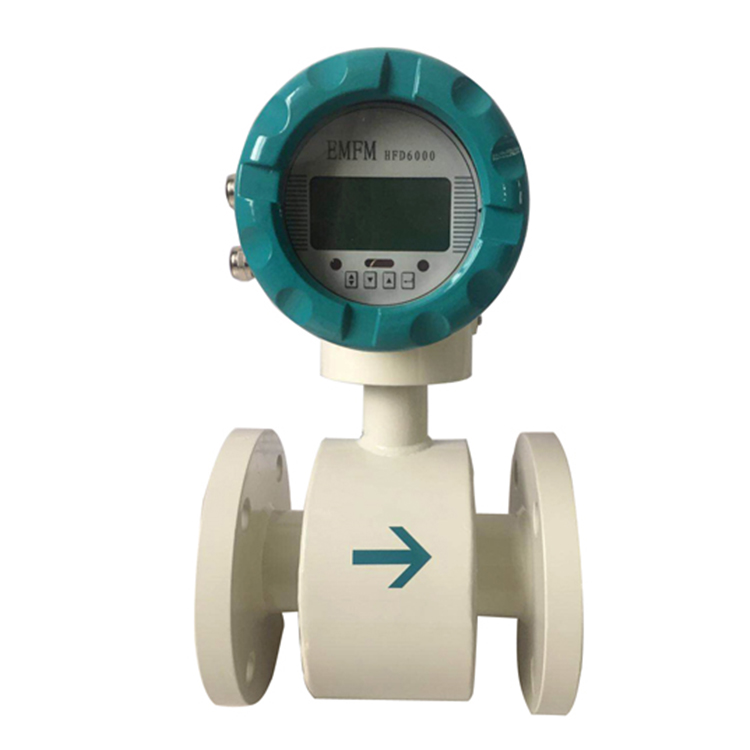







Electromagnetic Flowmeter
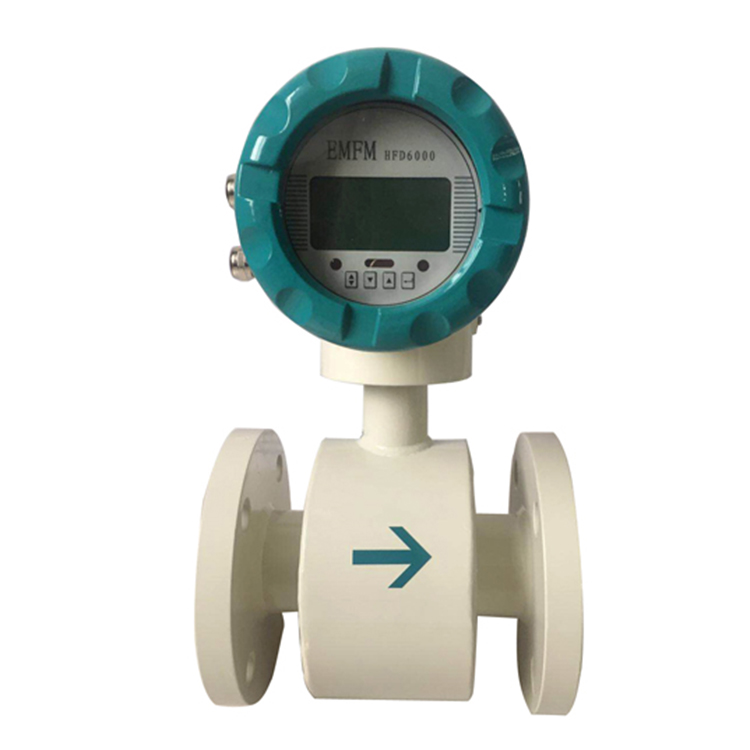
Electromagnetic flowmeter(Electromagnetic Flowmeters, abbreviated asEMF)Yes, it is20century50~60A new type of flow measurement instrument that has rapidly developed with the advancement of electronic technology. Electromagnetic flowmeter applies the principle of electromagnetic induction, An instrument that measures the flow rate of a conductive fluid based on the induced electromotive force when it passes through an external magnetic field.
structure
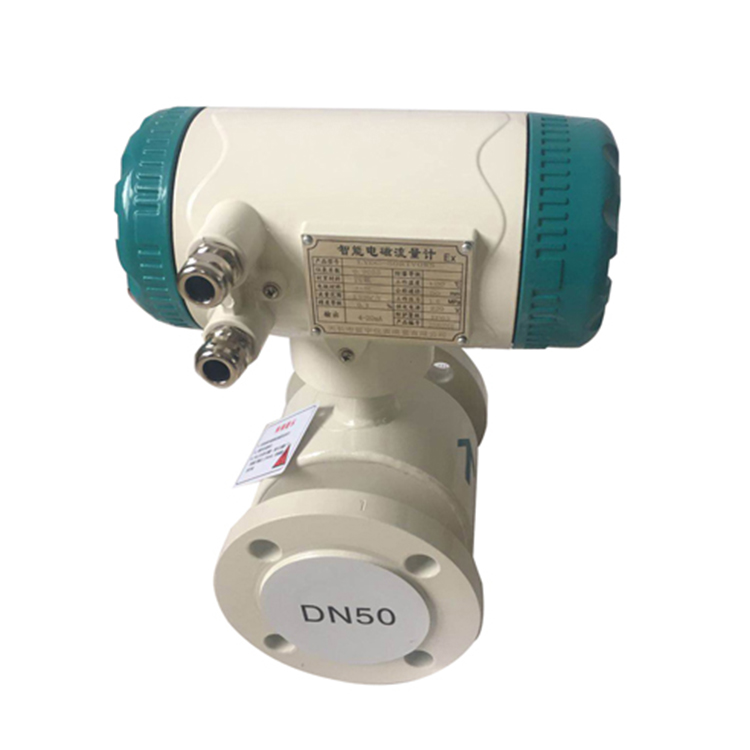
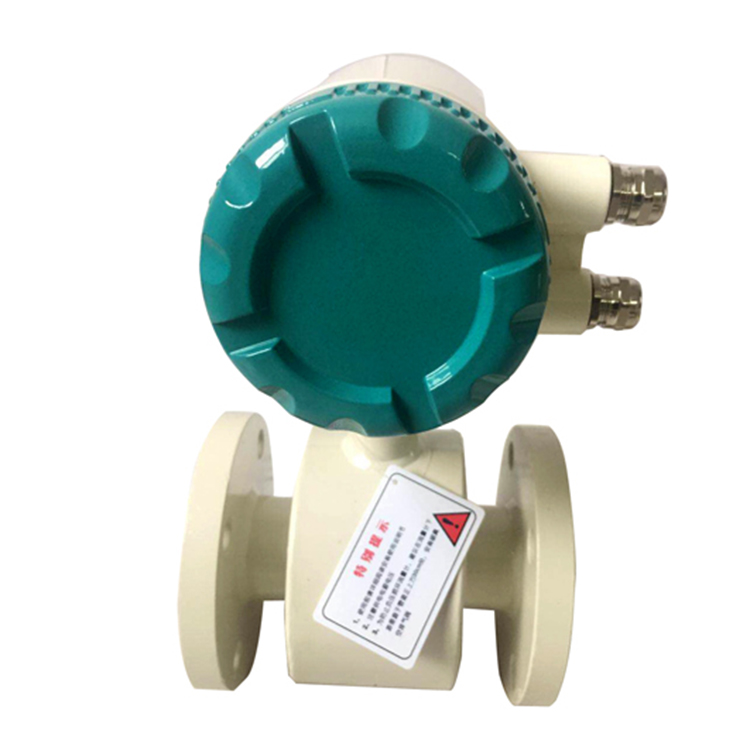
The structure of an electromagnetic flowmeter mainly consists of a magnetic circuit system, a measuring conduit, electrodes, a housing, a lining, and a converter.
Magnetic Circuit System:Its function is to generate a uniform DC or AC magnetic field. The DC magnetic circuit is implemented using magnets, which has the advantages of a relatively simple structure and less interference from AC magnetic fields. However, it can easily polarize the electrolyte liquid inside the measuring tube, causing the positive electrode to be surrounded by negative ions and the negative electrode to be surrounded by positive ions, resulting in electrode polarization and an increase in internal resistance between the two electrodes, which seriously affects the normal operation of the instrument. When the diameter of the pipeline is large, the corresponding magnet is also large, bulky and uneconomical, so electromagnetic flow meters generally use alternating magnetic fields, and50HZGenerated by power frequency excitation.
Measurement catheter:Its function is to allow the tested conductive liquid to pass through. In order to divert or short-circuit the magnetic flux when the magnetic field lines pass through the measuring conduit, the measuring conduit must be made of non-magnetic, low conductivity, low thermal conductivity, and materials with certain mechanical strength, such as non-magnetic stainless steel, fiberglass, high-strength plastic, aluminum, etc.
Electrode:Its function is to generate an induced potential signal proportional to the measured value. The electrode is generally made of non-magnetic stainless steel and is required to be flush with the lining so that fluid can pass through without obstruction. Its installation position should be in the vertical direction of the pipeline to prevent sediment from accumulating on it and affecting measurement accuracy.
Shell:Made of ferromagnetic materials, it is the outer cover of the distribution system excitation coil and isolates the interference of external magnetic fields.
Lining:There is a complete layer of electrical insulation lining on the inner side of the measuring conduit and the flange sealing surface. It directly contacts the liquid being measured, and its function is to increase the corrosion resistance of the measuring conduit and prevent the induced potential from being short circuited by the metal measuring conduit wall. The lining materials are mostly corrosion-resistant, high-temperature resistant, wear-resistant plastics, ceramics, etc.
converter:The induced potential signal generated by liquid flow is very weak and greatly affected by various interference factors. The function of the converter is to amplify and convert the induced potential signal into a unified standard signal and suppress the main interference signal. Its task is to detect the induced potential signal detected by the electrodeExAfter amplification, it is converted into a unified standard DC signal.
feature
Measurement is not affected by changes in fluid density, viscosity, temperature, pressure, and conductivity;
There are no obstructing flow components or pressure loss inside the measuring tube, and the requirements for straight pipe sections are relatively low. Has unique adaptability to slurry measurement;
Reasonably selecting sensor lining and electrode materials, which have good corrosion resistance and wear resistance;
The converter adopts a novel excitation method, with low power consumption and stable zero point. The flow range can reach150:1;
The converter can be integrated or separated from the sensor;
The converter adopts16A high-performance microprocessor,2x16LCDDisplay, convenient parameter setting, and reliable programming;
The flowmeter is a bidirectional measurement system equipped with three integrators: forward total, reverse total, and differential total; It can display positive and negative flow rates and has multiple outputs: current, pulse, digital communicationHART;
The converter adopts surface mounting technology(SMT)It has self checking and self diagnostic functions;
Related models: LREF-50YSF4IRA LREF-100YSF4IRA LREF-250FSF4IAEGC LREF-200FBF4IRA