





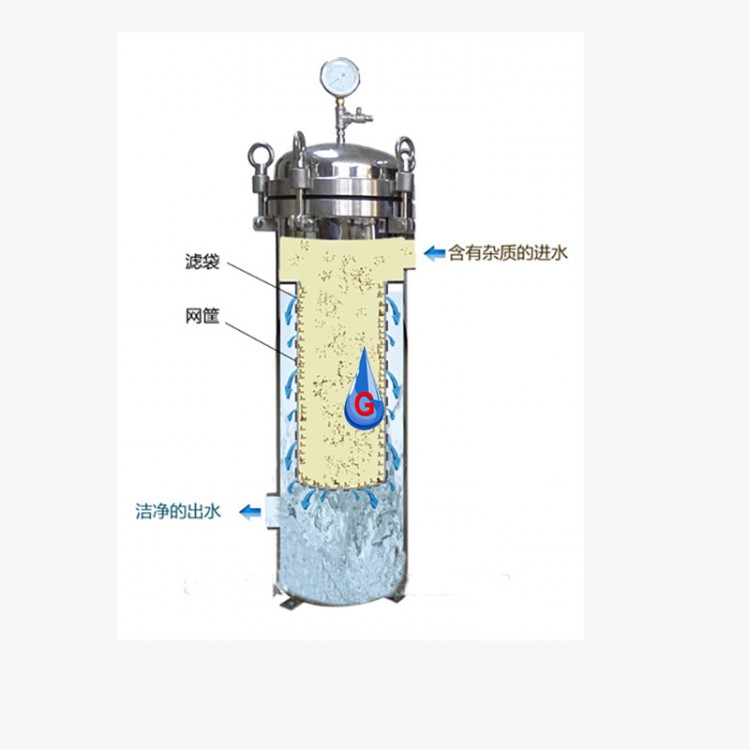
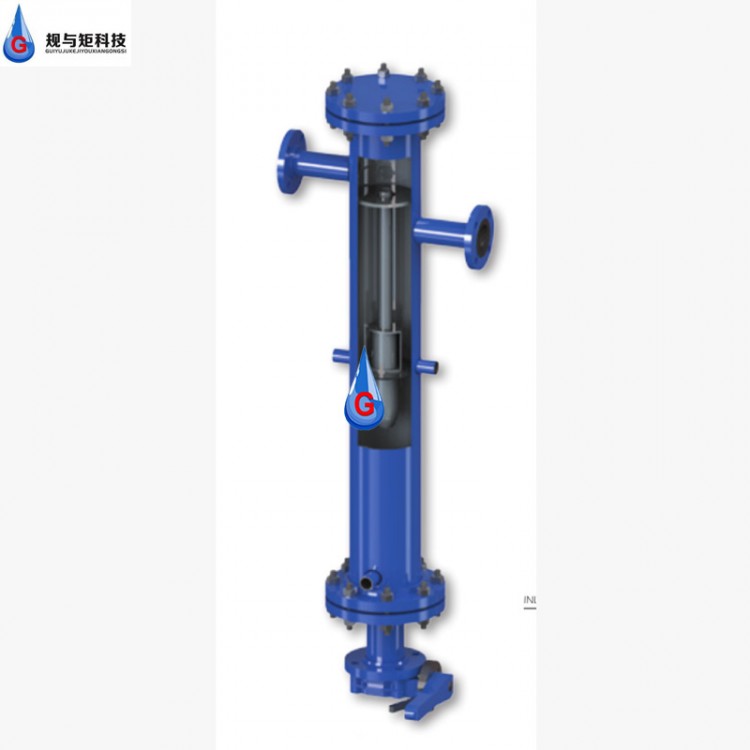
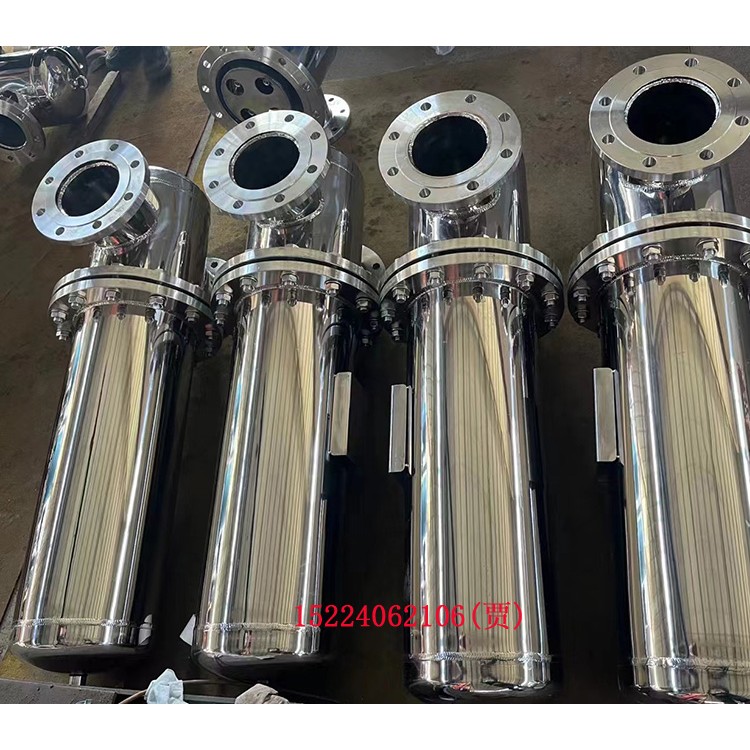
Rule and Measure can offer a wide range of separation equipment, primarily focusing on the following types of separation:
Separation of solids from gases or steam
Separation of liquid from gas or steam
Separation of liquid from another liquid
Separation of solids and liquids from gases
Three-phase separation
Gas-Liquid Cyclone Separator
The mechanical principle of the separator's separation:
Gravity
Mechanical Impact (Collision)
Centrifugal Force
Filtering (Coalescence)
Coaxial Separator
Vertical Gas Separator
Horizontal Gas Separator
Compressor suction and exhaust sections washing chamber
Two-phase/Three-phase Separator
Deaerator
Low Temperature Separator (LTS)
Gas-Liquid Swirl Separator
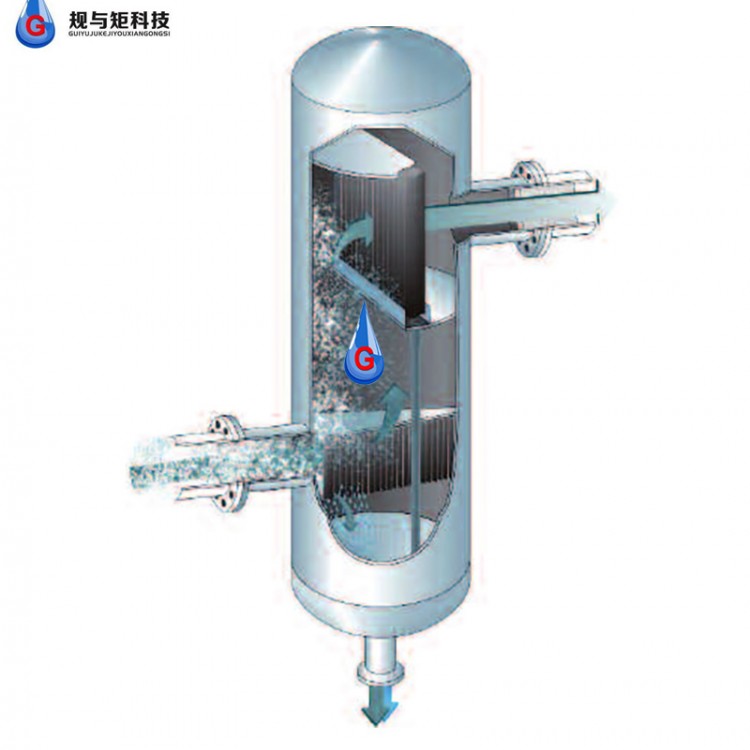
Upon entering the separator with gas carrying droplets, the fluid is forced to undergo multiple rapid directional changes within the blade bundle space of the specially designed flow channels. During this transformation, due to the effect of inertial forces, the droplets continuously collide with the blades, imparting kinetic energy. Simultaneously, as the fluid passes through the special channel structure, it generates rotation. With the decrease in droplet kinetic energy, the rotation radius sharply diminishes. The droplets and mist, due to surface tension, collide with the blade surface, resulting in an increasing coalescence effect. As the droplets and their aggregates grow larger, they are separated from the gas and adsorbed onto the blade surface. The collected liquid, under the influence of gravity, flows along the special channels of the blade structure vertically downwards to the bottom accumulation tank. It is then discharged through a conduit to the bottom of the tank, where a liquid seal structure is set up to achieve efficient gas-liquid separation.
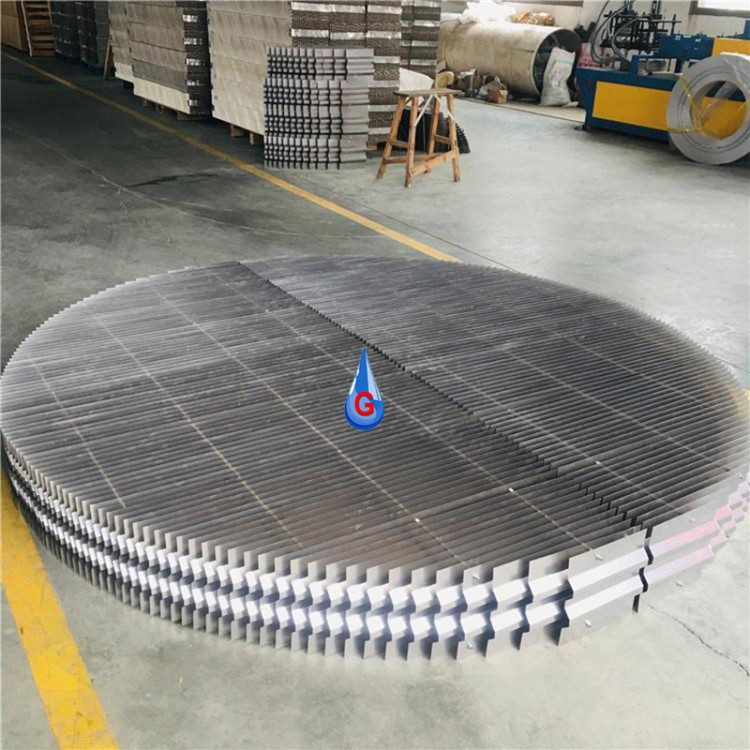
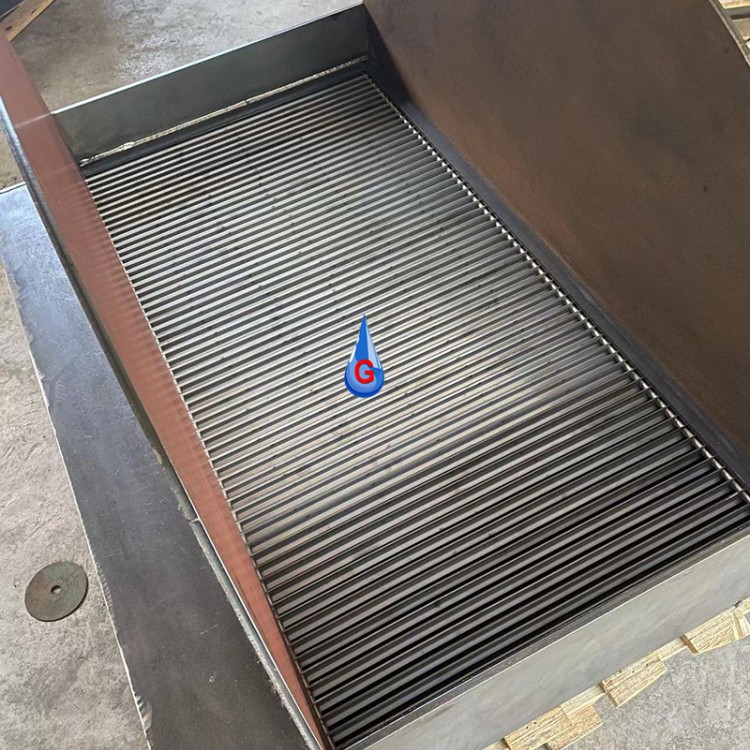
G2 model double-bag style blades. 'Vertical blade arrangement, horizontal gas flow.'
Separation Efficiency: 99% for 3-5 microns, 100% for >5 microns
Separation Effect:
- 100% Liquid Separation, greater than or equal to 5 micrometers.
- The liquid being vented carries less than 1/10 US gallon/10^6 cubic feet.
- Pressure Drop: <1 psi
- Liquid content in intake: Not exceeding 5% (by weight)