For years, we have been committed to the research and innovation of various professional clothing and attire, now evolving into a modern enterprise that integrates research, production, sales, and service on a large scale. We have established friendly and long-term cooperative relationships with numerous companies.
What to consider when customizing work uniforms:
1. Custom Workwear Colors to Match Your Company's Style: Different companies have different styles. This is not determined by personal preference but by the various trades within each company, which dictate the color and style of the workwear. Factories like those producing food, beverages, and noodles require more vivid workwear, such as white, sky blue, and pink. For factories in the machinery and hardware industries, darker colors like navy blue, gray, and brown are more suitable. These colors are easier to clean. Generally, adhere to the three-color rule, meaning no more than three colors. Black, blue, and gray are common choices.
2. Custom Workwear Styles: Both style and color are taken into consideration; some require separates, while others need all-in-ones or other specific requirements.
3. Custom Workwear Fabrics: Choose fabric based on the specific job characteristics for easy maintenance of cleanliness and order.
4. Accessories (zippers, buttons, elastic). Where metal zippers are not allowed on certain positions, alternatives such as buttons or plastic zippers can be used instead.
5. Sewing Technique: The stitching should be neat, with minimal loose threads to maintain aesthetics.
Size should be as accurate as possible: When necessary, take measurements to ensure employees fit comfortably.
7. Embroidery Printing: Mostly embroidery, but printing is also quite good now; it can be chosen based on the fabric.
8. Specificity: So-called specificity refers to the fact that when designing or selecting work uniforms, one must consider the differences in industry, job position, nature of work, and gender. Taking these factors into account, it is essential to have detailed communications with the uniform manufacturer's designer when selecting or customizing work uniforms to ensure the design suits the work environment.
9. Economic Efficiency. This is primarily reflected in the fabric, style, design, and manufacturing processes of custom workwear, as well as the production flow.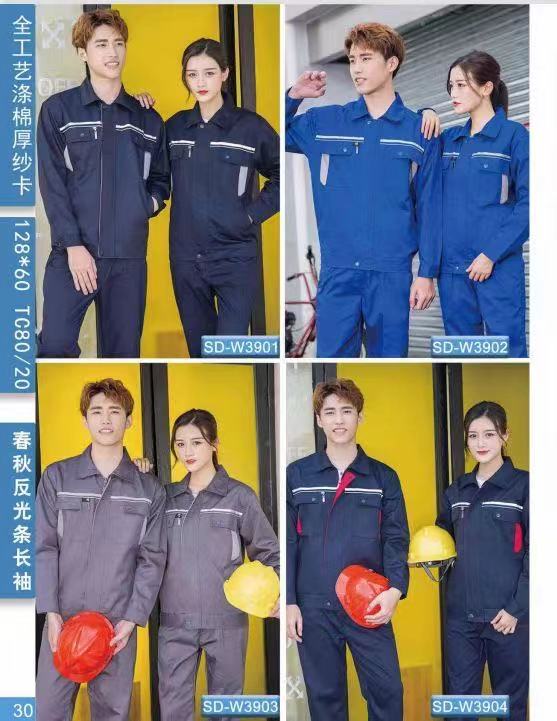
What fabrics are available for custom workwear?
1. Cotton Fabric: A general term for various cotton textiles. It is commonly used to make fashion, leisure, underwear, and shirts. Its advantages include easy warmth, softness, moisture absorption, and excellent breathability. However, it has drawbacks such as shrinkage and wrinkling, making it not very crisp or aesthetically pleasing. It requires frequent ironing when worn.
2. Linen: A fabric made from various types of plant fibers, including flax, ramie, jute, sisal, and abaca. It is commonly used for casual and workwear, and is increasingly used to make everyday summer clothing. Its advantages include high strength, excellent moisture absorption, heat conduction, and breathability. Its drawbacks, however, are that it is not very comfortable to wear, has a rough and stiff appearance.
3. Silk: A general term for various woven fabrics made from silk. Like cotton fabric, it comes in many varieties with distinct personalities. It is suitable for making a variety of work uniforms, especially women's work uniforms. Its advantages include being lightweight, fitting well, soft, smooth, breathable, colorful, lustrous, elegant, and comfortable to wear. However, its drawbacks are that it tends to wrinkle easily, absorbs moisture, is not very durable, and fades quickly.
4. Velvet: Also known as woolen fabric, it is a general term for fabrics woven from various types of wool and cashmere. It is commonly used to make formal wear, suits, overcoats, and other formal and work uniforms. Its advantages include wrinkle resistance, durability, soft texture, elegance, resilience, and strong warmth retention. Its main drawback is that it is difficult to wash and is not suitable for summer clothing.
5. Leather: It is a material made from tanned animal skins. It is commonly used for making fashion and winter clothing. It can be divided into two categories: first, leather, which refers to skins that have been dehaired. Second, fur, which refers to skins that are processed with both hair and leather. Its advantages are lightness, warmth, and elegance. However, its drawbacks include high cost, high storage and maintenance requirements, making it not suitable for widespread use.
6. Textile Fiber: Abbreviation for chemical fiber, it refers to textiles made from fibers produced with high molecular compounds as raw materials. Generally, it is categorized into two main types: artificial fibers and synthetic fibers. Their common advantages include vibrant colors, soft texture, good drape, and comfortable feel. However, they have drawbacks such as poor wear resistance, heat resistance, moisture absorption, and breathability, which can easily deform when heated and generate static electricity. While they can be used to make various work uniforms, they are generally of lower quality and not suitable for formal occasions.
7. Blended Fabrics: These are textiles made by blending natural fibers with chemical fibers in specific proportions. They are used to produce various types of workwear. The advantages of blended fabrics are that they incorporate the benefits of cotton, linen, silk, wool, and synthetic fibers while minimizing their respective drawbacks. Additionally, they are relatively inexpensive, making them very popular.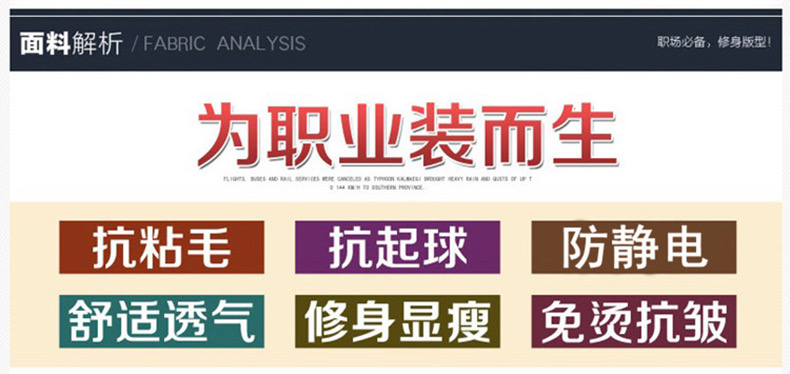
Advantages of Custom Workwear:
1. There are more styles to choose from when customizing corporate uniforms. Tailoring is based on the company's environment, selecting fabric colors and styles, and the designs are also trendy. Even if you have no idea about fashion, you can still find inspiration and direction from them.
2. Custom work uniforms offer more accurate sizing, ensuring comfort and appearance. Moreover, it's crucial that they do not hinder work while being worn, a factor that is often overlooked in ready-to-wear uniforms (improvements are made in the design of the back, sleeves, etc.).
3. Customized work uniforms are truly tailored to fit, as employees within a company come in a variety of body types and sizes. Ready-made work uniforms can only accommodate about 90% of the workforce (and often don't fit particularly well). Therefore, to facilitate work, it's best to opt for a custom-made approach.
4. Custom work uniforms cater to both men's and women's styles, addressing the need for both genders to wear them in the workplace.
5. Customized work uniforms come with more reliable after-sales service and customization services, ensuring guaranteed after-sales support.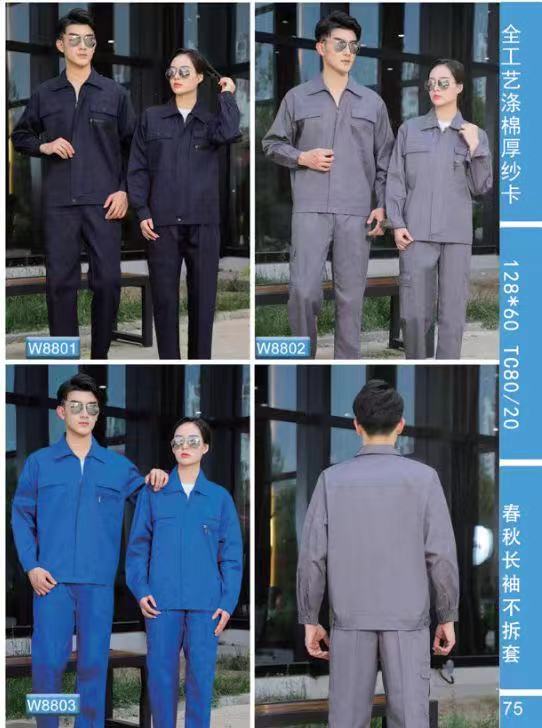
Custom workwear, repair workwear, workshop workwear, engineering workwear, static-resistant workwear, sanitation workwear, electrician workwear, and more; offering over 1,000 styles, various color options, and accepts custom orders based on samples or designs. Main fabrics include polyester-cotton, cotton, and static-resistant processing. Custom embroidery patterns and printed text are available for workwear.
Guangxi Bi Ren Garments Co., Ltd. maintains the same meticulousness with small and medium-sized customers. Our value lies in providing customers with a clothing medium to express themselves. We firmly believe that it is only through our professionalism and our dedication to product quality that we can bring significant value to our customers' promotional activities. A T-shirt imprinted with your company's logo is not just a simple piece of clothing to us; it embodies the corporate culture of your esteemed clients.
WeChat Official Account

Scan to follow Official Account